DR News

The Dominican film on the life of Jack Veneno (Jack Poison) and his career-long rivalry with “Relampago” Hernandez (Lightning) has just won the Best Cinematography Award at the Sydney Indiefest Film Festival. Tabaré Blanchard, the director, gave the good news to the Diario Libre.
The movie re-creates a life of the outstanding Dominican professional wrestler Jack Veneno, who garnered national attention for nearly 30 years. The film features well-known Dominican actor Manny Perez, and features stars such as Pepe Sierra, Richard Douglas, Mario Nuñez, Ovandy Camilo, Jaime Piña, Riccardo Bardelino, Yamile Scheker, Hector Anibal and Xiomara Rodriguez.
In August 2018, Blanchard’s film won the statuettes at the La Silla Awards that was organized by the Dominican Association of Film Professionals at which time it took 15 of the 17 nominations it had received.
http://sydneyindiefilmfestival.com/f…feature-films/
Source: DR1, Sydneyindiefilmfestival
Nov 24, 2018
The president of the National Hotel & Restaurant Association, Joel Santos says the leading tourism organization of the country rejects the green light authorities are giving to the construction of high rises in Punta Cana. The destination had successfully developed with a model of hotel and apartment construction under the height of a coconut tree, or no more than five floors. Santos said the low-density model that has turned Punta Cana into the most successful tourism destination in the Caribbean would be threatened by the authorization for high-rise construction.
The Presidency announced that President Danilo Medina would be at the ground-breaking ceremony for the Moon Palace Punta Cana, an 18-floor residential tower with access to Macao beach. This is a Mexican foreign investment. The high rise would be completed by 2021 at an estimated investment of US$500 million. The complex would have 2,149 rooms, of which 66% would have ocean view and 44% would look onto a golf course. The complex calls for the construction of a water park and nine swimming pools and would be built 500 meters from the beach line.
Gibran Chapur, executive vice president of the developer, Palaces Resorts and spokesman for the builders of the Moon Palace Punta Cana said that the reason why they are interested in investing in the country is because 35% of their clients, who are direct customers grouped in their vacation club, around one million, have asked for the Dominican Republic, which he described as a successful product.
Chapur defended the concept of vertical development, which has received opposition and criticism from Dominican hoteliers, and wondered why deny the sea view to their guests. “People do not go on vacation to look at their neighbor’s room,” he argued in an interview carried by Listin Diario.
Asonahores instead has disputed the amendments to the land use plan that would enable the construction of up to 22 floors in Macao.
Santos said that studies have not been carried out to back the argument of the developers that the construction of high rises on the eastern beach coastline would contribute to competitiveness of the tourism sector. He said a recent Gallup poll indicated that tourists visit the Dominican Republic find the low-rise resorts environmentally friendly. He said: “There is a study that shows how the construction of towers in Punta Cana would disfigure the typical Caribbean coastal landscape, a fundamental component of tourism in the islands.”
He said most companies investing in hotel construction in the country have adhered to the norm of low-rise construction. There are over 40,000 low-rise hotel rooms in the area.
He said instead of promoting high-rise construction, what is most convenient is for the government to promote low-rise tourism development in other regions, such as Montecristi, Pedernales, Barahona, Baní, Nagua and Samana where there is sufficient area to double the present inventory of hotel rooms in the country. Asonahores called for the government to be open to talks as it has been in the past.
The Association of Hotels of the East (Asoleste) that groups hotel companies in the Punta Cana area has also rejected the construction of high rises arguing that the decision introduces changes that will affect the low rise/ low density model that has spurred the successful development of tourism in the Dominican Republic. It called for studies and technical research to validate changes to the present land use plan. The country’s sole high-rise destination, Juan Dolio, is the least successful in the country.
Asoleste considers that it is a mistake to change the low height and density model to build towers in the east, where the arrival of tourists has continued to increase and over the last six years the average annual growth has been widely exceeded.
Source: DR1, Listindiario
Nov 24, 2018
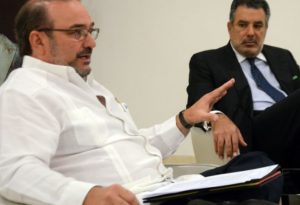
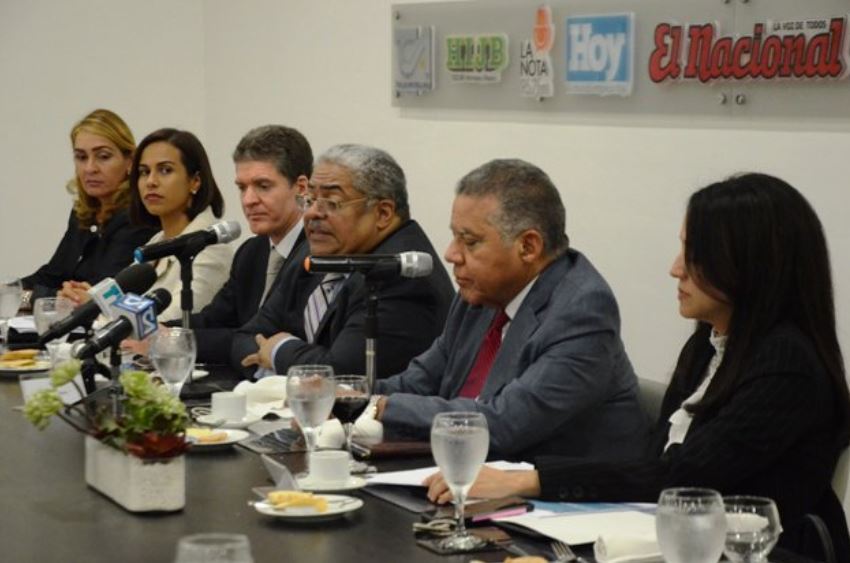
A strategic alliance between the Dominican Jasper Caribbean Windpower LLC company, the maker of electricity wind generators, Vesta, of Denmark, the Unique Capital Management investment fund in the United States and the People’s Republic of China state–owned Chengdu Power Engineering Corporation (Power China) will enable the installation of 115 MB of wind-powered electricity in Maimon and Imbert, in the province of Puerto Plata with an investment of US$260 million. The announcement was made by José Pereyra Cordova, the president of Jasper in the Dominican Republic, in an interview with members of the Corripio media group. He was accompanied by Enrique de Marchena Kaluche, the legal advisor of Jasper.
De Marchena and Pereyra explained this would be the first time a Chinese state-owned company joins a private entity in the Dominican Republic for energy production. Pereyra Cordova said that the project comes from way back, and began in the community of El Cupey with the construction of a kilometer of highway to access the construction site and other investments carried out together between local and US companies.
The participation of the Chinese company, ranked by Fortune magazine as one of the 500 biggest energy companies in the world, had been blocked because the Dominican Republic did not have diplomatic relations with the Peoples Republic of China. Chinese laws forbid their companies to do business with countries that do not have diplomatic relations with China.
According to the Jasper representative, they had been waiting for the establishment of diplomatic relations with the Dominican Republic.
The project to supply 110 megawatts of alternative wind energy, a US$150 million investment, had been announced in 2006 by the US firm of Jasper Caribbean Energy.
Source: DR1, Elnacional
Nov 24, 2018

The executive director of the National Health System (SNS), economist Chanel Rosa Chupany announced that his department is working on instating a system whereby appointments can be made by telephone and thus patients will have less wait times at the health facilities nationwide. He revealed this news during an interview with the Grupo de Comunicaciones Corripio.
Rosa Chupany said that the appointments would initially be able to be made by telephone but eventually they could also be booked over the Internet. Users will be able to call *767 and *SNS free of charge. They will then be given the date, place and hour of the appointment. He did not specify a date for the start of the new appointment system.
Rosa Chupany oversees 186 public medical centers and 1,622 public primary care centers.
Source: DR1, Elnacional
Nov 18, 2018
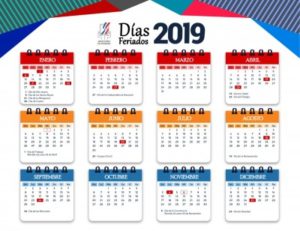
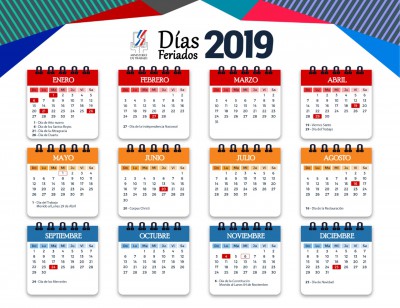
The Ministry of Labor has published the country’s official holidays calendar for 2019. The calendar establishes 12 holidays for the year. This year, only two holidays are moved – Labor Day and Constitution Day. The dates are important for vacation planners, as domestic demand peaks on the six long weekends that will happen in 2019.
The established holidays in 2019 are:
Tuesday, 1 January: New Year’s Day
Sunday, 6 January: Three Kings Day
Monday, 21 January: Our Lady of Altagracia Day
Saturday, 26 January: Duarte Day
Wednesday, 27 February: Independence Day
Friday, 19 April: Holy Friday
Wednesday, 1 May: Labor Day. It will be moved to Monday, 29 April.
Thursday, 20 June: Corpus Christi Day
Friday, 16 August: Restoration Day
Tuesday, 24 September: Our Lady of Mercedes Day
Wednesday, 6 November: Constitution Day. It will be moved to Monday, 4 November.
Wednesday, 25 December: Christmas Day
Long weekends, meaning peak times for hotel accommodations nationwide:
The first week in January, rolled over from Monday, 31 December. The 31st of December is a big day for family gatherings and celebrations, so for many this will become a long weekend.
The third week in January, with the Our Lady of Altagracia long weekend. Many will take off from Friday 18, Saturday 19, Sunday 20 and return on Monday, 21 January.
Easter Week is the country’s leading holiday. The long weekend begins on Thursday all through Sunday, 18, 19, 20, 21, 22 April.
Restoration Day will result in a long weekend just before the restart of school days. The event is celebrated on Friday, 16 August, created the long weekend of 16, 17, 18 August.
Tuesday, 24 September is a religious holiday, celebrating the patron of the Dominican people, Our Lady of Mercedes. That means that while not a holiday, many people will make a long weekend of Friday 20, Saturday 21, Sunday 22, Monday 23 and Tuesday 24 September.
Constitution Day creates the long weekend in the first week of November, when it is moved to 4 November, creating the long weekend of Friday 1, Saturday 2, Sunday 3 and Monday 4 November.
Source: DR1, mt.gob
Nov 18, 2018
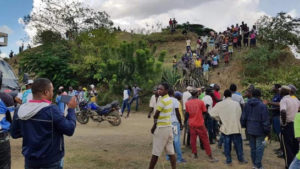
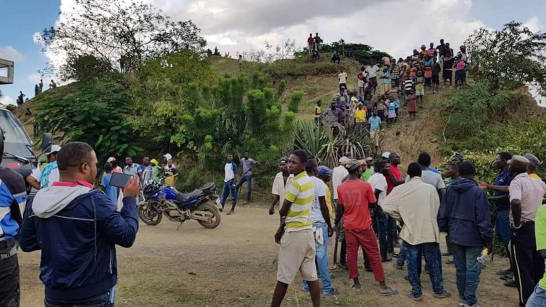
Following the kidnapping of cardiologist Pedro Ureña and six other Dominicans traveling together on a motorcycle excursion at the border by a group of at least 100 Haitians, Defense Minister Rubén Darío Paulino Sem has reported on his investigations to date.
He said that there had been an operation carried out by the Army, during which two motorcycles belonging to Haitians were confiscated as they did not have documentation, and the Haitians had decided to pressure Dominican authorities to return the bikes. To do this, they blocked the Carretera Internacional with trees and set fire to tires. He said that Pedro Ureña and the other Dominicans were kidnapped when travelling along the road where the protestors took violent measures to pressure Dominican authorities.
The situation has heightened the sense of insecurity in the area, and brought into the open the lack of control Dominican soldiers have in the area. The Ministry of Defense has also ordered an investigation into the actions of the army personnel, who despite being armed with firearms did nothing to interfere or defend Ureña and the other Dominicans affected by the mob of Haitians that assaulted Dominicans traveling on the road.
The Carretera Internacional runs for 55 kilometers from Pedro Santana to Restauracion. Along the way, there are several Dominican army posts.
In addition, in Dajabon province, Dominicans have complained that these sorts of attack are frequent, especially among those who either own businesses or supply merchants in the area.
Senator Adriano Sánchez Roa told El Nacional that Haitians have essentially taken control of large areas on the Dominican side of the border, such as in Tirolí in Elías Piña province. He said Dominicans traveling in this area are subject to assaults by the mobs that plague this area. “On several occasions I have seen armed civilians in places all through the area,” said the senator of Elías Piña.
He said that the situation experienced by Dr. Pedro Ureña and his friend when traveling on motorcycle on the Carretera Internacional on Saturday, 10 November 2018, occurs frequently. He said the case was known because it happened to Dr. Ureña and he went public with what had happened. But Sanchez Roa said these assaults happen constantly, because the Haitians are in control. He called for the military posts to be reinforced with more military and communication. He said in those areas Haitian telecom frequencies prevail because of the lack of action on behalf of the Dominican authorities. He said works need to be carried out to improve the Carretera Internacional. He said it takes around one hour to cover 20 kilometers. He called for better working conditions for the military in Tirolí, Uayajayuco, Los Cacaos.
Yesterday, journalist Santa Marte of the Listin Diario told her story of being kidnapped five months ago when traveling in Montecristi by a mob of Haitians. She said she was attacked with stones, sticks and machetes whoever tried to get through and Dominicans had to take refuge in the military post until the situation calmed down. She said Dominican authorities need to respond adequately and avoid the Haitian penetration of border areas. She said now 85% of the inhabitants in these areas are Haitians.
The Dominican border with Haiti is an area of 300 kms passing by the border province of Montecristi, Dajabon, Elías Piña and Pedernales. Haitians mostly cross over the areas between Elías Piña and Pedernales where they are evicting Dominicans from areas near the rivers. Likewise, there are complaints that using violence, the Haitians have evicted Dominican fishermen from national, coastal waters.
Source: DR1, Diarioibre
Nov 18, 2018

National District judge José Alejandro Vargas has handed down coercive measures of three months in preventive custody to a former employee of the National District Prosecution Office. Ramón Antonio Paulino Suriel is accused of stealing 19 motorcycles that had been confiscated as evidence in different judicial cases.
Via a press release, the Prosecution Service said that the Evidence Control Office had reported that since April this 2018, motorcycles were disappearing from the depository.
Paulino Suriel was questioned and later admitted that he had taken the motorcycles. He explained how he had taken the unauthorized possession of motorcycles and subsequently sold them. He was sent to the Najayo men’s jail in San Cristobal province.
Source: DR1, Listindiario
Nov 18, 2018
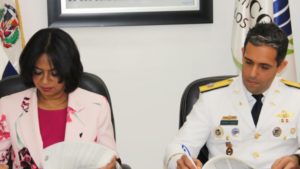
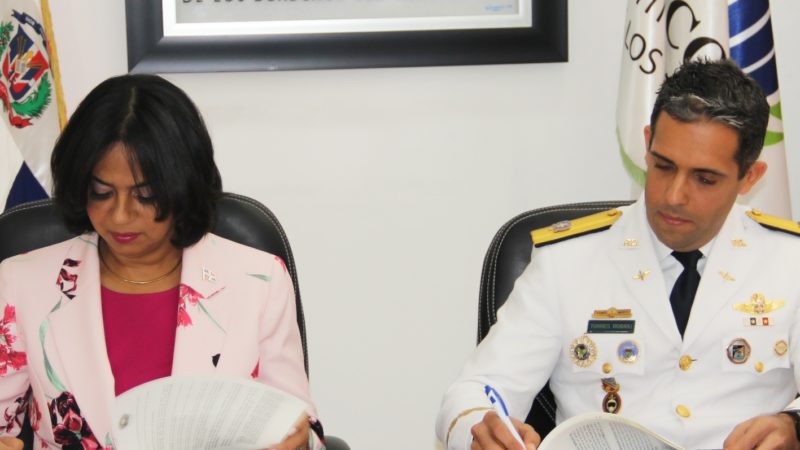
The directors of the National Institute of the Protection of Consumer Rights (Proconsumidor) and the Specialized Corps of Tourist Security (Cestur), Anina del Castillo and Juan Carlos Torres Robiou, respectively, have signed an agreement to respond more efficiently and effectively to complaints made by tourists.
The complaints tourists most often report are about changes in the prices of services and products, sales of fake artisan works, hotel packages, long stays booked in villas that later are not honored, as well as from tourists who say they are being cheated by mafias of lawyers, among others.
Del Castillo said that the inter-institutional agreement will ensure that tourists can be made aware of their rights when purchasing goods and services, as well as bringing clarity in pricing and compliance with reserved hotel packages, among others.
Given the importance of the tourism sector, Del Castillo explained the inter-agency agreement would bolster tourism and the nation’s economy.
Torres Robiou said that the agreement would help to control bad commercial practices in tourist areas, especially the exorbitant increases in prices. He said that one of the areas worst from where more cases are reported is in Boca Chica. He said there, they have had complaints of a serving of fried fish for a tourist costing as much as RD$2,000 when the average price should be no more than RD$400. This occurs many times when a “guide” takes an unknowing tourist into a restaurant and then the restaurant levies the tourist guide’s commission onto the bill of the tourist.
In addition, in Boca Chica, he said there is a mafia of lawyers that takes advantage of tourists who have broken the law and charge these high sums of money in dollars to try and resolve their cases.
Source: DR1, Hoy
Nov 18, 2018
UPDATE: Investigation into border kidnapping continues
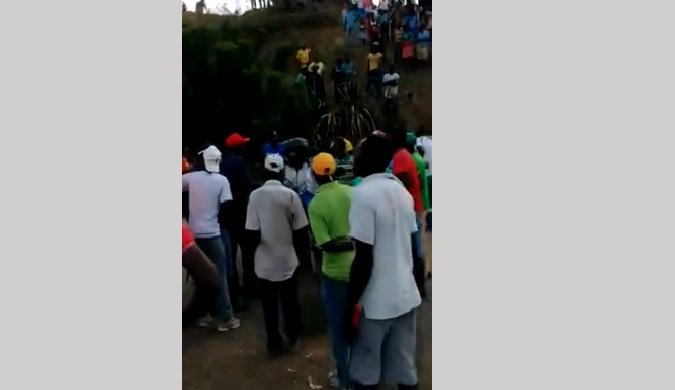
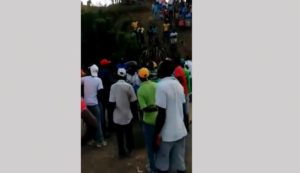
Media in the Dominican Republic exploded yesterday with the news story that well-known cardiologist Pedro Ureña had been held up for several hours by a crowd of 50-100 Haitians armed with stones, knives and machetes on Saturday, 11 November 2018. He was traveling with a group of motorcyclists along the Carretera Internacional (“no man’s land”) that divides Haiti and the Dominican Republic. He was traveling on the Dominican side of the mostly dirt road. He said they frequently had made the same trip and this was the first time he had been assaulted. They were making their way from the south to Puerto Plata along the border roads. They had started in Pedro Santana.
Once released, the physician contacted El Sol de la Mañana and reported on the scary incident. He said the Haitians created a fire obstacle on the road and then assaulted them taking their motorcycles, keys and cell phones. The men – Dr. Pedro Ureña, Oscar Valiente, Dr. Luis Cordero, Diego Cordero and Oscar Valiente, Pedro Ureña, Luis Andrés Cordero, Diego Cordero, Yoni Aquino, Gilberto Ureña and Juan Manuel Anico.– were retained with other Dominicans that had been assaulted for around three hours.
One of these told them not to speak, to keep their helmets on and pretend they were Americans. The Dominicans then told the Haitians that the new group was one of Americans and hence they were let free. Urena said the Haitian assailants returned their belongings. The Dominican urged that the doctors tell the story when they got back to Santo Domingo. Apparently, this is a frequent situation that has not been addressed by those responsible for border security.
Dr. Ureña said he felt sad and indignant. He was especially perplexed that two Dominican army men observed but did not do anything to help them. The men argued they could not use force by themselves and in the area there was no telecom signal to request help. They argued the Haitians committed the theft because one of them had had his motorcycle confiscated in Dajabón, a main border town. Dr. Ureña said the event took place in La Palmita, around 25 kilometers south of Restauración.
Dr. Ureña says this is an unacceptable situation. He said the other Dominicans had been there for hours, waiting in resignation, suffering these same experiences every now and then. In none of the situations do the military intervene, he said. “We were lucky that we passed for Americans, and they returned all our belongings and let us go,” says Ureña. “But, and those who live there? Why do they have to give up everything, why do they have to accept their cow is stolen, their vehicle taken, their motorcycle stolen?” he asks. With indignation, he said the Haitians only have to cross to the other side of the border and there is no way they can be reached.
“Here things have to change. Our border has to be a real border. There must be a military presence,” explains the cardiologist. “You have to do something different, what is happening does not work,” says the doctor.
Back in Santo Domingo the physician said: “What is most shameful for me is that I had to say I was an American to be let go, because if I said I was Dominican I would have been kept. In my country I had to pretend to be a foreigner to get out. That was the drop that made the glass overflow,” he said. He said he left another 10 Dominicans, including one who was transporting cows in a truck, and others in a pick up. He said when they got to Dajabon he heard the group was also let go.
Defense Minister Rubén Darío Paulino Sem has ordered an investigation into the kidnapping of the group by the Haitian mob on a border road within the Dominican Republic.
He said that he had called the doctor to hear his version of events and to understand the circumstances leading to the lack of assistance by Dominican soldiers stationed in the area. He told the press he had spoken with Dr. Ureña to hear his version of the events and to understand the circumstances leading to the lack of assistance by Dominican soldiers stationed in the area.
The United States Embassy in the Dominican Republic has announced the restriction of routine travel to Haiti by employees of the United States government, due to concerns about the levels of security in Haiti. The US recommends that its personal consider travelling by air to Haiti rather than by road. In addition, the US embassy in Port au Prince has announced a travel restriction for its personnel of a 15-mile radius of the capital for security reasons.
Source: DR1, Hoy
Nov 18, 2018
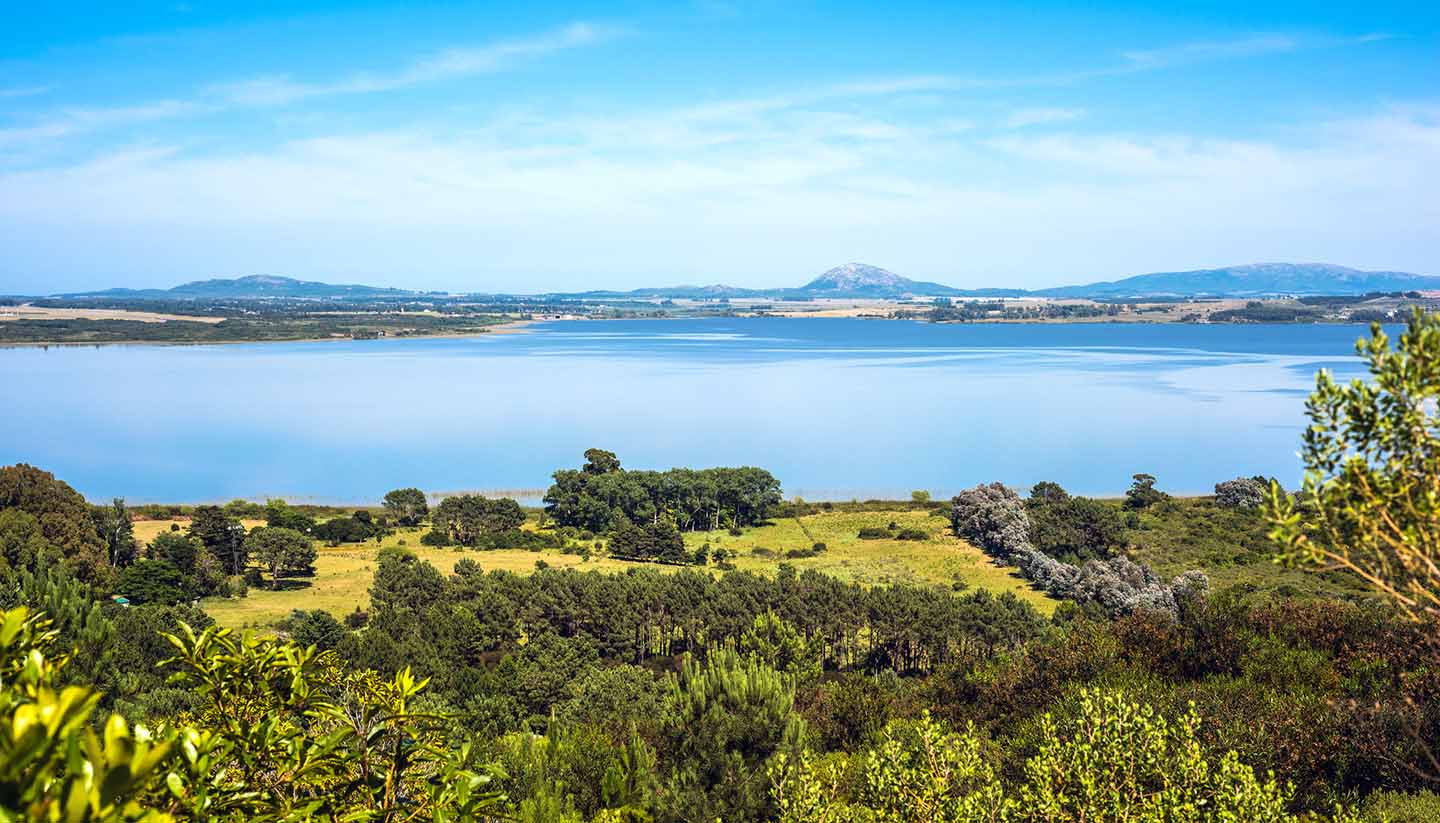
The foreign ministers of Uruguay Rodolfo Nin Novoa and Miguel Vargas for the Dominican Republic announced the signing of three agreements on migration, aviation and trade and investment on Monday, 12 November 2018 at the Ministry of Foreign Relations in Santo Domingo. Present for the signing agreement were Uruguay Ambassador Álvaro Gallardo, and Luis Ernesto Camilo, president of the Dominican Civil Aviation Board (JAC).
Foreign Minister Miguel Vargas said the aviation agreement formalizes commercial aviation relations between both countries. The Memorandum for Understanding for the Promotion of Trade, Investments and Productive Linkages calls for creating a joint council to promote cooperation in these areas. The Memorandum of Understanding for Cooperation on Migratory Flows reaffirms the joint will to combat trafficking of persons and migrants, strengthening the work group with capacity to analyze migratory flows between both countries.
The ministers also announced that as of 1 January 2019, Dominicans that have a US or Schengen visa do not need to apply for a visa to travel to Uruguay. Likewise, new family reunification admittance measures will now facilitate travel for Dominicans that are related to relatives that are legal residents in Uruguay.
Source: DR1
Nov 18, 2018