DR Living

There are numerous banks available in the Dominican Republic, but the most popular are:
There is also Scotiabank, which is the only foreign retail bank in the country.
Most banks operate between the hours of 9 am and 5 pm. If you have an appointment for a specified time, then make sure you don’t arrive late. You can expect to find long queues on workdays—especially at the end of the month. Plus, hotter countries tend to have what’s known as “island time” (even when not an island!). In other words, whilst the majority of appointments will run on schedule, some may be 15-20 minutes later than originally agreed upon.
What documents are needed to open an account?
The good news is that there are currently no restrictions on foreign nationals opening bank accounts in the Dominican Republic. You don’t even have to be a resident to do so.
There are some banks that won’t allow you to open an account without legal residency in place. However, typically, most will allow you to open an account if you have a valid form of ID (such as your passport) and a letter of reference from your current bank—sometimes even the latter is not needed. Nonetheless, bear in mind that some banks may require additional documents.
How do I open an account?
To open an account, simply go into a local branch and speak with the branch manager. Social relationships in the Dominican Republic are very important, and the manager will either be able to help you personally or guide you to an advisor who can.
The process will start with a discussion of your financial requirements and whether you’re looking to open a current account or a savings account. The advisor will then guide you through the different account options and help you narrow down your choices. It’s important to find the one that’s most suitable to your requirements.
The currency used in the Dominican Republic is the Dominican Peso, but you don’t have to solely bank in this currency. You can choose to open a Dominican Peso account, a Euro account, a US Dollar account, or a combination of all three. However, it’s important to note that some banks will only issue a Visa debit card if it’s connected to a Peso savings account. Make sure you ask the branch manager or advisor about this when you’re opening your account.
If you’d like to proceed with opening the account, once you have been given all the details, you need to complete an application form. You will also have to show your proof of ID and banking letter, if applicable.
Are there fees involved when opening an account in the Dominican Republic?
To understand what your account’s interest rates and fees are, you’ll have to ask the bank or check the terms and conditions of your account. This is because they will vary depending on which type of account you hold. For example, savings accounts typically have a 4-7% interest rate, whereas loans and mortgages have an interest rate of 14-18%.
You may face additional fees, such as when making international transfers or withdrawing funds. The maximum withdrawal limit is usually 10,000-30,000 DOP (140-430 GBP) per day. You can withdraw cash using ATMs in supermarkets, petrol stations, shopping malls, or the bank itself.
However, it is recommended that you only use ATMs in bank branches, due to the occurrence of fraud. Fees for using ATMs vary, but if you’re using an ATM that’s owned by the bank you hold an account with, you shouldn’t be charged.
Public Schools
The Dominican Republic provides free public education to all children up to 14 years of age, including the children of expats. However, to continue receiving state-funded free education in secondary school beyond the age of 14, citizenship is mandatory. There is a high dropout rate after students complete their basic primary education, and the government, along with some NGOs, has been making efforts to reduce this number.
The academic year consists of two terms divided by a Christmas break. Summer holidays consist of eight weeks from mid-June to mid-August. In most public schools, the day begins at 7.30 am or 8 am and ends at about 2 pm. Some schools are open from 12 pm to 6 pm. Attending half a day of school has been the custom in the Dominican Republic, but some full-day schools have opened recently, for example in the Puerto Plata province.
Students are required to wear uniforms in both public and private schools in the Dominican Republic, and this additional expense is one of the factors responsible for the number of dropouts. Primary schools generally instruct students in academic learning, with very little emphasis on practical learning. Secondary schools provide more options, such as vocational courses. Some public schools, especially those in the capital city of Santo Domingo, teach the curricula in Spanish as well as in foreign languages.
Private Schools
Private schools in the Dominican Republic teach in English and enroll students from different parts of the world. The fees at private schools vary, and there may be additional expenses such as uniforms, textbooks and lunches. Private education has been in existence for decades in the Dominican Republic, and an increasing number of students are enrolled in these schools. The majority of schools in Santo Domingo are private, and more than half of all primary education students are enrolled in them. The spurt of growth in private education is partly due to the poor standards of the public education system in the country. Students must show some proficiency in English before they can be admitted into most private schools.
The Dominican Republic also has some religious private schools, such as Catholic schools, which are partially state-funded.
The government offers scholarships to high achievers in order to enable them to enroll in a private school of their choice. Like public schools, private schools must adhere to the national curriculum and follow the academic schedule established by the government. National examinations are held at the end of primary and secondary education.
Public, private, and international schools in the Dominican Republic follow the US-based A-to-F grading system.
International Schools
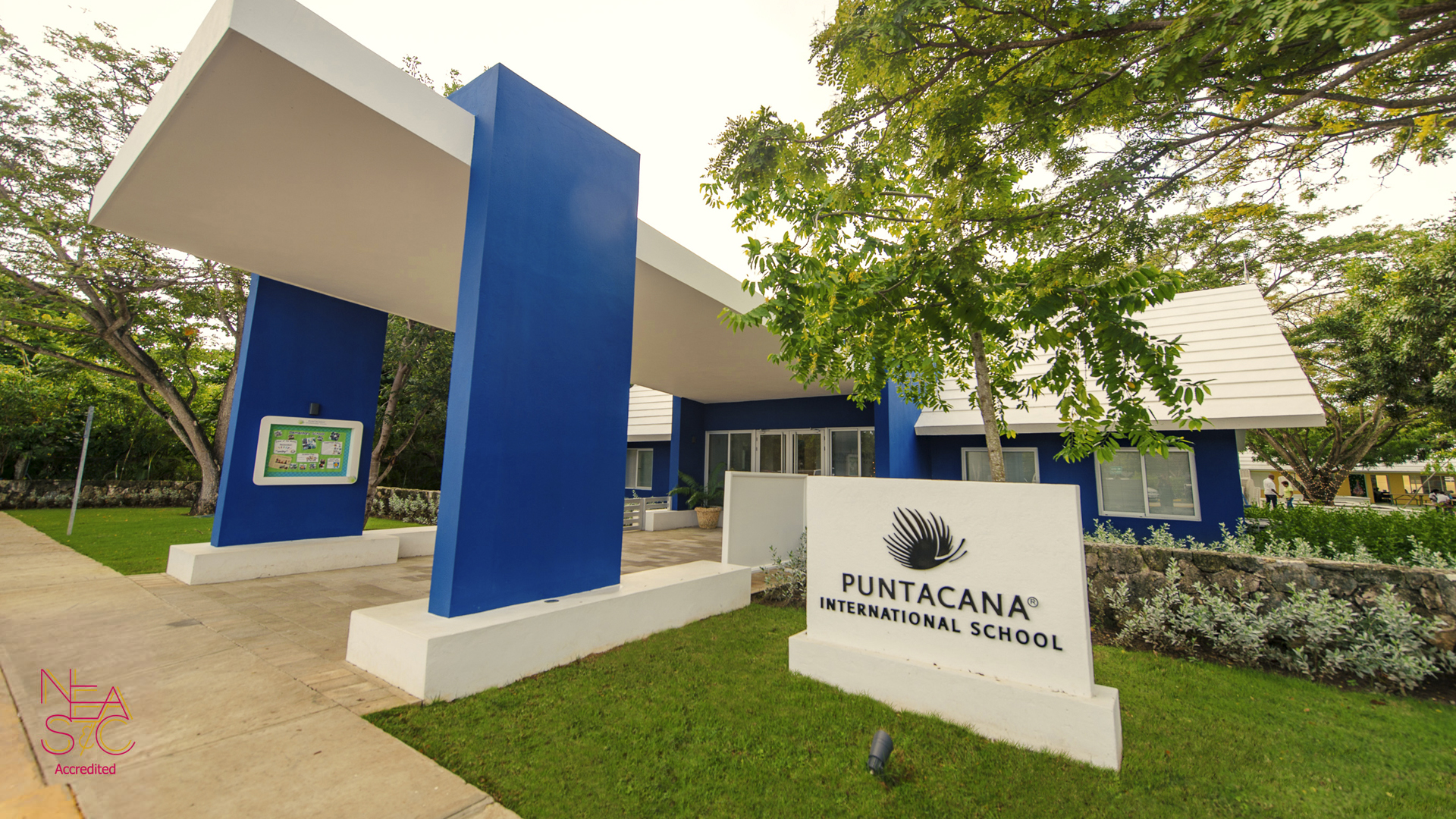
There are plenty of international schools in the Dominican Republic, and these schools have the freedom to either follow their own academic schedule or follow international curricula. International schools can expand their curriculum beyond the basic material, and they also have the flexibility to alter the academic year as long as the curriculum is completed. International schools are usually the preferred option for expats. These schools are located in various cities in the Dominican Republic.
The Colegio Adventista, is a Spanish-speaking institution located in Bonao, in the Monseñor Nouel province. Instruction in French and English is also provided here.
The Doulos Discovery School in Jarabacoa is a Christian school catering to students from kindergarten to grade 12. It provides instruction in English and Spanish and prepares students to enroll in local universities, as well as those in the United States.
The city of La Romano is home to the Abraham Lincoln School, which was founded to educate the children of American employees of the Central Romana Corporation. Today, it is open to other children and offers education in English and Spanish.
French expats who intend for their children to follow the French curriculum can send their children to the Ecole Francaise las Terrenas, a bilingual school in Las Terrenas. Another French school is the Ecole Francaise de la Costa Verde in Rio San Juan, which provides education from the primary level to the baccalaureate level.
The Santiago Christian School in Santiago is a US-accredited school, enrolling students from pre-school to grade 12.
The capital city of Santo Domingo has a varied choice of international schools, such as the American School of Santo Domingo, which offers the US curriculum; the Saint George School, which offers the International Baccalaureate program; and St. Michael’s School, a college preparatory school based on the US system.
In the resort town of Sosúa in the Puerto Plata province, expats can choose between the International School of Sosúa, which is a co-educational day school that caters to students from pre-kindergarten to grade 12, and the Garden Kids International School, a bilingual institution catering to the local and international families living in the country.
Source: Focus Expats
The public education system in the Dominican Republic may not have such a good reputation, but when it comes to higher education, the country has a number of respected universities that enroll both local and international students. In fact, the first university in the Americas, the Universidad Santo Tomás de Aquino, was established in the Dominican Republic.
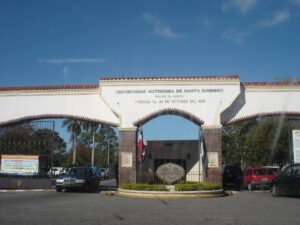
Upon completing secondary education, students receive a certificate from the Ministry of Education that enables them to apply to local or international universities. Most Dominican universities are private, except for the Universidad Autónoma de Santo Domingo, which is the only public university in the country. The fees at this university are more affordable than those at private universities, although, in comparison to many other countries, higher education fees in the Dominican Republic as a whole are low.
However, only Dominican citizens are eligible for these subsidized fees. As a result, expats who have long-term plans to live here with their children sometimes arrange for citizenship before applying to local universities, in order to avoid paying the higher fees that are charged to international students. These fees are on par with those charged by universities in the US.
International students can also apply to the study abroad program offered by the Pontificia Universidad Católica Madre y Maestra, one of the country’s premier higher education private institutions. Proficiency in Spanish is not a prerequisite for this course, which lasts for a semester. However, students can opt for the classes taught in Spanish that usually cater to local students. For those who wish to learn Spanish during the program, the university has a language school on its campus.
Both public and private universities offer the standard bachelor’s, master’s, and Ph.D. degrees. University students in the Dominican Republic usually live at home while pursuing their higher education. However, student accommodation is available at some universities. Expat students arriving in the Dominican Republic for the purpose of higher education can choose to stay with a host family, which may help them settle into the local community and will also aid their learning of Spanish. Expats should be aware that the job market for graduates in the country is not very vibrant or lucrative, and that students may have to look elsewhere for employment.
Source: Expat Focus

The Dominican Republic has plenty to offer expats who come to live and work within its shores. It has some of the best natural scenery in the world, a pleasant tropical climate, and an affordable cost of living. Its expansive coastline is home to beautiful beaches, and there is great diversity in the interiors, in the form of mountains, deserts, and lush rainforests. The Dominican Republic is especially popular among expat retirees, who find that real estate in the country is inexpensive and the healthcare system adheres to a high standard. Expats with families also have much to look forward to when moving to the Dominican Republic. There are several educational options and opportunities available for children, and although the local language is Spanish, there are a number of multinational schools that adopt other languages of instruction. However, before moving to the Dominican Republic with children, it is important to be more fully informed about the education system in the country, and take stock of its pros and cons.
The Dominican Republic’s public education system does not have a great reputation. In fact, it is known to be among the world’s most underperforming education systems. The good news is that there are measures being taken to improve the situation. The main challenges faced by the education system are overcrowding in classrooms, a lack of proper facilities, and outdated curricula. National law makes it necessary to spend at least four percent of the country’s GDP on education. In reality, only two percent actually reach the education system.
Teachers earn meager salaries and find it hard to make a living. This is why not many local people choose to become teachers in the Dominican Republic. This also leads to the problem of a skewed student-to-teacher ratio, meaning students don’t receive adequate individual attention. Many of the teachers who are working in the Dominican Republic have not sufficiently acquainted themselves with the material they are required to teach. Statistics have shown a 40 percent dropout rate among students, even before they reach the eighth grade.
Other societal issues that exist in the country, such as a high rate of teenage pregnancy, also contribute to this high drop-out rate. The Dominican Republic’s literacy rate stands at a fairly impressive 92 percent, but studies have revealed that many high school students attain only a sixth-grade reading level, even upon entering university.
In recent years, teachers in the Dominican Republic have exerted pressure on the government to pay more attention to education, and there have in fact been some improvements, such as establishing more schools and lengthening teaching hours. However, teacher training and the scarcity of teachers still remain problems. This led to the World Bank’s 2015 announcement of the intention to invest $50 million to aid the national education reforms over the course of five years.
Education in the Dominican Republic is divided into three stages.
Preschool Or Pre-Primary Education
The initial level or the preschool stage enrolls students below the age of six. The first cycle of the pre-primary stage includes children up to the age of two; the second cycle is for children from age two to four; and the third cycle is for children between the ages of four and six. Legally, only the final year of preschool is compulsory. This year is funded by the government.
Primary Education
Primary schooling is mandatory and includes students between the ages of six and 14. This stage of education is divided into two cycles. The first cycle is for children aged six to ten and consists of grades one to four. The second cycle enrolls children aged 10 to 14 and consists of grades five to eight. Each grade is made up of ten months of education.
Secondary Education
Secondary school, which enrolls students from 14 to 18 years, is not mandatory. It consists of four years of education, divided into two cycles. In the first cycle, education in general. The second cycle permits students the flexibility to focus on art, technical or vocational education. With technical or vocational schooling, students may find it easier to access certain professions in the fields of agriculture and industry. An arts education aims at honing creativity in students and enables them to enter the fields of visual, performing, and applied arts or music. National exams are held at the end of secondary education, in which students must obtain a passing grade in order to graduate. They must also have participated in a community service program. Students who successfully complete secondary schooling receive a high school diploma, after which they can enroll in the university.
Expats who want their children to study at universities in the United States should have them educated at schools that have accreditation from the Southern Association of Colleges and Schools. For those looking at a university education in Europe, it is advisable to enroll your children in a school that teaches the International Baccalaureate, such as the Saint George School in Santo Domingo.
Source: Expat Focus

The 22nd Dominican Republic Jazz Festival, sponsored by FEDUJAZZ and the Ministry of Tourism, successfully concluded a stunning four-city free concert and music education workshop tour of the northern island with acclaimed international artists. Thousands attended each show in Sosua, Puerto Plata, and Cabarete, on October 26 and from November 1-4, 2018. The concerts were held outdoors, at Centro Le ó n in Santiago, the town square in Puerto Plata and right on the beach in Sosua and Cabarete.
The Festival began in Santiago on October 26t h with celebrated Colombian harpist Edmar Castañeda and beloved Dominican singer Pavel Núñez who had the thousands in attendance singing along to his songs. It concluded on Cabarete Beach, with a magical performance from living jazz legend and original Buena Vista Social Club member Omara Portuondo, followed by a dance party to the sounds of accordion-vocalist El Prodigo and his band, featuring saxophonist Sandy Gabriel.
The Festival also featured GRAMMY-award winning Brazilian vocalist Luciana Souza, local Dominican musical ensemble Grupo Bonyé, Italian vocalist Sissy Castrogiovanni, Israeli vocalist Tutti Druyan (featuring saxophonist Edmar Colon), Dominican fusion pioneer Xiomara Fortuna, and a diverse group of musicians from the Berklee Global Jazz Institute, featuring director Marco Pignataro on saxophone.
Each year’s Festival is centered on a musical theme, and this year the Jazz Festival celebrated and explored the role of the human voice in the world of jazz. As Marco Pignataro, Artistic Advisor to the Dominican Republic Jazz Festival and Managing Director of the Berklee Global Jazz Institute, put it: “This year’s festival theme is “Voices for Peace & Humanity” with a special emphasis on the impact of singers in jazz to bring forward a powerful message of freedom, creativity and hope for all mankind.” Maria Elena Gratereaux, President of the FEDUJAZZ board, thanks the public and the FEDUJAZZ team for helping to make this free event a reality, saying, “The DR Jazz Festival is handmade, with the soul, and the will of many who believe in the cultural and artistic contribution that this event offers to our country; and at the same time it helps us to fulfill the objectives of the foundation of bringing music education to more than 100 children playing instruments such as: piano, clarinet, drums, saxophone, guitar, drums. These children have the opportunity to live musically all their lives, and here they are imbued with responsibility, love, peace, honesty, teamwork and respect for the environment.”
About FEDUJAZZ
FEDUJAZZ is the educational foundation of the Dominican Republic Jazz Festival, which offers free music education to young people in the Dominican Republic. There are currently a hundred students at the center of the foundation in Cabarete and hundreds more from the North Coast of the Dominican Republic that also attend educational music workshops with the renowned musicians performing at the jazz festival. This year’s festival included eight free music education workshops in five Dominican cities. More than 1,000 children and youth attended the workshops.
For official photos, please click here. Higher resolution photos are available as needed. Contact FEDUJAZZ for more details at 809-571-9350, info@drjazzfestival.org
MEDIA CONTACT:
Dominican Republic Jazz Festival
Shaudi Bianca Vahdat, press@fedujazz.org | drjazzfestival.com
Nov 13, 2018

Dominicana … Christopher Columbus, who had once sailed here, called the island the most beautiful land on which man’s foot had ever walked, and in particular, the island of Saona was Dominican.
An enterprising Spaniard can be understood – the picturesque subtropical nature of this region is just as kindly welcomed by travelers as is the kindly-minded local population. Today, the Dominican Republic is one of the most visited tourist countries and the most developed resort center of the Caribbean. The magnificence of natural landscapes is generously complemented by creations of human hands. In the Dominican Republic the largest number of historical and architectural monuments of the colonial era. They are rich in the capital of the republic – Santa Domingo, a city that grew up in 1496 on the site of the first Spanish settlement. Many buildings here are among the oldest European buildings in the New World. The historic center of the city, erected in the 16th century, entered the UNESCO Foundation and received the status of “The wealth of mankind”
Among the main attractions of the Dominican capital we mention the royal palace of Alcazar de Colon (or as it is also called the Columbus Palace), which reveals to the tourists a collection of furniture, objects of art, weapons and even musical instruments of the late Gothic and Renaissance. Around the former residence of the Spanish rulers is a beautiful garden with exotic plants. By the way, I would like to draw your attention to the fact that it is very popular to marry in the Dominican Republic. At the same time, there are not so many wedding agencies in the Dominican Republic as it seems, therefore we recommend the Happy People wedding agency.
About the military past of the Dominican Republic will tell Fort Concepcion, erected in the XVII century. Columbus himself once hid in it, fleeing persecution from the governor of Haiti, Francisco Bobadigli. Well, perhaps the most unusual monument of Santa Domingo is the sundial built in 1753 and still “reaching” with constant accuracy. What else strikes the capital because it is an abundance of temples, which is not surprising, because it became the first stronghold of Christianity among Indian tribes far from the “civilization”. The symbol of the city is the Cathedral of Santa Maria la Menor, completed in 1540. The oldest (how many times, speaking of the Dominican Republic, you have to repeat this word) America’s cult building is still in force, which undoubtedly allowed it to survive well.
There are many museums in Santa Domingo, mainly showing treasures from Spanish galleons, there are also several interesting art galleries, the Museum of Nature and so on. The luxurious flora of the region is widely represented in the National Botanical Gardens and numerous parks of the Dominican capital. Not to mention the unique natural formation – the cave of the Los Tres Ojos (in the translation of “Three eyes”). It is famous for its three lakes located at a depth of 15 m and differing in the chemical composition of water and, accordingly, in color.
Other attractions of the Dominican Republic include many kilometers of pearl-white beaches, on which famous resort cities like Boca Chica, San Pedro de Macoris, Juan Dolio, La Romana, San Cristobal are strung like beads. , Punta Palenque and above the fashionable Casa de Campo. In the east of Santo Domingo, the islands of Catalina and Saona are located – a real paradise for diving enthusiasts. However, the so-called “Coconut Beach” is considered to be the best resort area in the country, stretching for 40 km to the side of the town of Iguey. Here are the exquisite “pearls” of world tourism – Bavaro and Pointe-Cana.
Source: http://republicapro.com/
Oct 26, 2018
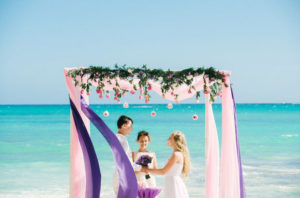
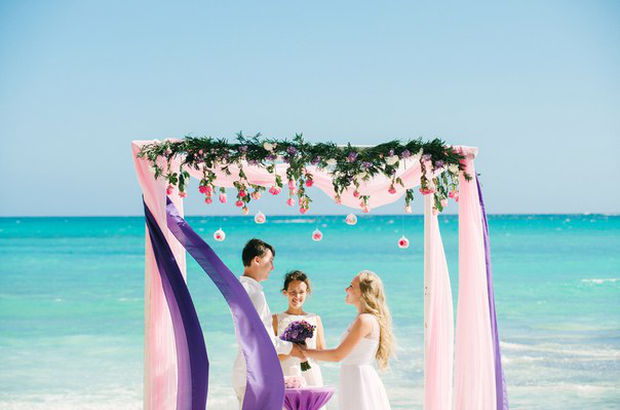
Every woman dreams of a wedding from a young age. Many girls imagine themselves to be princesses at their own ballroom of life, which means that the celebration requires certain traditions. A great choice for such dreamers will be a wedding in the Dominican Republic, which will bring life to life.
First of all, a wedding in the Dominican Republic is a stylish and unique celebration. Currently, it is still available to almost everyone.
However, this ceremony also has other positive aspects, which are fulfilled by the specific features of the paradise coast:
- engagement rings delivered in a sea shell;
- photo session on white sand beaches and expensive yachts;
- cheerful carnivals and parties;
- dinner at the restaurant or on the beach after the wedding.
A wedding on the beach with traditional island music, as well as with parrots instead of guests, is an exciting, interesting and romantic adventure that will be the beginning of a honeymoon.
To make the ceremony really fantastic, and as in the picture, you have to entrust this matter to professionals who will take care of all possible details for you.
This is every woman’s dream
I want to say right away that a wedding on the island is an official ceremony. Of course, there will be a priest who issues a certificate and all other traditional rituals, but it should be noted that the marriage will not be officially registered. So, a wedding in the Dominican Republic is suitable for those who are already married, or those who want to have an informal cerempny. And paradise islands are a good start.
After spending time in the Dominican Republic, the newlyweds will feel all the charm of the island, and the honeymoon will become really sweet.
It is worth saying that the Dominican Republic attracts people from all over the world not only for their wedding ceremonies and lush carnivals.
Other attractions of the island:
- nature and unique climate;
- diving and surfing;
- friendly residents;
- exotic food;
- carnivals and festivals;
- treasure of pirates and much more.
However, on the very top of the attraction is a wedding ceremony. In the end, it can be held at any time of the year on the island. Even in winter time it will always be sunny and bright. In addition, there is no need to worry about the organization of the ceremony, as there are now many agencies that will gladly accept the offer to organize a wedding on a paradise island.
https://republicapro.com/

By Heather Lincoln
Have you ever thought about how cool cassava is? Widely grown throughout Latin America and the Caribbean, this popular root vegetable is a staple in the Dominican diet. The Dominican Republic’s tropical climate makes an excellent environment for its growth and because of cassava’s versatility and tolerance, it has been revered since the Taino, Carib, and Arawak population.
Here are 10 things you might not know about cassava:
Cassava can take up to 18 months to harvest and needs 8+ months of warm weather to grow. It does best in full sunlight.
Cassava is able to tolerate drought and grow in poor soil, and naturally resists pests and plant disease.
It can be stored for two years in the ground without rotting!
Cassava is known by many names including yuca, manioc, mandioca, yucca root, casabe, and tapioca.
People with dietary constraints will appreciate that cassava is gluten-free, grain-free and nut-free.
The ways to make cassava are numerous— boil, bake, steam, grill, fry or mash it, as well as add it to stews!
There are two varieties of cassava – sweet and bitter. Bitter cassava is processed into breads, pastries and cakes.
Cassava is high in calories and carbohydrates.
The American Cancer Society warns that people with a latex rubber allergy might be more susceptible to an allergy to cassava.
Cassava should never be eaten raw — it contain traces of cyanide that can be deadly! The Bill and Melinda Gates Foundation is helping to breed cassavas with less cyanide.
When properly prepared, cassava poses no problems to your health. It needs to be soaked, dried, and cooked. Because of its long life-cycle and easy agriculture, cassava can act as a source to help prevent hunger in impoverished communities. Delicious in many forms, it’s often eaten for breakfast, lunch, and dinner. It’s no wonder why we find so many ways to enjoy it!
Source: Casa de Campo Living

The Province of Samana, on the country’s northeast region, offers visitors much more than its beautiful white-sand beaches. Its spectacular natural resources and the friendly attitude of its citizens, has turned the region into a fascinating tourism destination.
Its mountains and rivers offer excellent possibilities to visitors looking for adventure tourism. Other possibilities are horseback riding, hiking and ziplining, just to mention a few. By far, the Province of Samana offers tourists a wide range of fun activities, such as:
Samana 4×4:
This is a unique experience for the more adventurous visitor. The offer consists of traveling to some of the province’s most beautiful destinations on board safari-like vehicles that will take the guests through beautiful mountains, valleys and local villages. This is an excellent option for those who also want to meet and interact with the local communities, and enjoy snacks consisting of native fruits, fresh coconut milk or a warm cup of freshly brewed coffee and/or hot cocoa.
“Los Haitises” National Park:
Situated in Samana Bay, this rainforest is situated along the southern part of the Bay of Samana. The area is one of the country’s top nature reserves, where visitors can visit caves where the Tainos – the original inhabitants of the island – painted symbolic drawings that have lasted through the ages. The reserve is also known for the incredible number of birds that live or migrate through the area.
Las Galeras:
This old fishing village is situated next to the Bay of Rincon. Well organized tours include hiking and camping.
Limon Waterfall:
The 40-meter waterfall can be reached with the help of special guides, either on foot or on horseback.
Scuba Diving:
The area is also known for excellent scuba diving possibilities due to the beautiful coral reefs found along the north coast of the Bay.
Source: Access DR

Situated a very short distance from the eastern region city of La Romana – 1.5 hours east of Santo Domingo and 30 minutes west of Punta Cana – the Butterfly Park is found along the banks of the Chavon River. This beautiful area was used for location scenes in the movies “Apocalypse Now” and “Rambo II.” Surrounded by lush tropical vegetation, the Butterfly Park is the largest in the Caribbean.
A few steps from the region’s main highway tour members will board a wooden barge will transport the tour members to the town known as “Gato.” The crossing is done with the sounds of typical merengue music, the national rhythm of the Dominican Republic. Once across, guests are transported to Caribbean VIP Tours, a very special place because it is home to the largest butterfly park in the country’s eastern region.
During the last two years tourists from Germany, Holland and Italy have participated in special tours that have taken them to areas where they can become familiar with the beautiful landscape of the Dominican Republic. The guided tours start off with a walk through a path lined with wild flowers and lush vegetation. Native birds are also a popular sight in these tours. At the butterfly park, tour guides will give guests a full explanation of the cycle of life of a butterfly.
This is truly a magical and unforgettable place to experience, surrounded by hundreds of colorful butterflies that flutter all around.
In the park, it is common to see the impressive black and yellow Tiger Butterfly settle quietly on the shoulder of one of the visitors. During the tour, guides will provide all the information necessary on the importance of these noble insects in the local environment. For more information, please visit: www.tanamabayahibe.com.
Source: Access DR