DR News
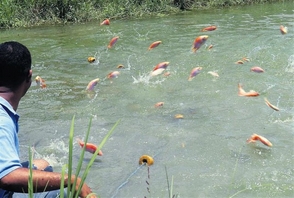
In the last 20 years, the production of fish in the country has decreased by over half. In 1996, there were 18,000 tons of fish, but in 2006, it was down to 11,104 and by 2015 down to 8,944. Unsustainable fishing practices, coral reef loss, overfishing and climate change are identified as reasons for the decline.
The information was given in the “Third National Communication of the Dominican Republic to the United Nations’ Convention on Climate Change” which was published recently.
In addition to the reduction in fish production, the number of fishermen and fishing boats has also declined, probably as the trade is not as lucrative as before, and in addition as the fishers know, there are less fish forcing many fishers to look for other sources of income.
The report goes on to say that fishing contributes only 0.3% to GDP and most consumption is in the tourist areas in the east of the country. Many of the resorts also have to import fish for their customers as the local production cannot satisfy the demand.
In the Dominican Republic, excluding freshwater fish, there are around 300 species of fish plus crustaceans and shellfish that are found in mangroves, coral reefs and the open sea.
Samaná is the province with most fishermen; in 2015 there were 2,161, and 951 fishing boats.
Source: DR1, Listindiario
March 27, 2018

The Major League baseball pitcher, Bartolo Colón, has been sued in the Dominican courts by two doctors who carried out stem cell treatment on his which enabled him to extend his career from 2011 to date, and are asking for the payment of outstanding bills according to an agreement made between the physicians and Colon. The complaint filed in court claimed that the payment owned to the doctors was linked the success of the procedure.
Doctors Leonel Liriano and Sergio Guzmán allege that they treated Colón in 2010 when it appeared that his career in the Major Leagues was all but over. But thanks to the work of Liriano and Guzman, Colon was able to continue playing at a high level while earning a salary of more than US$45 million.
The physicians explained that the agreement reached with Colón was that if the treatment was not a success he would not be required to pay. However, if the procedure was successful (as it was) Colon had agreed to pay the doctors a percentage of his salary. In the lawsuit, they are asking for US$4 million.
The doctors maintain that they did not only help return Colon to full health and wellbeing but that they revitalized his career that led directly to his ability to earn several big paydays. With his “new” right arm, Colon became the third Latin American pitcher with the most Major League victories after Nicaraguan Dennis Martínez and his compatriot Juan Marichal.
The physicians noted that due to problems with his pitching arm, Colón was out of baseball in 2009 and 2010 seasons, having left Boston Red Sox the previous year. In March 2011, Colón allegedly accepted the doctors’ proposition and underwent stem cell transplant to repair the damaged tissues in his shoulder in the Centro Union Medica Clinic in Santiago in 2011.
Bartolo Colón did not have money to pay for the procedure at the time and hence agreed to pay 1% of his salary to those who participated in it. The lawsuit claims that Colon has not made payment to the treating physicians.
Source: DR1, Almomento
March 27, 2018
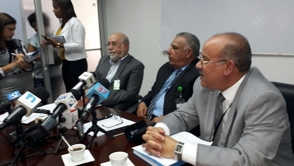
The Ministry of Public Health warns the public that there is an increase in the incidence of influenza in the country. The AH1N1 strain is spreading. Four deaths have been confirmed of the 98,909 cases reported to the Ministry of Public Health.
Raquel Pimentel, director of Epidemiology at the Ministry of Public Health, stressed the importance of preventing the sickness by limiting its expansion by taking measures such as the sneezing into the bend of the elbow, not the hand. Sneezing into the arm is being encouraged as one of the better ways to avoid the spreading of droplets from sneezing and coughing. When sneezing into the hands, these droplets can be passed on to doorknobs, elevator buttons and other surfaces people regularly touch. Vulnerable persons with flu symptoms should seek medical care.
The Ministry of Public Health also reported one death attributed to diphtheria, a Haitian child in El Chucho, Los Alcarrizos in northern Santo Domingo. The child, four year old Wender Vicente, had arrived in the Dominican Republic on 21 March and according to his mother, 29 year old Sheyla Filguera, he seemed to be in good health. However the following day he had a fever and he was taken to hospital on the Friday where he was admitted to intensive care being unable to breathe. He died on Sunday 25 March.
The Ministry of Public Health subsequently issued an epidemiology alert and asked all parent to make sure that their children have received the correct diphtheria vaccination protocol that consists of three doses before the age of one year, a booster at 18 months and another shot at aged four. Those who have not received this battery of shots should go to a health clinic or hospital to be vaccinated.
A growing number of Haitians frequently travel back and forth from Haiti to the Dominican Republic. There is an outbreak of diphtheria in Haiti. Many residents are concerned that a highly mobile population may bring the diphtheria virus into their community. To prevent the spread of diphtheria, the Ministry carried out vaccination program in the area on Sunday, 25 March 2018.
The Ministry has said there is no need for alarm in the general population, and that there is sufficient supplies of the vaccine. Those who have been vaccinated have nothing to fear, early diagnosis of diphtheria would mean there is no risk of death and that the child who died was only diagnosed with diphtheria clinically and the results of laboratory tests are not yet available.
Source: DR1, Listindiario
march 27, 2018
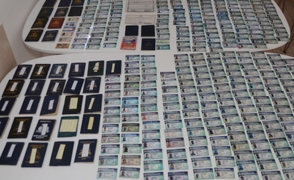
The Migration Agency (DGM) reported the seizing of 329 altered National Foreigner Status Legalization (PNRE) ID cards in migratory inspections carried out in the provinces of Dajabon and Santiago last week. Of these, 165 were forged and another 164 were being used by persons who were not issued the ID cards. The irregularities were detected using biometric readers and consulting the PNRE database. Those found in possession of irregular cards are to be deported.
The DGM says that it has seized 3,985 PNRE cards with irregularities in operations in Dajabon, National District, Elias Piña, Greater Santo Domingo and Santiago.
News reports have mentioned the scheme of people traffickers including the PNRE cards as part of the smuggling scheme. The use of biometric readers has enabled the authorities to identify the lack of matching between the holder of the card and the person to whom the card was issued.
Source: DR1, listindiario
March 27, 2018
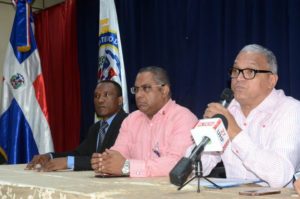
The Ministry of Interior and Police announced its “Safe Holy Week 2018” program which will begin next Wednesday, 28 March 2018 as the exodus starts with hundreds of thousands leaving the big cities for beach and mountain destinations and small towns. The comprehensive public safety program aims to prevent traffic accidents, general intoxication and violence nationwide during the four-day Easter long weekend.
One of the measures is to ensure a reduction in drunk driving. Inspectors will be posted at the entrances and exits to beach and mountain destinations. These inspectors belong to the Department of Control of Alcoholic Beverages (COBA) and will be authorized to search vehicles and if the driver is suspected to be under the influence of alcohol, the vehicle will be detained until the person is deemed to be sober and in condition to drive without representing a danger to himself or herself or third parties.
Participating in the operation will be members of the National Police together with members of the Red Cross and Ministry of Public Works road patrol, Asistencia Vial (829 688-1000). Thousands of Civil Defense volunteers will be posted at important areas around all of the nation’s highways.
There will be several command posts stationed on the most important intersections of the nation’s highway system, and assistance will be available at places such as Higuero, in North Santo Domingo, Yamasa, Boca Chica, Palenque, San Cristobal, Juan Dolio, Bani, Salinas, Los Patos, Manoguayabo and Nizao. There were also be checkpoints in Cambita, San Cristobal; Santiago, San Francisco do Macoris, Moca, Salcedo, Ocoa, and at the El Morro in Montecristi.
Source: DR1, Elnacional
March 27, 2018
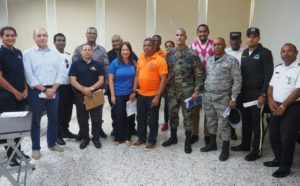
Thursday afternoon, March 22 there was a meeting in the City Hall of Sosúa. For this meeting, representatives of police, fire, military and civil guard were present. The meeting was led by Mayor Ilana Neumann. They consulted each other about splitting the tasks and maintaining order during Semana Santa (Easter week). There will be plenty of extra police on the streets to prevent disturbances. Also, more than 100 volunteers from the Voluntary Civil Guard and Red Cross will be on standby to provide assistance in case of accidents. At the entrance to the beach bags are checked for prohibited glassware. Glass bottles of liquor are forbidden in these days and the bars serve all the drinks in plastic cups. This will be strictly controlled.
Sunday almost everyone goes back home. Unfortunately, many will then again get behind the wheel although they have been drinking. So the police will be extra vigilant on drunk people behind the wheel.
Source: Sosua News
March 27, 2018
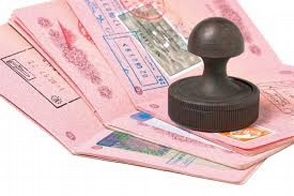
The Dominican Republic is in sixth place among the 12 countries in the world that received more than 100,000 tourist visas to visit the United States in 2017. The DR is the fourth country in Latin America in number of tourist visas received for its nationals.
During 2017, US consulates around the world issued a total of 9,681,913 nonimmigrant visas of which 80% were in the category of tourist visa, according to migration specialist Roque Leonel Rodriguez. Of these, Dominicans received 205,460 non-immigrant visas of which 194,557 were as tourists.
In the world ranking, the most non-immigrant visas for the United States were issued to citizens of the following countries: China with 1,452, 834; India (599,883); Brazil (520,589); Argentina (353,555); Colombia (333,433) and the Dominican Republic (194,557), followed by Ecuador in seventh place with 168,103, Russia, (164,944), Israel (163,495); Nigeria (155,940); Philippines (115,712) and Vietnam (100,423).
In the last few years the number of visas given to Dominicans has increased and in 2017 it was the second year it went over 100,000 as in 2016 there were 146,901 non-immigrant visas for Dominicans and last year 205,460.
Source: DR1, Listindiario
March 26, 2018
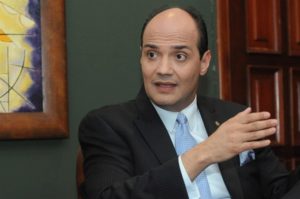
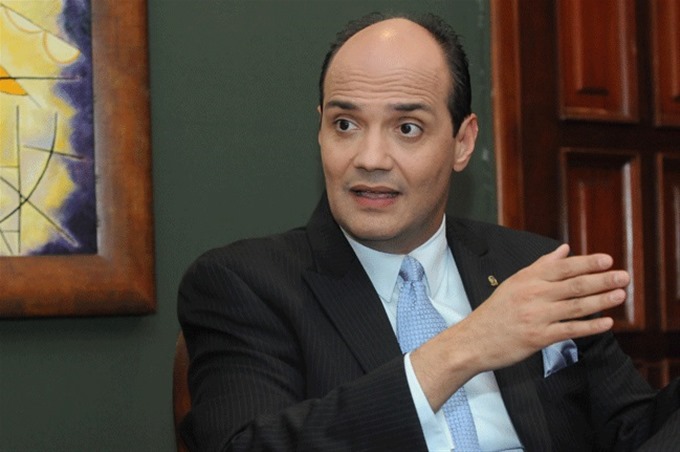
According to a March 2018 Gallup poll for Hoy newspaper, opinions are divided about the participation of a grandson of the former dictator, Rafael Leonidas Trujillo, in the 2020 presidential election. Ramfis Domínguez Trujillo has spoken of his aspirations to participate in the 2020 presidential election.
Approximately 51% of those polled for the March 2018 Gallup-Hoy poll oppose the idea of a Dominguez-Trujillo presidential run. However, 42% of those polled would not oppose his right to run for the country’s highest office.
Domínguez Trujillo is the son of Angelita Trujillo, daughter of the dictator Rafael Leónidas Trujillo, who governed the country with an iron fist for 31 years.
The highest rate of opposition to his running for president comes from residents in rural areas, with 58%, and women with 54% and among adults aged 55 or more with 56.4%.
In addition, of those who sympathize with the ruling Dominican Liberation Party (PLD), 59% rejected Trujillo running for President, 50.2% of those supporting the Revolutionary Modern Party (PRM), 43,3% of those sympathizing with the Dominican Revolutionary Party (PRD) and 34.2% of those who like the Social Christian Reformist Party (PRSC).
Trujillo is president of the Partido Esperanza Dominicana (PED), a political party that has yet to be recognized by the Central Electoral Board (JCE).
In addition to JCE recognition, a potential Domínguez Trujillo candidacy for president must clear other constitutional and legal issues. For example, the Dominican Constitution establishes restrictions to dual nationals running for President, including the requirement that the aspirant would have had to have resigned the other nationality and have lived in the Dominican Republic 10 years before aspiring to the Presidency. Trujillo was born in the United States.
Likewise, Law 5880 dating back to 1962 prohibits activities that celebrate or pays homage to the dictatorship of Trujillo. This law is still in effect and was confirmed on 19 March 2013 by Resolution 1140 of the Attorney General Office when Domínguez Trujillo carried out a legal consultation. At the time, attorney general Francisco Domínguez Brito confirmed the ban on pro Trujillo activities.
Source: DR1, http://eljaya.com
March 26, 2018

The concerns of visitors to the Dominican Republic about roaming charges could soon become a thing of the past. Representatives of 19 countries of the Americas agreed to end roaming charges for cell phones users. The agreement was announced in a meeting of the VII Assembly of the Inter-American Telecommunications Commission (Citel) in Buenos Aires, Argentina.
As part of the 2018-2022 Action Plan the Citel representatives terminated roaming charges so that citizens can communicate without barriers across countries.
The end of roaming charges will benefit users in the United States, Canada, Argentina, Uruguay, Peru, Paraguay, Brazil, Colombia, Ecuador, El Salvador, Costa Rica, Nicaragua, Panama, Mexico, Belize, Trinidad and Tobago, Dominican Republic, Bahamas and Barbados.
This means that users can call, use the Internet and send messages for the same price to and from all of the signatories as if they had been in their own country.
Other themes discussed were the rolling out of more telecommunications’ services, strengthening cyber security, and to improve Internet services and promote the development of ecommerce.
Source: DR1, Listindiario
March 26, 2018
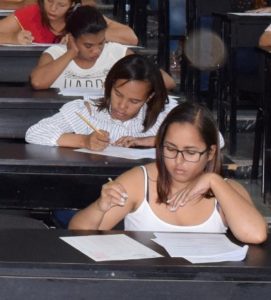
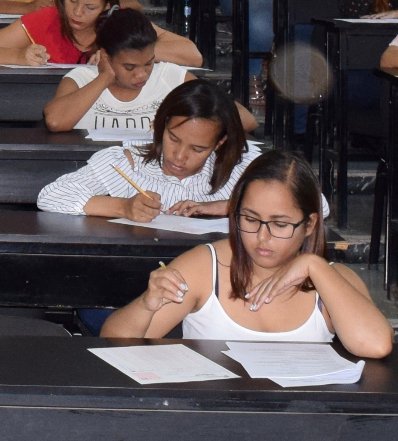
Only 661 graduates of Dominican universities passed the standardized national test that establishes the candidates have sufficient knowledge and skills to practice medicine at public hospitals in the Dominican Republic. Some 4,624 graduate physicians sat for the exams last month.
Wilson Roa, president of the Dominican Medical Guild (CMD), said the low pass rate is a warning that universities may need to revise their curriculum and programs. Of the 4,624 physicians, 2,019 were graduates of the state university, UASD, 821 of Utesa and 605 of the UCE.
Source: DR1, Eldia
March 26, 2018