DR News

Thursday afternoon, April 5th, residents of Los Castillos (Sosúa) held a protest meeting. The residents are outraged about the monthly water bills the water company CORAAPLATA sends them. Although the water supply leaves a lot to be desired, they often don’t have any water for days, but the bills remain equally high. So the residents have to pay for water they never received. At the meeting the residents decided to form a delegation to go to Puerto Plata to present their grieves to the management of the water company. It has been proposed to remove the water meters and then return them to the water company. They also require that bills be reduced because of the lack of water supply. They also want an improvement on the water supply.
Source: Sosua News
April 10, 2018
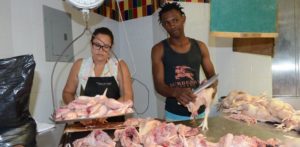
Supermarkets, restaurants, and local “pica pollo” establishments are having a lot of trouble with their supply of poultry both in Santo Domingo and in the rest of the country, apparently because the poultry producers reduced their stocks by some 30% and now fresh killed chickens are selling for RD $65 and RD $70 per pound. Representatives from different sectors that consume poultry products complained that the producers are rationing their supplies by as much as 30% and the gondolas in many supermarkets are sometimes nearly empty. Regarding housewives, the lack of poultry requires them to find other alternatives to chicken, which is the least expensive meat in the Dominican diet.
Dionisio Quinones, the secretary-general of the National Union of Economic Supermarkets, said that their supply has been reduced by between 25% and 30%. One area manager at a Plaza Lama said that they ask for 500 pounds a day of poultry and are barely receiving 100. The owner of a small restaurant on Independence Avenue, Altagracia Paniagua, said that she has had to work miracles in order to obtain a small amount of poultry for her clients. She said that at 8 o’clock in the morning none of her usual suppliers had any chickens left. As a result of the scarcity of poultry in the local market, other products such as eggplant, beef and pork are going up in price.
Source: Dr1, Elnacional
April 8, 2018
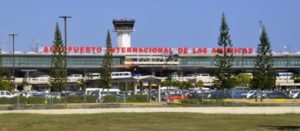
More than 250,000 Dominicans have active travel restriction cases against them that theoretically prevent those affected from leaving the Dominican Republic. There are also some 14,000 foreign residents, mostly Europeans, who are not allowed to leave the national territory because of different judicial proceedings against them.
Sources at the office of the Attorney General of the Republic and at the Directorate General of Migration revealed that the foreigners with travel restrictions include Spaniards, French, Germans, Italians, Chinese, Americans, and several other nationalities and are generally involved in outstanding judicial cases regarding property, real estate, physical aggression and child support issues.
The travel restrictions for Dominicans are usually requested by judges and prosecutors and are set forth by the Attorney General of the Republic and notified through officials at Migration.
According to the reports relating to Dominicans, most travel restrictions are related to open cases of crime, including accusations of sexual harassment, corruption, falsification of documents, human trafficking, drugs, traffic accidents, and other issues.
Sources revealed that there are travel restrictions in force as far back as 20 years ago and for reasons which for the most part have disappeared but still remain on the books and in the archives both at the Attorney General’s office as well as at the offices of Migration.
Among those Dominicans who cannot travel are former officials, former mayors and city council members active and retired members of the top military and police commands, former diplomats, active and former baseball players, businessmen, bankers and others. According to the report many of the persons with travel restrictions have made numerous attempts before the judicial authorities to petition the lifting of the disposition, often with no positive results.
Source: DR1, Elnacional
April 8, 2018
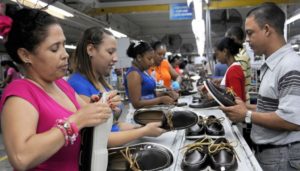
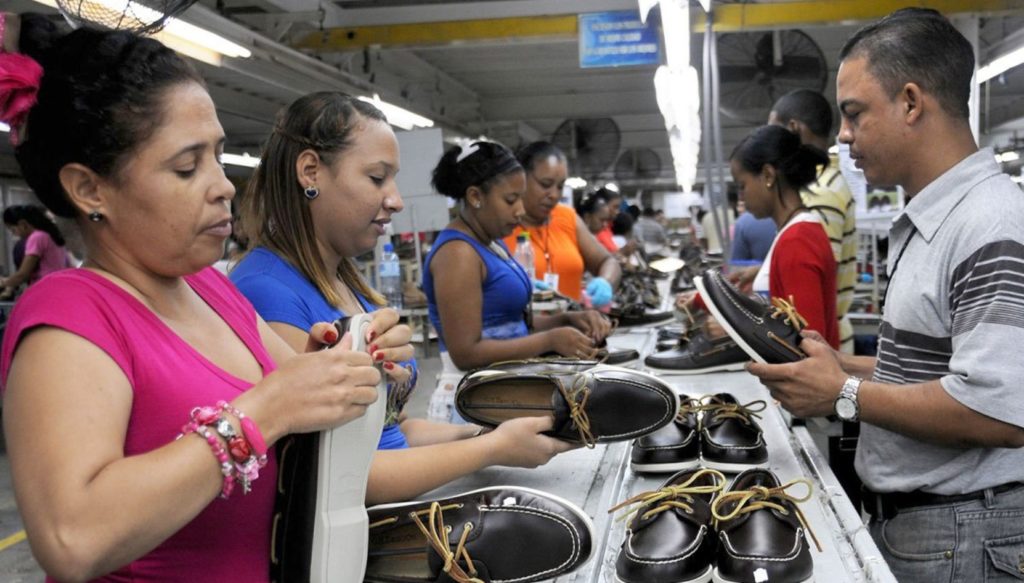
The Dominican Republic can create 350,000 new jobs in three years if new policies are put in place to enhance the competitiveness of tourism, footwear, medical devices, pharmaceuticals, electrical and electronic devices and call centers, five sectors with great export potential identified by the Association of Industries of the Dominican Republic (AIRD). AIRD sees potential to increase exports by US$2.7 billion a year.
The potential for the tourism sector is estimated at US$4.6 billion through 2021 with the potential to create 183,000 new jobs. The tourism sector has generous tax incentives.
Medical devices manufacturing, that operates in tax free zones, could generate US$3.2 billion in exports and create 47,000 jobs. The electric and electronic deices sector (also operating in tax free zones) could contribute through 2021 US$2.7 billion and create 32,000 new jobs. Meanwhile, call centers have the potential to generate US$1.2 billion and create 53,000 jobs. Footwear is estimated to generate 37,000 new jobs and US$1 billion in exports.
Circe Almanzar, executive vice president of AIRD, says to achieve these objectives of exports and jobs, beyond the present focus on tax incentives, better supplier policies are needed for savings in logistics and strengthening of the local market. Almanzar said that this means the government needs a change in vision to enact policies that support the industries, and not necessarily through tax incentives. “To grow public policies are needed, and we have a vacuum of public policies directed to these sectors,” she said. AIRD advocates for a public private alliance to achieve competitiveness.
The president of the Association of Industries de Herrera and province of Santo Domingo, Antonio Taveras Guzmán corroborates that changes to the development model are needed. “We need a strong state but a smaller government,” he said. He urged efforts begin to promote the true development of large, medium-sized, small and micro Dominican industries. “The country needs a real commitment, to leave politicking aside, to face the challenges industry confronts,” he said.
Source: DR1, Eldia
April 8, 2018

According to the Central Bank, the rate of depreciation of the peso has accelerated at the closing of the first quarter of the year, estimated at 2.07%. On the last working day of March, the 28th, the United States dollar was at RD$49.3001, whereas the previous year closed at RD$48.2993 for each dollar.
Over the last 12 months the rate of devaluation of the peso to the American dollar has been at 4.1% but the major part has been this year, with deprecation at 1.39% over the first quarter.
The reason, according to economists, is that the Banks are not selling a high amount of dollars and there is not sufficient US currency circulating to meet the demand of businesses.
According to government sources, businesses and lenders in the Dominican economy are holding on to US dollars for speculative reasons and that this has led to increased pressure on the peso.
But the tensions surrounding the exchange rate are not just related to foreign currency as the net international reserves were at US$8.05 billion at the end of February 2018 which is the highest amount of savings in dollars which the country has ever seen.
Source: DR1, DiarioLibre
April 4, 2018
Customs Agency made clear on Tuesday, 3 April 2018 that personal items are still duty free. Mentioned among these are clothing, laptop, camera, cell phone, and gifts for up to US$500. “The rights of passengers continue as they were. It is not true that duties need to be paid on the items categorized as personal luggage,” said the DGA in a press release.
The DGA says that what has changed is the Customs form that was modified to comply with Law 155-17 on Money Laundering and Financing of Terrorism.
Source: DR1, DiarioLibre
April 4, 2018
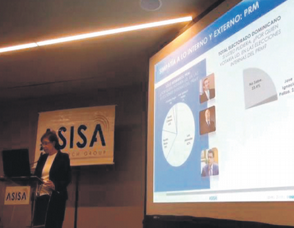
81% of Dominicans polled for the March 2018 Asisa Research/Listin Diario poll believe Haitian immigration is detrimental to the Dominican Republic. 35.6% responded that Haitian migration is a burden for public health and the national education system. Haitian migrants benefit from the free public health and education services available to all in the Dominican Republic. 41.5% relate illegal immigration to the increase in crime and less jobs for Dominicans (40%).
When asked about recent measures implemented by the government to check Haitian immigration, 68.3% said that little has been done or actions have not been effective. Only 28% responded these have been effective or somewhat effective. The poll was carried out 17-19 March 2018 and 2,002 persons eligible to vote were surveyed.
Source: DR1, Listindiario
April 4, 2018

The Ministry of Foreign Relations says that soon document legalization and apostille services will be available 24/7 online at the mirex.gob.do website of the Ministry. Upon making the announcement, Foreign Minister Miguel Vargas said the digital service is in the direction of making government services more timely, economic and accessible to the population. He explained that the project is focused on the modernizing and strengthening of capacities of the Dominican government to efficiently respond to the growing and changing needs of the population.
The project is the responsibility of the vice ministries for consular and migratory affairs and that of economic affairs and international cooperation and is part of the Bilateral Cooperation 2017-2019 agreement with Colombia.
Source: DR1, Mirex
April 4, 2018

According to an official from the National Confederation of Agricultural Producers (Confenagro) Dominican exports of avocados were valued at more than US$30 million last year, and increase of more than 150% since 2006 when they were scarcely US$11 million in export sales. The data was shared by Confenagro during the meeting when the National Avocado Cluster was formalized. More than 50 avocado farmers attended.
Most Dominican avocados are shipped to the United States, Spain, France, Holland, Great Britain and Italy. World production is around 4.7 million tons and the Dominican Republic has around 8% of the production or 400,000 tons, making it second in the world in avocado production behind Mexico that accounts for 31% of the total. The DR is the twelve largest avocado exporter in the world.
Economist Hecmilio Galván, executive vice president of Confenagro, said that around 3,000 to 4,000 producers have more than 300 tareas, spread out in the provinces of San Cristóbal, Elías Piña, Pedernales, Bahoruco, San Juan, Ocoa, Azua and Barahona. There are also farms in Puerto Plata (Altamira), Moca (Villa Trina), La Romana, Hato Mayor and El Seibo.
The main varieties of avocado grown in the country are Carla, el Semil 34, and Hass (a small avocado with a purple skin).
Source: DR1, Almomento
April 4, 2018

According to unofficial statistics, Diario Libre reporters estimated that at least 39 people died in the country during Easter Week, which is almost double the official figure in 2017. In the Cibao area and the Northwest, 22 people died from Thursday to Sunday in different incidents, there were 11 deaths in the east and six in the south. The most alarming local death toll was in Cotui, where three people drowned and a motorist died in a traffic accident.
Nevertheless, according to the Emergency Operations’ Center (COE) however, the figure was 30 deaths in traffic accidents and drownings, 17 of which happened on the road and public beaches and bathing spots, and the other 13 in areas where bathing had been prohibited.
According to General Juan Manuel Mendez, director of the COE, there were 741 traffic accidents involving 843 people. Of the accidents 556 involved motorcycles, 145 light vehicles and 11 heavy vehicles. There were 287 collisions on highways and main roads and 454 on urban roads.
Méndez said that 4,063,260 people travelled on the roads, with more than 73,000 cases of roadside assistance having been reported.
Source: DR1, DiarioLibre
April 4, 2018