On Sunday and Monday, 26-28 August 2018, the Claro telecom system was down for hours, making for a crisis for those who depend on the mobile and Internet telecommunications. The company has apologized but not given explanations.
Likewise, Claro is alerting its customers against fraudulent calls. In a note shared on the telecom company’s social media, the company alerts its customers to not return calls to areas with area code 375, 371, 370, 563, 255 because this could be fraud. The calls are being made to persons and then the caller makes it appear as if the call has crashed. The person usually returns the call and then is a victim of fraudulent charges of upwards of EUR30. Worse still, the system allows the hacker to steal your list of contacts and financial information. When receiving a call from any of those area codes, just let the telephone ring, says Claro.
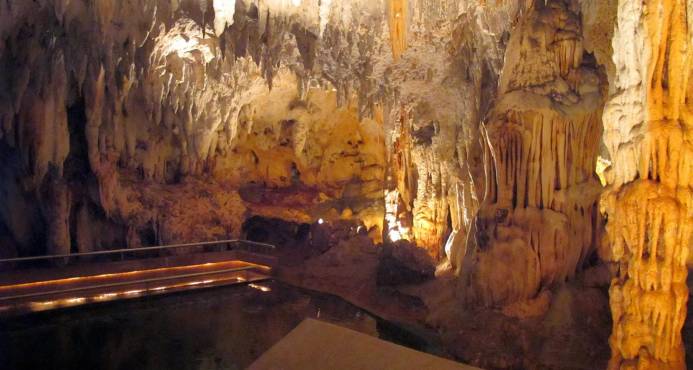
A source told Diario Libre that the Cueva de las Maravillas Foundation seeks to privatize the Cueva de las Maravillas property so that squatters do not continue to illegally occupy the protected area. The foundation, seeking to privatize 16,540.28 tareas (1 tarea = 629 square meters), said that already 3,000 tareas have been irregularly occupied. The source says that while the property continues to be under the legal ownership of the State Sugar Council these are susceptible to illegal occupation or invasion.
“The property has continued to feed a huge appetite for people who are seeking to squat on the protected area’s land. At the moment there are more than a hundred invaders in the northern part, ” the source told Diario Libre, while complaining about the lack of action on behalf of the provincial authorities despite the irregular situation.
The Foundation source said that in 2014, the CEA agreed to donate the 16.540.28 tareas to the Cueva de las Maravillas Foundation. The Foundation would manage, conserve and protect the natural resources and physical structures of the Cave of Wonders anthropological reserve, the preservation of its caves, its pre-Columbian identity, flora and fauna.
The contract then passed to the National Congress for final approval. In March 2018, the Chamber of Deputies remanded to the commission of contracts the reference to the Cuevas de las Maravillas. The logic of the contract was questioned by some legislators.
Then on 20 August, the Ombudsman Zaida Medina submitted a nullity action against the act of donation before the Superior Administrative Court (TSA). The body emphasizes that it is a fundamental duty of the Ombudsman to contribute to safeguarding the fundamental rights of all the inhabitants of the country and that this includes collective and diffuse interests, such as the environment, protected areas, cultural and archaeological heritage, as well as the general interest of the State.
The appeal to stop the transfer of the property has the support of the Academy of Sciences that argues that the areas or lands that are under the protection regime of protected areas constitute an inalienable and un-attachable component of state heritage and the ownership of such property cannot be transferred to any individual or private entity.
The Central Bank announced a new one peso coin is in circulation starting Monday, 27 August 2018. The coin is dated 2017 and has the inscription “peso dominicano” under the national coat of arms. The word “dominicano” is added to the old coin that is still valid.
The president of the Dominican Numismatic Society, Isaac Rudman, explained that the adding of the word “dominicano” to the Dominican peso is to comply with Art. 299 of the 2010 Dominican Constitution. The coins now in circulation just say peso, because the name of the country, Dominican Republic, is on the same side of the coin.
Meanwhile, the coordinator of the School of Economy at the Instituto Tecnológico de Santo Domingo (Intec), Rafael Espinal, criticized the minting of the new 2017 coin. He said the cost of minting the coin is more than the value of the coin itself. He said the coin is but a coin collector’s item.
The Dominican hip hop group Da Republik received enough support from the general public to advance to the semi-finals of the NBC reality show, America’s Got Talent. The group performed to “WTF (Where They From”, made known by Missy Elliott and Pharrell Williams. The dance troupe received the backing of judge Simon Cowell.
Those behind the development of women’s volleyball in the Dominican Republic can proudly say that all Dominican team players are “made in the Dominican Republic.” This is contrary to many other winners of medals in the Central American & Caribbean Sports Games that train abroad or are residents in developed countries where they are part of advanced sports systems. This is the case in track and field, artistic skating, swimming, basketball, baseball and many others sports.
The success of the Dominican women’s volleyball is the result of a project created by Cristóbal Marte, president and founder of the project that creates the conditions so that young girls can look to volleyball as a way of making a good living. The project secures high yield contracts abroad for the most outstanding players, but they keep the commitment to play for the national teams, at the most important events.
A report in Listin Diario explains that the project that began in 1997 makes it possible for all national women’s team players to come up through the ranks of the local program. The Dominican Republic women’s team is ranked 9th in the world. The Dominican Republic team has won four Pan American Cups (2008, 2010, 2014 and 2016, and three Norceca championships (2009, 2010 and 2017). Likewise, it has won the gold medal in the past five Central American & Caribbean Games. It also has made it to the Athens (2004) and London (2012) Olympic Games. In 2003, the Dominican team won the gold medal in the Pan American Games.
The National Teams Project since 2008 has been coached by Brazilian Marcos Kwiek.
On Sunday, 19 August 2018, the Dominican team won the U-23 Pan American Cup in Peru, showing the quality of the Dominican teams. This was the team’s fourth straight victory in the tournament. Likewise, in 2015, the Dominican U-20 team won the World Championship that took place in Caguas, Puerto Rico. The DR won silver in the Sub-18 World Championship in Argentina 2017, and silver in the U-23 World Championship in Turkey in 2018.
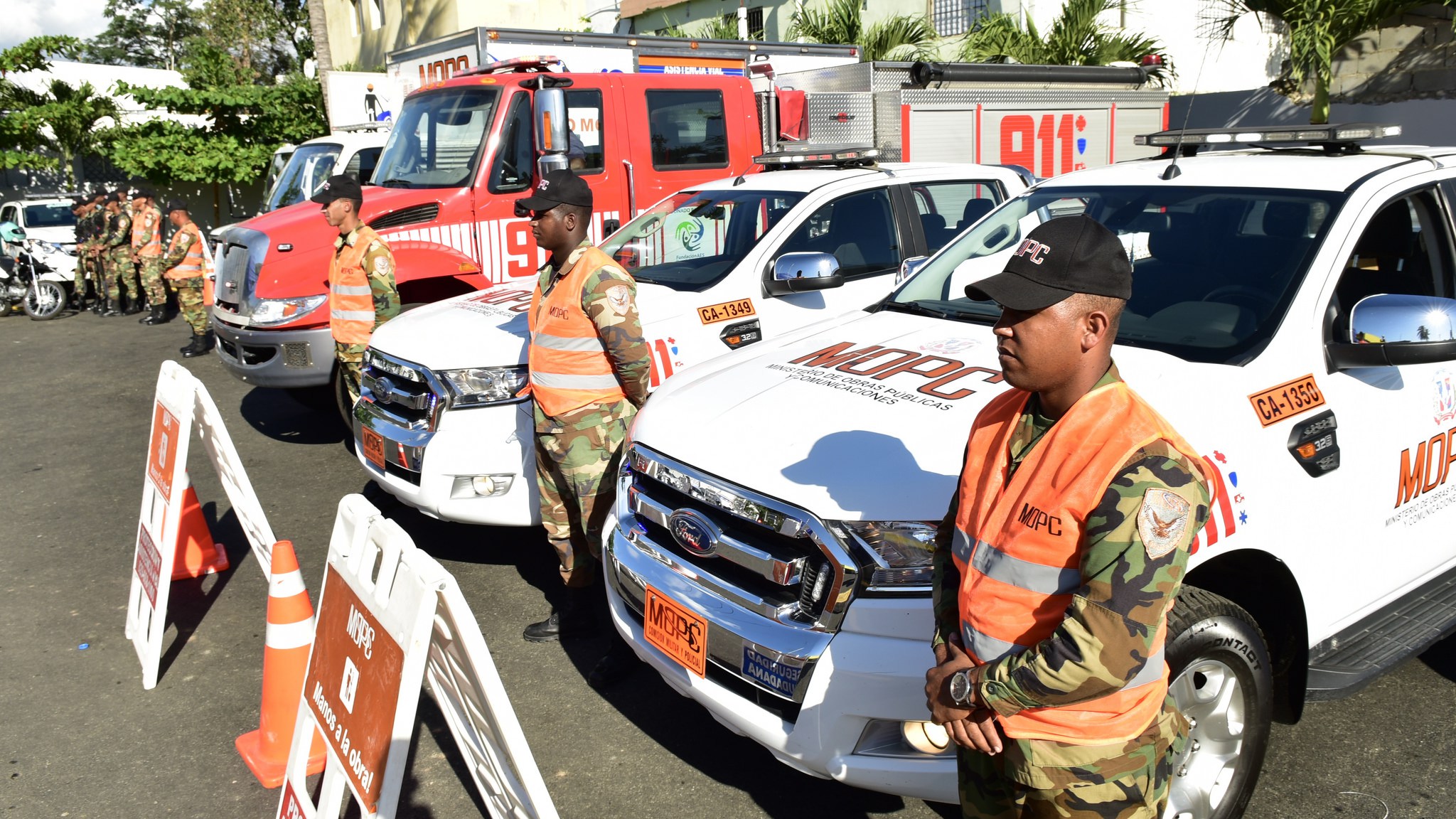
Residents and tourists alike in the Juan Dolio and San Pedro de Macoris areas will now benefit from the start of the 911 Emergency System in the province of San Pedro de Macoris. President Danilo Medina visited San Pedro to mark the start of the service. The service addresses security and health emergencies. The rapid emergency response service integrates public health facilities, fire and police stations and Ministry of Public Works offices. There is no charge for the service. As reported, a staff of 300, including eight physicians, will serve the community 24/7.
The Medina administration says that with the entry of San Pedro de Macoris into the service, the 911 Emergency System now covers 68% of the Dominican population.
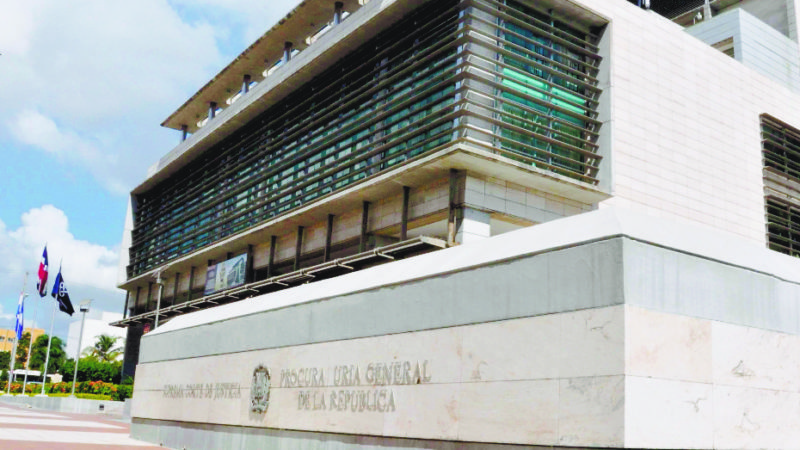
On Monday, 20 August 2018, the former directors of the Municipal District Board of Cabarete, Puerto Plata province, Gabriel Antonio Mora Ramírez (Canoa) and Eddy Ramón Morfe, were arrested following the decision by the Supreme Court of Justice to confirm the two-year prison sentence following their conviction for embezzling RD$185 million while they were in charge of the district of Cabarete from 2004 and 2010.
The Specialized Prosecution Service for the Persecution of Administrative Corruption (Pepca) said in a press release that the Supreme Court had rejected an appeal to annul the ruling.
The two were convicted last year by a Puerto Plata appeals court after a previous court had found them not guilty.
Three hundred Dominican police are participating in a 12-week long “Your Ideal Weight” program seeking to put their body, mind and emotions into better shape. The program includes sessions with experts on nutrition, body training, and mental conditioning. Colonel Licurgo Evangelista Yunes Perez, in charge of human development at the force, said the program was developed to teach the agents how to live a healthy life. Lab tests in support of the program will be carried out at the National Police General Hospital. There they will work with nutrition expert, Dr. Mery Ogando. The challenge is for the agents to lose at least 10% of their current weight. Studies show that 32% of the Dominican population is obese.
American Theodore Symonds traveled frequently to the Dominican Republic to sexually abuse children, a United States attorney’s office said last week. There, his victims reportedly included a 13-year-old girl who had Symond’s name tattooed on her skin.
Symonds, 51, received a sentence to 17 years in prison Thursday after pleading guilty to traveling overseas to have sex with minors, the attorney’s office for the Southern District of Florida announced.
He last traveled to the Caribbean nation on March 20, 2017, to the tourist hotspot of Puerto Plata, the office said. Authorities there arrested him three days later for crimes tied to child sexual abuse.
An investigation followed from federal agents that uncovered “proof of Symonds’ sexual abuse of children, both in person and using the internet,” the office said.
According to the Miami Herald, Symonds admitted to using Facebook to contact the girls in between trips to the Dominican Republic. He directly referenced the 13-year-old girl’s age in a message to her in February of last year, the newspaper reported, and he asked for nude photos of her a week later.
Similar messages to a 15-year-old girl began after they met earlier in January 2016, according to the Herald, which reported that Symonds admitted to having tattoos of both girls’ names on his skin, as did they of his.
The U.S. Attorney’s Office did not clarify Symonds’ place of residence, which remained unclear.
“This sentence should send a powerful message to child predators who believe that they can evade law enforcement by using international travel to engage in this type of reprehensible behavior,” said Mark Selby, a Miami special agent overseeing Homeland Security Investigations.
“Sexual exploitation of children is a despicable crime that will never be tolerated.”
While prostitution is illegal in the Dominican Republic, The New York Times reported, the age for consent is 18.
A report in 2003 from a United Nations agency estimated as many as 35,000 prostitutes in the Dominican Republic, the newspaper noted, about 60 percent of whom began prostituting as minors.
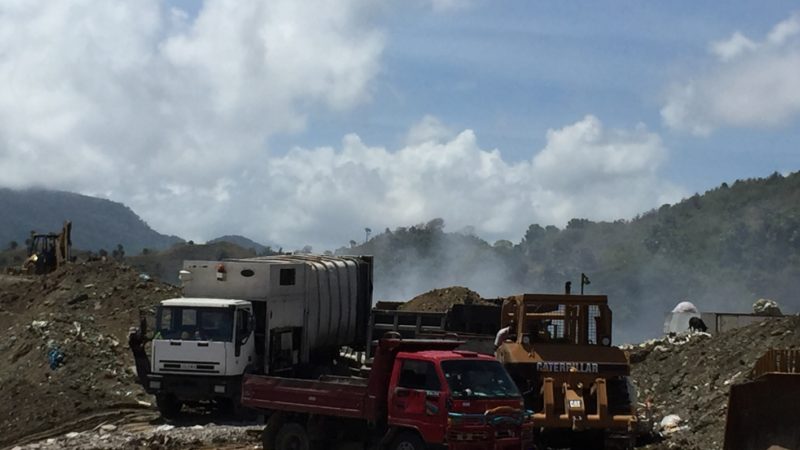
Puerto Plata mayor Walter Musa Meyreles has announced that the central government will buy the land necessary to build a waste landfill and recycling plant that will cost RD$550 million. He said that President Danilo Medina had told him and that the project would be carried out as part of an agreement between the Ministry of Tourism and Puerto Plata City Hall.
Musa Meyreles, said that Tourism Minister, Francisco Javier García, would be travelling to Puerto Plata this week to give all of the project details which would solve the problems at the current garbage dump.
He explained that President Medina had asked on several occasions about the purchase of the land where the dump operates but the option was rejected as the land owners are asking for RD$298 million, although at the last minute they had reduced it to RD$110 million.
Meyreles said that both prices were too high, as owners had originally offered the land to City Hall for RD$82 million. However, the Dominican College of Engineers, Architects and Surveyors (Codia) valued the property at a mere RD$23 million.
Given that stalemate the authorities decided to look for another location near the current dump at a more sensible price that would at last provide a definitive solution to the garbage situation in Puerto Plata.
Paul Imbert Brugal, vice president of the Blue Jack Tar hotel said that the problem had to be solved as the garbage dump is on the way from Amber Cove cruise ship terminal into the city and the smoke caused by the burning of the garbage was affecting the population and the visitors. For decades, the business community in Puerto Plata has lobbied for a solution to the waste situation. The government had committed to resolve the situation prior to the start of operations of the Amber Cove terminal.