DR News
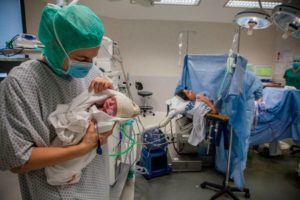
The Dominican Republic is the global leader in C-sections, with the World Health Organization reporting in 2015 that 56% of all births were by C-section. The number is expected to be even higher this year. In the Dominican Republic, C-sections appear to be the birth procedure of choice, rather than the exception. The study revealed back then that 42% of all births in public hospitals were by C-section, while 87% of births in private clinics were by C-section.
In most countries abroad, C-sections are traditionally reserved for circumstances that include prolonged labor, placenta abnormalities, cord prolapse, distress of the fetus, certain diseases and if the baby is in an abnormal position. Globally, medical professionals estimate that these conditions occur in 10 to 15% of births.
In the Dominican Republic, nevertheless, doctors are increasingly recommending C-sections. As a result, young physicians are losing confidence in their ability to assist in vaginal births. Moreover, women have also increasingly requested the C-sections due to prior negative experiences with natural births, fear of labor pain or damage to their bodies or concerns about future sexual function.
However, recent studies confirm that there are no benefits of employing the procedure without a medical justification and indeed women and babies can die from complications from C-sections, especially when a medical facility is under-resourced and staff is under-trained.
New studies organized for the International Federation of Gynecology and Obstetrics World Congress presented recently in Brazil indicate that the use of C-sections is highest in the Dominican Republic, Brazil, Egypt, Turkey and Venezuela, accounting for more than half of all births there. Rates of C-sections have increased the most sharply in South Asia, where they accounted for 7% of births in 2000. Since then, the rate in Asia has risen to more than 18 percent of births in 2015.
The findings of the compilations of research indicate that C-sections continue to be overused in North America, where rates grew from 24% to 32% during that time; in Western Europe, with rates of 20% in 2000 and 26% in 2015; and in Latin America and the Caribbean, where rates jumped 32% to 44%.
Low- and middle-income countries saw the greatest disparity the use of C-sections, where wealthy women were six times more likely to have one than the poorest of those populations. The procedure is 1.6 times more likely to take place in a private institution rather than a public one, perhaps due to persistent shortages of staff and facilities in rural and vulnerable regions.
Source: UsNews
Oct 16, 2018
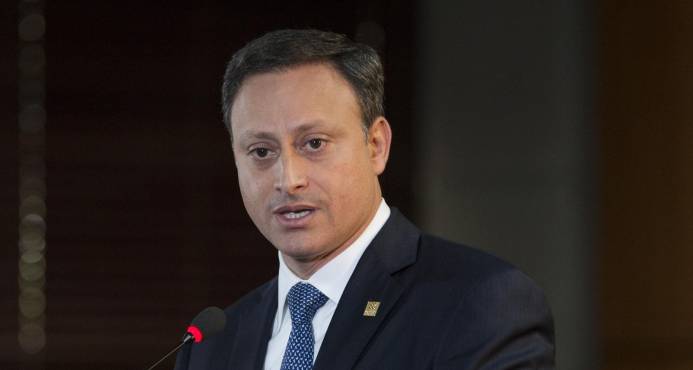
The Attorney General of the Dominican Republic, Jean Alain Rodriguez, announced late last week that with some government funding as well as the cash from payments received from Odebrecht and Embraer as compensation in government bribery cases, the Justice Department would build a new prison to replace La Victoria in Guerra together with the facility in San Luis used for preventive custody.
According to Rodriguez this is only part of a program to provide more humane treatment throughout the penitentiary system. The jails have a budget of around US$170 million, says the Attorney General. Odebrecht has agreed to pay the Dominican government US$184 million after admitting in a New York City court that the company paid US$92 million in bribes in order to obtain some very lucrative contracts for public works in the Dominican Republic. Embraer, the company that manufactured and sold the Super Tucanos aircraft to the Dominican Air Force, reimbursed the government to the tune of US$7.0 million in order to be excluded from the judicial case unfolding over corruption in the purchase of these aircraft.
The Attorney General reported that the projects should be completed by April 2020, a month before the 2020 general election.
La Victoria prison was designed to hold 1,200 inmates but currently has a prison population of over 9,000. The new prison complex will be built in the area of Las Parras in Guerra, in East Santo Domingo and will have a capacity for 8592 men and 665 women. Construction companies will use the prison labor to build the jail. The new facility will have its own hospital, the first one of its kind in the Dominican Republic.
The Attorney General also announced the construction of juvenile detention centers in Barahona and La Romana.
Source: DR1, DiarioLibre
Oct 16, 2018
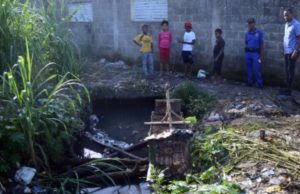
Technicians from the Ministry of the Environment are on the lookout for the American crocodile that is known to live in a creek in the area of Barrio Nuevo, in Sabana Perdida, over in East Santo Domingo. The authorities reported that traps were laid but the wily crocodile has so far avoided capture.
Nelson Garcia is one of the technicians heading the operation. He told the press over the weekend that this crocodile is a protected species and is mostly found in Enriquillo Lake, in the southwest. It is a species in danger of extinction.
It is not known how the crocodile relocated to Santo Domingo. But now residents told reporters they live in fear of being attacked by the crocodile, because it has been seen wandering the streets in the barrio. The crocodile is between three and 4m long and usually scurries back to its safe place in the dirty creek under a large concrete slab.
Many of the locals have encountered the crocodile, like Julia Martinez who said that one time the crocodile appeared right in front of her house. Sightings of the crocodile are more frequent in the morning or after heavy rains.
One morning late last week, a team from El Nacional newspaper visited the creek where the reptile lives and noticed that very early at least four children between the ages of eight and 12 were waiting for the crocodile to come out to watch it around 9am. Residents avoid the area at night, and all the families that live nearby close their doors early in the evening and place pieces of sheet metal in the alleyways so that the crocodile doesn’t enter yards or empty lots.
Some of the neighbors reported losing chickens they raise for their own consumption. They suspect the crocodile. Julio Perez, the president of a local boxing club said that he hoped that the authorities capture the animal soon so that his students will pay attention to their sport and not be so interested in observing and taking photos of the creature.
The existence of this neighborhood crocodile became known throughout the area because some residents loaded videos on social media, and now the area is a local tourist attraction.
Source: DR1, Elnacional
Oct 16, 2018

The director of the National Institute of Traffic and Ground Transport (Intrant), Franchesca de los Santos says they will be enforcing traffic rules that establish that trucks and other cargo vehicles need to keep to the right on multi-lane roadways. It is common to see large trucks permanently occupying the left lane on main roadways when this should be used exclusively for passing. This is just one of several other regulations the Intrant is publicizing in the agency’s push to improve road and highway safety. However, Intrant did not explain how they are going to enforce the new ruling.
The obligation to drive on the right has always been in local driving rules. When Law 241-67 was published it already specified that cargo vehicles need to drive on the right.
The announcement of the trucks and the left lane coincides with an editorial in Listin Diario, titled “The Untouchables” on the dangerous practice of truck drivers who insist on using the left lane, forcing other vehicles to pass these trucks on the right.
The editorial in the Listin Diario on 13 October 2018 stated:
“It cannot be alleged that the drivers do not know this rule. Drivers know this rule well, but they do not respect it because here no authority has been able to stop them and fine them for the infraction. These truck drivers are under the impression these traffic laws are never enforced and they are immune to any legal penalty. In truth, they have every right to feel impunity, because the lack of the intent of the government to enforce our nation’s traffic laws. Thus, truck drivers do essentially what they want, a privilege that millions of Dominican citizens do not enjoy yet as only these have reached the highest category of ‘owners of the country’ “..
Traffic experts have been critical of the delays in Intrant implementing rulings contained in Law 63-17 that replaced Law 241-67. The Dominican Republic is a global leader in traffic accidents in great part for the lenient application of traffic laws by local authorities.
Motorcycles are involved in 64% o the mortal accidents in the country. Sunday is the day when most accidents occur.
Source: DR1, Listindiario
Oct 16, 2018
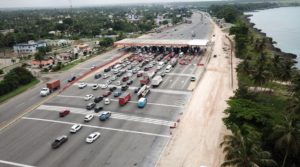
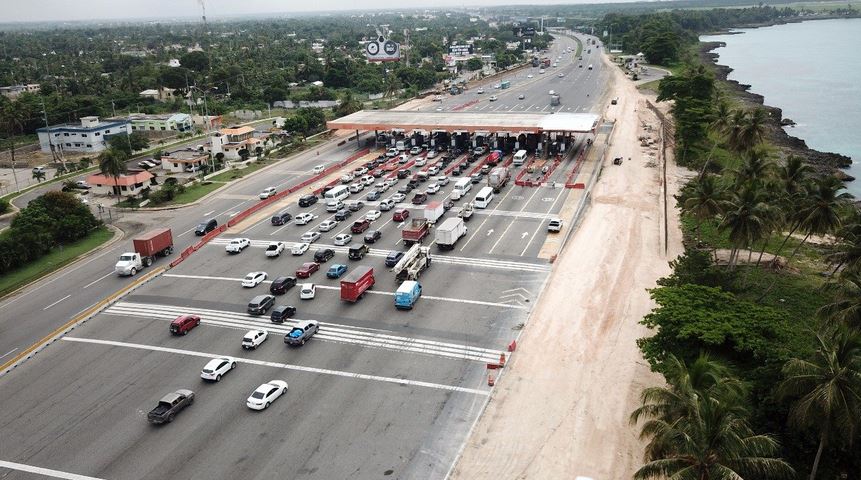
The Coordinating Office of the DR Highway Trust is increasing the lanes at the Las Americas Highway near the tollbooths to speed up the vehicular traffic. Eyla Vargas, the director general of the DR Highway Trust, explained that the expansion of the Las Americas Highway calls for the construction of three new lanes, with two dedicated to normal toll collection by hand, and one lane dedicated to EZY Pass. She added that there will be an additional lane set aside exclusively for motorcycles, bringing the total access to 14 marked lanes. During the construction some lanes will be closed and there will be manual collection of tolls.
Vargas encouraged drivers to purchase and use the time-saving Las Americas toll road Paso Rápido (EZY Pass).
Source: DR1, Elnacional
Oct 16, 2018
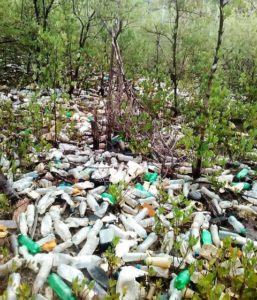
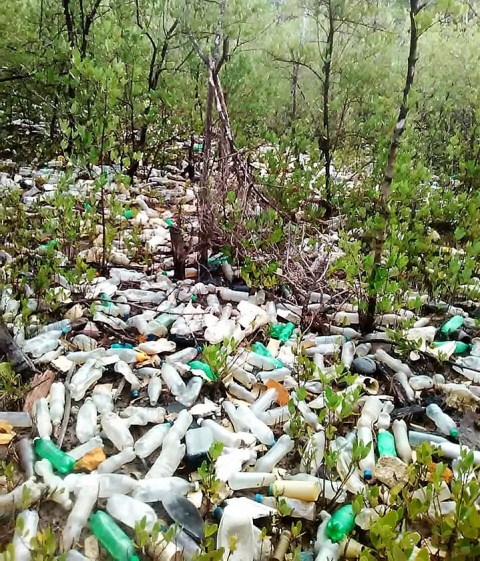
PUERTO PLATA.- Tonnes of solid waste are being collected in the mangroves that make up several ecosystems in the Wildlife Refuge of the Bahía de Gracia in the municipality of Luperón.
It is estimated that two thirds of the fish populations in the world depend on the mangrove, in one or more of their life cycles as they are also nesting and feeding areas for many species of birds and reptiles, their roots being the ideal substrate for many species of bivalves used commercially.
The sanitation day is carried out by the personnel of the Ministry of Environment and Natural Resources, who within the existing mangrove ecosystem there, with great zeal and enthusiasm, continue to remove bags full of garbage and waste.
In a mangrove area of 50 tasks that have been traversed, were extracted some 185 covers each with capacity of 55 gallons and 47 bags of inorganic waste, such as plastic and glass bottles, cups and plates of polyurethane, tin, in addition to plastic cases.
The solid waste that is being removed from the mangrove area in the beautiful Luperón Bay, is dragged by several ravines, which denotes the unbridled behavior of the society that lives on its back to its natural environment, without caring about the consequences of their actions.
The expert Pablo Rodríguez, explained that mangroves are the most important vegetation that predominates in the bay of Luperón, where the species are found: Rhizophora mangle (Red Mangrove), Laguncularia racemosa (White Mangrove), Conocarpus erectus (Mangle Button) and Avicennia germinans (Black Mangle).
“The mangrove ecosystem of which there are around 258 square kilometers in the Dominican Republic is economically important, since it represents a source of food for most of the estuarine and marine organisms that live there,” Rodríguez said.
He said that the mangrove ecosystem is characterized by high productivity, production of organic matter, barrier against coastal erosion, natural barrier against salinity and waves, help improve water quality, fixation of pollutants.
Source: Puerto Plata Digital
Oct 11, 2018
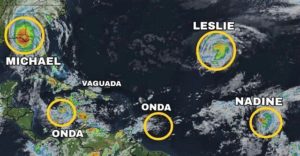
PUERTO PLATA.- Due to the presence of strong tropical activity in the open waters of the Atlantic Ocean, the weather forecast indicates that during the weekend there will be downpours.
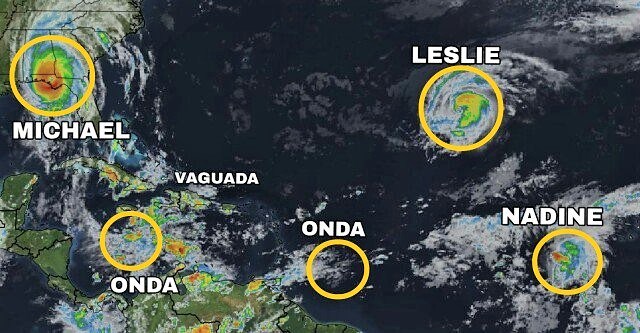
According to meteorology expert and communicator Jean Suriel, the Category 3 Hurricane Michael with winds 205 kilometers per hour is affecting Florida and heading to Georgia.
Likewise, the Category 1 Hurricane Leslie that travels 120 kilometers per hour in the eastern direction, and the tropical storm Nadine with winds of 100 kilometers per hour will degenerate a low pressure for this weekend.
While in the most part of the Dominican Republic due to the trough and the proximity of a tropical wave, this Friday the rainfall will be concentrated in the northeast, southeast, Cordillera Central, Cibao and southwest.
Source: Puerto Plata Digital
Oct 11, 2018
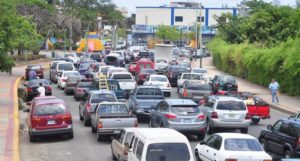
Transporters are showing no respect for the authority of the newly created National Institute of Traffic and Ground Transport (Intrant), as reported in El Nacional. The government entity was created in 2017 to group all government organizations that have to do with ground transport and implement new rules ordered by Law 63-17.
El Nacional reporters say that the traffic jams, the improvised passenger stops by transporters, unilateral fare increases by transporters are the order of the day, despite new Intrant rules. They say there has been inertia on behalf of the National Institute of Transit and Transportation (Intrant) is in a state of suspended animation and has not taken significant steps to implement Law 63-18 on Mobility, Land Transport, Traffic and Road Safety.
Transport experts interviewed by El Nacional reporters say that the Intrant has been incapable of organizing passenger transport. Making matters worse, the Intrant has yet to present to the Executive Branch the 33 internal rulings and complementary regulations ordered by the 2017 law. The law itself gave the Intrant authorities six months after its passing to publicly share the drafts of the rulings.
“The Intrant is responsible for the disorder that exists in the public transport of passengers, as it has not been able to resolve the conflicts that exist in the routes of the multi-fare charging taxis, and has let the drivers operate at their free will,” say transport experts of the National Chamber of Ground Transportation (Cámara Nacional del Transporte Terrestre). The Chamber noted that drivers can still be found fomenting panic in the streets as they wield sticks and firearms, under the pretense of defending their business interests while prevent pirate vehicles from invading their territory”.
Guillermo Estévez, of the National Chamber of Land Transportation (CANTT), said that the Intrant has failed to fulfill its mission of planning and designing the integrated public passenger transport system, of organizing the routes and other aspects of public transportation.
Source: DR1, Elnacional
Oct 11, 2018

Dominicans export more to Commonwealth Countries than is imported, according to Fernando González Nicolás, president of the Commonwealth Roundtable in the Dominican Republic when speaking during the Embassy of Canada Thanksgivings Day luncheon on Monday, 8 October 2018. The event is organized by the Canadian Dminican Chamber of Commerce (Canchamrd).
He said Dominican exports in 2017 were US$1.67 billion, while imports were US$1.39 billion, with a surplus of US$283 million for the Dominican Republic.
Commonwealth countries Canada and India are the country’s third and fourth largest importers. Canada purchased US$786 million in 2017, and India US$578 million. The United States and Haiti are the country’s two largest markets.
Moreover, González Nicolás says that Commonwealth countries have the main mining companies in the world. He said there is an environmental protection awareness and the main financial institutions of the world are located.
González Nicolás highlighted that the roundtable seeks to promote bilateral economic, trade, social and cultural relations with the country and 53 countries that make up the Commonwealth around the world.
Also speaking at the event, Foreign Minister Miguel Vargas highlighted that Canadian investments in the Dominican Republic are now around US$4.98 billion and total trade is US$1.07 billion in 2017.
Source: DR1. DiarioLibre
Oct 11, 2018
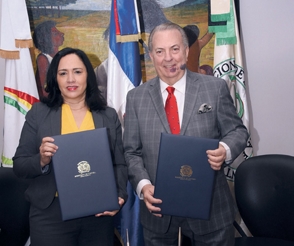
Following a global trend, the Ministry of Culture announced that seniors over 65 can now request a 30% discount on admission to events organized by the Ministry and to government museums. Culture Minister Eduardo Selman said the decision complies with Art. 46 of Senior Citizens Protection Law 352-98. The discount will also apply on books published the Editora Nacional, a dependency of the Ministry of Culture. The Ministry of Culture encourages other government entities to do the same.
Source: DR1, Listindiario
Oct 9, 2018