DR News
According to data from the Ministry of Education, school desertion is high. During the school year 2017 to 2018, a total of 40,206 students from the public, private and semi-official schools, were registered but dropped out during the school year. The largest number of dropouts were those registered in private schools, 31,314 students.
At least 19,627 deserted schools at the secondary level. Some 15,317 dropped out of elementary school. Some 5,242 started daycare, but stopped attending the classes.
The main reason for dropping out is the difficulty in getting to school and financial problems at home. In addition, many children, while still attending school, work after school in order to help the family finances.
Source: DR1, Listindiario
Mar 20, 2019

The Dominican Republic is losing territory to Haitian migration. As reported in the Listín Diario, a motion in the Senate presented by the senator Adriano Sánchez Roa for Elías Piña has called for an exhaustive review of the border markers to comply with the Dominican-Haitian Border Treaty of 1929 and its review dated 1936. There are reports the country has already lost around 6,200 square kilometers to migration. As reported, thousands of Haitians have occupied Dominican land illegally, where they have built homes, businesses and farms along the border.
As reported in El Caribe, the government of Haiti recently recognized that the area in Carrizal, Elías Piña where the government is building a gate is Dominican territory.
“An analysis of the geo-located cartographic surveys and the verification of the geographical references was carried out, in comparison with the border between the two countries. As a result, according to the results of these studies, the Dominican infrastructures that were being disputed, and that are located between terminals RH / RD 181 and RH 182, are on the east side of the border and are located in Dominican territory,” says the official statement issued by the Ministry of the Interior of the Republic of Haiti.
A clash between violent Haitians and Dominican soldiers resulted in the death of one Haitian and injury of another last week. The Haitian authorities say it makes the matter public to avoid future clashes as that which occurred on Friday, 15 March 2019.
Senator Adriano Sánchez Roa said that the announcement by the government of Haiti opens the way for a strengthening of the bi-national trade and to continue combatting contraband between the two nations. He said El Carrizal is a place from where more Dominican exports can be made and where Haitians can source low-cost imports of food, construction materials and other needed goods.
The senator for the border province of Elías Piña congratulated Defense Minister General Paulino Sem and the Dominican soldiers for the defense of Dominican territory.
Source: DR1, Elcaribe
Mar 20, 2019
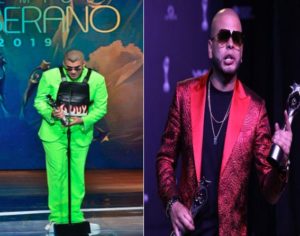
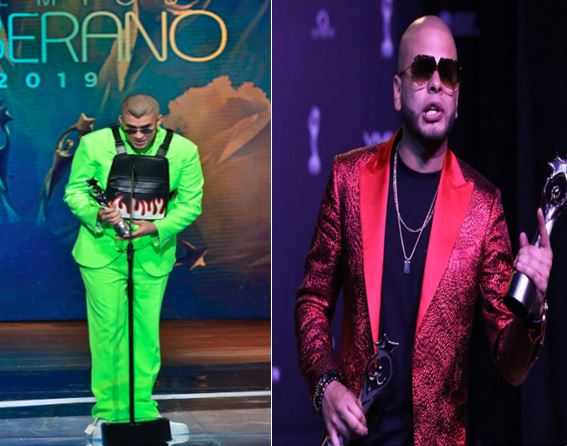
Anthony Santos was honored during the 35th Soberano Awards for his contributions to positioning bachata as an international dance music. The Dominican Republic has requested that the Unesco list Dominican bachata as intangible cultural heritage. Santos received the honor from Emely Baldera, president of the Dominican Show Business Writers Association and Franklin León, president of Cervecería Nacional Dominicana, the sponsor of the event. On the same evening, Anthony Santos had been honored as the Best Bachata Performer and for the Best Bachata (Mal educado) for 2018.
Another big winner of the Soberano Awards was Alá Jazá (Emmanuel Jiménez), who won in the categories of Merengue of the Year (Nadie se ****), Best Collaboration (Mi forma de ser) and Street Merengue. Alá Jazá is credited for creating the 21st Century style of urban merengue known as MamWali, that merges merengue and trap music. He is also an acclaimed mambo, bachata, and ballad singer.
In the movie category, Tabaré Blanchard took to the stage of the National Theater on three occasions to receive awards for “Veneno,” the story of wrestler Jack Veneno. In the theater category, the big winner was Juancito Rodríguez for “Agosto.”
Another highlight of the evening was the performance by singer Juliana O’Neal, who is battling cancer. Merengue star Alex Bueno performed his long-time merengue hit “Colegiala” on the stage. Danny Rivera sang the music of the late Anthony Ríos. Others that were remembered that evening were radio innovator Teo Veras, singer Luchi ******* and movie-maker Fernando Báez in a segment with Lily Goodman.
There were many expressions of solidarity to Venezuelan artists who expressed their appreciation to Dominicans for local support.
See the list of the award winners:
https://www.cdn.com.do/2019/03/20/li…soberano-2019/
Source: DR1, CDN
Mar 20, 2019

On Monday, 18 March 2019, five people died and more than a dozen were injured in several traffic accidents in Puerto Plata.
Hotel employee Juan Eduardo Céspedes Henríquez, died of head injuries when his motorcycle was hit by a vehicle on the Gran Parada-Montellano road.
The second victim has not yet been identified but was killed during an accident in front of Playa Dorada hotel and residential complex.
In Villa Isabela, 37-year old Williams César Peña from Mao and 17-year old Daniel Tineo Ramos from Luperón, died when two motorcycles collided on the road linking the two communities of La Sabana de Los Mieses and Los Arquíes.
Francisco Núñez died when his vehicle caught fire on the La Catalina-Pata de Gallina road in Sabaneta de Yásica, but the driver of the car managed to save himself.
Five young men were seriously injured when their Ford SUV left the road near the gas station in La Ciénaga in Cabarete. Those injured, who were all from Cabarete, were Robinson Cuello Hilario, Roberto Mejía, Rómulo De la Cruz, Andrés Jiménez and Wilfredo De la Cruz.
Another accident happened to 19-year old Asi Starlin Geraldino Peralta who fell from his motorcycle on the Puerto Plata-Cofresí road. A collision between two motorcycles on the Malecon in Puerto Plata caused serious injuries to 21-year old Yanibel Salvador and 2-year old Alan Dariel Bonilla.
Also with serious injuries are Fiordaliza Camacho, Miguel Caonabo Vargas and Osiris Bonilla, again when two motorcycles collided in Sosua. Two unidentified men were injured as the result of a crash between a car and a motorcycle in front of the Jose Briseño baseball stadium in Puerto Plata city.
Source: DR1, Eldia
Mar 20, 2019

The Inclusive Internet Ranking produced by The Economist Intelligence Unit has ranked the Dominican Republic 61st out of 100 countries globally evaluated and 12th out of 15 Latin American countries. The ranking is based on the categories of availability, affordability, readiness and relevance.
The Economist Intelligence Unit ranking assesses the quality and coverage of the available infrastructure for access to the Internet and the levels of use and its affordability.
The DR is ranked 52nd in availability, 77th in affordability, 58th in relevance and 10th in readiness. In availability, the DR is ranked 22nd in infrastructure, but gets low scores in usage, quality and electricity. In affordability, the DR is ranked 52nd in price, but 87th in competitive environment. In relevance, the score is 44th in local content and 78th in relevant content. In readiness, the DR was ranked 21st in trust and safety and 43rd in literacy and 1st in policy.
In Latin America, Brazil (31st) is the highest ranked country, followed by Argentina (33rd), Colombia (35th), Mexico (45th), Costa Rica (46th), Uruguay (48th), Ecuador (54th), Panama (55th), Peru (56th), El Salvador (59th). In the region, below the Dominican Republic are only Guatemala (67th), Jamaica (68th) and Venezuela (78th).
Source: DR1, DiarioLibre
Mar 20, 2019

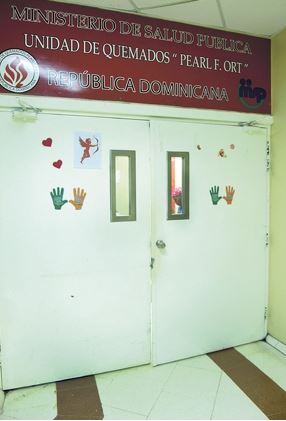
During the last five years, there have been 500 people who have died due to burns in the Dominican Republic. This is an average of 100 a year.
The death toll is from reports by the Pearl F Ort burn center in Santo Domingo that handles adult burn cases. Also from the pediatric hospitals Arturo Grullón in Santiago and Robert Reid in Santo Domingo where burn centers care for burned children. Other deaths are reported from those who died at the scene due to a fire, electrocution, scalding, chemical, acid and contact with something hot.
The figures mean that the Dominican Republic is among countries with the highest level of burn-related deaths. Burns from fire and electrocution are the most common. Of the electrocution cases, 95% is due to people touching live wires. According to Eddy Bruno, head of the adult burns’ unit, among the most dramatic are the deaths of persons when trying to set up irregular connections to steal electricity.
Source: DR1, Listindiario
Mar 20, 2019
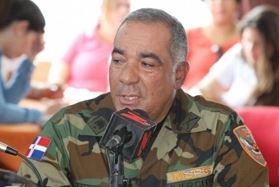
One hooded Haitian was killed and another was injured after they crossed the border to throw rocks and bottles full of gasoline at members of the Armed Forces. The Haitians protested that the government was building a gate around a Customs Agency building in Carrizal, Elías Piña on the border with Haiti, as reported by the Ministry of Defense. The Dominican military fired in self-defense and to defend Dominican territory.
As reported, on the Haitian side of the border, Haitians were burning tires and affecting the Friday market day as part of protests demanding that Haitian President Jovenel Moise resign. But then the protestors crossed the border. Dominican soldiers fired in self-defense after two of the Haitians crossed to Dominican territory and threw rocks and a bottle of gasoline at Colonel José Manuel Durán Infante, director general of the Cuerpo Especializado de Seguridad Fronteriza Terrestre (Cesfront).
In a press release, Defense Minister Rubén Darío Paulino Sem lamented what had happened and said a special commission head by Ministry of Defense inspector general Edmundo Félix Pimentel, and general commander of the Army Estanislao Gonell Regalado, would investigate and present a detailed report. The army says that the Haitians had been congregating at the site with a hostile attitude, but then they crossed the border and began to shoot and throw stones at the Dominican soldiers.
Last week, Enrique Ramírez, director of the Customs Agency, announced the DGA is building multi-agencies at several points of the border to ensure greater control and security in commercial transactions at the border. He says the DGA checkpoints are coordinated with the Haitian authorities.
Elías Piña senator Adriano Sánchez Roa said that the hostility of the Haitians is because they oppose the construction of the gate around the Customs Agency. The gate seeks to better organize trade on the border.
Source: DR1, Listindiario
Mar 20, 2019

“Lo que siento por ti”, a film by Raúl Camilo, was the big winner of the Premios La Silla, on Friday, 8 March 2019 at the auditorium of the Sports Hall of Fame at the Juan Pablo Duarte Olympic Center. The awards are organized by the Asociación Dominicana de Profesionales de la Industria del Cine (Adocine).
The film starring actors Frank Perozo and Nashla Bogaert won Best Movie, Best Producer (Oscar Villanueva and Gabriel Tineo), Best Script (Giovanna Bonelly), Best Editing (Gina Giudicelli and José Miguel Mejía), Best Score (Sergio Jiménez Lacima and Peng Bian), Best Sound. The movie is the story of Ana, a woman abandoned by her husband and her two autistic children and how they positively impacted the people around them.
Leticia Tonos’ “Juanita” won awards for Best Director, Best Lead Actress (Cheddy García), Best Song (“Juanita no come cuento”, with Milly Quezada), Best Secondary Actress (Ruth Emeterio) and Best Artistic Direction (Lorelei Sanz). Juanita is the story of a Dominican migrant in Spain and her return to the country with her Spanish husband.
The list of winners:
Best Movie
“Lo que siento por ti”, Raúl Camilo
Best Director
Leticia Tonos, “Juanita”
Best Lead Actress
Cheddy García, “Juanita”
Best Lead Actor
Iván Aybar, “Un cuarto de Josué”
Best Comedy
“El fantasma de mi novia”, Francis “El Indio” Disla
Best Producer
“Lo que siento por ti”, Óscar Villanueva y Gabriel Tineo
Best Script
“Lo que siento por ti”, Giovanna Bonelly
Best Visual Effects
“El fantasma de mi novia”, Ariel Morales y José Rodríguez
Best Special Effects
“El fantasma de mi novia”, Óscar Gutiérrez y Carlos Nin
Best Sound Design
“Lo que siento por ti”
Best Editing
”Lo que siento por ti”, G. Giudicceli y José Miguel Mejía
Best Makeup
Anny Torres, G. Sánchez y G. Jiménez, “El fantasma de mi novia”
Best Documentary
“Solano”, Patricia Solano y Juan Basanta
Best Costumes
Gina Terc, “Rubirosa 1”
Best Cinematography
“Rubirosa 1”, Francis Adames and Frankie Báez
Best Song Track
“Juanita”, “Juanita no come cuento”, Milly Quezada
Best Secondary Actress
Ruth Emeterio, “Juanita”
Best Secondary Actor
Yasser Michelén, “Trabajo sucio”
Best Score
“Lo que siento por ti”, Sergio Jiménez y Peng Bian Sang
Best Artistic Direction
“Juanita”, Lorelei Sanz
Source: DR1, Hoy
Mar 13, 2019

The Association of Entertainment Businesses (ASECEDI) has placed an appeal against Law 16-19 that forbade the use of hookahs. The association that represents owners of hookah lounges says the law is discriminatory. They allege there are 15,000 to 16,000 bars where at least three patrons use the hookahs in each. That is 48,000 people that will be affected by this law, they argue. They also say thousands will lose their jobs.
Law 16-19 prohibits the use of the hookah in public and private areas throughout the country in closed spaces and in vehicles used for passenger transport. The fine for breaking the law is five to ten minimum salaries for those owners of establishments where the hookah is used. The consumers can also be fined.
Hookah business owner Farid Chalhoud criticized recent confiscations of hookahs for sale in stores. He said that while the new law bans the use of hookahs in closed public and private places or in vehicles for the transport of passengers, there is nothing against a person smoking hookah from his own balcony or back yard with friends.
Source: DR1, Hoy
Mar 13, 2019

The Center for Integral Orientation and Investigation (COIN), a non-governmental organization for sexual and reproductive health in the Dominican Republic, estimates that around 250,000 women make a living from sex work in the country.
COIN research reveals that in addition to the traditional prostitutes, there are those involved in virtual sex, and the “chapiadoras” (female sanky pankies) and “chapiadoritas.” The latter are minors that do sexual favors in exchange for gifts or cash for around 200,000 Dominican women involved in sex work.
Likewise, COIN estimates at around 6,000, the number of foreign women who offer their services primarily in tourist destinations. Of these, around 3,000 are Venezuelans, and 2,000 Haitians.
The most popular tourist areas where the women find work are Sosúa and Cabarete in Puerto Plata, Boca Chica in Santo Domingo, Punta Cana in the East and Las Terrenas in Samana.
An estimated 100,000 women have gone abroad to earn hard currency for their trade and live in Antigua (16,000), Guadeloupe (10,000), Curacao (1,000), Dominica (900), Haiti (500), Italy, Switzerland, Germany and Spain. COIN says that the contacts for the overseas work are either via organized networks or family members.
The director of COIN, sociologist Santo Rosario told Listin Diario that 90% of the women know they are going to work in the sex trade and are not lured abroad under false promises. Nevertheless, Rosario said the women take on the work for the money. He says in most cases they need the money to maintain their children. They are victims of social exclusion, unemployment and low wages in the Dominican Republic.
Source: DR1, Listindiario
Mar 13, 2019