DR News
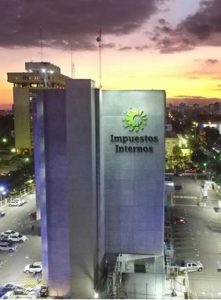
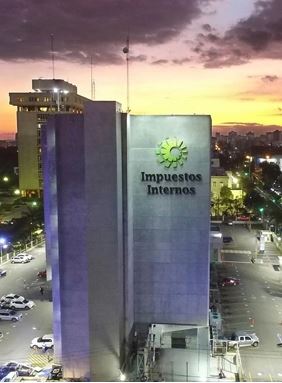
The Tax Agency (DGII) says the Foreign Account Tax Compliance Act (FATCA) entered into effect as of Wednesday, 17 July 2019. The agreement seeks to improve international tax compliance between the governments of the US and Dominican Republic.
FATCA is the US law intended to bring unreported foreign income and overseas assets under compliance by the US tax authority, the Internal Revenue Service (IRS). The law is primarily implemented through bilateral agreements, such as the one concluded with the Dominican Republic in 2016 and ratified by the Dominican Congress.
The agreement regulates the exchange of information via an automated system of accounts reportable between the United States and the Dominican Republic. Dominican financial institutions need to identify persons and companies from the United States to send pertinent information to the IRS, including the movement of money, accounts, income and other operations. At the same time, the United States should send to the Dominican Republic information about the US accounts held by residents of the Dominican Republic.
The Ministry of Hacienda has delegated in the director-general of the DGII, Magin Díaz, the application of these measures to avoid double taxation and prevent fiscal fraud. The DGII says training workshops will be offered to assist the financial institutions in complying with the new measures.
Source: DR1, Listindiario
July 25, 2019

With a year to end his term, President Danilo Medina announced at 9pm on Monday, 22 July 2019 that he would not run for President in 2020. He would not push for constitutional reform to change the transitory clause that impedes him from being the Dominican Liberation Party (PLD) candidate in the 2020 general elections. Medina kept the country on edge for months, with his followers repeatedly announcing the National Assembly for Constitution Revision would be convened. It didn’t happen.
While Medina followers dominate in the political and central committees that control the ruling PLD, manage the National Budget and the Supreme Court, it is apparent now that they did not have the votes in the Chamber of Deputies to reverse the ban that would allow him to seek a new term in office. In his ambition to continue in power, Medina met with strong opposition from the president of the PLD party, former President Leonel Fernández.
For over a year, most polls have shown that a majority of Dominicans reject constitutional reform. A July Asisa Research poll shows 77% rejection to constitutional reform. Likewise, opposition has escalated and protest marches are gathering followers.
“When I reach the end of my second term and leave the Presidency, I want to go out on the streets and walk like another citizen,” said Medina. He advocated that the PLD campaign inject new blood into Dominican politics. “I, therefore, trust that we will witness a clean campaign based on proposals and that injects new blood into political life,” said Medina. The President called for business people to trust the economy and maintain stability.
This is the last week of the legislature. An article in Diario Libre makes the point that the intense political activism affected the legislature. Three days before the closing of the legislature, only four bills had been passed, despite a long list of priority bills.
The deadline for the registration of candidates with the Central Electoral Board (JCE) is 22 August 2019.
Source: DR1, Eldia
July 25, 2019

Data published by the Joint United Nations Programme on HIV/AIDS (UNAIDS) reveals that new HIV cases in the country have decreased compared to previous years. The report also shows a decrease in deaths from AIDS, a slight increase in those currently living with HIV, and an increase in people who have coverage while receiving treatment for the virus.
During 2018, UNAIDS in its reports on the Dominican Republic, highlights that the number of new infections (all ages) fell from an estimated 2,800 people to 2,700 compared to 2017.
With respect to Dominicans currently living with HIV (all ages), the number of people increased over the previous year, by an estimated 69,000 to 70,000.
Deaths annually have maintained a steady decline in statistics since 2004, when the point was at its highest, with an estimated 5,900 people, decreasing progressively to 1,200 in 2018.
A total of 38,952 individuals, including children and adults are receiving treatment. These numbers place the Dominican Republic as one of the countries of Latin America with greater “progress” in the continent.
Source: DR1, Listindiario
July 25, 2019

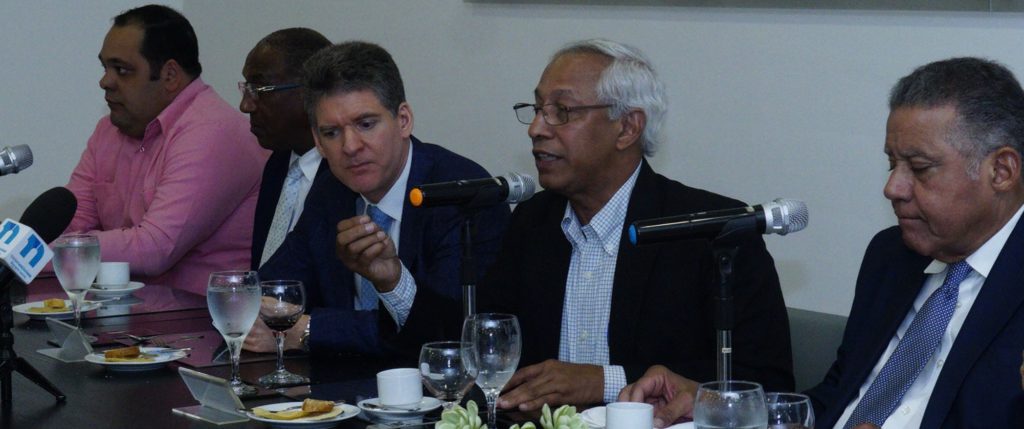
According to the Dominican Association of University Rectors (ADRU), the student drop out rate is at 50%, with 30% of drop-outs occurring in the first year. The rectors recently participated in the Weekly Breakfast of the Corripio Communications Group.
According to these university leaders, most students can’t afford to stay. Student loans are costly and scholarships are few.
Angel Hernandez, the rector of UAPA and president of ADRU, said the nation has to decide the kind of society it wants and the training that is needed. He said more technical careers would enable graduates to find decent jobs both here and abroad. Local higher education schools need to ensure their studies have international accreditation so the titles are valid for their students abroad, he said.
The rectors also called for more preparation of college professors and urged the creation of doctoral programs at local universities. They noted that the Ministry of Higher Education, Science and Technology (MESCyT) has many scholarships available. However, Hernandez said that barely 0.05% of the GDP is dedicated to financial aid for higher education. Hernández spoke of the need for increases in government subsidies to private universities. One rector said that his school receives just RD$15 per student per month.
Hernandez also noted that 40% of the nation’s university students are enrolled at the state Autonomous University of Santo Domingo (220,000). The UASD does not charge tuition to low-income students.
At the Corripio meeting, Hernández was accompanied by fellow rectors Marcos Villamán, Epifanio González Minaya and Esteban Tiburcio.
Source: DR1, Eldia
July 25, 2019
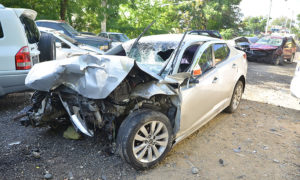
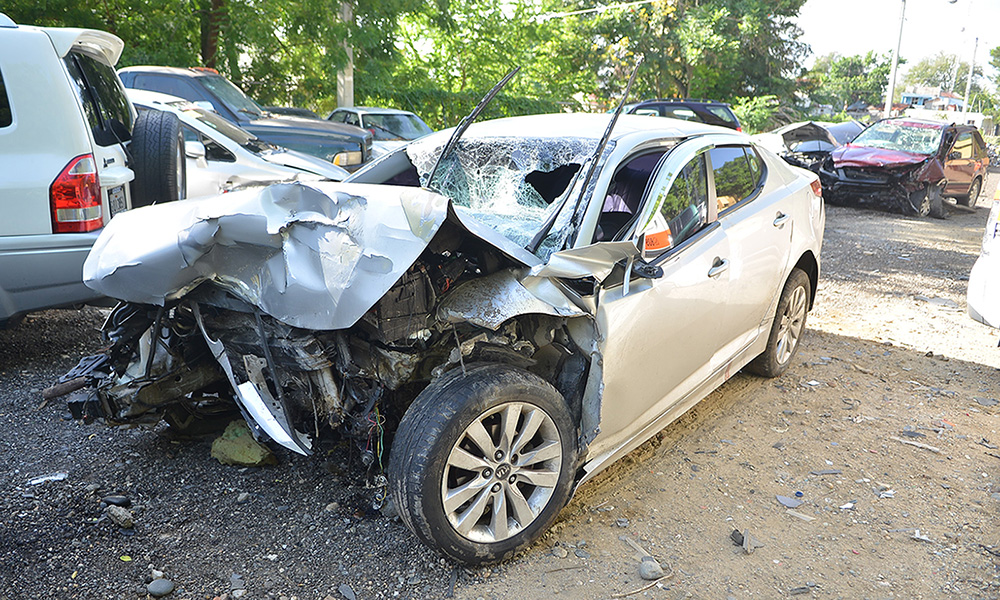
The Catholic weekly, “Camino” says the traffic accident rate is “a national epidemic.” The more than 3,000 traffic fatalities each year (and growing) constitute one of the worst records in the world per 100,000 population. In Sunday’s editorial, the Archbishop of Santiago Freddy Breton makes the point that “people leave without saying good-bye.”
In 2017 more than 97,000 persons were injured in traffic accidents. The number places the Dominican Republic in the unenviable position of #2 among all of the 192 nations in the world.
The number one spot belongs to Niue, a tiny 260 km2 coral island in the Marshall Islands with a population of 1,624. Even one traffic fatality would skyrocket their standing in the world list. It is 186 times smaller than the Dominican Republic and has 6,500 times fewer people.
By any reasonable measure, the DR ranks first in the “Worst Traffic Deaths” around the world. The real number is 93.7 deaths per 100,000 inhabitants, while countries like Switzerland, Germany, France, Spain and Canada have less than seven fatalities per 100,000 inhabitants.
The Archbishop cites the lack of respect for traffic laws, especially those regarding red lights. (Note: This reporter witnessed the results of a four car accident at the intersection of Bartolome Colon and Estrella Sadhala in Santiago last night!!).
The fact that this is maybe the only country in the world where there are drive-thru windows for cold beers is most certainly a major contributing factor. Technology is also a culprit, with texting and chatting while driving a vehicle is known to be on a par with driving while intoxicated. The final note by the magazine’s editors calls for a massive driver education campaign through every available media outlet.
In 2017, the country passed a new driving law creating the National Transit and Ground Transport Institute (Intrant). The Intrant, nevertheless has been slow in passing rulings and implementing the law.
Source: DR1, Elcaribe
July 25, 2019
The success of the Punta Cana beach resort and residential area has spurred many developers to want to join in the bonanza. The Ministry of Tourism has followed the trend, authorizing new developments, including many high rises in the area. Population in the area has doubled in recent years. More people are relocating to Punta Cana attracted by the employment and opportunities generated by the tourism boom in the eastern coastline strip.
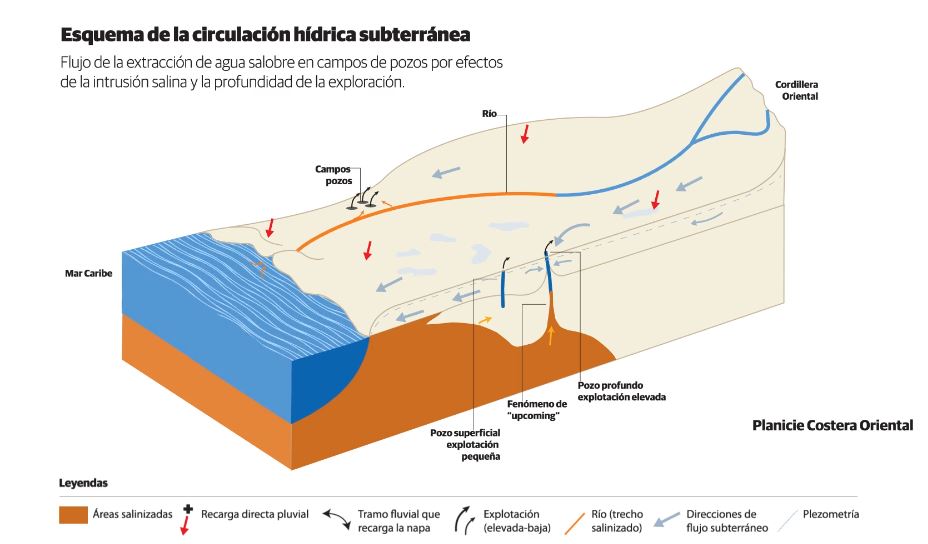
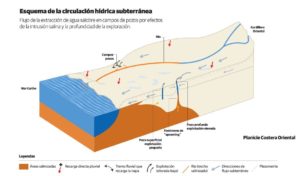
Now, a report in Diario Libre by investigative journalist Mariela Mejía takes a look into a reality few people are addressing. The Punta Cana area does not have abundant water sources. The report highlights that saltwater is mixing with drinking water as underground wells are overexploited.
“The increase in population in the eastern part of the country and the high demand for water by resort complexes have led to an increase in saline intrusion in the underground currents of that region,” writes Mejia. She says the presence of brackish water has increased to more than six kilometers away from the coastline, signifying an advance of three kilometers compared to what was measured in 2002, according to studies.
Source: DR1, DiarioLibre
July 18, 2019

The government commercial bank, the Banco de Reservas announced it is now allowing longer parental leave for fathers. The bank is following a trend for local companies to recognize that fathers, too, want to spend time with their newborns.
The BanReservas announced that pre and post-natal leave has increased to 112 days for the mothers and 12 calendar days for the fathers. The Dominican Labor Code establishes 98 days for mothers and seven days for fathers when their babies are born.
The measures seek to facilitate that mother and father be present for these important moments for the family, and to contribute to the physical, psychological and emotional balance of newborns, says the note.
The measure is implemented after the entry into force of International Labor Organization (ILO) Convention 183 on “Protection of Motherhood” in the Dominican Republic. The Convention had been ratified by the Dominican Republic on 9 February 2016, according to a press release from BanReservas.
The board of directors of Banreservas also approved to extend the breastfeeding period to one year. In this regard, the Labor Code only provides for six months.
Source: DR1, Listindiario
July 18, 2019

Sonia Vásquez Ferreras, United Nations Population Fund (UNFPA) representative, said that life expectancy in the Dominican Republic has increased by 16 years over the past 50 years. She says this means more attention needs to start to be given to the senior segment of the population. At present, most of the Dominican population is in the 15 to 65 year age bracket, the most productive.
“The big issue behind all this is that one has to live with quality those years, it’s not enough to live longer.” she said.
Vasquez explains that today a 65-year-old is a person of productive age, who is more active and has very different service demands that must be met.
She said, nevertheless, that for the aging population to have a decent old age and a pension, these persons need to contribute to the social security system.
She shared the statistics that show there is a population of around 11 million people living in the Dominican Republic, of which 7% are older than 65 years, 64% are 15 to 64 year and 29% are 0 to 14 years. The population growth is at 1.2% per year.
Furthermore, the country is significantly affected in its productivity by the percentage of teenage girls giving birth that is alarmingly high.
Source: DR1, Hoy
July 18, 2019
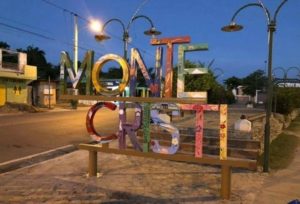
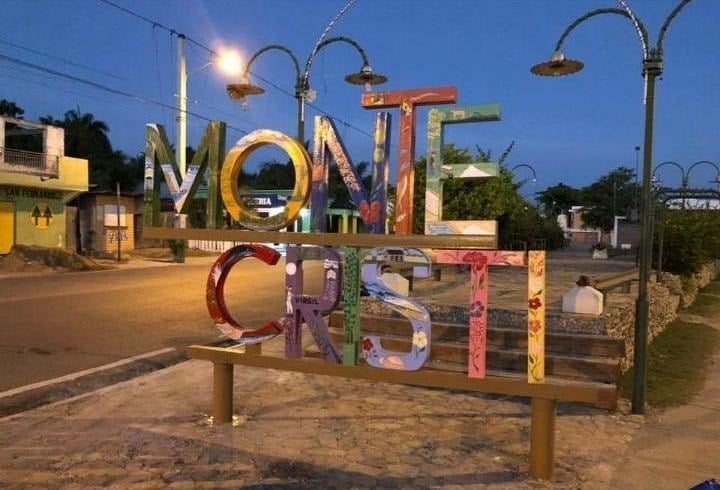
Montecristi has joined Dominican communities that are using the large signage that is perfect for visitors taking selfies showing where they are. The global tourism trend began in 2004 when Amsterdam unveiled its first 3-D sculpture of the city’s “I Am Amsterdam” brand.
No problem with following the trend. But the people of Montecristi are wondering how their sign could have cost RD$500,000. A clash has erupted between the municipal authorities of the province’s capital city and councilors that say it should have cost no more than RD$35,000.
The metal signage at the entrance of the city welcomes visitors. The price tag, according to the city government, was RD$551,510.10. Even with the high cost, city dwellers say it is of poor quality, compared to similar signs located in other communities nationwide.
Source: DR1, Acento
July 18, 2019
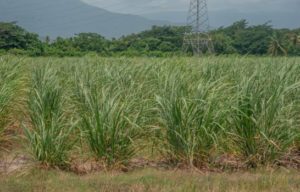
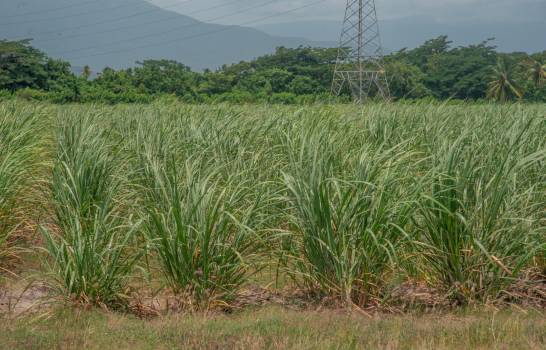
The Ministry of Public Health has not been available for comment for Diario Libre journalists on the use of glyphosate in the Dominican Republic. Recently farmers in Barahona have complained that their crops are affected by the use of the product by the Consorcio Azucarero Central, a large sugar producing company in southwestern Barahona.
The World Health Organization’s International Agency for Research on Cancer (IARC) has declared glyphosate as “probably carcinogenic to humans,” and Argentina, Australia, Austria, Belgium, Bermuda, Brazil, Colombia, Czech Republic, Denmark, El Salvador, France, Germany, Greece, India, Italy, Luxembourg, Netherlands, Malta, New Zealand, Portugal, Scotland, Slovenia, Spain, Sri Lanka, Sweden, Switzerland, United Kingdom have restricted or outlawed the use of the agrochemical nationwide.
Source: DR1, DiarioLibre
July 18, 2019