DR News

For years, country marketers had considered changing the name of the Dominican Republic. The “republic” in the name just didn’t cut it, was the conclusion, time after time. Many have called the country, “The Dominican”, or just Dominicana. Then enter 2020, the year when anything and everything has happened and can happen.
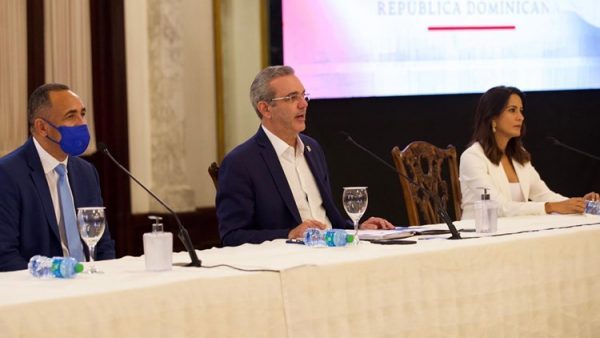
President Luis Abinader, First Lady Raquel Arbaje, and Vice President Raquel Peña, the cabinet in full and a dozen of the country’s most wealthy businesspeople, have stepped forward and done the unthinkable. The Dominican Republic is taking ownership of “republic.”
During a mega event held on 20 October 2020, the Dominican Republic’s new country brand was launched: “The Dominican Republic, the republic of republics, the Republic of the World.” The Ministry of Tourism has campaigned until now promoting the Dominican Republic “has it all,” yet there has not been a country brand to represent all sectors.
The Abinader administration inherited the country brand from the Medina government. What is new is that Abinader and his cabinet see in the tool a way of galvanizing tourism, business, industry, and government to get people headed in the same direction.
Let sustainability and innovation start to flow around one single brand, says the presentation. “There is no better time to present the country brand,” said President Abinader. “Let us show together that we are much more than a country. That we are the Dominican Republic, the Republic of the World,” he said, challenging everyone to become an ambassador for the country.
Tourism Minister David Collado is named the general coordinator. The ministries of Tourism, Foreign Relations, Industry & Commerce, and Culture have leadership roles in the new endeavor. Biviana Riveiro of Pro Dominicana (formerly CEI-RD) is implementing the new campaigns.
For the private sector, businesswoman Ligia Bonetti (Sociedad Industrial Dominicana) is the coordinator of private sector.
The government explains that the country brand seeks to communicate what the country is and what it aspires to become. The creators have looked into Dominican history, culture, traditions, and values. The brand stands on five pillars: tourism, culture, exports, investment, citizenry, and talents. “We are a country made up of many countries,” is the conclusion. The many republics open up a whole world of possibilities.
Speaking at the event, Ligia Bonetti spoke of the country brand as “a new identity that represents all Dominicans.” She said that the image of the country is critical to how we position ourselves in the world. She called for people to put heart and soul to spread the news on who we are, what makes us attractive and unique, and what we want to project. We need to deliver a reality that is beyond people’s expectations, she said. She said the country brand seeks to motorize the pride of being Dominican.
Tourism Minister David Collado said the concerted public-private effort seeks to prepare the nation to confront challenges ahead. He recalled how the fake news media crisis in 2019 cost the country around US$500 million in tourism revenues. “To say one was Dominican became controversial,” he recalls. He said at the time, the country did not have in place who could speak for it. He says the country brand effort is now developing that team. He spoke of how tourism, industry, and government have committed to step up and speak for the country.
During the event, President Abinader said what the country aspires to be is stated the National Development Strategy Law 1-12: “A prosperous land where people can live in dignity, adhering to ethical values, participatory democracy, rule of law with equity, equal opportunities, and social justice.”
He said the country brand seeks to take this theoretical clause and put it into practice. Now, with the country brand, we are turning this into state policy,” he explains.
The President said the country brand is the joint identity of the country’s mixture of cultures that represent what it means to be a Dominican. “Our strength is in our diversity,” says the President. “The footprint of our past is our tool to imprint our stamp on the world, “said the President. “
The country brand logo is based on the initials of the country “RD.” The lettering is blue and red. The blue represents the inspiration of the continuously changing waters surrounding the country; the red, the passion that drives the Dominican people.
Watch the country brand presentation in Spanish:
Channel 4
Source: DR1
Oct 24, 2020
The United Nations Children’s Fund (Unicef) office in the Dominican Republic issued a statement congratulating the Central Electoral Board (JCE) for issuing Resolution 74-2020 that authorizes issuing identity cards to all minors, from the age of 12. The cards need to be requested by the minor accompanied by the parent.
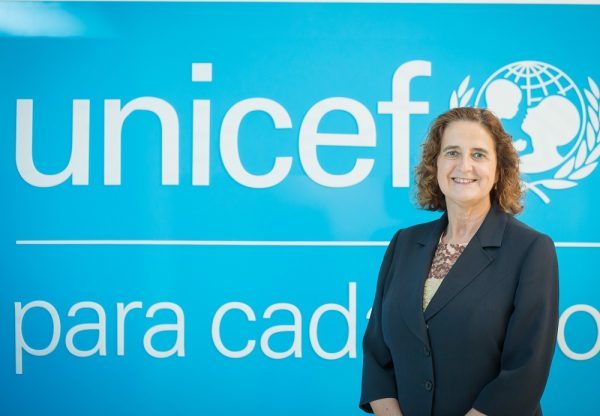
“With this resolution, we advance one more step forward to secure a legal identity for all children and adolescents in the Dominican Republic,” says Rosa Elcarte, Unicef representative in the Dominican Republic.
Moreso, Unicef’s position is that the document should be issued to all immediately after birth registration, regardless of age, as is done in many countries around the world. Unicef understands that the scope of the resolution should be extended progressively to all children.
In the explanation, Unicef says that the identity card is the document that proves a person’s identity. Through it, the state certifies who its holder is, recognizes his or her name, and gives him or her a unique identification number that serves to open the doors to the exercise of multiple rights.
Unicef explains that the issuance of the identity card will also help solve many pregnant adolescents’ inability to register their children at birth because they did not have legal identity themselves when giving birth.
Elcarte said: “This action helps to reduce one of the negative consequences of teenage pregnancy, which affects their babies. Without this measure, the Dominican Republic will not achieve universal birth registration. This right is included in the Convention on the Rights of the Child and is a Goal of the Sustainable Development Objectives (ODS 16)”.
The Unicef representative said that it is urgent and essential that the country take all necessary measures to reduce adolescent pregnancy, as stated in the National Plan for the Reduction of Adolescent Pregnancy (2019).
Unicef’s position is that the exception for girls under 12 years of age who have been abused and who, as a result of that abuse, have children, have an identity card, in no way constitutes legalization of that situation. Unicef points out that on the contrary, what it does is avoid a greater violation of rights; that the child of that abused girl, also suffer from the denial of legal registration at birth.
Unicef explains that an identity card’s issuance does not change the legal status or protection children and adolescents have by law. The document does not make its holder an adult or enable him/her to exercise, by him/herself, any of the exclusive powers to adults.
Source: DR1, El Caribe
Oct 24, 2020

President Luis Abinader went live from the Presidential Palace on 7 October 2020 to announce his commitment to 5G broadband in the Dominican Republic. The new standard is seen as a step forward for the country’s digital development. It will impact the transmission speeds of mobile data, allowing an exponential leap in the technological advance of both the productive sectors and all citizens.
President Abinader says the country accepts the challenge to become the second Latin American country to install 5G technology. The first is Chile. The digital transformation will create much-needed jobs, says the President.
On 7 October 2020, the Presidency issued Decree 539-20, declaring the right to universal access to the latest generation broadband internet network. The decree establishes that the productive use of information and communication technologies is of national interest.
Speaking at the Presidential Palace, he announced a new national policy for managing the radio spectrum of frequencies in the country to guarantee economic development through plans that drive the digital economy’s growth and competitiveness. He spoke of the transformation of businesses and government, equal opportunities, promotion of innovation and free and fair competition.
Abinader said he had instructed the Dominican Institute of Telecommunications director to initiate the bidding process for the spectrum for the development of 5G networks in the country. The announcement comes when the Internet’s use is now crucial for government, business, and education.
“We want to develop a plan for the deployment of 5G technology and broadband that is unprecedented in our history, a leap in level to hyperconnectivity that will change the future of our country,” said Abinader.
President Abinader indicated that the Covid-19 pandemic had highlighted the great digital divide and represents the greatest challenge for this year’s school year.
“We are looking to expand coverage nationally and will try to get it to every place where there is a school in our country,” he said.
Nelson Arroyo and Julissa Cruz, president and executive director of the Dominican Telecommunications Institute, participated in the Presidential Palace presentation.
As a regulatory body, Indotel must do its part to ensure that 5G service reaches the Dominican people as cheaply as possible. “The government’s goal is to increase quality and decrease exclusion,” said Nelson Arroyo.
According to the ENHOGAR-2018 survey, only 31.6% of Dominican households had access to the Internet. Currently, 8% of the population does not have access to a quality network.
Source: DR1, Elcaribe
Oct 8, 2020

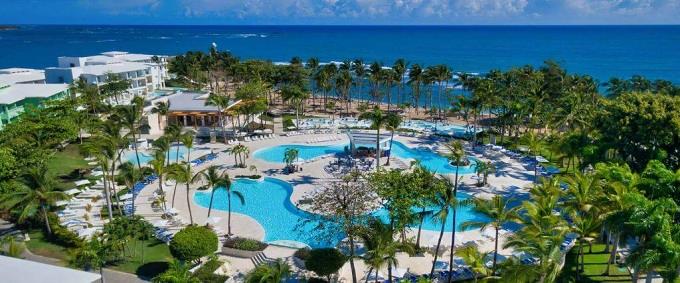
Puerto Plata is settling into its new normalcy. Several hotels have reopened and more expect to do so from now to January 2021. Domestic tourism is rediscovering the north coast as many Dominicans venture out to know their own country.
Listin Diario Puerto Plata correspondent Edgar Lantigua reports that by January, most north coast hotels expect to be back into operation under the new health protocols.
As reported, the first hotel to reopen was Senator Hotels. Its Playa Bachata hotel reopened on 6 July, Senator Puerto Plata followed both in Bahía Maimón.
Blue Jack Tar hotel and residences in Playa Dorada is also open. And Tubagua Ecolodge on the Puerto Plata-Santiago tourist highway for nature lovers.
In Sosua, the Sosua Ocean Village, New Garden, Hispaniola Residences, Casa Linda Residential, Infinity Blue, Casa 21 and Ahnvee Resort are receiving guests. These hotels feature fully-equipped kitchens and accommodate entire families.
In Playa Dorada, the Sunscape hotel is scheduled to reopen on 16 October, the Gran Paradise on 29 October, V Heavens on 1 November, the Casa Colonial boutique hotel on 15 December, and Gran Ventana on 2 January 2021.
In Cofresí the Lifestyle Holidays hotel and residential complex are scheduled to start operations on 1 November.
In Cabarete Velero Beach Resort, Millenium Resort, Sea Winds, Cabarete Ecolodge, and Natura Cabana are open. To the west, in Punta Rucia, the Punta Rucia Lodge is open, and to the east, in Rio San Juan, Ani Villas.
Source: DR1, ListinDiario
Oct 8, 2020

Cinemas in the Dominican Republic were shut down when the lockdown was ordered in mid-March for Covid-19.
This Thursday, 8 October 2020, the movie houses are allowed to reopen. They must only sell tickets for half their capacity. This should not be hard to comply with. Even in non-Covid-19 days movie houses operated most halls at below 50% capacity.
The movie houses are one of the last businesses to be able to get back to business. The new health protocol requires that moviegoers wear masks, keep social distancing, and purchase their tickets online.
Meanwhile, the Multicentro La Sirena at Winston Churchill and Gustavo Mejía Ricart avenues announced the opening of a drive-in cinema in their fifth-floor parking area. The cost of the film per car (max 4 persons) is RD$1,500.
Among the first films to show at indoor cinemas are:
The Hunt, I Still Believe, Invasion, Red Shoes, and the Seven Dwarfs, Bloodshot, Unidos.
In another development, “My 500 Crazy People,” (Mis 500 Locos), the Leticia Tonos film based on the book by Dominican psychiatrist Antonio Zaglul is scheduled to open for Dominican audiences at cinemas on Thursday, 15 October 2020. Waddys Jáquez and Lenin Comprés wrote the script. The drama takes place in 1953 during the cruel dictatorship of Rafael Leonidas Trujillo.
Foreign Films showing this week:
The Hunt
I Still Believe
Invasion
Source: DR1, Caribbean Cinema
Oct 8, 2020
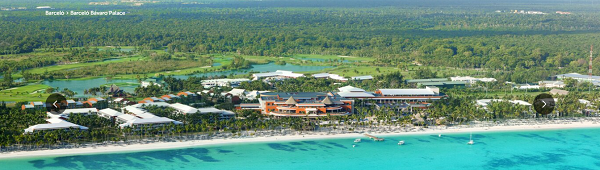
In a press conference, Tourism Minister David Collado said the ministry would send inspectors to verify that hotels comply with the approved health protocols for Covid-19. Dominicans have responded to promotions, filling hotel rooms on weekends.
The Ministry of Tourism acknowledges that resorts and hotels around the country were booked full for the past long weekend. People responded to the discounts on stays ranging from 20 to 50%.
Tourism Minister Collado announced that 19 hotels of eight chains are participating in new programs that offer great deals and vacation financing. The Domestic Tourism Incentives Plan begins on 1 October in alliance with the Reservas, Popular, and BHD Leon banks.
Collado mentioned Riu, AMResorts, Bahía Príncipe, Meliá, Viva, BeLife, Barceló, Hard Rock and Casa de Campo have deals with steep discounts.
Collado said the effort seeks to contribute to the recovery of the tourism industry but at the same time to the emotional health of Dominican families that have been in lockdown mode since March 2020. Collado says the government expects 10,000 hotel room nights to be filled from now to December.
Source: DR1, DiarioLibre
Sep 30, 2020

President Luis Abinader, Vice President Raquel Peña, and the Council of Ministers met at the Presidential Palace on Monday, 28 September 2020, and approved the National Budget Bill for RD$1.037 trillion. This is the first time a trillionaire budget is presented. The bill is scheduled to be submitted to Congress by 1 October.
Hacienda Minister Jochi Vicente said the government expects to receive RD$746 billion in revenues and to spend RD$891 billion.
The deficit would be about 3% of the Gross Domestic Product (GDP). Vicente said the public debt of the non-financial sector in the 2021 budget could reach 59.3% of the GDP.
Hacienda Minister Vicente said that focus is on stabilization and recovery. “We expect the economy to have fully recovered by the end of 2021 and in 2022,” said the minister.
The previous National Budget was for RD$997.1 billion.
Source: DR1, N Digital
Sep 30, 2020

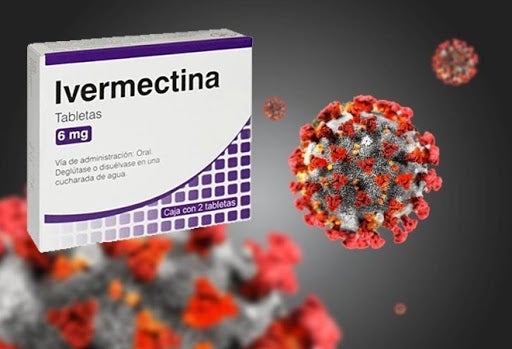
It’s not on the official list for Covid-19 treatments, but in the Dominican Republic, physicians at private and public hospitals regularly prescribe the anti-parasitic drug ivermectin to people who suspect they may have caught the virus. The reasons: The drug is readily available at pharmacies without prescription, is a low cost, and has low side effects with the correct dose.
Dr. Jose Natalio Redondo of Grupo Rescue with hospitals affiliated in Puerto Plata, Punta Cana, and La Romana says they have treated around 6,000 patients with ivermectin with a high success rate.
The advantage of ivermectin, says Redondo, is that it is a well-known and studied drug because it has been used for more than 30 years in humans and for about 45 years in animals. He said more than one trillion doses per year are prescribed without side effects all around the world.
He explained that the current dose for a person weighing between 80 and 90 kilos is six or seven tablets in total, which can be administered all together or in daily doses, preferably in the early stage of symptoms. “Our group is giving all six together in the emergency room to patients with COVID,” he said.
Diario Libre published on Tuesday, 30 September 2020, the findings of an Argentine scientific study that proves that the drug reduces the viral load of the disease.
Source: DR1, Listindiario
Sep 30, 2020
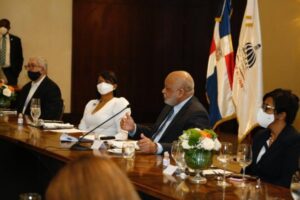
In a meeting with media directors on Tuesday, 29 September 2020, Education Minister Roberto Furcal confirmed that distance learning for public school children starts 2 November. He said television, radio, and the Internet will be used to reach the students. He said most public school teachers had already received their laptops, and the teachers’ training in distance learning had begun on 18 September. He said connectivity is the main obstacle to online learning.
He presented the Ministry of Education’s “Safe Education for All” plan. He said the national and international bidding process is underway to purchase devices needed for online education programs. He said that ministry technicians are at work to produce the contents. The ministry is producing 20 masterclasses on topics to prepare better citizens. Furcal announced that meanwhile, provisions are underway to renovate the schools for when in-person learning can resume.
Source: DR1, Acento
Sep 30, 2020
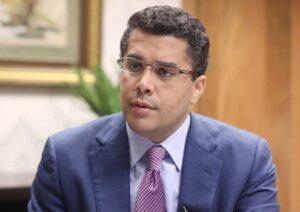
Tourism Minister David Collado announced on his Twitter account on 30 September 2020 that the Riu Bambu is being fined RD$1 million for violating the health protocol. Hotels represented by the Association of Hotels & Tourism (Asonahores) and the Ministry of Tourism had agreed to the Covid-19 health protocol established in Resolution DJ-03/2020.
Collado said that the management of the hotel said the situation would not happen again. “The owners of the hotel apologized to the local authorities and the President of the Republic, and assured us that the situation presented last weekend will not happen again,” said Collado. He said if there is a repeat, the Ministry would close the resort.
Over the Mercedes Day long weekend, a video showing a packed hotel and people violating physical distancing and other protocols circulated on social media.
Collado said that over the long weekend, the Ministry of Tourism inspectors verified that most hotels complied with the safety and hygiene measures.
Source: DR1
Sep 30, 2020