Dominican Republic agreement with China makes headlines around the world
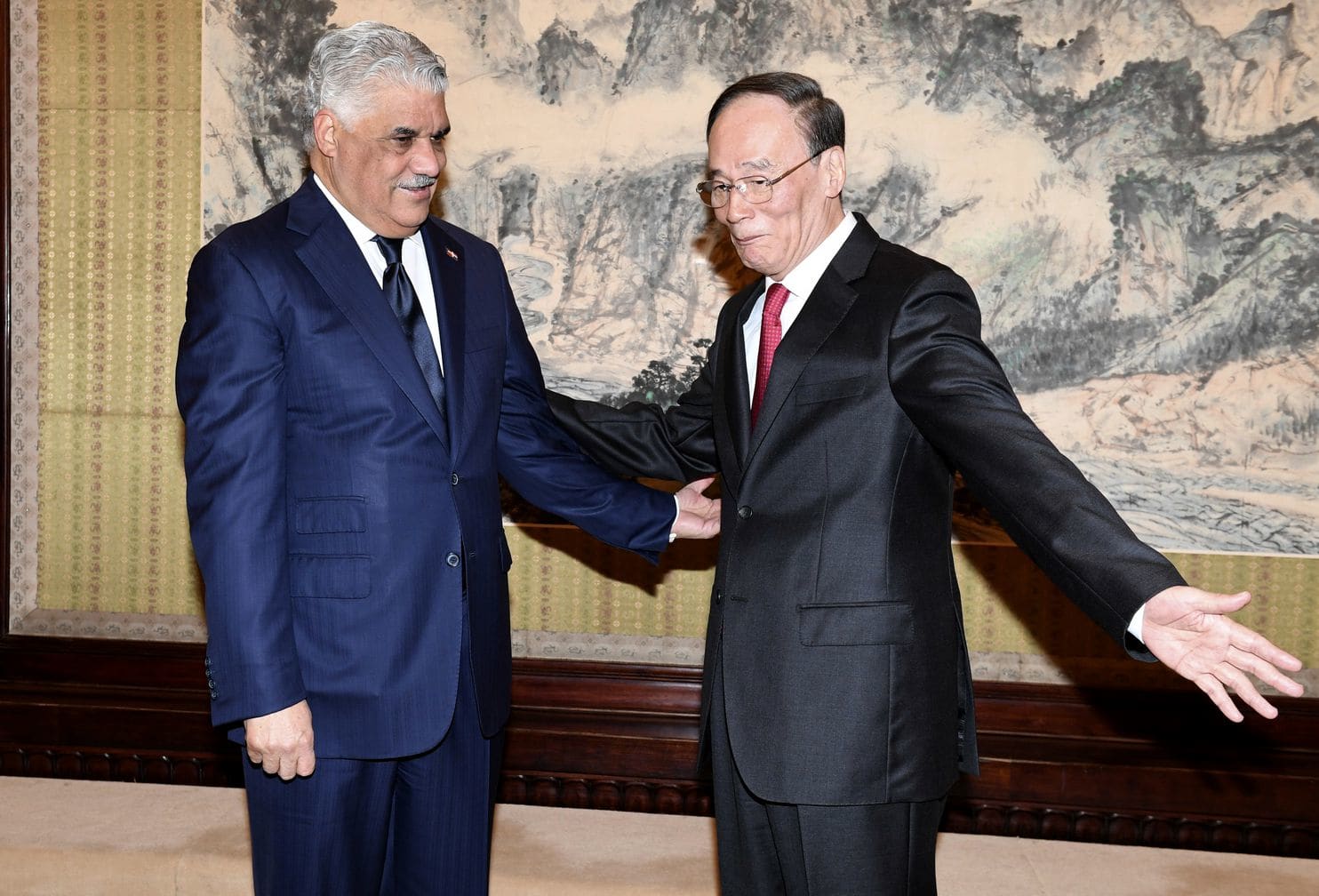
The establishment of formal diplomatic relations between China and the Dominican Republic has been a hot news topic throughout the world.
Officials from the People’s Republic of China (PRC) and the Dominican government signed a joint agreement at an event in Beijing, China on 30 April 2018 announcing the establishment of formal diplomatic ties. According to Foreign Minister Miguel Vargas, the Dominican Republic “breaks diplomatic relations with Taiwan (known as the Republic of China – ROC) which is an inalienable part of China, and will not maintain any kind of official relations or contacts [with ROC].”
The Dominican Republic is not the first country in the Central American and Caribbean to sever ties with Taiwan. Panama dropped its longtime ties with Taiwan in 2017. Costa Rica was first in the region to do so in 2007.
The People’s Republic of China insists that Taiwan is part of PRC territory. With the announcement of the Dominican Republic’s breaking of diplomatic relations with Taiwan, the island nation is now recognized as a sovereign country by only 19 nations: 10 in Latin America and the Caribbean, two in Africa, six small island states in the Pacific and the Vatican.
Taiwan government officials, expressing their deep dismay of the Dominican Republic’s decision, criticized what it called China’s “dollar diplomacy” and announced that Taiwan would immediately terminate ties with the Dominican Republic. As a result of the break in diplomatic ties between Taiwan and the Dominican Republic, the Taiwanese government has suspended all projects and assistance it provides to the country.
It has been reported that China has offered US$3 billion in assistance to the Dominican Republic. Of this money, it is speculated that US$220 million will be to build affordable housing; US$400 million to build roads; US$1.6 to build railroads and US$50 million to set up an IT system for the Civil Aviation Institute. Another US$300 million will be used to build a natural gas electrical plant. US$350 million will be invested in a hydroelectric plant and US$174 million for an incineration plant.
However, Taiwan’s Foreign Minister Joseph Wu warned that Beijing has failed to deliver on hundreds of millions of dollars in pledges to some of Taiwan’s former diplomatic allies and said that the Taiwanese government was “deeply upset by China’s actions.”
He said that China did not comply with its promises of US$1 billion for a refinery and US$400 million for roads in Costa Rica.
Flavio Dario Espinal, legal advisor to the Executive Branch, said at a news conference on Monday, 30 April 2018, that the change in foreign policy was based on the “needs, potential and future prospects” of the country and that the decision had been made due to history and socioeconomics and that it would be extremely positive for the future of the Dominican Republic. He went on to say that even without formal diplomatic relations with China, trade between the two countries “has grown year after year to the point that today China is the second biggest supplier of our imports.”
Espinal said the government informed Taiwan of its move earlier Monday and thanked the Taiwanese for their cooperation including the development of very important programs. Over the last few weeks Taiwan has given assistance to the Dominican Republic to the tune of US$35 million and two helicopters, 90 military trucks and 100 motorcycles.
Beijing announced yesterday, Tuesday that it would exchange ambassadors with the Dominican Republic “as soon as practicable”.
Source: DR1, Washington Post
May 5, 2018
Category: DR News |