Archive for May, 2023
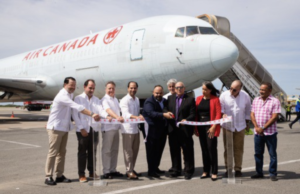
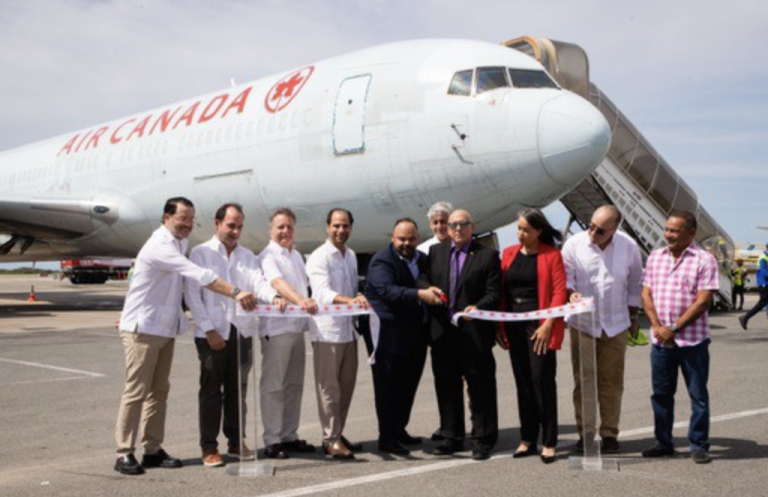
Air Canada Cargo began weekly cargo service to Punta Cana International Airport (PUJ) flying a Boeing 767 freighter.
Frank Elías Rainieri, president & CEO of Grupo Puntacana; Giovanni Rainieri, director of Airside Operations at Punta Cana International Airport hosted the team of Air Canada executives that welcomed the inaugural flight. These were:
Sergio Moreno, manager of Cargo Operations for Air Canada Cargo; Rene Rojas, general manager of Cargo and Services for Latin America for Air Canada Cargo; Yuderka Torres de Castillo, general manager of Cargo and Services for Latin America for Air Canada Cargo.
The service will operate once a week.
Punta Cana International Airport is a leading regional airport and the large number of flights transporting tourists are fitted for cargo operations to dozens of destinations worldwide. The Air Canada Cargo service is a step forward in turning the airport into a leading cargo hub for the Americas.
Source: DR1, Diario Libre
May 31, 2023
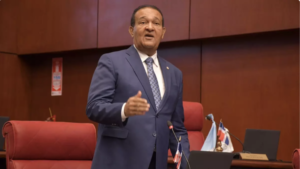
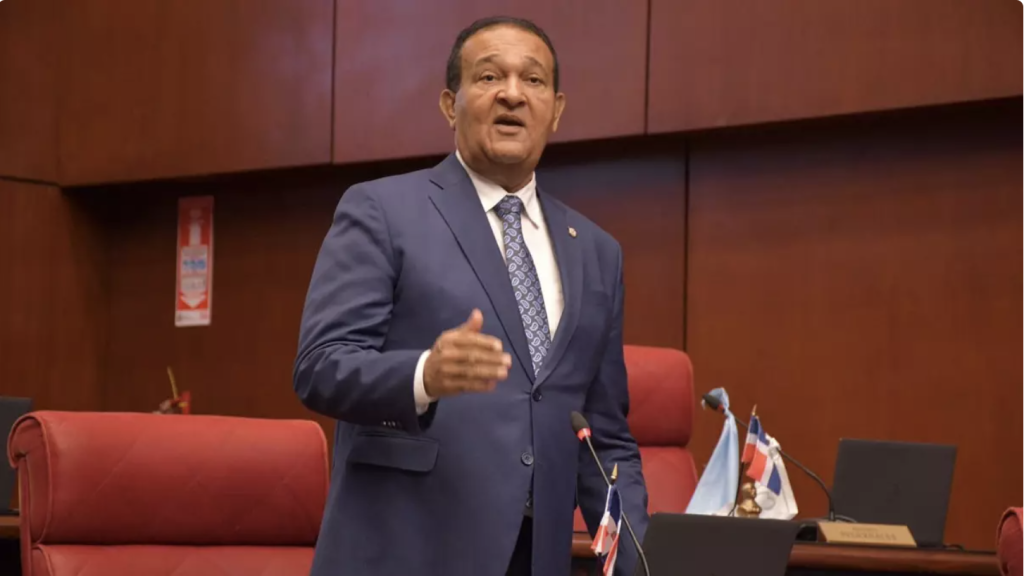
Santiago Rodriguez senator and transport czar Antonio Marte again calls for the Abinader administration to put a stop to the apparent business of selling visas to Haitians.
“We are not on the right track. That is a big business that visa and everybody qualifies. If everyone qualifies for the visa, we are really going to fill this country with Haitian immigrants,” Marte said speaking during Wednesday’s session of the Dominican Senate.
For Marte, it is necessary to stop the issuance of uncontrolled visas to citizens of the neighboring country and to create a commission in charge of purging those who request such service.
“It worries me. I have said on several occasions that the visa to Haitians should be paralyzed, that they should come here, apply for these visas, and that there should be a commission in charge of purging those who apply for them,” he said, as reported in Listin Diario.
Marte warned that at the pace immigration is going, in the future, Haitians will govern the country. He said that Haitian children already are 12% of the students in the public schools in the country.
“In a few years, this country will be governed by those Haitians, by that 12%”.
He also stressed that while the children of Dominicans have difficulties entering schools to study, we have that the children of Haitian migrants in this country already occupy 12% of places in public schools.
Finally, the congressman called on the authorities to address the situation.
Source: DR1, Listin Diario
May 31, 2023
The United States Embassy has just released the new fee schedule for visa applications beginning 17 June 2023. Tourist visas will now cost US$185.00, and those visas that require a petition, such as work or resident visas, will now cost US$205.00. These visas (H, L, O, P, Q, and R) allow a person to work in the United States.
Finally, there is a third type of visa, the E visa, which is for commercial use or for investors. This visa will cost US$315.00.
None of these increased prices apply to those who have already paid or been interviewed, according to the press release from the US Embassy.
Source: US Embassy
May 31, 2023
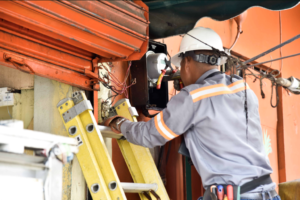
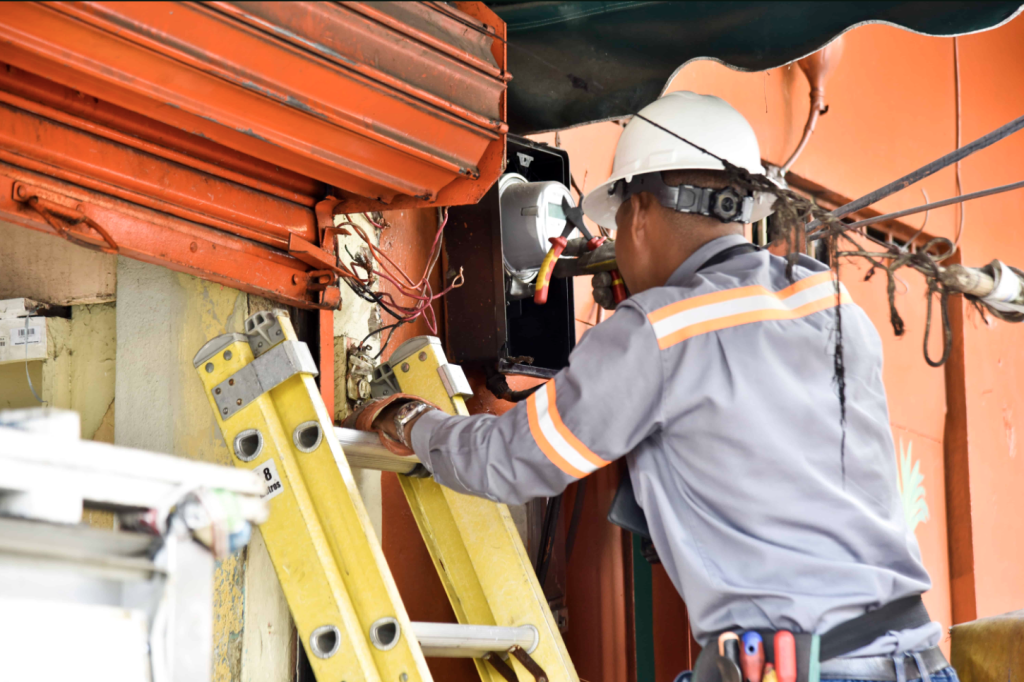
Milton Morrison, the general manager of the EdeSur power distributor in the capital city, admitted to mafias inside and outside the power distributor in an interview for Diario Libre. He says these affect the quality of the service.
Edesur’s general manager told Diario Libre that he is fully aware that in that public company, there are mafias dedicated to hindering customers to receive bribes.
He addressed issues such as contractors stating that there are no cables in stock to carry out a repair, and then when the client offers to pay, the cable appears.
Milton Morrison says he is determined to confront the corruption schemes. He said the corruption scheme is present in the line men of the contractors, the contractors, and internal employees at Edesur’s offices.
Employees at the commercial office in Centro de los Heroes reportedly inform people who come to open a new contract or to request 220 volts that there are no power meters or cables. But the manager of Edesur told Diario Libre that Edesur has 12,000 power meters and enough meters of cables in stock.
“Those same people who tell you that there is no cable, and those same linemen, when a client bribes them and they give them 500 pesos, the cable appears at once, so, was there or was there not? There is a mechanism that we are pursuing of people who are doing harm,” he told Diario Libre. Diario Libre reported that bribes of RD$8,000 to get a job done, are not unusual.
Source: DR1, DiarioLibre
May 31, 2023

The Festival de las Flores is set for 8 to 11 June 2023 in the mountain vacation area, Jarabacoa in La Vega province. The event this year will coincide with Corpus Christi (7 June 2023) long weekend.
The president of the Festival de las Flores, Mercedes Perez (Mily), and director Alba Yris Rodriguez say the event is in its 12th year and is dedicated to the care and conservation of the environment.
The Festival de las Flores is a multi-cultural activity event. It is an opportunity to purchase plants and flowers, watch horse riders parade, and enjoy multiple educational and cultural activities, including a contest of umbrellas and hats made from flowers, horse decorations, and the floral arts. Jarabacoa is a major center for flower cultivation.
As in previous years, the event is centered at La Confluencia Park in Jarabacoa city.
Source: DR1, LisitnDiario
May 31, 2023

The Ministry of Environment announced it has authorized the construction of the Pedernales international airport. The airport calls for the construction of a two-level passenger terminal and a runway of 3,100 meters long and 45 meters wide.
The airport is key to the development of the new beach areas in the southwestern province. The closest airport in the area, the Barahona’s Maria Montez International Airport was never operational because it was built before there were hotels in the area, and a sufficient number of hotels were never built. The government is betting on building thousands of hotel rooms in the Punta Cana area in the next five years to make the new airport viable.
The Ministry of Environment said that Environmental License Number 0492-23 authorizes the operation of the air terminal project on the Oviedo-Pedernales highway, specifically in the Los Tres Charcos section of the municipality of Oviedo.
The document also establishes a surface land extension of 13,978,821 square meters for the work and a construction area of 413,500.00 square meters.
“This is a transcendental step to continue with the execution of this important work, which is also already in the final review stage of its executive project,” indicated Victor Pichardo, executive director of the Department of Airports.
He said the ground studies for the runway, taxiways, and aircraft parking aprons are nearing completion, including the pavement designs, giving way for the bidding process for the construction of these facilities to start soon.
The facility will also include restaurants, offices, a control tower, a heliport, a cargo terminal, a multi-service building, a power plant, a water treatment plant, an incinerator, a fueling area, a mixed military building, parking lots, perimeter fencing and others.
The Cabo Rojo International Airport is part of the Abinader administration’s ambitious Pedernales tourism project, which involves constructing a series of infrastructure works, within the public-private alliance strategy, to develop the tourism industry in the southwest.
Source: DR1, Notocoas SIN
May 31, 2023

There are numerous banks available in the Dominican Republic, but the most popular are:
There is also Scotiabank, which is the only foreign retail bank in the country.
Most banks operate between the hours of 9 am and 5 pm. If you have an appointment for a specified time, then make sure you don’t arrive late. You can expect to find long queues on workdays—especially at the end of the month. Plus, hotter countries tend to have what’s known as “island time” (even when not an island!). In other words, whilst the majority of appointments will run on schedule, some may be 15-20 minutes later than originally agreed upon.
What documents are needed to open an account?
The good news is that there are currently no restrictions on foreign nationals opening bank accounts in the Dominican Republic. You don’t even have to be a resident to do so.
There are some banks that won’t allow you to open an account without legal residency in place. However, typically, most will allow you to open an account if you have a valid form of ID (such as your passport) and a letter of reference from your current bank—sometimes even the latter is not needed. Nonetheless, bear in mind that some banks may require additional documents.
How do I open an account?
To open an account, simply go into a local branch and speak with the branch manager. Social relationships in the Dominican Republic are very important, and the manager will either be able to help you personally or guide you to an advisor who can.
The process will start with a discussion of your financial requirements and whether you’re looking to open a current account or a savings account. The advisor will then guide you through the different account options and help you narrow down your choices. It’s important to find the one that’s most suitable to your requirements.
The currency used in the Dominican Republic is the Dominican Peso, but you don’t have to solely bank in this currency. You can choose to open a Dominican Peso account, a Euro account, a US Dollar account, or a combination of all three. However, it’s important to note that some banks will only issue a Visa debit card if it’s connected to a Peso savings account. Make sure you ask the branch manager or advisor about this when you’re opening your account.
If you’d like to proceed with opening the account, once you have been given all the details, you need to complete an application form. You will also have to show your proof of ID and banking letter, if applicable.
Are there fees involved when opening an account in the Dominican Republic?
To understand what your account’s interest rates and fees are, you’ll have to ask the bank or check the terms and conditions of your account. This is because they will vary depending on which type of account you hold. For example, savings accounts typically have a 4-7% interest rate, whereas loans and mortgages have an interest rate of 14-18%.
You may face additional fees, such as when making international transfers or withdrawing funds. The maximum withdrawal limit is usually 10,000-30,000 DOP (140-430 GBP) per day. You can withdraw cash using ATMs in supermarkets, petrol stations, shopping malls, or the bank itself.
However, it is recommended that you only use ATMs in bank branches, due to the occurrence of fraud. Fees for using ATMs vary, but if you’re using an ATM that’s owned by the bank you hold an account with, you shouldn’t be charged.
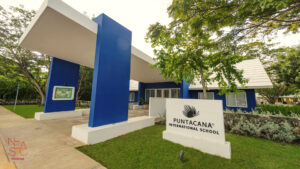
Public Schools
The Dominican Republic provides free public education to all children up to 14 years of age, including the children of expats. However, to continue receiving state-funded free education in secondary school beyond the age of 14, citizenship is mandatory. There is a high dropout rate after students complete their basic primary education, and the government, along with some NGOs, has been making efforts to reduce this number.
The academic year consists of two terms divided by a Christmas break. Summer holidays consist of eight weeks from mid-June to mid-August. In most public schools, the day begins at 7.30 am or 8 am and ends at about 2 pm. Some schools are open from 12 pm to 6 pm. Attending half a day of school has been the custom in the Dominican Republic, but some full-day schools have opened recently, for example in the Puerto Plata province.
Students are required to wear uniforms in both public and private schools in the Dominican Republic, and this additional expense is one of the factors responsible for the number of dropouts. Primary schools generally instruct students in academic learning, with very little emphasis on practical learning. Secondary schools provide more options, such as vocational courses. Some public schools, especially those in the capital city of Santo Domingo, teach the curricula in Spanish as well as in foreign languages.
Private Schools
Private schools in the Dominican Republic teach in English and enroll students from different parts of the world. The fees at private schools vary, and there may be additional expenses such as uniforms, textbooks and lunches. Private education has been in existence for decades in the Dominican Republic, and an increasing number of students are enrolled in these schools. The majority of schools in Santo Domingo are private, and more than half of all primary education students are enrolled in them. The spurt of growth in private education is partly due to the poor standards of the public education system in the country. Students must show some proficiency in English before they can be admitted into most private schools.
The Dominican Republic also has some religious private schools, such as Catholic schools, which are partially state-funded.
The government offers scholarships to high achievers in order to enable them to enroll in a private school of their choice. Like public schools, private schools must adhere to the national curriculum and follow the academic schedule established by the government. National examinations are held at the end of primary and secondary education.
Public, private, and international schools in the Dominican Republic follow the US-based A-to-F grading system.
International Schools
There are plenty of international schools in the Dominican Republic, and these schools have the freedom to either follow their own academic schedule or follow international curricula. International schools can expand their curriculum beyond the basic material, and they also have the flexibility to alter the academic year as long as the curriculum is completed. International schools are usually the preferred option for expats. These schools are located in various cities in the Dominican Republic.
The Colegio Adventista, is a Spanish-speaking institution located in Bonao, in the Monseñor Nouel province. Instruction in French and English is also provided here.
The Doulos Discovery School in Jarabacoa is a Christian school catering to students from kindergarten to grade 12. It provides instruction in English and Spanish and prepares students to enroll in local universities, as well as those in the United States.
The city of La Romano is home to the Abraham Lincoln School, which was founded to educate the children of American employees of the Central Romana Corporation. Today, it is open to other children and offers education in English and Spanish.
French expats who intend for their children to follow the French curriculum can send their children to the Ecole Francaise las Terrenas, a bilingual school in Las Terrenas. Another French school is the Ecole Francaise de la Costa Verde in Rio San Juan, which provides education from the primary level to the baccalaureate level.
The Santiago Christian School in Santiago is a US-accredited school, enrolling students from pre-school to grade 12.
The capital city of Santo Domingo has a varied choice of international schools, such as the American School of Santo Domingo, which offers the US curriculum; the Saint George School, which offers the International Baccalaureate program; and St. Michael’s School, a college preparatory school based on the US system.
In the resort town of Sosúa in the Puerto Plata province, expats can choose between the International School of Sosúa, which is a co-educational day school that caters to students from pre-kindergarten to grade 12, and the Garden Kids International School, a bilingual institution catering to the local and international families living in the country.
Source: Focus Expats
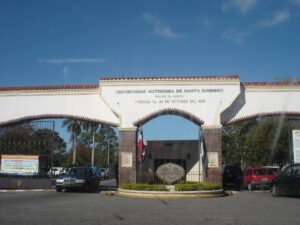
The public education system in the Dominican Republic may not have such a good reputation, but when it comes to higher education, the country has a number of respected universities that enroll both local and international students. In fact, the first university in the Americas, the Universidad Santo Tomás de Aquino, was established in the Dominican Republic.
Upon completing secondary education, students receive a certificate from the Ministry of Education that enables them to apply to local or international universities. Most Dominican universities are private, except for the Universidad Autónoma de Santo Domingo, which is the only public university in the country. The fees at this university are more affordable than those at private universities, although, in comparison to many other countries, higher education fees in the Dominican Republic as a whole are low.
However, only Dominican citizens are eligible for these subsidized fees. As a result, expats who have long-term plans to live here with their children sometimes arrange for citizenship before applying to local universities, in order to avoid paying the higher fees that are charged to international students. These fees are on par with those charged by universities in the US.
International students can also apply to the study abroad program offered by the Pontificia Universidad Católica Madre y Maestra, one of the country’s premier higher education private institutions. Proficiency in Spanish is not a prerequisite for this course, which lasts for a semester. However, students can opt for the classes taught in Spanish that usually cater to local students. For those who wish to learn Spanish during the program, the university has a language school on its campus.
Both public and private universities offer the standard bachelor’s, master’s, and Ph.D. degrees. University students in the Dominican Republic usually live at home while pursuing their higher education. However, student accommodation is available at some universities. Expat students arriving in the Dominican Republic for the purpose of higher education can choose to stay with a host family, which may help them settle into the local community and will also aid their learning of Spanish. Expats should be aware that the job market for graduates in the country is not very vibrant or lucrative, and that students may have to look elsewhere for employment.
Source: Expat Focus

The Dominican Republic has plenty to offer expats who come to live and work within its shores. It has some of the best natural scenery in the world, a pleasant tropical climate, and an affordable cost of living. Its expansive coastline is home to beautiful beaches, and there is great diversity in the interiors, in the form of mountains, deserts, and lush rainforests. The Dominican Republic is especially popular among expat retirees, who find that real estate in the country is inexpensive and the healthcare system adheres to a high standard. Expats with families also have much to look forward to when moving to the Dominican Republic. There are several educational options and opportunities available for children, and although the local language is Spanish, there are a number of multinational schools that adopt other languages of instruction. However, before moving to the Dominican Republic with children, it is important to be more fully informed about the education system in the country, and take stock of its pros and cons.
The Dominican Republic’s public education system does not have a great reputation. In fact, it is known to be among the world’s most underperforming education systems. The good news is that there are measures being taken to improve the situation. The main challenges faced by the education system are overcrowding in classrooms, a lack of proper facilities, and outdated curricula. National law makes it necessary to spend at least four percent of the country’s GDP on education. In reality, only two percent actually reach the education system.
Teachers earn meager salaries and find it hard to make a living. This is why not many local people choose to become teachers in the Dominican Republic. This also leads to the problem of a skewed student-to-teacher ratio, meaning students don’t receive adequate individual attention. Many of the teachers who are working in the Dominican Republic have not sufficiently acquainted themselves with the material they are required to teach. Statistics have shown a 40 percent dropout rate among students, even before they reach the eighth grade.
Other societal issues that exist in the country, such as a high rate of teenage pregnancy, also contribute to this high drop-out rate. The Dominican Republic’s literacy rate stands at a fairly impressive 92 percent, but studies have revealed that many high school students attain only a sixth-grade reading level, even upon entering university.
In recent years, teachers in the Dominican Republic have exerted pressure on the government to pay more attention to education, and there have in fact been some improvements, such as establishing more schools and lengthening teaching hours. However, teacher training and the scarcity of teachers still remain problems. This led to the World Bank’s 2015 announcement of the intention to invest $50 million to aid the national education reforms over the course of five years.
Education in the Dominican Republic is divided into three stages.
Preschool Or Pre-Primary Education
The initial level or the preschool stage enrolls students below the age of six. The first cycle of the pre-primary stage includes children up to the age of two; the second cycle is for children from age two to four; and the third cycle is for children between the ages of four and six. Legally, only the final year of preschool is compulsory. This year is funded by the government.
Primary Education
Primary schooling is mandatory and includes students between the ages of six and 14. This stage of education is divided into two cycles. The first cycle is for children aged six to ten and consists of grades one to four. The second cycle enrolls children aged 10 to 14 and consists of grades five to eight. Each grade is made up of ten months of education.
Secondary Education
Secondary school, which enrolls students from 14 to 18 years, is not mandatory. It consists of four years of education, divided into two cycles. In the first cycle, education in general. The second cycle permits students the flexibility to focus on art, technical or vocational education. With technical or vocational schooling, students may find it easier to access certain professions in the fields of agriculture and industry. An arts education aims at honing creativity in students and enables them to enter the fields of visual, performing, and applied arts or music. National exams are held at the end of secondary education, in which students must obtain a passing grade in order to graduate. They must also have participated in a community service program. Students who successfully complete secondary schooling receive a high school diploma, after which they can enroll in the university.
Expats who want their children to study at universities in the United States should have them educated at schools that have accreditation from the Southern Association of Colleges and Schools. For those looking at a university education in Europe, it is advisable to enroll your children in a school that teaches the International Baccalaureate, such as the Saint George School in Santo Domingo.
Source: Expat Focus