Archive for March, 2021

Diario Libre reports on the many films and reality shows carried out in the Dominican Republic. The Film Incentives Law 108-10, the variety of locations, and skilled workforce have made the DR a popular film location.
Data from the Film Agency (DGCine) reveals that during the peak year of the Covid-19 pandemic, the country closed in black with benefits of RD$7.4 billion for the issuing of the film permissions. Agency director Marianna Vargas says there are expectations the total will double this 2021. She mentioned that a single production will pay US$80 million.
This week, Vin Diesel announced he will install a film-producing studio in Bergantín in Puerto Plata, on the north coast. And the owner of one of the largest studios in Europe, Nu Boyana Film, and founder of two production companies, Nu Image and Millennium Media, Avi Lerner has explored building a studio in Cap Cana in the Punta Cana area on the east coast of the country.
In the southeastern coast, Lantica Media operates a large facility in Juan Dolio.
Recent productions filmed here are: “Old” with Gael García; Netflix productions “The True Memoirs of an International Assassin” with Kevin James and “The I-land”. Also, “Shotgun Wedding” starring Jennifer Lopez; “Arthur The King” with Mark Wahlberg; and “Fast and Furious 9” with Vin Diesel.
Among the reality shows carried out here: Survivor Turkey, Survivor Greece, Survivor Mexico, Exatlon USA, Exactlon Mexico, “La isla de las tentaciones” (Mediaset España).
Source: DR1, DiarioLibre
Mar 31, 2021
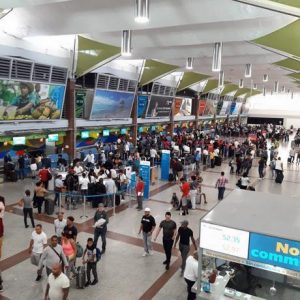
The Civil Aviation Board (JAC) announces that as of Thursday, 1 April 2021 travelers will be required to fill out online forms for entry and departure to and from the Dominican Republic. The authorities are consolidating a single form for migration, customs, and public health requirements. The JAC decided to implement the digital format during the work session held on 10 March 2021.
The form is to be available on Migration digital form
It is available in English, Spanish, French, Italian, Portuguese, Russian, and German.
Source: DR1
Mar 20, 2021
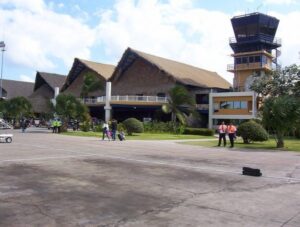
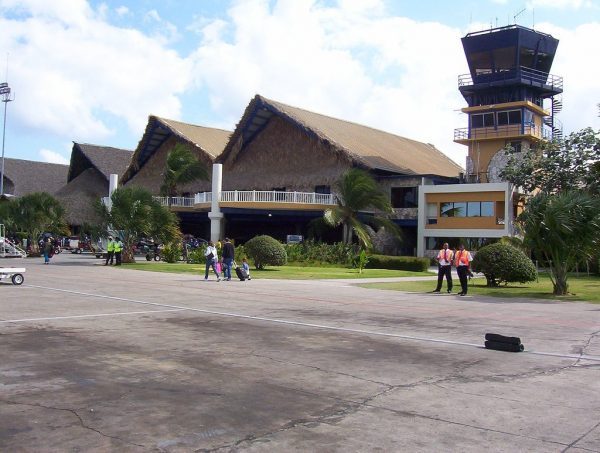
Punta Cana International Airport (PUJ) again has received the ACI Award for Best Airport by Size and Region. The award is in the 5-15 million passengers category. 2020 is the fifth consecutive year for which the east coast airport receives the award. The Punta Cana International Airport is the country’s largest in size and number of passengers served. The Airports Council (ACI) World Airport Service Quality awards highlight the world’s best airports as judged by their customers.
Punta Cana International also received the new 2020 Best Hygiene Measures by Region award that focuses on hygiene-related questions in the year of the Covid-19 pandemic. The award has provided airports with a reliable method of gauging customer response to new health measures and recognizes airports’ success in responding to the intense focus on hygiene. The new category also complements ACI’s Airport Health Accreditation program, launched in 2020, which has resulted in more than 275 airports being accredited already.
ACI highlights that the Covid-19 pandemic has had dramatic impacts on global passenger traffic in 2020 and has changed customer perceptions and expectations of the airport experience. Despite the challenges posed by the pandemic, airports continued to collect ASQ surveys from their customers throughout the year and 89 individual airports around the world won 108 awards.
The Airport Service Quality program is the world’s leading airport customer experience measurement and benchmarking program. The ASQ Departures program measures passengers’ satisfaction across 34 key performance indicators. More than half of the world’s travelers pass through an ASQ airport.
Airports Council International (ACI), the trade association of the world’s airports, was founded in 1991 with the objective of fostering cooperation among its member airports and other partners in world aviation, including the International Civil Aviation Organization, the International Air Transport Association, and the Civil Air Navigation Services Organization. As of January 2021, ACI serves 701 members, operating 1933 airports in 183 countries.
Source: DR1, ACI
Mar 9, 2021
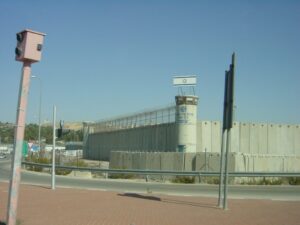
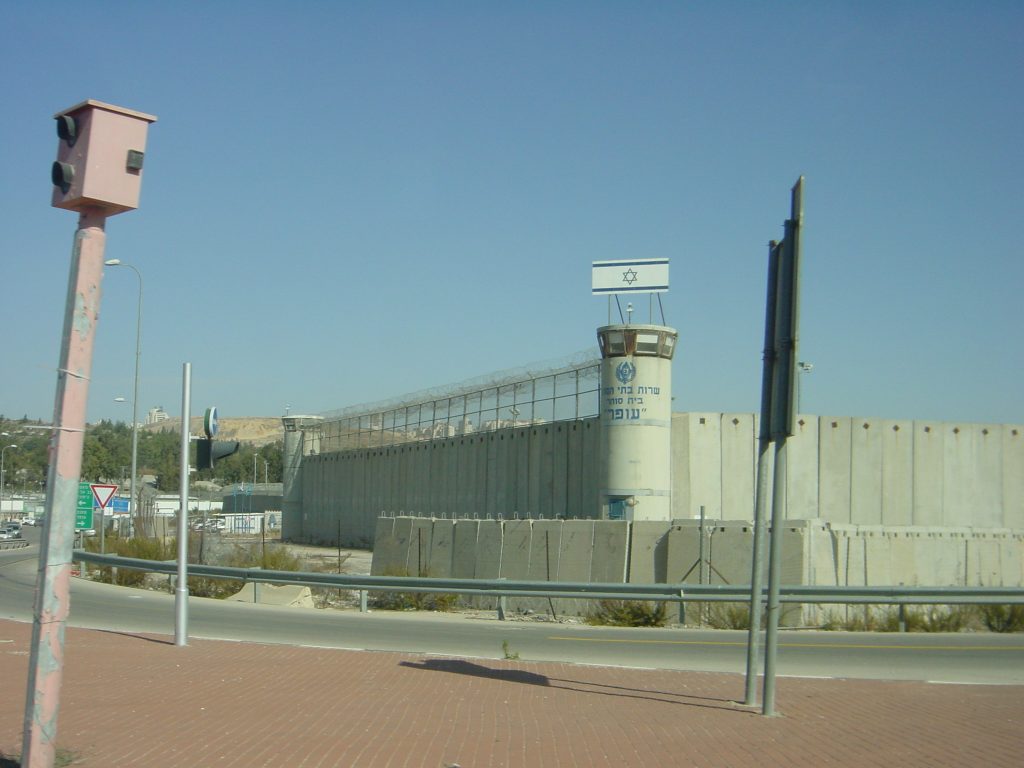
Foreign Minister Roberto Alvarez says the Dominican government is in talks with Spanish and Israeli companies for the construction of a fence on the border of Haiti and the Dominican Republic. The border is over 300 km. The fence construction would have a length of 190 kilometers, and is estimated to cost more than US$100 million, or about RD$6 billion. Right now, there are only small stretches of border construction, primarily at the Jimaní and Dajabón.
Alvarez said the 180 km extension is a long-term project for the government. He said the government has contracted for the construction of 23 kilometers of the fence between both countries. He said by the end of the year, there should be around 30 km of border fences in places of easy access. Alvarez said the project calls for the construction of a “technological and physical” border. The Dominican authorities intend to install sensors and drones to secure the physical fence.
Alvarez made it clear that the perimeter fence’s objective is to facilitate trade with Haiti, avoid irregular migration, stop the smuggling of all kinds, and guarantee peaceful coexistence between the two nations.
Alvarez was interviewed for “El Día,” hosted by Huchi Lora, Carolina Santana and Edith Febles on Telesistema, Channel 11.
The migration problems are likely to continue until the economy improves in Haiti. Gustavo Sanchez, spokesman for the Dominican Liberation Party (PLD) in Congress says that the Dominican government can build all the walls it wants and the Haitians will then build tunnels under to enter the country. In Sánchez’s opinion, as long as the Haitian people remain in a “state of social decomposition” and with “high figures of rampant poverty”, Haitians will continue to cross the border to settle in the country.
With the famous phrase “pigeons always fly where there is bread”, the opposition congressman expressed himself on the situation of famine prevailing in Haiti. He added that until the Haitian authorities do not solve this problem, its inhabitants will continue to cross the border because survival is the first human instinct.
Source: DR1, N Digital
Mar 9, 2021
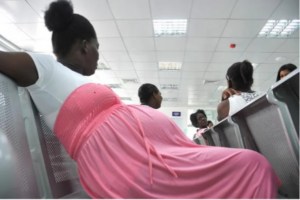
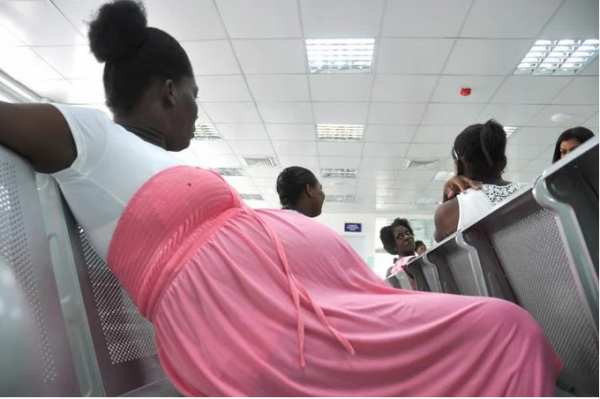
Haitian women in labor flock to Dominican maternity hospitals to take advantage of the free medical services. Local physicians complain the women usually suffer from anemia and other medical conditions.
According to statistics from the Hospital Universitario Maternidad Nuestra Señora de La Altagracia in Santo Domingo, the number of births to Haitian mothers outnumber the number of births to Dominican citizens. The hospital is the largest maternity ward in the country. Of 2,283 births at the largest maternity hospital in the capital city, 1,050 have been to Dominican mothers, or 47%. Another 1,196 births have been to Haitian mothers or 53%.
As reported, waiting rooms are crowded with pregnant women, most of whom do not speak Spanish and sometimes do not even understand what they are told. Listin Diario reporters say the La Altagracia Maternity Hospital and the San Lorenzo de Los Mina Maternity Center are the public hospitals where the largest number of births are registered in the country. Haitian women come to give birth in the Dominican Republic motivated by the no-cost services.
Thousands of Haitians also give birth in border hospitals. There Haitian women in the waiting rooms outnumber those of the Dominican Republic. In some border town, nine out of ten women giving birth are Haitian, according to the report in Listin Diario.
Source: DR1, Listin Diario
Mar 9, 2021
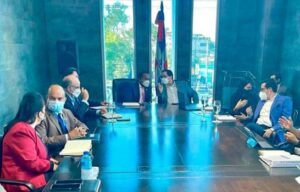
The Airport Department (DA) is preparing the draft for the authorization of the development of the Pedernales International Airport project. The government is seeking a public-private partnership to build the airport. The airport would be built in Cabo Rojo, described as the next great Dominican beach destination. The Pedernales Development Plan envisions the construction of 3,000 lodging units in the southwestern area. Pedernales is most famous for its Bahía de las Aguilas beach area, a strip of pristine white sands, and crystal clear shallow waters. The province is on the border with Haiti.
Victor Pichardo, of the Airport Department, says that while the international airport is built, the government is contemplating the construction of a control tower and a small terminal to service the first tourists.
Source: DR1
Mar 9, 2021
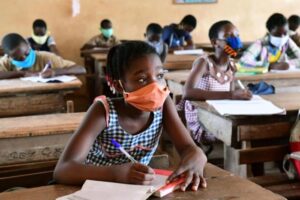
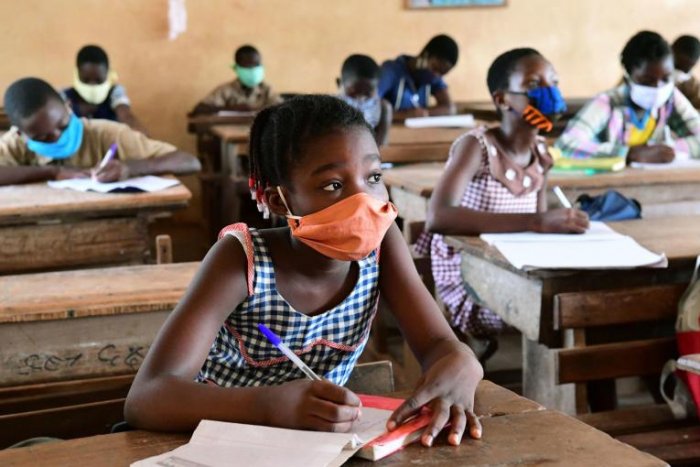
Rosa Elcarte, the local representative for United Nations International Children’s Emergency Fund, acknowledges governments are sovereign in making decisions such as when to return to in-person learning in schools. She said the recommendation of Unicef is for schools to reopen under hygiene protocols.
She said the Unicef has recommended that schools reopen as soon as possible in all countries. Interviewed on La Cuestión radio talk show on 107.7FM, she said that students have fully returned to in-person learning in Costa Rica, Paraguay, Nicaragua, and Belize in the Americas. These countries have fewer active cases than the Dominican Republic, yet higher 1M death rates.
Elcarte stressed the risk of keeping children out of school is primarily in that in boys, it increases child labor and in girls, the number of early cohabitation and child pregnancies. “It is a serious problem and one that has to be confronted comprehensively,” said Elcarte.
She mentioned the Dominican Republic has been slow in reopening school and has been proceeding against the global trends for the return to school. She stressed the Unicef could recommend, but each country is sovereign to make its own decisions.
Elcarte says she would have liked to see a faster return to in-person schooling in the Dominican Republic. But, she said the country has taken a step in this direction with the announcement on Friday, 5 March 2021 that school would reopen in the pre-school and elementary levels. She said studies show small children do not spread the disease, while teenagers 16+ spread the disease as adults do.
Education Minister Roberto Furcal announced a protocol for the gradual reopening of schools starting with those eight years and younger. Furcal limited the reopening to municipalities where the positivity rate is 5% or less. Other requirements are that the school has potable water, that the local committee approves the reopening, and that each child has written parental approval. So far, this means that only three provinces qualify, Elias Piña, Monte Plata, and Independencia.
Elcarte expects schools in rural areas to open before schools in the cities. She said it is up to adults to continue preventive measures to reduce the spread. The virus spread has been dropping. Elcarte is concerned that there could be a spike again as people gather for the Easter holidays.
Elcarte said that Unicef recommends for countries that had closed fully to in-person learning start with the pre-school and elementary children to get accustomed to the Covid-19 back-to-school safety protocols.
Source: DR1
Mar 9, 2021
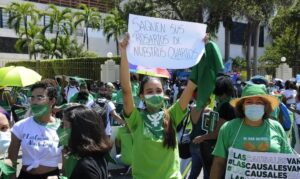
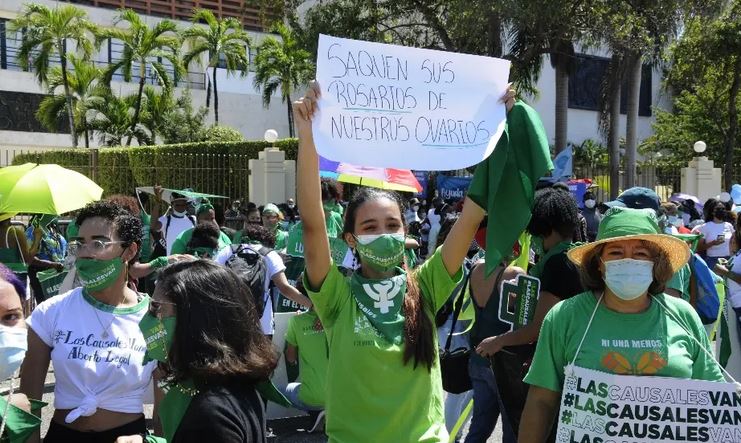
The three grounds for exceptions to the banning of abortion in the Dominican Republic are a trending topic on the International Day of Women. Protest groups have urged Congress to include the three grounds in the Penal Code. The Chamber of Deputies president Alfredo Pacheco (National District -PRM) has instead favored a separate bill drafted for the three exceptions. Yet, women groups advocate that first the criminalizing of abortion needs to be removed from the Penal Code that is being reviewed in Congress.
The three grounds are:
• The life of the mother is at risk.
• The fetus is unviable.
• The pregnancy resulted from rape or incest.
Senator Faride Raful (National District-PRM) called for the deputies to remove the criminalizing of abortion from the Penal Code if the legislators insist on sending a separate bill on the three grounds. She says if the legislators want a special bill, then they need to first eliminate the mention of abortion in the Penal Code.
The Gender Institute at Intec university in Santo Domingo issued a statement advocating for the passing of the three grounds for voluntary interruption of pregnancy and other measures in favor of women’s rights on the occasion of International Women’s Day. The statement goes a step beyond and demands the human rights of women to make their own decisions.
Source: DR1, Hoy
Mar 9, 2021