The Presidency extended the present Covid-19 curfew that is now in effect from 2 December to 22 December. The Ministry of Public Health has said that depending on the indicators, the government will decide whether to authorize more flexibility during the Christmas and New Year holidays. Recent Covid-19 epidemiological bulletins show an increase in the spread of the disease.
The announcement of the extending of the evening curfew is in Decree 554-20. The curfew schedule is the same – Monday to Friday from 9 pm to 5 am, and Saturdays, Sundays, and holidays from 7 pm to 5 am. The government issues special circulation permits to a large number of people that are authorized to circulate during the curfew. Among these are health care providers, private security work, press, food deliveries, airport transporters, among others.
Source: DR1, ListinDiario
Nov 1, 2020
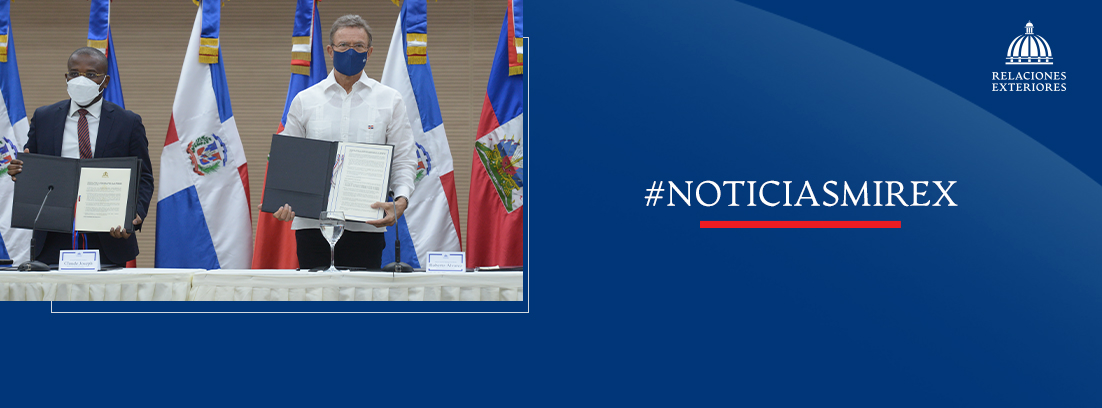
Foreign Relations Minister Roberto Alvarez announced a joint declaration with his colleague, Claude Joseph of Haiti after meetings this week. Joseph head a high-level mission from Haiti that is visiting this week. The channels are open for improved communication between both countries.
The foreign ministers signed a protocol for the repair or replacement of several border markers on the border between Haiti and the Dominican Republic.
Said Alvarez: “For the Dominican government, it is of the highest priority to establish an agenda with Haiti. This agenda addresses transcendental issues for the development and benefit of both nations. Among them, formalizing and strengthening bi-national trade in both directions, establishing technical cooperation programs between both states, bringing our positions closer in regional forums and creating a common framework to protect this island that we share for the welfare of our peoples,” said the Dominican Foreign Minister.
Alvarez pointed out that the border must and can become a source of well-being and progress for both countries’ citizens. He said the meeting with Joseph is an important step in this direction. Alvarez highlighted that better border management will allow both states to take advantage of bilateral trade. At the Ministry of Foreign Relations, we are convinced that a better border means that jobs, better income, environmental and environmental conditions for sustainable human development, said Alvarez.
The foreign ministers initiated the revised bilateral agenda with the signing of a protocol for the repair or replacement of the 240, 241, and 251 markers that identify the border limits between both nations in the same locations as was established by the border delimitation agreements.
“These pyramids were buried underwater after the flooding of Lakes Azuey and Enriquillo several years ago. Besides, the same natural phenomenon generated the displacement of neighboring communities into Dominican territory. The protocol we are signing today, which has been satisfactorily negotiated for some time now, allows us to relocate these communities in a peaceful and orderly manner and to re-establish the common pyramids,” explained Álvarez.
The document signed by both ministers of foreign affairs establishes that each country will designate a technical committee to order the topographical survey, plans, and models for re-establishing the above-mentioned markers and any other damaged or submerged between the pyramids 238 and 252.
The committee will also prepare the budget for heavy equipment and machinery with the fair distribution of costs shared between the two parties.
The border markers are regulated by the Treaty of 21 January 1929 on the delimitation of the border between the two countries; the Treaty of Friendship, Perpetual Peace and Arbitration signed on 20 February 1929; the Border Boundary Agreement of 27 February 1935; the Additional Protocol to the Border Treaty of 21 January 1929 signed on 9 March 1936; and the act registering the joint inventory work on the border pyramids carried out in 2002, all related to the territorial limits of the two countries.
Source: DR1, Ministry of Foreign Relations
Nov 1, 2020
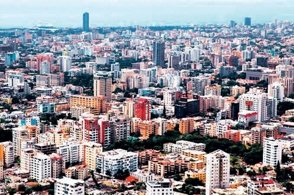
The city government of the National District has passed new rulings that facilitate construction in the city. While the Polígono Central and Gazcue areas of the city are excluded, the new regulation applies to most of the capital city. The new regulation authorizes a 20% increase in the density of the city areas. The increase in density also allows for high rises up to 40 floors on main avenues.
Neighborhood groups protested the increase in density, arguing that the city government is not taking into account the services in the areas, including infrastructure, roads, and parking, when authorizing more dwellings in the same space.
Source: DR1, Listindiario
Nov 1, 2020