To make bus transport safer in these Covid-19 times, OMSA announced that air conditioning will no longer be used on the buses that circulate in Santo Domingo and Santiago.
Visa announces machines have been installed on OMSA buses on the Av. 27 de Febrero route, the longest in the city of Santo Domingo. The Visa contactless payment cards are valid.
This initiative, the first in the entire Caribbean, was developed using an open payment system. Now the contact payment cards, be they credit, debit or prepaid, issued by local banks or abroad, can be used to travel on the public bus system.
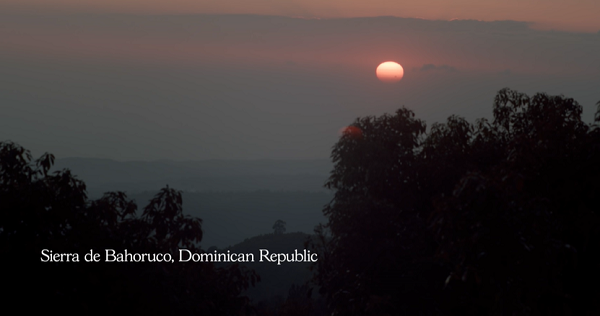
“Avocado Rise” is a short, 10-minute documentary on the environmental challenges and ravages of growing avocados in a protected area of the Dominican Republic. This documentary deals with the avocado farms authorized by the Medina administration to operate in the Bahoruco/Jaragua Biosphere, one of the most environmentally diverse areas of the Dominican Republic
The Bahoruco Sierra is covered under the Law of Protected Areas, but that does not seem to have bothered persons related to the highest strata of Dominican political life. The cloud forests of Bahoruco are unique for their huge biodiversity, but in the area around Los Arroyos, there are just some small patches of this exuberant foliage. Since the Sierra flows into Haiti, there is ample evidence of the terrible deforestation as just on the other side of the border there is nothing but rocks and exposed and denuded terrain.
Much of the Dominican side has now been transformed into avocado monoculture cultivation.
It took a Kickstarter campaign to raise the 75,000 Euros needed to bring this 10-minute documentary to life.
The popular shoe, Tropicfeel was closely involved in the process.
Since avocados are a product in such high demand, they decided to “influence the consumer’s conscience regarding avocados in the United States and Europe, and show the consequences of illegal cultivation of this product, as well to try and avoid the deforestation of protected lands such as the Bahoruco Sierra.”
The winner of the presidential elections on 5 July 2020 gets a basket full of major problems. Besides having a country in the throes of a major, worldwide pandemic, the newly elected administration will receive what many journalists describe as a “devastated economy.” The biggest hurdle to conquer is the restart of the economy, with a push for productive sectors in these Covid-19 time.
These efforts might well be overcast by the possibility of rising petroleum prices as the OPEC nations try and drive up the price of oil. The Dominican Republic remains heavily dependent on imported oil, both for transport and power generation.
President Medina has added RD$150 billion to the National Budget and received millions from the World Bank and the International Monetary Fund (IMF) to deal with economic stimulus and mitigating the impact of the Covid-19 on the poorest sector of the population. The IMF approved US$650 million (RD$378.5 billion) to steady the economy. The national debt has increased significantly to fund relief operations.
In the case of the Dominican Republic, the Central Bank has a decreasing amount of reserve hard currency on hand. Nevertheless, Hector Valdez Albizu, the governor of the Central Bank, says that the fundamentals of the DR economy are solid, and will serve to support a faster than average return to economic sustainability, “with low inflation rates and macro-economic stability.”
The Central Electoral Board reported the recovery of most of the RD$37 million in working capital to pay staff working in the Sunday presidential and congressional election in Santiago.
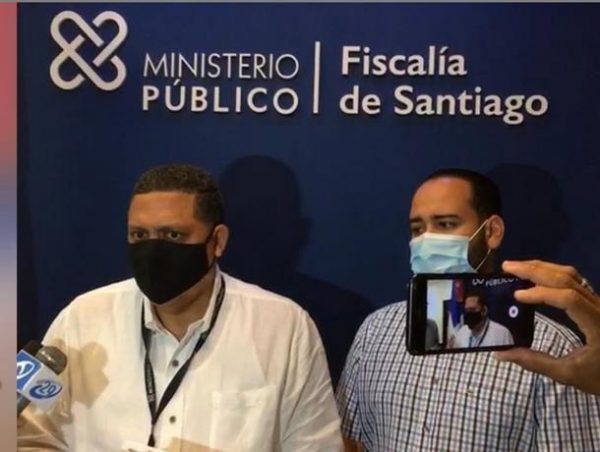
The Santiago District Attorney’s Office accuses security guard Joel Antonio Duran Tavarez of the robbery of the electoral board of that district. The prosecutors said that during a search of the house of his mother-in-law they found almost RD$2 million. “The remainder RD$35 million was hidden in the plafond (ceiling) at the Santiago Electoral Board,” said the Attorney General Office.
Durán Tavarez worked as security at the Santiago Electoral Board for the past five years. He was arrested.
The Santiago prosecutor, Francisco Núñez, explained that the first lead to solve the robbery they found after searching the man’s residence. There they found a small piece of paper that had wrapped the money bundles.
Another search, carried out at the house of Mr. Duran’s mother-in-law, resulted in the finding of more than one million pesos, which confirmed the research thesis they were carrying out.
Haime Thomas Frías Carela, president of the Santiago Electoral Board, confirmed the resolution of the robbery case that occurred in the early morning of Tuesday. He said all the cash minus RD$15,000 has been recovered.
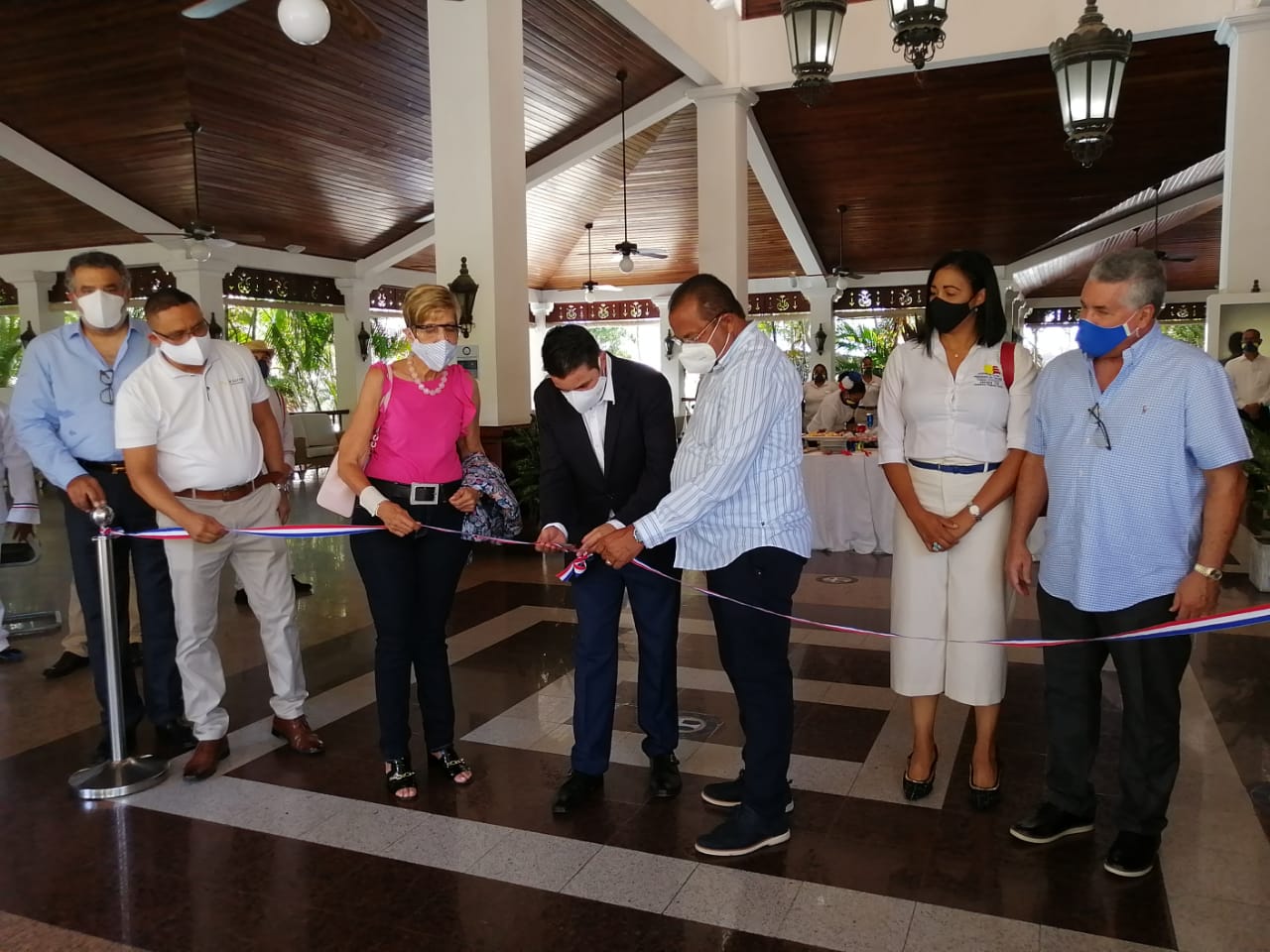
PUERTO PLATA.- Part of the main authorities of Puerto Plata participated today in the act of reopening the hotel complex owned by the Spanish chain Senator Hotels & Resorts.
The brief activity was led by Mr. Alejandro Castillo, who is the CEO of Senator in the Dominican Republic, and reported that they have already received the first guests who will occupy 30 rooms.
He explained that in this first stage, only the Playabachata Hotel will be in service, which is one of the two establishments in the Senator hotel complex and is the largest number of rooms in Puerto Plata since it has 1,590.
“Going out to the market and starting operations with a limited number of reserved rooms, but with 200 employees, is an expression of support and confidence in the speedy recovery of tourism activity in this region,” Castillo said.
After cutting the symbolic ribbon of reopening, the hotel executive thanked the presence of the current deputy and senator-elect of Puerto Plata, Ginette Bournigal de Jiménez, the municipal mayor of San Felipe de Puerto Plata, Roquelito García, as well as the provincial director of Tourism Jakaira Cid.
Likewise, the president of the Association of Hotels, Restaurants and Tourist Companies of the North (ASHONORTE), José Natalio Redondo, as well as Enrique de Marchena Kaluche who is an entrepreneur with an outstanding career in the Dominican tourism sector.
The Senator chain ensures that with the reopening of its first hotel, a confidence signal is sent to the market and the results can be observed since the tour operators will verify that they can bring their clients because there they are offered a guarantee of health security.
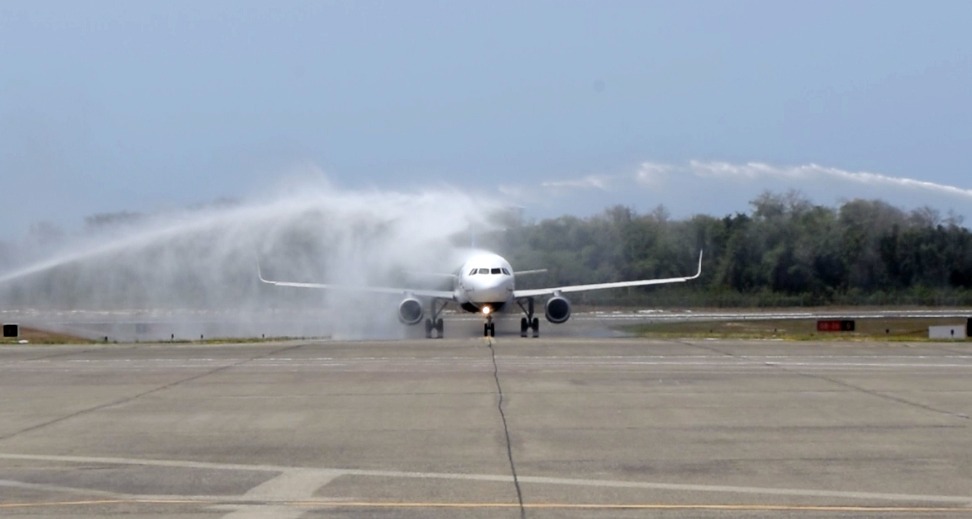
PUERTO PLATA.- At the typical merengue rate, the first passengers who arrived at the General Gregorio Luperón International Airport after the pandemic on a Jet Blue airline flight from New York City were received.
The reception of the flight that marks the restart of operations at this airport was led by Enrique Pacheco, director of operations of Aerodom and Jakaira Cid, regional director of Tourism.
On the flight that made landfall after 2:00 in the afternoon in which 116 passengers arrived between Dominicans and foreigners with all the corresponding sanitary measures and complying with the protocols of the World Health Organization (WHO).
The event was attended by the mayor of the San Felipe municipality of Puerto Plata, Roquelito García, the mayor of Sosúa Wilfredo Olivence, Sixto Peralta of the Chamber of Commerce, Lowesky Luciano, representative of the Industrial Free Zone, among other personalities.
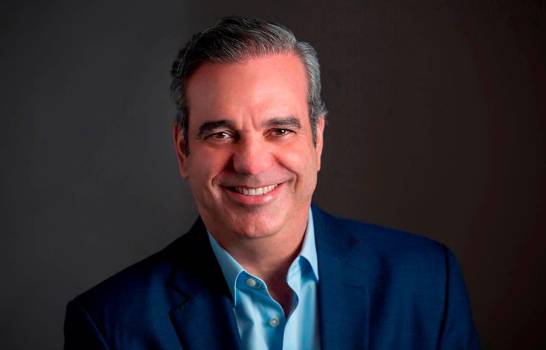
PUERTO PLATA.- Last Sunday’s elections were overwhelmingly won in Puerto Plata by the presidential candidate of the Modern Revolutionary Party (PRM) and allies, Luis Abinader.
Similarly, at the senatorial level, the current congresswoman Ginette Bournigal de Jiménez, with a wide margin leads the way with 57.07% compared to 42.65% of the candidate of the Dominican Liberation Party (PLD) and allies, Javier Clark.
Bournigal de Jiménez so far has compiled 65 thousand 609 votes, when 470 polling stations have already been counted and only 123 remain to be counted, while Clark received 49 thousand 28 votes.
Likewise, the lawyer Milton Jiménez Guidín, who was the candidate for senator of the National Citizen Will Party (PNVC), received 328 votes for 0.29%.
According to the preliminary results offered by the Central Electoral Board (JCE), exactly at 9:30 in the morning on Monday the total number of registered is 246,477 voters in 593 electoral colleges.
The votes cast are 118,612, while the null votes amount to 3,646, only at the Presidential and Senate level, since the line of Deputations evaluates the preferential vote according to the Hondt method.