Archive for May, 2020
New curfew hours are in effect as of today. Unauthorized circulation of people and vehicles is banned now from 7pm to 5am. Previously the curfew was from 5pm to 6am. A digital form is available at the Ministry of Public Health website for requesting permission to circulate during curfew hours.
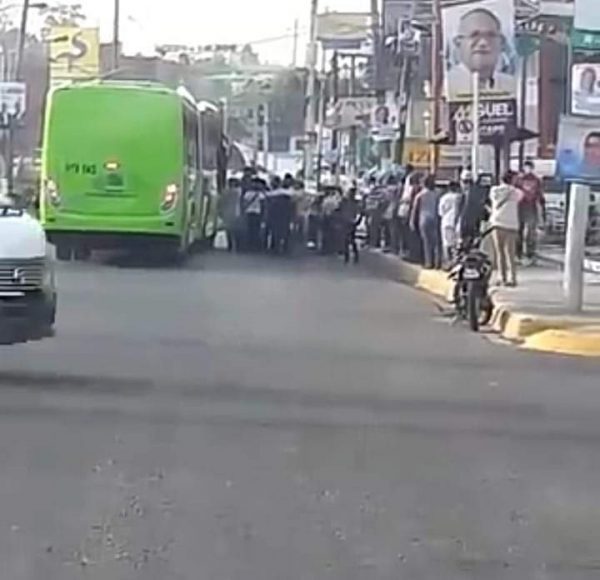
The government mass transit services – Santo Domingo metro, skylift and OMSA buses – are back as of Wednesday, 20 May. But staff have orders to control boarding to no more than 30% of the capacity of the vehicles at any time. The services will be offered from 6am to 6pm.
The High Commission for Coronavirus Prevention and Control has announced the restart of public transport as part of a five-phase recovery plan. The first phase begins on 20 May 2020, the second phase on 3 June, the third phase on 17 June, the fourth phase on 1 July and the fifth phase on 24 August.
Diario Libre estimates that around 600,000 employees will resume work from now through July.
The High Commission pinpoints that the advancing in phases will depend on Dominicans continuing to adhere to physical distancing, wearing facial masks at work and in public spaces and transport, and maintaining hygiene measures such as constant hand washing to reduce the spread of the disease.
The first phase of the easing of restrictions is from 20 May to 3 June 2020. It allows a wide scope of businesses to reopen. Among these are beauty salons, barbers and medical doctors that are authorized to reopen their offices. Restaurants are still limited to delivery and takeout.
The breakdown by number of employees for those opening in phase one are:
•Micro enterprises (1 to 10 employees), up to 5 employees, or no more than 50% of the staff.
•Small enterprises (11 to 50 employees), up to 10 employees, and no more than 50% of the staff.
•Medium-sized enterprises (51 to 150 employees), up to 25% of the staff.
•Large enterprises (151 employees and more), up to 25% of the staff.
Persons older than 60 years and others suffering from high-risk diseases are considered vulnerable and should continue to work from home, with the exception of top executives whose work cannot be delegated.
The government announced that all activities that lead to crowding, including funeral wakes, sports, recreation, cultural and political campaign activities are banned. Likewise, schools, universities, movie houses and theaters. Access to beaches, public swimming pools and rivers and other recreational areas is still banned.
The government has announced new start-of-work hours to space out the use of public transport. These are:
7am: Supermarkets, pharmacies, construction, industry and manufacture, mining, farming, ports and airports.
8am: Government workers
9am: Hardware stores, vehicle dealerships, workshops, furniture and appliance stores, financial companies and services.
Phase two begins on 3 June with the incorporation of 100% of staff of microbusinesses, up to 75% of the staff of small businesses, up to 50% of staff of medium-sized businesses, and 50% of staff of large businesses. Betting businesses, with the exception of casinos, are authorized to reopen. Stores in shopping malls. Private collective transport is cleared to reopen.
Phase three begins on 17 June with the incorporation of 100% of staff of micro and small businesses, up to 75% of staff of medium-sized and large businesses.
Phase four begins on 1 July with the incorporation of 100% of staff of micro, small, medium-sized and large businesses. Only then is green light given for hotels to operate fully, airports to reopen, restaurants and gyms. There is no known date for the government authorization of regular flights in the Dominican Republic or abroad.
Phase five is set for 24 August. Entertainment and businesses that agglomerate people are authorized to open. The start of the school year is yet to be determined by the National Education Council and the Ministry of Higher Education.
The High Commission says that the use of facial masks at work is mandatory. People need to maintain physical distancing and hygiene measures.
Dr. Amado Alejandro Báez, executive director of the Presidential Committee for Covid-19 Response, says restrictions have been eased because of the collective efforts of the Dominican population. He said statistics show a consistently reduced spread in almost all provinces, with the exception of Greater Santo Domingo. Greater Santo Domingo gathers around a third of the population of the Dominican Republic. Dr. Báez urges people not to let their guard down. He said much has been achieved with the effort and sacrifices of all, and this could be lost if safety measures are relaxed.
Diario Libre editorial today warns the population to continue the safety measures taken over the past two months.
Source: DR1, Diariolibre
May 20, 2020
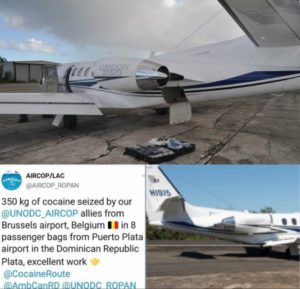
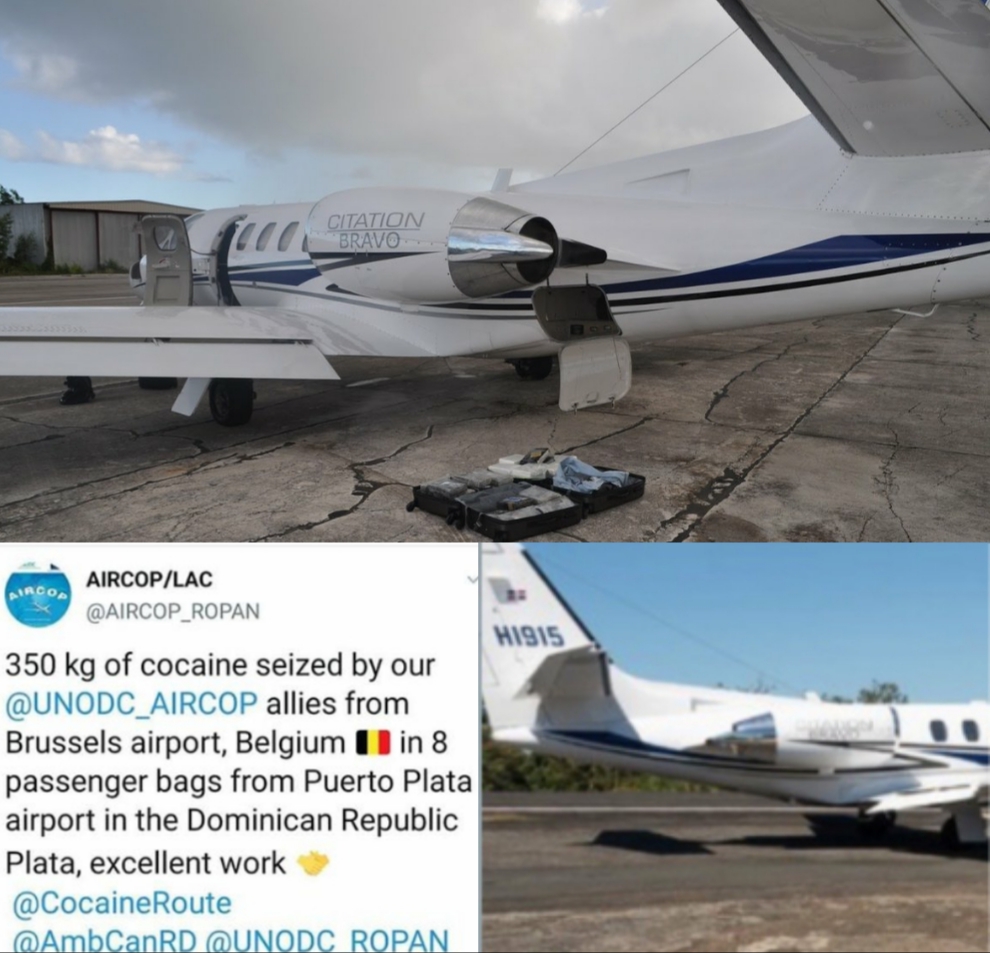
PUERTO PLATA.- An airplane that was detained in Belgium after having transported about 350 kilos of cocaine to that European country, supposedly left from the airport terminal in Puerto Plata.
Belgian authorities reported that the Cessna-brand aircraft, Citation Bravo model, registration H1915, landed at Zaventem airport in Brussels, where eight passenger bags containing the drug were found.
The United Nations Office on Drugs and Crime (UNODC), through the Twitter account @AIRCOP_ROPAN, confirmed in the aforementioned plane that 350 kilograms of cocaine arrived from the Puerto Plata airport in the Dominican Republic.
It has been speculated that “the aircraft left the country with the complicity and permissiveness of the authorities” since all air operations are restricted after applying restrictive official measures to combat the COVID-19 virus.
This case continues to generate a lot of suspicion as the government authorities of the Dominican Republic maintain a hermetic silence in this regard.
To add insult to injury, a large part of the national press has turned a blind eye or treated it in a very shallow way, when international newspapers reported on this event.
The security agencies and the Attorney General’s Office “have turned a blind eye” since they have not spoken of the plane that left the Dominican Republic for Europe with 350 kilos of cocaine in the middle of the Coronavirus pandemic.
Source: Puerto Plata Digital
Mau 13, 2020
President Danilo Medina has asked the Senate to maintain the National State of Emergency. The Presidency says the extension will give the government time to complete plans for a gradual reduction in Covid-19 stringency measures affecting economic activities. The request was addressed to Aristides Victoria Yeb, acting president of the Senate. The ruling Dominican Liberation Party (PLD) has a majority in the Senate, where the bill is expected to pass on Wednesday.
If approved, this would be the third extension of the original state of emergency that was established as of 19 March 2020 (Decree 134-20). The first national emergency period was for 25 days, followed by two periods of 17 days apiece that expire on 17 May 2020. The government has requested the National State of Emergency continue from 18 May through 11 June 2020.
If the bill passes in the Senate during the convened Wednesday session, it will then move to the Chamber of Deputies.
The provision enables the government to make expedited procurement purchases and take actions that affect the right to transit of the Dominican people. Investigative journalists have presented clear evidence of Ministry of Public Health, National Health Service and Ministry of Defense purchases plagued with serious irregularities.
Despite the emergency state, the government has not been able to source sufficient inputs to maintain a stable amount of diagnostic tests. In the press briefing on 12 May 2020, the Public Health Minister Rafael Sánchez Cárdenas says that the government lab at times has accumulated 2,500 tests for lack of inputs. He said this explains the delays in people tested that have to wait up to two weeks to get results. The representative of the Pan American Health Organization in the Dominican Republic, Dr. Alma Morales said that the country yet does not meet the criteria to begin opening up. She said that the country has not been able to maintain a consistent number of tests.
The Dominican Republic is a member of the Central American bloc and is the nation to show the worst handling of the health and economic crisis. Costa Rica, Guatemala, El Salvador, Honduras and Panama have all had more effective management of the crisis.
Source: DR1, ListinDiario
May 13, 2020
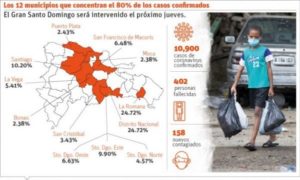
Minister of Public Health Rafael Sánchez Cárdenas announced the government has decided to extend to La Romana the Thursday, Friday and Saturday (14-16 May 2020) intervention. The Ministry of Public Health has explained that crews of health and social workers, accompanied by the military, will be visiting areas where reports are there may be people with the disease that have not yet tested positive. People will be tested, and if necessary, these will be relocated to isolation centers.
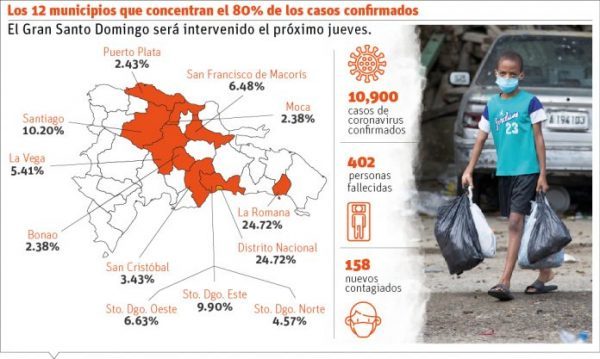
The Ministry of Public Health had already announced the focus would be on areas in Greater Santo Domingo (National District and Province of Santo Domingo) and its neighboring provinces, Monte Plata and San Cristobal. These provinces and the National District account for 50% of all the cases in the Dominican Republic as of 11 May 2020, or around 5,000 cases.
In the Ministry of Public Health press conference, Dr. Sánchez Cárdenas said that the health authorities are working on better coordination. He acknowledged there have been communication glitches with his colleagues at the National Health Service (SNS) and Ministry of Defense. He said he has a meeting pending with Chanel Rosa of the SNS and Major General Paulino Sem of the Ministry of Defense. These organizations have been carrying out Covid-19 diagnostic testing of which the minister said he was not aware. These organizations had carried out testing in Villa Juana and Villas Agrícolas low-income areas in the National District with more than a third testing positive.
In an announcement to the nation on Tuesday evening, Public Health Minister Rafael Sánchez Cárdenas clarified that the province’s interventions did not mean there would be total lockdowns. He specified it was more about a cordon sanitaire, or high-quality epidemiological surveillance and targeted intervention of areas of high risk.
In the statement from the Presidential Palace, the Health Minister said that the operation will be a public sanitation effort. He said homes where people with people that have tested positive or are suspected Covid-19 patients will be fumigated with sodium hypochlorite. He said the effort seeks to identify, control and monitor Covid-19 cases to keep the epidemic under control.
Source: DR1, Listindiario
May 13, 2020
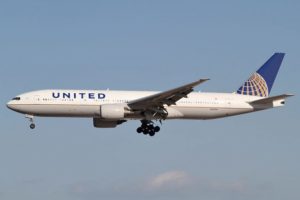
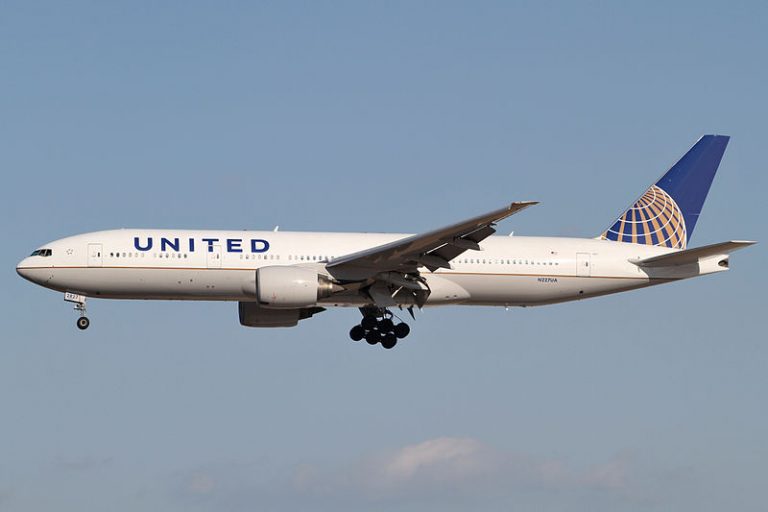
The Sunday (May 17th) flight schedules are:
Departure at 11:30am from Las Americas International (SDQ), arrival 3:29pm to Newark International (EWR).
Departure at 2:45pm from Cibao International Airport (STI), arrival at 6:05pm to Newark International (EWR).
These flights are only open to US residents and citizens.
For more information, contact your travel agent or United Airlines at ventasrd@united.com or latinamerica@united.com
Source: DR1
May 13, 2020
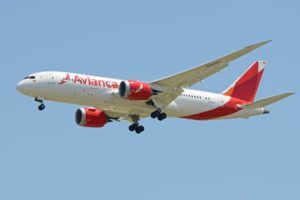
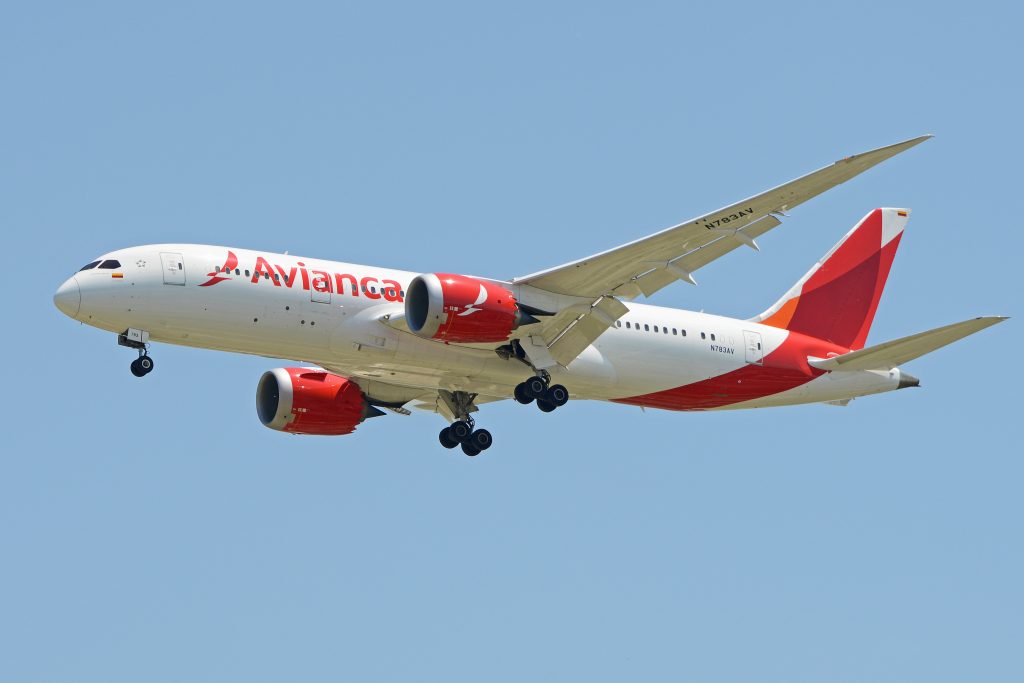
Avianca could be the first major airline flying to the Dominican Republic to file for bankruptcy
The airline was the Dominican Republic’s main air connection to Colombia. The airline dates back to 1919 and as of the end of 2019, was the third-largest Latin American airline based on market share, after Chile’s Latam Airlines and Brazil’s Gol Linhas Aéreas. It is a member of Star Alliance. Now its planes are grounded and staff is on unpaid leave.
The president of the company, Anko van der Werff, told reporters of El Tiempo, the Bogotá-based newspaper: “For airlines all around the world, Covid-19 has been too big of a challenge. Without revenues, no company has a good future. The outlook: closed borders, no one knows when the skies will reopen, and a very low recovery of demand is expected. That is why we see our best solution is in filing under Chapter 11.”
Avianca chose to file for bankruptcy in the United States because its stock is listed on Wall Street.
The New York Times reported on 11 May 2020 that the average number of passengers on a commercial flight within the United States right now is just 23. It estimates that every day, the airline industry is losing almost US$400 million.
Airlines flying to the Dominican Republic have just been handling repatriation flights that are only open to citizens and residents of the country to where they fly to.
Source: DR1, El Tiempo
May 13, 2020
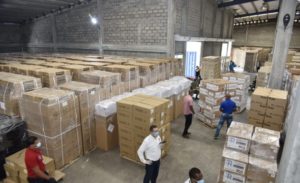
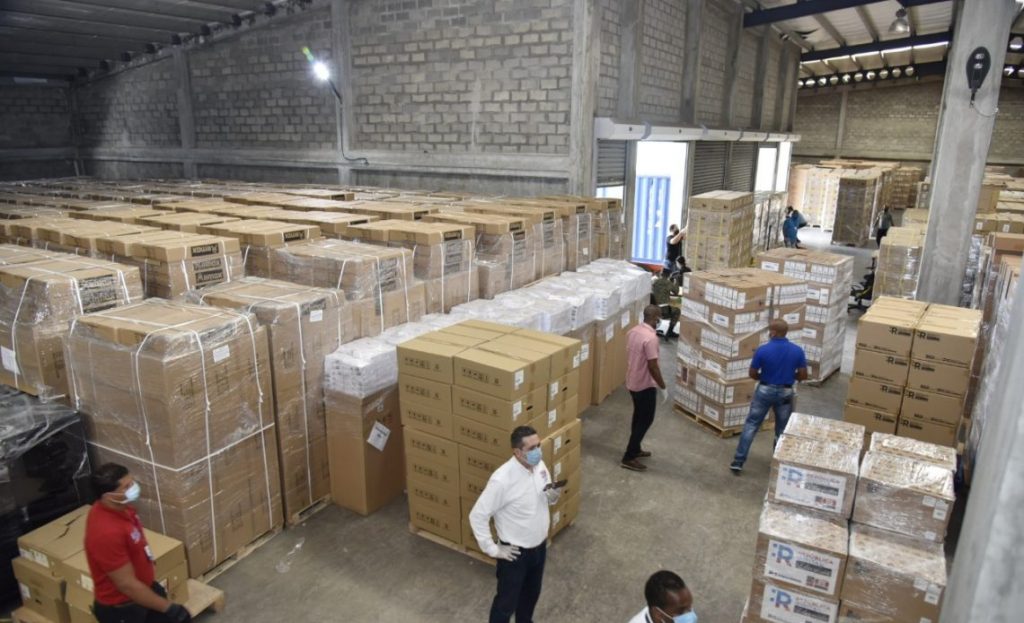
The Ministry of Education announced it is receiving a shipment of 350,000 computers, laptops and netbooks to distribute to elementary and high school students nationwide. The Ministry says they are just waiting for the National Emergency State to end to begin the delivery to the devices to public school students. The Ministry says the donations will be carried out following Pan American Health Organization (PAHO) and Ministry of Public Health protocols for avoiding the spread of the Covid-19.
The Ministry says they already have 150,000 of the devices stored in the warehouses of República Digital Educación, a government program. Other devices are expected to arrive shortly.
Schools in the Dominican Republic have been closed since 12 March 2020. The government has invested in digital learning programs.
Source: DR1, N Digital
May 13, 2020
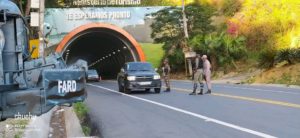
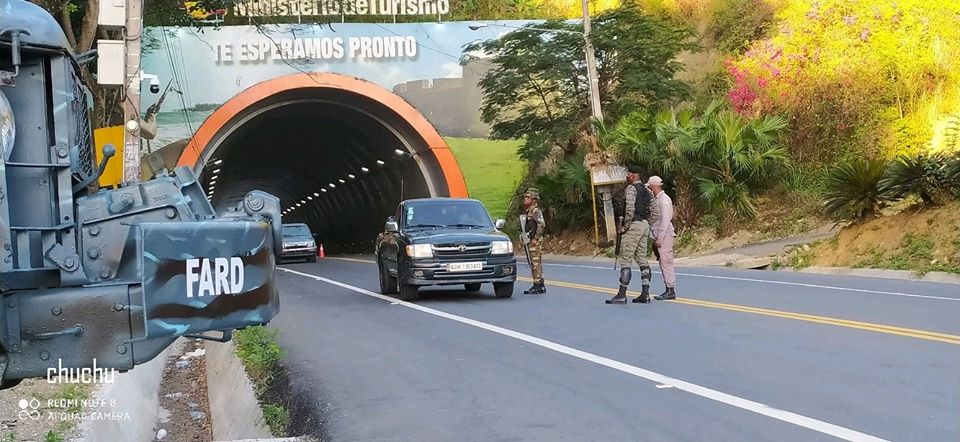
PUERTO PLATA.- Last Monday (May 11th), the government authorities inexplicably continued with the police-military checkpoints at the East and West entrances of the Puerto Plata province.
The actions that are part of the so-called “Sanitary Cord” established in Puerto Plata two weeks ago to prevent the spread of the COVID-19 virus, expired at exactly 6:00 am on Monday, May 11.
However, the checkpoints continue to operate around the Altamira tunnel on the Puerto Plata-Navarrete highway, as well as at the second entrance to Playa Dorada on the General Gregorio Luperón tourist highway.
Dozens of citizens who expressed their opinion on this matter indicated that the checkpoints do not lead to anything positive and only generate discomfort for drivers since vehicles and motorcycles are seized arbitrarily.
So far, the government authorities of Puerto Plata have kept a grave silence on this situation, and the representatives of the Defense and Health ministries, in addition to the National Police, have not issued any information regarding these actions.
Source: Puerto Plata Digital
May 12, 2020
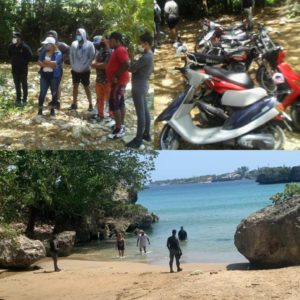
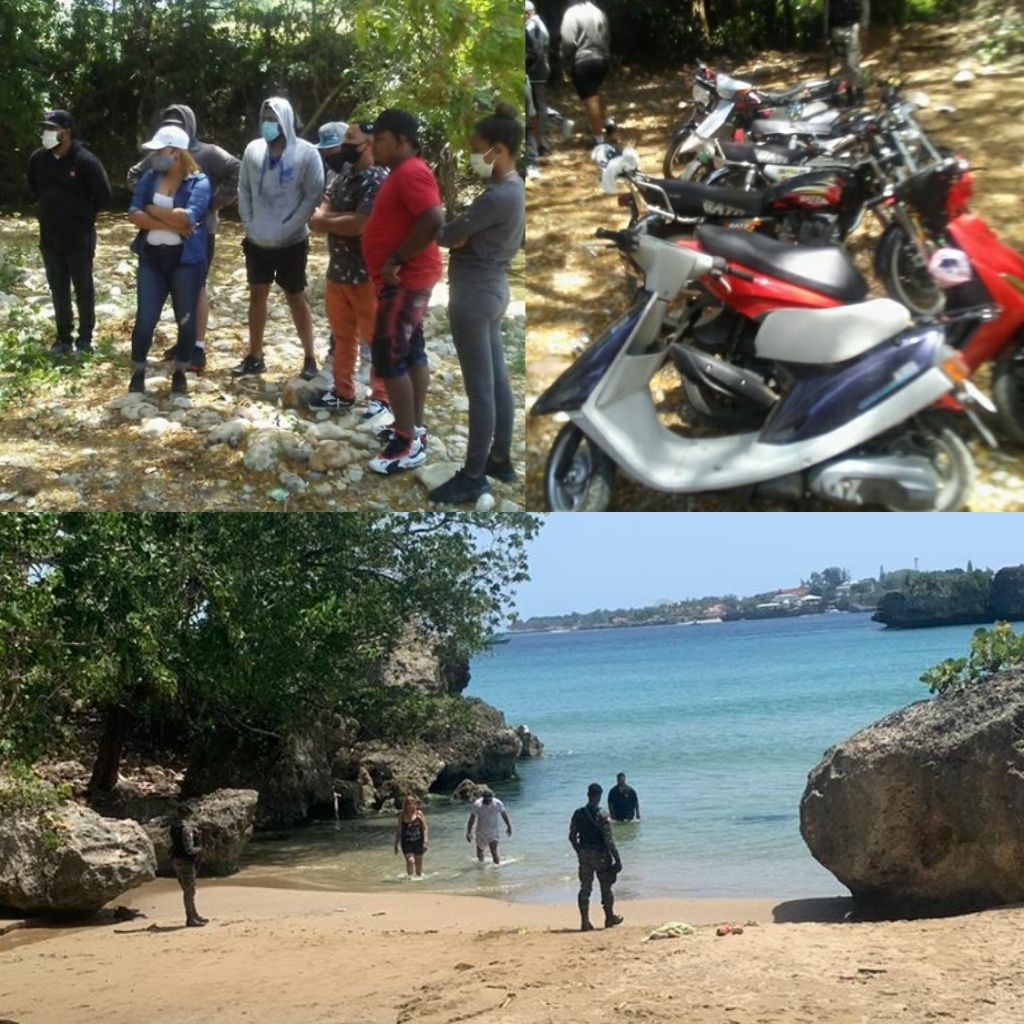
PUERTO PLATA.- Yesterday, a military patrol arrested eight young residents of Santiago de Los Caballeros, after being caught bathing in a river in the municipality of Villa Isabela in the western part of Puerto Plata.
The uniformed officers proceeded to arrest the group of people when they were at La Noria resort in Villa Isabela for violating official social distancing regulations due to COVID-19.
The detained people explained that they traveled from Santiago to that area of Puerto Plata aboard 7 motorcycles and managed to evade the Sanitary Cordon using shortcuts and internal roads.
While on La Boca beach in the municipality of Cabarete, about five citizens were also arrested while enjoying a swim in the ocean despite the nationwide ban on the use of beach and river resorts.
The detainees who traveled in two cars were taken to Puerto Plata to be brought to justice and fined for violating the government restrictions in place that order social isolation and prohibit circulation, in addition to bathing in rivers and beaches.
Source: Puerto Plata Digital
May 11, 2020