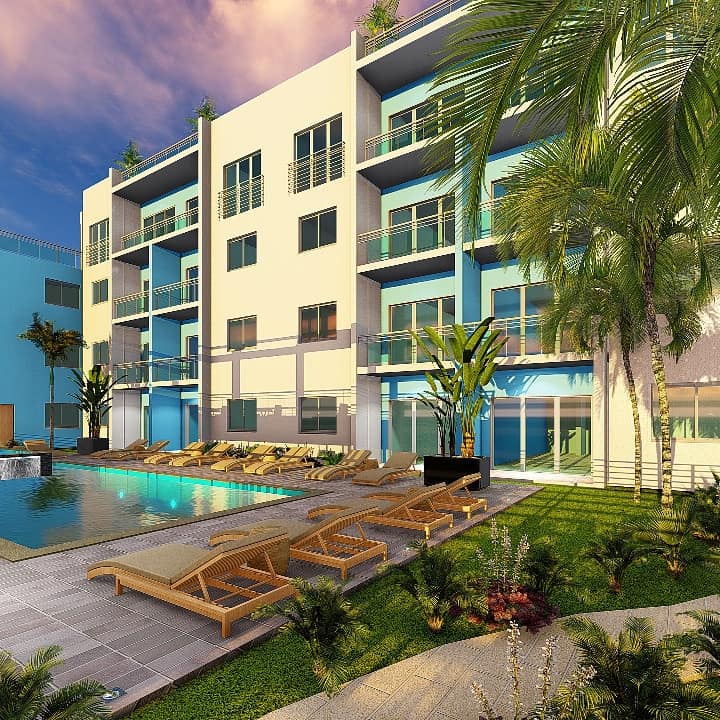
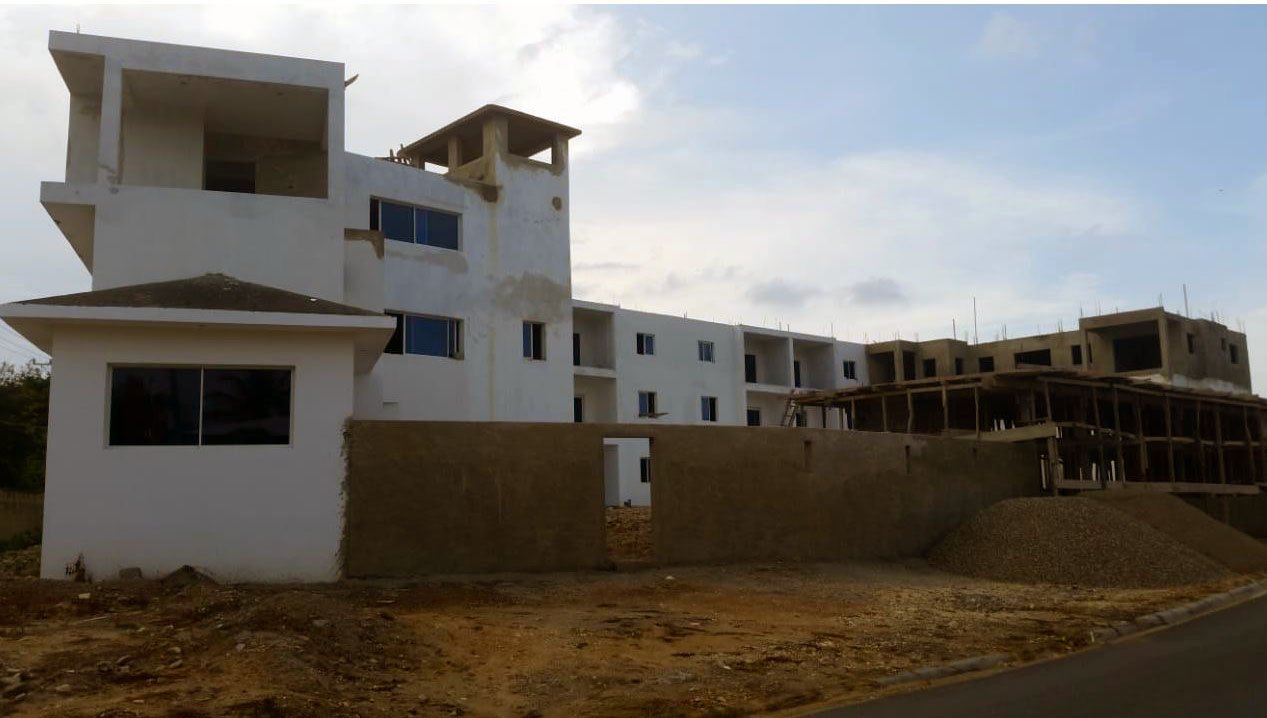
Blue Life Luxury Condos is a New Affordable Paradise Condominium for Sale in Sosua, Playa Chiquita. It’s a new complex, currently under construction, and expected to be in operation in December 2019.
Located in a quiet part of Sosua, 200 meters from the beach, a few minutes walk to the city center with its bars and clubs, and just round the corner from the Casino and tennis courts. This luxury condos are offering high end finishing, 2 pools (one is downstairs, and one is on top of the roof in the penthouse and has full ocean view).
Invest in 1, 2 Bedroom condos, or a 4 bedroom penthouse and get your piece of paradise!
PUERTO PLATA.- Tremendous joy and pride in the entertainment world has caused the today’s official premiere of the video clip – the song “Lampara Pa ‘Mis Pies” that was filmed in Puerto Plata by the renowned Dominican artist Juan Luis Guerra and his group 4-40.
The visual production of the popular singer and songwriter was filmed at the beginning of April, 2019 in Puerto Plata, with the Malecon avenue just in front of the Bomberos headquarters and against the coconut trees located on Long Beach, in addition to the Amphitheater of La Puntilla and Plaza Independencia.
Guerra who is the winner of 18 Latin Grammy, two North American Grammy and two Latin Billboard Awards, in this video takes Puerto Plata to the highest level of exposure of its culture, its beauties and its splendor, touristly strengthening the brand of “La Novia del Atlantic”.
To make the aforementioned video, Juan Luis Guerra accompanied by his formidable orchestra, installed for three days a film set directed by his son Jean Gabriel Guerra Vega who is an expert in cinematography and directs the company “Guerra Films”.
The song “Lampara Pa ‘Mis Pies” is a meringue with romantic lyrics inspired by his wife Nora Vega, song is part of his most recent album entitled “Literal” which has been well received since it highlights his most recent “Kitipún” hit that was a boom since its launch.
For the production of this music video in Puerto Plata, Juan Luis Guerra, who has sold more than 70 million records in his long artistic career, had the collaboration of the Puerto Platenian carnival artist Simeón Reyes (Caquito) with his renowned character of “La Burra que Baila ”.
The author of “La Bilirubina” arrived at Puerto Plata at the beginning of last April accompanied by his orchestra 4-40 conducted by the teacher Janina Rosado, the chorus player Roger Zayas Bazán, the prominent drummer Juan De La Cruz ( Chocolate), percussionist Luis Mojica, among other musicians besides the sound engineer, Allan Leschhorn.
ProConsumidor, the government protection agency, says Whirlpool Corporation has alerted that KitchenAid glass cooktops (KCES950 and KCES956) sold in the Dominican Republic can present a fire hazard. The corporation says there have been cases when these have turned on by themselves.
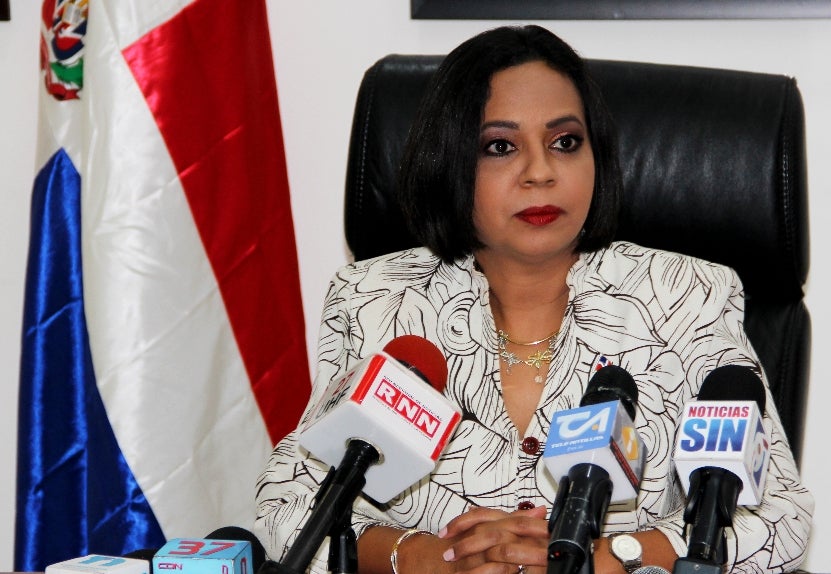
Anina del Castillo, the director of ProConsumidor, says that so far her office has not been notified of any local case. Abroad the company has recalled the cooktops. As reported around 50 of these units have been sold locally. The models were recalled by the company and those who have purchased these may seek a replacement cooktop free of charge, says ProConsumidor. Meanwhile, owners are being told to not leave empty cookware or flammable material on or near the cooktop.
People who have these cooktops in their homes are urged to contact Whirlpool to arrange for the installation of a replacement cooktop free of charge. They are also being told to turn the cooktop off at the circuit breaker and to not leave empty cookware or flammable material on or near the cooktop.
The Yaque del Norte (the North Yaque River) serves six provinces in the north-central part of the Dominican Republic. In 2006, the National Institute of Water Resources (INDRHI) presented its Water Resources Plan, a series of studies on the water resources of the country, and projections regarding the availability and demand for water. According to the plan, the demand for water at the time was 93% compared to availability. For 2020, the projection was for 103.43%, in other words, a deficit of water facing demand.
According to Jose Raul Perez, the technical advisor on international cooperation for INDRHI and the former director of planning between 2009-2013, official agencies have not addressed the needs of the growing industry and population.
He said: “What is coming is that we are going to go from a latent crisis to an imminent crisis.”
The Yaque del Norte watershed is the most important water source in the Dominican Republic. It covers 7,053 km2, 14.6% of the national territory, and affects 40 municipalities directly, in six provinces in the Central and Northwest Cibao Valley. The river feeds the two largest irrigation areas in the country.
There is a disproportion in the use of water from the different watersheds, meaning that there is little or no sense of economy or long-term vision in its daily use. Based on data published by the Food and Agriculture Organization of the United Nations (FAO), the Dominican Republic uses the most water per capita in all Central American and the Caribbean. The local rate is 700 m3 (177,800 gallons) per year per person. 80% of the water goes to agricultural production.
Therein lies one of the challenges for the country: How to reduce water consumption in the countryside.
New technologies may help mitigate the situation, such as pressurized irrigation systems. While these have proved to be very efficient, there has been strong resistance on the part of most farmers. It is also true that many of the technological innovations have not been partnered with technicians to help and guide in the proper use of the new systems. There is no doubt that more technology will help in the better use of the available water.
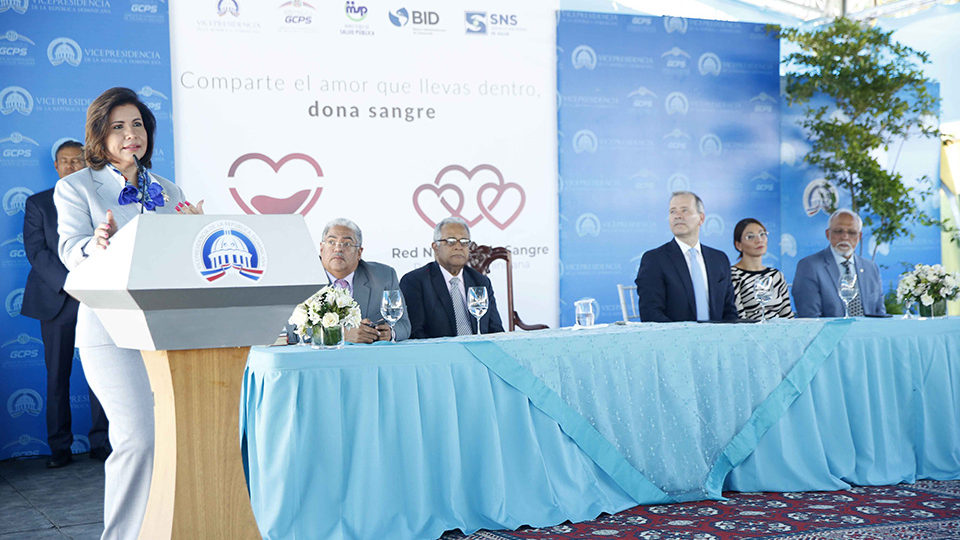
Vice President Margarita Cedeño and Public Health Minister Rafael Sánchez Cardenas headed the official inauguration of the Hemocentro Nacional in the Ciudad de la Salud at Av. Charles de Gaulle in eastern Santo Domingo on Thursday, 29 August 2019. The center, nevertheless, will not be open to the general public until November. Dr. Sócrates Sosa directs the center.
At present, those in need of blood transfusions need to find donors. The only center in operation, the Red Cross Blood Bank, requires those seeking blood to bring a donor and pay for the service.
As reported, the new center can process 400 blood tests every hour and can attend to 10 donors simultaneously. It affiliates 16 blood banks located at hospitals nationwide.
The center should be operating at full capacity in three years. A mass awareness campaign will be held to motivate people to donate blood. Mobile units of the center will be placed at universities, companies and malls to encourage people to participate in the drive to donate blood to stock the inventories of the blood bank.
Research shows that 9 out of 10 persons will need a blood transfusion some time in their lives.
Dominicana’s Got Talent starts Wednesday, 4 September 2019 at 9 pm on Color Visión, Channel 9. The judges for the Dominican version of the leading global reality are actress Nashla Bogaert, TV host Milagros Germán, actor Waddys Jaquez, and comedian Raymond Pozo. The show hosts will be actor Frank Perozo and TV host Pamela Sued.
Acción Empresarial para la Educacion (Educa) is concerned that the US$18.5 billion the Medina administration has spent on public education over the past seven years has not produced the desired results. The non-governmental organization backed the national effort to get the government to increase its investment in public education to 4% of GDP. The government would pour billions into building new schools that would extend school hours from 8 to 12 to 8 to 4pm. Significant wage raises have lured thousands of private school teachers to the public school system.
But still, the standardized tests carried out by the Ministry of Education reveal that only 12% of the children in third grade have minimal comprehension levels, and only 4.1% by sixth grade have satisfactory math skills.
Samuel Conde, president of Educa spoke of the disappointment with the results of the mega-investment in public education. He remarks that most youths today are not studying or working, which means they are very vulnerable to become victims of vices and crime.
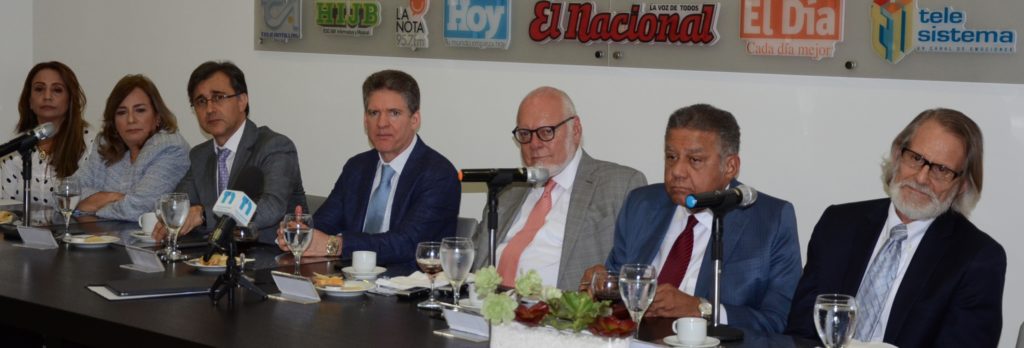
Conde was interviewed by El Dia newspaper. Participating in the interview were also Darwin Caraballo, executive director of the pro-education entity, Yandra Portela, board member and Juan Tomas Tavares Kelner, past president.
Educa is celebrating its 30th anniversary. The Educa officials propose a public-private alliance to enable exponential leaps to increase the quality of learning of the student population.
Darwin Caraballo said that already there are around 125 companies that are investing around US$1 million a month in public education initiatives.
Caraballo says that the problem is no longer one of the low wages for teachers. He said that public school teachers make 53% more than the average paid to university professors.
80% of public teachers failed the standardized tests to be hired for the 2019-2020 school year. The teachers that flunked are demanding a new test.