Archive for June, 2019
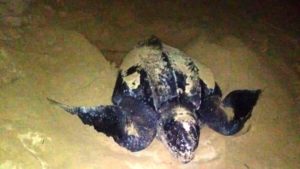
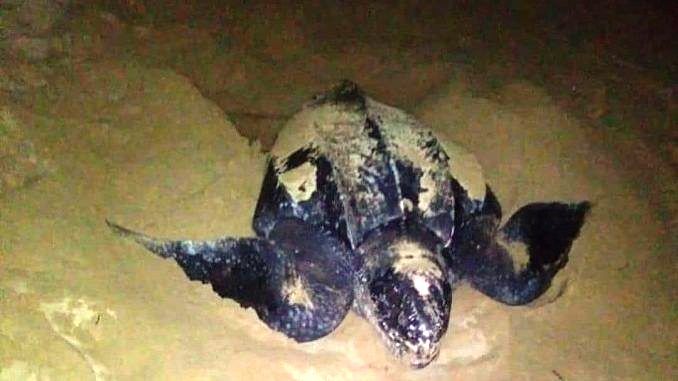
Employees of the Ministry of the Environment recently found a turtle while patrolling Cabarete beach. These protected turtles come to the coast during this period to lay eggs, and the environmental staff also searched for the eggs. However, they were not found and, according to Captain Roberto Martínez (Quico), it is likely that the eggs were taken away. The eggs of the turtle are seen by Dominicans and Haitians as a delicacy and very desirable. Due to destructive human activity, the sea turtle of the Dermochelyidae family is on the point of extinction and is, therefore, on the list of protected animals.
It is the largest of all sea turtles, with a length of 2.3 meters and a weight of more than 600 kilos.
Source: Sosua News
June 16, 2019
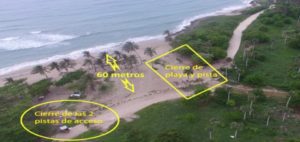
PUERTO PLATA.- The Constitutional Court of the Dominican Republic ratified by free public access to the populous El Encuentro beach located in the Cabarete municipal district.
The judges of that High Court issued judgment number TC / 0106/19, dated last Thursday May 27 of the current year where ratification of sentence number 271-2018-SSEN-00588, issued by the first Chamber of the Civil Chamber and Comercial de Puerto Plata, on September 26, 2018.
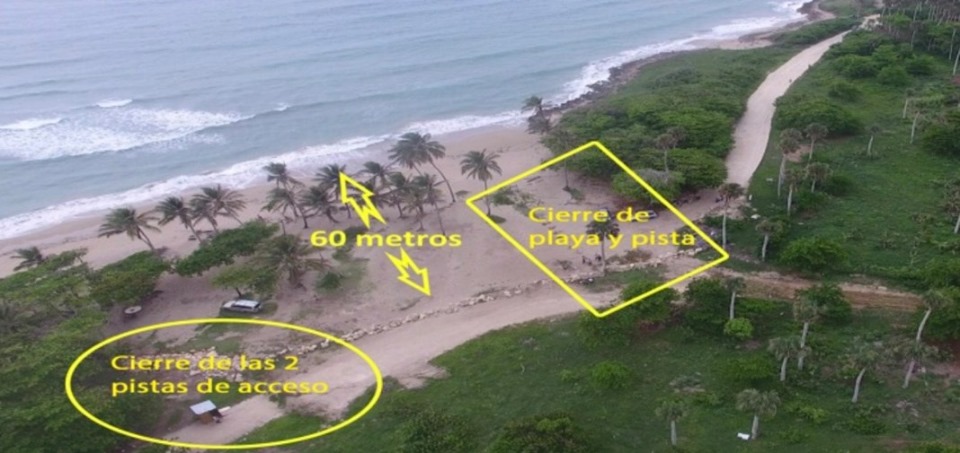
This sentence of the Constitutional Court which was published on its official website, establishes the immediate reopening of the public road that gives access to El Encuentro beach, which has been closed in the district board of Cabarete and by the companies Inversiones Calpe SRL and Mesa Invesment Limited C by A.
It is recalled that the first degree amparo action filed by the Association for the Protection, Development and Free Access in Playa Encuentro (APRODELAPEN), was generated due to violations of the constitutional rights of free transit, right to sport, use of the waters and the sixty (60) meters of high tide.
This legal action initiated by the lawyers José Alejandro Jiménez Almonte and José Ramón Valbuena Valdez, who represent the entity APRODELAPEN, obtained a profit of cause more than 10 months ago and now obtaining the ratification of the judgment in the first degree, acquires the power of the Irrevocably Thing Judged.
In spite of the fact that the Civil and Commercial Chamber of Puerto Plata ordered the access to El Encuentro beach in Cabarete, inexplicably said sentence could not be executed since the Public Ministry has not ordered the delivery of public force for such purposes.
Similarly, said ruling declares access to El Encuentro beach as a right fundamentally protected by the Constitution of the Dominican Republic, ordering the companies Inversiones Calpe SRL and Mesa Invesment Limited C por A, to immediately withdraw the obstacles that prevent free access to said beach.
The Municipal Council of Sosúa is also ordered, visibly marking the sixty (60) meters of high tide, while the Ministries of Environment and Tourism, the Specialized Body of Tourist Security (CESTUR) and the District Board of Cabarete, must have as many measure are necessary for the optimal preservation of the beach encounter free of obstructions.
Source: Puerto Plata Digital
June 3, 2019
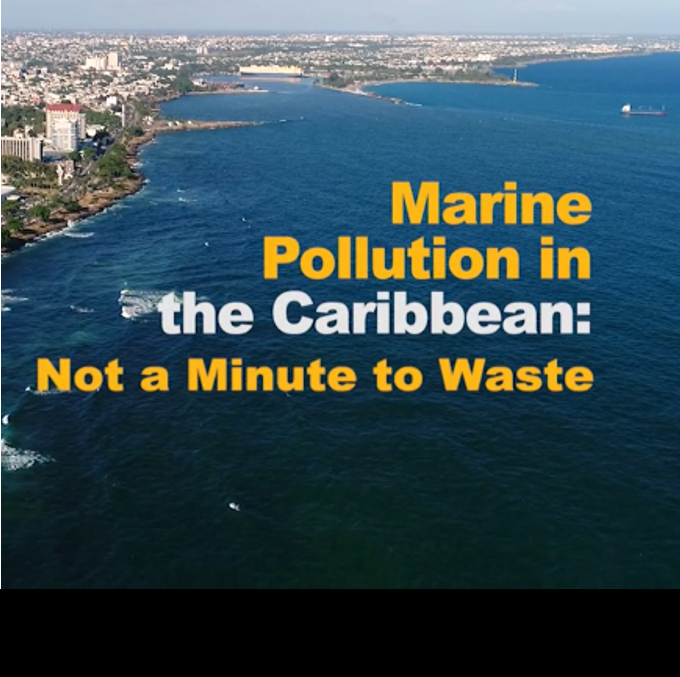
The Dominican Republic needs to step up efforts to reverse marine degradation, restore damaged ecosystems and protect the area’s marine resources. A recent report by the World Bank says that so far 14 other Caribbean countries have already acted to ban single-use plastic bags and/or Styrofoam.
The report, “Marine Pollution in the Caribbean: Not a Minute to Waste,” calls for governments to ratify international conventions, such as the Cartagena Convention. The report examines how marine pollution in the Caribbean is a threat to the region’s resilience to climate change and highlights that marine resources are a vital source of food, livelihoods and jobs to millions of people dependent on tourism, fisheries and the ocean economy.
Tahseen Sayed, World Bank country director for the Caribbean stresses: “Effective management of plastics, solid waste, and wastewater are our top priorities to create a blue legacy for future generations”.
The report lays out an action plan to reverse this threat and transition towards a more sustainable “Blue Economy” that can generate growth and build resilience while preserving ocean resources.
The report highlights that marine pollution including plastics, sewage, agriculture runoff, oil and chemicals, poses a severe threat, particularly to tourism that accounts for 15% of the region’s GDP and to fisheries which provide income and food security to impoverished communities in the area. Thousands of plastic shards can often be found in Caribbean waters, representing nearly 80% of the total litter.
According to the report, more than 320,000 tons of plastic waste remains uncollected each year in the Caribbean. Coral reef degradation is also strongly linked to marine pollution and represents an estimated annual revenue loss of between US$350 million and US$870 million.
Source: DR1, youvisit
June 3, 2019
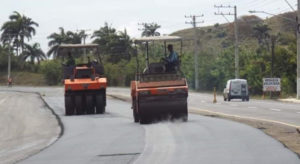
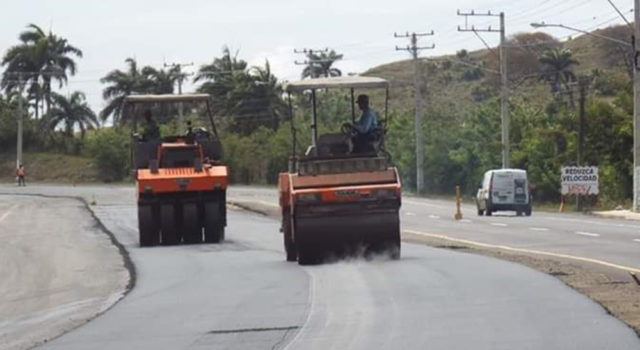
Contractors for the Santiago to Puerto Plata highway expansion (via Navarrete) have said that they expect to finish paving the stretch of roadway between Maimón and the city of Puerto Plata by August 2019. The new road stretch connects Amber Cove Cruise Ship Port to the city of Puerto Plata.
Public Works Minister Gonzalo Castillo expects this section of the expansion of the Santiago to Puerto Plata road to be inaugurated by 16 August, marking the start of the last year of the present term of President Danilo Medina. Heavy equipment can be seen along the stretch of road, working hard to ready the area for paving.
The improvement of the Navarrete-Puerto Plata highway, together with the Luperón Tourist Highway, between Santiago and La Gran Parada are two of the most demanded public works by the communities involved. Right now, about 70% of the work has been done on the Navarrete-Puerto Plata road, with difficulties encountered at critical points. Arrears in contractor payments by the government are said to have caused delays.
Work on the Santiago-Gran Parada highway, known as the “Tourist Highway” because of its stunning vistas, is said to be 75% complete. This was the first road between the two cities and dates back to the early 20th century.
Source: DR1, Elcaribe
June 3, 2019

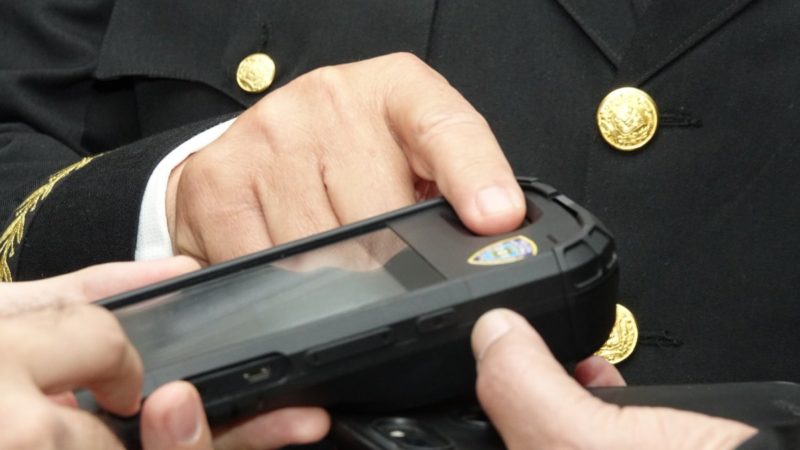
The National Police is implementing a new integrated identification system whereby law enforcement agents have access to identify anyone in real-time by comparing a person’s fingerprints and faces against those in the Central Electoral Board (JCE) database.
Police director, Major General Ney Aldrin Bautista Almonte reports that the new tool (Sistema Integrado de Identificación Ciudadana y Depuración Biométrica) makes it possible for police to do background checks of people, their IDs, vehicles and firearms on site. In the past, people had to be arrested and taken to police posts.
The new device weighs less than a pound and consists of a camera lens, an optical scanner and a smartphone application enabled for biometric analysis and identification.
This application was developed by the National Police to make possible automated consultations to the Central Electoral Board (JCE) national system of fingerprint identification and facial recognition. The system includes a database with biometric finger and facial records of more than 10 million people, in addition to the ability of comparing and identifying faces.
Source: DR1, Hoy
June 3, 2019
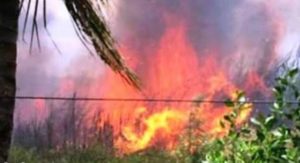
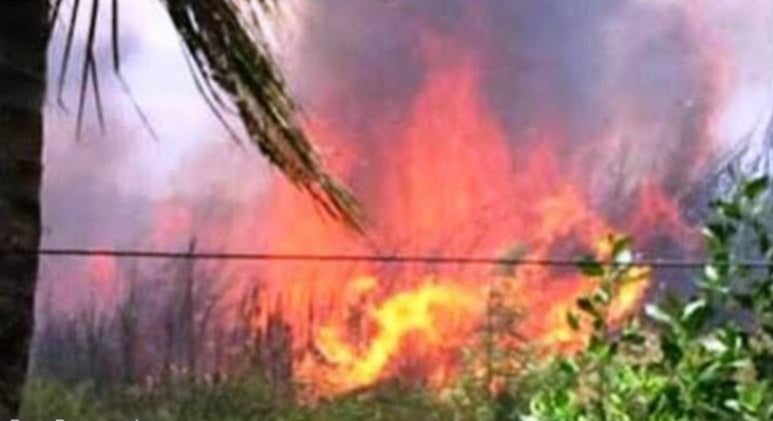
Unknown people set fire again to a large area in the municipal district of Cabarete, in what is described as a new attack on the environment. The forest fire devoured dozens of nests, eggs and chicks as well as killed crabs, turtles and other species, endemic to the area.
According to Máximo Reynoso Vásquez, the fire affected a school in La Cienaga when the dense smoke caused breathing difficulties for the students and teachers as well as local residents.
Cabarete residents say they are fed up with the number of arson attacks against the environment and complain that the authorities are doing nothing. They recall that precisely a year ago, an arson attack destroyed thousands of square meters of vegetation in Islabon in Cabarete including the destruction of flora in the natural wetland in the protected area.
Environmentalist Michel Gay-Crosier says that the fires are set twice a year so that those who set them can fish, or take land to build homes, without thinking of the environmental damage.
Source: DR1, Eldia
June 3, 2019
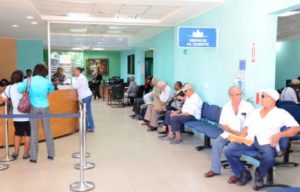
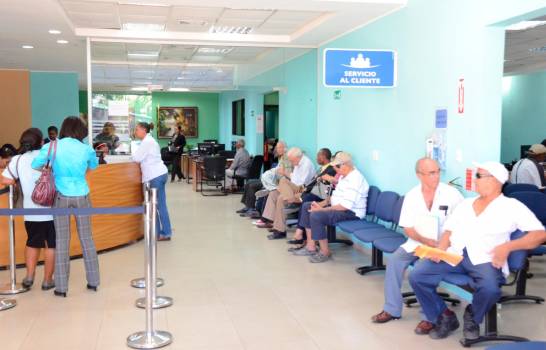
A report in Diario Libre on 28 May 2019 reveals that 73% (1.44 million people) of those that contribute to the Social Security System make low wages, or under two minimum wages. This means their pension will be even lower when they retire.
According to recent statistics from the Superintendence of Pensions (Sipen) only 85,777 persons make wages over RD$70,000 a month. In the Dominican Republic, 1,969,696 persons contribute to the Social Security System, while 3,895,037 persons are in the system.
Source: DR1, DiarioLibre
June 3, 2019
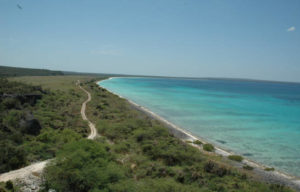
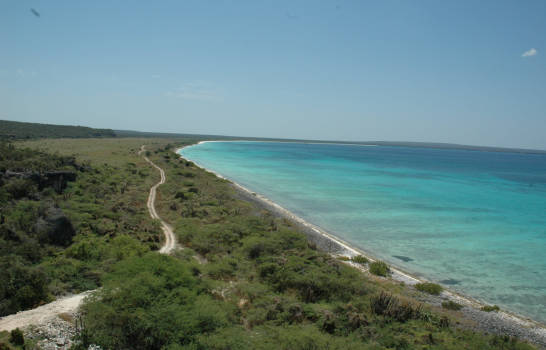
No one was penalized despite the lengthy legal process, but the good news is that the country has resumed ownership of the beach land known as Bahia de las Aguilas in the Jaragua National Park in southwestern Pedernales province. Legal advisor to the President, Flavio Darío Espinal received from Attorney General Jean Alain Rodríguez the property title for almost 362 million square meters corresponding to Bahía de las Aguilas in Enriquillo, Barahona.
The dispute of the ownership of the land began in 1992 and has just concluded. The legal case on behalf of the government was started in 1997 by prosecutor Piky Lora. Upon her death in 2013, the case would be continued by her daughter, lawyer Laura Acosta.
Bahia de las Aguilas is a protected area. The protected area has difficult access by land. It includes an 8 km long white sand beach with the same vegetation from the time of the Taino Indians. No coconut trees have been planted there.
The development of tourist infrastructure in the area is banned by the Environment Law 64-00, Sectorial Law for Protected Areas 202-04, The UN Convention on Biological Biodiversity, the UNESCO Jaragua-Bahoruco-Enriquillo Biosphere Reserve, the Protocol Concerning Specially Protected Areas and Wildlife (SPAW) in the Wider Caribbean Region, among others.
Nevertheless, the Medina administration has invited several international tourism industry development companies to tour the site. The government has said it has plans to call an global tender to hire a marketing company to promote foreign investment in Bahia de las Aguilas.
Source: DR1, DiarioLibre
June 3, 2019