Archive for May, 2019

The director of the Films Agency in the Dominican Republic (DGCine), Yvette Marichal spoke of the successful participation of the Dominican Republic in the 2019 Cannes Film Festival. Filmmakers from around the world are briefed on the incentives and pluses of filming in the Dominican Republic during the event that ends 25 May in Cannes, France. The Dominican Republic has its own booth at the festival. Several Dominican films are on the Cannes program.
“This is the ideal stage to promote the Dominican Republic as a film destination in the region,” said Marichal. More than 12,000 film professionals meet every year in Cannes. She says the event is an opportunity for greater exposure of the work of Dominican moviemakers, to explore new frontiers, opportunities for co-production, creation and distribution.
In addition to Marichal, other traveling as part of the official delegation are Omar de la Cruz, Carlos Cabral, Desiree Reyes, Francis Disla, Alan Nadal, Luis Arambilet, Danilo Reynoso, Lía Chapman, Luis Cepeda, Armando Guareño, Ana Iris Gómez, Pericles Mejía, Luis Rafael González, Katherine Bautista, Paula Cury Melo, Iván Bordas, Zamantha Díaz, Schisell Joaquín Mena, Marcos Moreno, Fernando Blanco, Karla Groizard and Martín Díaz Bello.
Several Dominican films will be shown at Cannes. On Saturday, at the Marché du Film, “La fiera y la fiesta” by Laura Amelia Guzmán and Israel Cárdenas was shown at Palais G.
Director Jose Maria Cabral’s “El proyeccionista” will be shown on Monday, 20 May 2019 at 3:30pm (French time) at Riviera 2.
As part of the DR Global platform, an initiative of the Global Film Festival (FCGD), the Dominican film, “Colours” is being shown. It is by director Luis Cepeda and had won the audience award during the past FCGB film festival in the Dominican Republic. The film is being shown on Tuesday, 21 May 2019 at 2pm (France time) at the Palais G.
The documentary “Por si vengo al río” by Fernando Blanco is participating on Tuesday, 21 May 2019 at 11:30am at the Palais H.
Source: DR1, dgcine
May 26, 2019

The urbanization of rural life is resulting in greater obesity worldwide. A recent study by the Non-Communicable Disease (NCD) Risk Factor Collaboration (NCD-RisC) reported in Nature magazine indicates that body-mass index (BMI), which is based on height and weight, has increased steadily in most countries in parallel with a rise in the proportion of the population who live in cities. This challenges the long-held assumption that the global obesity epidemic is mainly an urban problem. The study reveals that obesity worldwide is increasing more quickly in rural areas than in cities, including those in the Dominican Republic.
Data covering 200 countries and territories compiled by more than 1,000 researchers showed an average gain of roughly five to six kilos per woman and man living in the countryside from 1985 to 2017.
Interestingly, according to the findings, published in Nature, women and men living in cities, however, put on 38 and 24% less, respectively, than their rural counterparts over the same period.
At the country level, the Nature publication points to several findings that stand out. It reports that some of the largest BMI increases from 1985 to 2017 among men were in China, the United States, Bahrain, Peru and the Dominican Republic, adding an average of 8-9 kilos per adult.
The NDC Risk Factor Collaboration challenges countries around the world to create programs and policies that are rurally focused to prevent weight gain.
Source: DR1, ThedailyStar
May 14, 2019
A follow-up report in NY’s NBC News observes that a man fired for teaching despite having a criminal record for sexual abuse in the United States could be back at the job soon. NBC says that 47-year old former priest Hadmels DeFrias in theory could seek another job at a private school in the Dominican Republic.
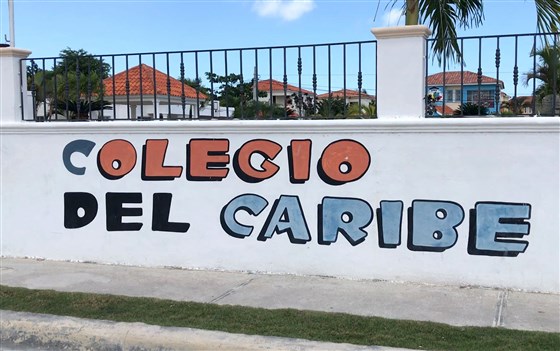
When he was fired, he was teaching English at the Colegio del Caribe in Punta Cana. NBC aired he had been banned from working with children in the United States. Authorities at the school said they did not know about De Frias’s criminal record when hiring him at the school. The school promptly fired the teacher as soon as the story broke on NBC News.
NBC interviewed Ministry of Education officers and was told that the case was closed against De Frias after he was fired from the school, but nothing impedes him from finding another job in the country where he does not have a criminal record.
Source: NBC News
May 14, 2019

German national Heinrich Christlieb, alias Sacha, has been captured. He had been sentenced to 20 years for child pornography. He was captured trying to flee via Haiti to Paris, France on Friday 10 May 2019. The arrest was carried out by the Public Prosecution Service, in coordination with the National Police and Interpol.
On 1 April 2019, 76-year-old Christlieb was convicted by a Puerto Plata court of child pornography in violation of Law number 53-07 on Technology Crimes and the Children Protection Law 136-03.
At the time of his arrest, he was allowed out on bail but an exit impediment was set, meaning he could not leave the country.
Because of his attempt to leave, the Puerto Plata Prosecutor’s office has asked for bail to be revoked and for him to go into preventive custody. Hoy reported that in addition to his attempts to avoid serving jail, it appears he had continued his child pornography business while out on bail. A new case will be heard against him.
Source: DR1, Hoy
May 14, 2019
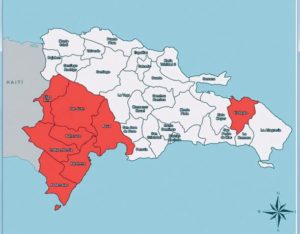
According to a recently launched program by the United Nations Organization for Food and Agriculture (FAO), called 100 Territories Free of Poverty and Hunger (100-T), the Dominican Republic is one of the five priority countries in the region of Latin America and the Caribbean where there are strong differences between urban and rural areas and profound inequality in rural areas leading to hunger and poverty.
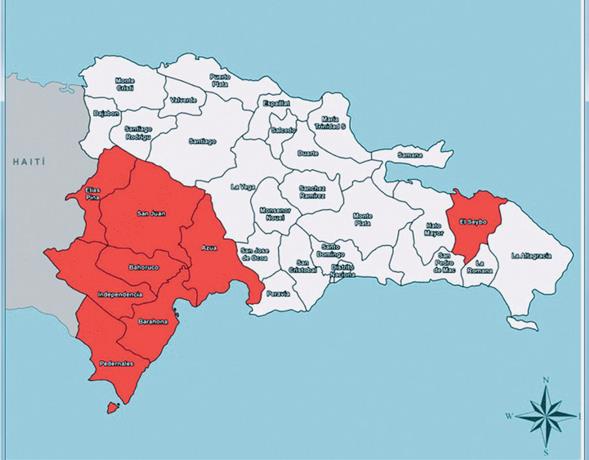
In the case of the Dominican Republic, the program will be focused along almost all of the frontier area, from Pedernales, Independencia, Elías Piña down to Bahoruco, then Azua, Barahona and El Seibo.
The other four priority countries are El Salvador, Guatemala, Colombia and Honduras.
The FAO will offer technical support and look for ways to improve public policies over a ten-year timeframe and identify the most vulnerable areas with the most poverty and hungry.
According to the FAO, despite advances in and growth of economies, there are rural areas with levels of poverty and extreme poverty of around 70% and an unacceptable level of chronic malnutrition, well below the national average.
Source: DR1, Listindiario
May 14, 2019

El Dia journalist Teresa Casado has denounced life threats received from Sidney Rafael Matias Perez (El Fuerte) who is accused of being the head of a drug trafficking ring that introduced 363 kilos of cocaine in 2017. Matías is being tried in court for this case.
El Dia has carried the story to protect their journalist in an intent to avoid that the Dominican Republic suffers the plight of Mexico, where thousands of journalists have lost their lives after reporting on drug traffickers. Listín Diario recently carried the story in defense of the journalist.
Matías had sent a message to Casado that a recent attempt to rob her house at gunpoint was just a warning.
Source: DR1, Eldia
May 14, 2019

Both Altice and Claro have sent a letter to the Dominican Telecommunications Institute (Indotel) requesting the government agency halt sales of Blue Max in the Dominican Republic. The service comes with the installation of the Amazon TV Fire Stick. It has been gaining customers in the Dominican Republic.
The two telecom giants call for the end to the illegal streaming services. Altice and Claro complain they pay a lot of money for their cable content. Blue Max and Fire Stick offer more competitive costs to view thousands of movies and now offer Dominican channels, too. The service costs RD$2,500 and provides access to 1,200 live channels.
Source: DR1, DiarioLibre
May 14, 2019

The population of the Dominican Republic is, demographically speaking, getting old fast. While still within the moderate phase of what is known as “demographic transition,” the falling birth rate along with improved health care are seen as responsible for the changes.
A recent study “Misión República Dominicana Envejece” (Mission the Dominican Republic is Aging) is part of the work done by the NTD Foundation and the Saldarriaga Concha Foundation, with support from the International Aging Institute of the United Nations. The report reveals that the Dominican Republic has already passed the initial phase of the demographic transition marked by a high birth rate. Now there are fewer births and people living longer, thus bringing about an increase in the adult population.
This represents several new challenges. In 1960, the average number of children born to Dominican women was 7.6. The statistics for the 2015-2020 period show that the national fertility rate is now at 2.29, and will decline to 2.1 for the 2025-2030 period and 1.8 for 2050-2055, below the so-called “replacement level fertility” (whereby population exactly replaces itself from one generation to the next, without migration).
This represents a shrinking population, much like Spain and most West European countries today. This projects to a much older population by mid-century. This reality poses many challenges for the Dominican Republic since it affects the socioeconomic wellbeing of the population. This includes everything from empty schoolrooms, to overcrowded health facilities to serve the aging population.
Source: DR1, DiarioLibre
May 14, 2019
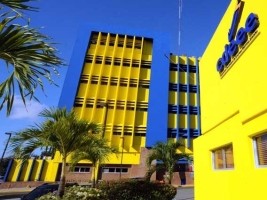
Power supply has always been a problem in the Dominican Republic. Now, the executive vice president of the Dominican Public Electricity Corporation (CDEEE) Ruben Jimenez Bichara understands that the new Punta Catalina coal-fired central and new renewable projects will mean there will be a surplus to sell power to Haiti. The government of China has signed for a US$600 million loan to improve transmission lines.
As reported in Haiti Libre, Jiménez Bichara says the operation could be viable and profitable for both countries thanks to the agreement with international organizations for the rehabilitation of distribution networks in the main Haitian cities.
The Punta Catalina thermoelectric power plant is in its test phase has generated up to 385 megawatts of power, or around half its capacity. Nevertheless, Jimenez Bichara said that in the next four to five years, the power generation park in the Dominican Republic will need 700 megawatts to 900 more megawatts to meet the growing demand for energy and that a tender will be launched this effect.
Source: HaitiLibre
May 14, 2019

Everyone is born with the ability to heal themselves. Chiropractic care helps to optimize that ability so that you can heal faster. I serve Chiropractic with a traditional hands-on approach to people of all ages. I tailor my touch to the individual needs of each person I serve so that they get exactly what they need, exactly where they need it.
Price: 2000 pesos/visit
Call or Message via WhatsApp (Tom) at +1 347-495-6136 for an appointment.