Archive for March, 2019

President Danilo Medina was present when the Lácteo del Caribe Group inaugurated their new plant Tuesday, 26 March 2019. The initial investment in the plant is over US$30 million. The factory will manufacture Dos Pinos and La Granja brands. The new plant will produce milk products, juices, nectars and sodas, with 50 varieties in the first phase targeted especially for the Caribbean consumer. Dos Pinos is a leading Costa Rican food brand.
The plant has a capacity of bottling 250,000 liters a day and is located on 31,314 square meters of land, with 8,500 square meters of construction. Its manufacturing technology is described as of the most advanced of its type in operation in the country.
According to plant director, Alvaro Solano, Lácteo del Caribe sees the potential for important growth in the country.
The plant is located at Km. 22 of Duarte Highway in the Parque Industrial Duarte.
Source: DR1, Presidencia
Mar 28, 2019
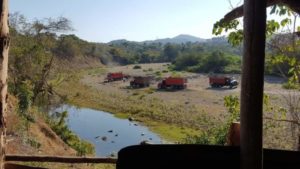
The provincial authorities of the Environment Ministry are taking the mayor of Imbert, Puerto Plata, José Tomás Díaz, to court. A lawyer, Díaz is a member of the opposition party PRM and has increased his popularity and is recognized for paving rural roads and backing sports in his community.
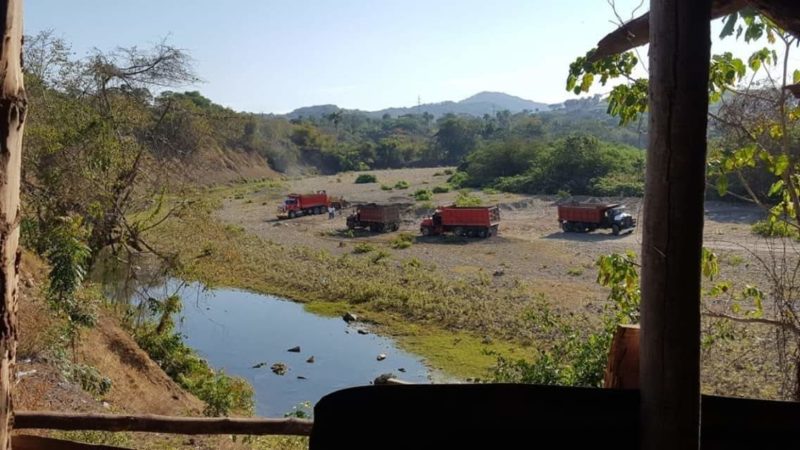
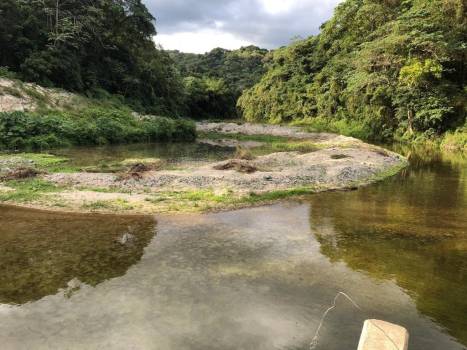
José Tomas Díaz and the public works contractor from Guananico, Engineer Aladino Ulloa Mena, are to be charged with allegedly carrying out illegal extraction of construction materials from the banks of the Bajabonico, Saballo and Obispo Rivers, located in the western area of Puerto Plata province.
Danilo Morrobel, Environmental director for the municipality, confirmed the information, saying that he had overwhelming evidence against both Díaz and municipal public works contractor from Guananico, engineer Aladino Ulloa Mena. Both are charged with irregular extraction of construction materials from the banks of the Bajabonico, Saballo and Obispo rivers. He said the material was used to pave streets in several neighborhoods in the municipality, including La Grúa and Los Cafeses.
The Ministry of Environment is also investigating whether nearby mayor of Guananico, Ramón Alberto Dorrejo (Momi), had given permission for his construction equipment to be used. If this is verified, he also will be charged. He may be accused of having allowed extraction of construction material from the Bajabonico River.
Díaz says the visuals presented as evidence do not correspond to work carried out by his city government contractors.
Source: DR1, Hoy
Mar 28, 2019
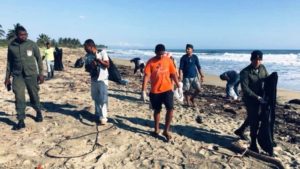
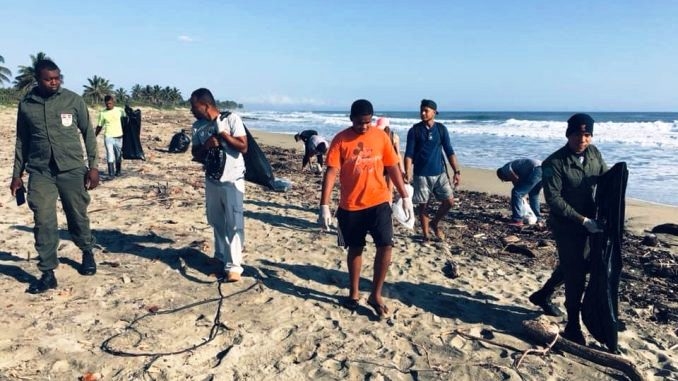
The volunteers of the SOMONCA ecological foundation (Sosúa, Montellano and Cabarete) have cleaned a number of beaches near Cabarete (including La Boca) from litter. They were supported in this by the Ministry of Tourism, Medio Ambiente, CESTUR, Asociación de Agricultura of Puerto Plata, la Asociacion Nacional and municipal administration.
Recently co-founder and secretary Garry Kooy of SOMONCA passed away. He would have been proud and pleased to know that even without him the foundation will continue the good ecological work for the north coast. The chairman Tony Gómez of SOMONCA said in a press briefing that cleaning up the beaches, especially removing stray plastic is of vital importance. Plastic affects the eco-system and is partly responsible for fish mortality. SOMONCA is therefore very active with information campaigns about the unnecessary use of plastic packaging materials. Among other things, they come to schools to inform young people as early as possible about the threats to the environment.
Source: Sosua News
Mar 28, 2019

Millions lost “the other part of their brain” when their smartphones and computers went blank in the Dominican Republic on Thursday, 21 March 2019. The loss of service upset many businesses, including lottery sales points and banking activity. Billings and credit card purchases were also affected.
Later in the afternoon, Claro Dominicana telecommunications confirmed there had been a “nationwide interruption” that day starting at around 11am. Claro says the service was restored in 1:49 minutes. The telecom said the outage affected 4.2 million Internet users.
The company sent out a note on its Twitter account at 2:41 p.m. on Thursday, 21 March saying: “We report to our clients that Internet service has been reestablished. Initially, there might be some slowness in the connections. Thank you for your understanding.”
Claro reported that excavations on the highway expansion project between Puerto Plata and Santiago had accidentally cut two fiber optic lines causing the Internet collapse. The cuts occurred on the stretches Navarrete-Puerto Plata and Puerto Plata-Nagua.
Claro social media posts indicated that the second line cut represented redundancy circuits, and was the final cause of the interruption of service.
Users of Altice Internet service were also affected by the outage.
Source: DR1, Elnacional
Mar 25, 2019
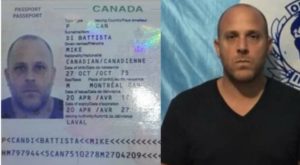
PUERTO PLATA. – A 43-year-old Italian-Canadian citizen was shot in a residential area of the municipality of Sosúa, after being ambushed by unknown persons.
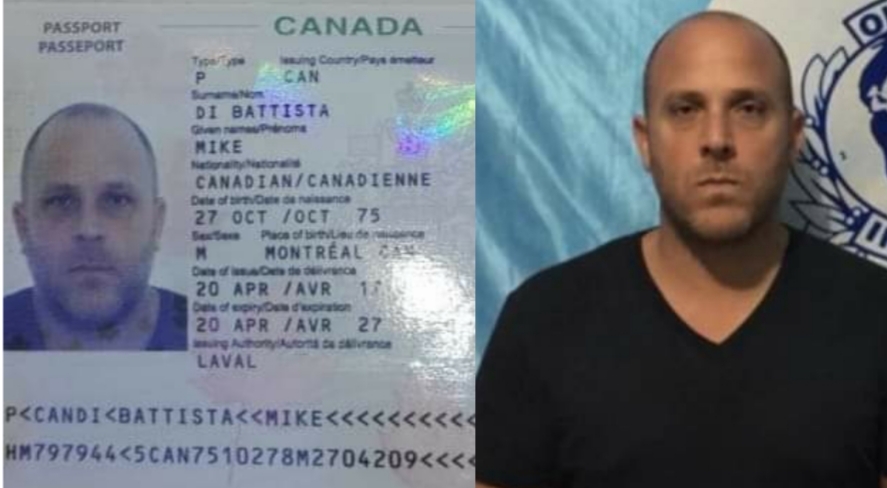
The murdered stranger is Mike Di Battista, who died as a result of the wounds from firearm that hit his body at point-blank range. The corpse was sent to the National Institute of Forensic Sciences (INACIF) for purposes of autopsy.
This fact of blood that is speculated could be “an adjustment of accounts” occurred in the early hours of Sunday in one of the streets of the residential La Mulata I, Sosua, the deceased was attacked by gunfire while driving a SUV, after the attack the vehicle crashed into the wall.
At the scene of the crime, the judicial and police authorities appeared, accompanied by the acting legal doctor, Dr. Mario César López, who examined the body of Di Battista certifying his death caused by the multiple bullet wounds received in the head and other parts of his body.
Members of the Scientific Police collected 13 shells of automatic weapons, plus two passports of the deceased, one Italian registered and the other Canadian numbered, as well as all his belongings, so the theft was ruled out.
It was learned that the murdered foreigner had been residing for several years in the Lomas del Sol residential complex in Sosúa, but on December 17, 2015, he was captured by agents of the International Police (INTERPOL) because he was wanted in his country in connection with a drug trafficking network to which a shipment of 700 kilos of cocaine was confiscated in February of this year.
At that time, the authorities of Canada issued the order of international capture of red alert level under the number # A-2642 / 4-2015 against Mike Di Battista since it was looked for “like needle in a pajal” next to other 17 people linked to other actions of organized crime.
Likewise, the National Police of the Dominican Republic upon the capture of Di Battista reported that it was delivered to Canadian officials who boarded a commercial flight to Ottawa, which is the capital of Canada from the El Catey airport in Samaná.
Source: Puerto Plata Digital
Mar 25, 2019

After the story broke on NBC News on Friday, 22 March 2019, 47-year old former priest Hadmel Frías Gatón (Hadmels DeFrias) found himself without a job by the following Monday. He had been teaching English at a private school, Colegio del Caribe, in Pueblo Bávaro, a residential area in Punta Cana since February 2018. Frías is a Dominican by birth who migrated to New Jersey, where he studied religion at Seton Hall University in 1995. He had been ordained a Roman Catholic priest in 1999.
The school director and community would find out the grim background of their employee when the story was carried on local media.
Gatón (DeFrías) had been arrested when he was 31 years after the mother of two brothers under 14 walked in on him one time and complained to church officials. Gatón (DeFrías) subsequently would be convicted for fondling the two brothers that worked at the rectory of St. Mary’s of the Assumption in Elizabeth, New Jersey in 2001 and 2002. He was removed from the parish and eventually defrocked from the Roman Catholic Church. The man was first arrested in 2003 when he was living in Maryland. As part of his conviction in 2004, he was ordered to not take a job where he would work in any way with minors in the state of New Jersey.
In February 2019, leaders of the Catholic Church in New Jersey had published the names of 186 members that had been sanctioned by the church, charged with a crime or both. Hadmel Frias Gatón (DeFrias) is on the list. The publishing of the list was to help victims heal as more revelations have been made in recent months.
Source: DR1, Eltiempo
Mar 25, 2019
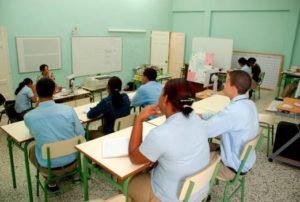
Unemployment levels of young people between the ages of 15 and 29 remain high and seem to be stuck at 14% over the past 10 years. At the same time, the average salary is RD$10,000 per month. As a result, of the 2.7 million young people between 15 and 29 in the country, more than 750,000 are without jobs and somewhere close to a million are neither studying nor working—the famous “NINI.” This information is part of the results from a study entitled: “Young Dominicans; those unknown” carried out by the group known as Business Action for Education (EDUCA) under the auspices of five institutions, including the Ministry of Economy, Planning and Development.
The study surveyed the population between 2000 and 2016. One of the conclusions is that the young people face challenges that work against their quality of life. Some of these are low levels of education, high rates of unemployment and exposure to risky and vulnerable situations.
In 2016, 422 young people were homicide victims, representing 44.3% of all homicide victims. Many of the youth that were interviewed said that their future was selling drugs: “because those that do have more than one woman, money and live well.”
Analyzing the study, the executive director of EDUCA, Darwin Caraballo said that if this situation is not corrected, in 10 or 15 years there would be an enormous risk to public safety. He said: “When the illicit becomes the model to follow, there is an enormous risk because the young people are joining in criminal activities and the system is not providing any answers.”
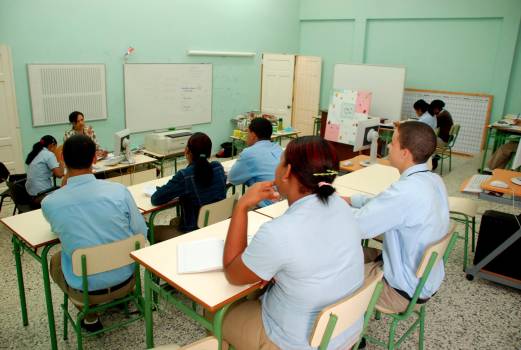
Another of the barriers facing the young is the high dropout rate from schools and universities now at 37.7%, together with the conditions of vulnerability and inequality with respect to education and employment, which particularly affect women.
Of the unemployed, 56% do not have a high school degree. Those that do finish high school have 10% more income, averaging RD$12,500. Of the young people that do have jobs, about half are involved in low-paying areas such as services, commerce and basic manufacturing, where the minimum wage is RD$10,000.
The study recommends the creation of a support system that would prevent dropouts and focus on preventing adolescent pregnancies. They also suggest creating programs to promote job training and bring young people from the poorest strata up to levels of training that would lead to employment.
In an editorial commenting on the Educa study, Diario Libre executive editor Adriano Miguel Tejada says the findings reveal what happens when aspirations of youths meet reality. “As long as the education system does not offer short-term outlets, the economic system does not create jobs with adequate salaries, and there is no real social policy aimed at youth, this situation will not change,” wrote Tejada
Source: DR1, DiaroLibre
Mar 25, 2019
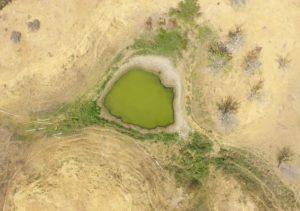
The head of the National Institute for Hydraulic Resources (INDRHI), Olgo Fernández, announces that 32 of the nation’s 34 reservoirs are at “critical levels” and this will have a negative impact on farming and cattle ranching. He added that according to international forecasts, the drought could well last another 60 days.
Fernández noted that this is the worst drought recorded over the past 60 years. He told reporters from El Dia that the only reservoirs that are at a normal level for irrigation and human consumption are Hatillo and Valdesia.
He assured the public that water for human consumption is assured and that water would not be diverted to farming or generation.
According to the INDRHI boss, the agency began to “administer” water back in August 2018, thus assuring the rice, tomato and bean crops of the fall of 2018.
In 2018, the INDRHI drilled 2,066 wells in the areas of greatest need, and currently are drilling wells in Santiago Rodriguez, Montecristi and Dajabón.
Source: DR1, Eldia
Mar 25, 2019
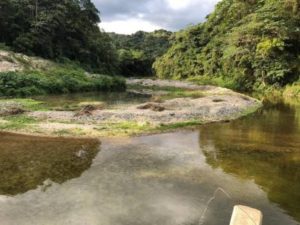
The director of the Water and Sewer Corporation of Santo Domingo (CAASD), Alejandro Montas reports that Greater Santo Domingo has a deficit of some 51,000.000 gallons of water a day due to the prolonged drought affecting the country. He explained that four of the systems providing water to the aqueduct are working at very minimum levels.
Late last week the area was receiving 369 million gallons rather than the 420 million gallons that are normal. Montás made the remarks at a meeting of Evangelicals on the topic of water conservation and proper use.
He explained that Haina-Manoguayabo is only using three of its 10 pumps and the others are only providing one cubic meter of water per second, representing a deficit of 70%.
Source: DR1, DiarioLibre
Mar 25, 2019