Archive for October, 2018

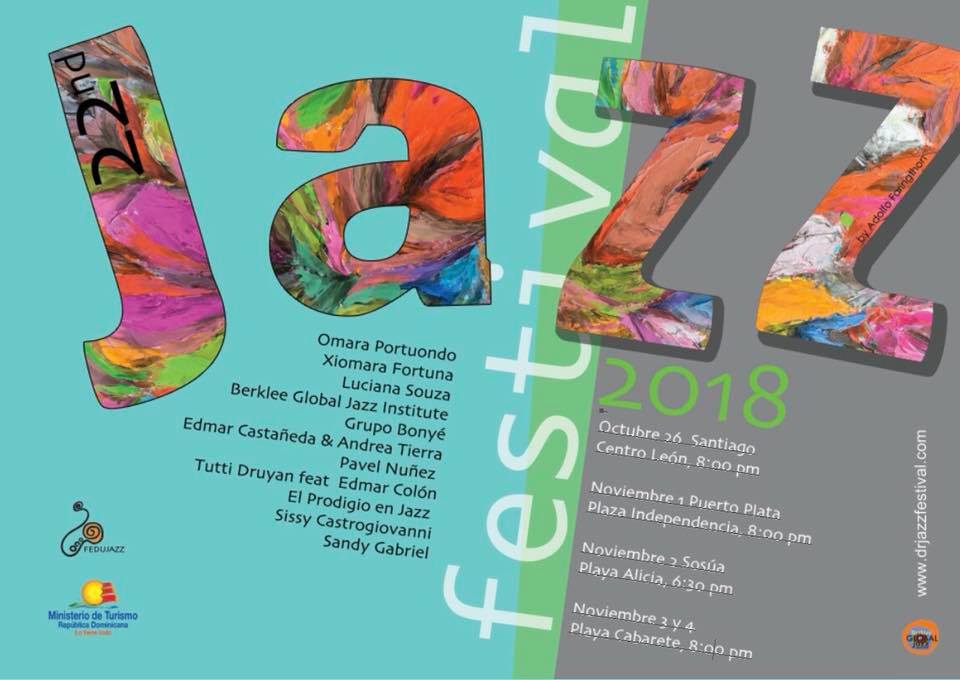
PRESS RELEASE: October 19, 2018, Cabarete, Dominican Republic – The 22nd Dominican Republic Jazz Festival, presented by FEDUJAZZ and the Ministry of Tourism, will host five nights of free concerts recognizing music, culture and the arts beginning in Santiago on October 26, and from November 1 – 4, 2018 in Puerto Plata, Sosúa and Cabarete.
Celebrating a rich history spanning over twenty years, the Dominican Republic Jazz Festival welcomes internationally acclaimed artists such as the GRAMMY Award-winning singer Luciana Souza, GRAMMY Award-winning Cuban vocalist and Buena Vista Social Club member Omara Portuondo, harp virtuoso Edmar Castaneda, and Afro-Caribbean fusion pioneer Xiomara Fortuna. The festival will also feature performances by accomplished artists from around the globe including Sicilian vocalist Sissy Castriobani, Israeli singer-songwriter Tutti Druyan featuring Edmar Colón, innovative fusion group El Prodigo featuring saxophonist Sandy Gabriel, the Berklee Global Jazz Institute, and Santo Domingo’s Grupo Bonyé.
The 2018 Dominican Republic Jazz Festival celebrates and explores the role of the human voice in the world of jazz. Marco Pignataro, Artistic Advisor to the Dominican Republic Jazz Festival and Managing Director of the Berklee Global Jazz Institute, states: “This year’s festival theme is “Voices for Peace & Humanity” with a special emphasis on the impact of singers in jazz to bring forward a powerful message of freedom, creativity and hope for all mankind. By celebrating singers, the festival also recognizes that the human voice was used for artistic expression before the invention of instruments and because all melodic instruments learn from the human voice, it can be suggested that all music is influenced from vocal music.”
Festival Date, Show Location, Featured Artists
Friday, October 26, 2018 – Santiago, Centro Leon
· Edmar Castañeda
Thursday, November 1, 2018 – Puerto Plata, Plaza de la Independencia
· Xiomara Fortuna
· Sissy Castriobani
Friday, November 2, 2018 – Sosúa, Playa Alicia
· 6pm: “Mothers with Sissy” Parade: Mothers and children will model designs by Sissy Bermudez in support of the Fedujazz Foundation.
· Tutti Druyan featuring Edmar Colón
· Grupo Bonyé
Saturday, November 3, 2018 – Cabarete, Playa de Cabarete
· Luciana Souza
· Berklee Global Jazz Institute Sunday, November 4, 2018 – Cabarete, Playa de Cabarete
· Omara Portuondo
· El Prodigo & Sandy Gabriel
The Dominican Republic Jazz Festival is sponsored by companies including Jet Blue, Brugal, Berklee Global Jazz Institute, United States Embassy, Lifestyle Holidays, Sea Horse Ranch, Cibao Recycling, Casa Linda, Gratereaux Delva & Associates, Millennium, Viva Wyndham Tangerine, Amhsa Marina, Gansevoort, Banco del Progreso, Israel Embassy, Centro León, Reef Condos, Villa Taina, OK Motors, VH Hotels – Gran Ventana, Blue JackTar, and Emisora Raíces, among others.
All Dominican Republic Jazz Festival shows are free and open to the public, with VIP tickets and priority seating available for purchase at drjazzfestival.com/festival/tickets/ . Proceeds of VIP ticket sales benefit FEDUJAZZ, the music education foundation of the Dominican Republic Jazz Festival.
FEDUJAZZ provides free music education for the youth of the Dominican Republic. Currently, there are one hundred students attending classes at the foundation’s center in Cabarete.
Throughout the festival, free music workshops and master classes for local children and FEDUJAZZ students are held at each concert location, led by the renowned international musicians participating in the festival. This year’s locations include Centro León, Renovation Cultural Society, Casa Marina Amphitheater, Sosua, Sosua Art House, Fedujazz, Caberete and Cabarete Beach.
MEDIA CONTACT:
Dominican Republic Jazz Festival

Eugenio Polanco, director of the UASD state university Seismological Institute, the principal earthquake-monitoring center in the country, explains that every year 1,000-1,200 small tremors are recorded, around 1-20 a day, rendering a relatively low seismicity. Nevertheless, he said a significant earthquake can happen at any time and the population should take measures to mitigate damages.
Polanco says science cannot yet precisely forecast when and where an earthquake will take place, but it can identify the areas where this will occur. He explained around 1 to 20 micro earthquakes occur each day in the country, and areas such as the eastern, northern and southern zones are more prone to these tremors. He said that while the country has not suffered a major earthquake in a long time, the factors for a major earthquake occurring are in place.
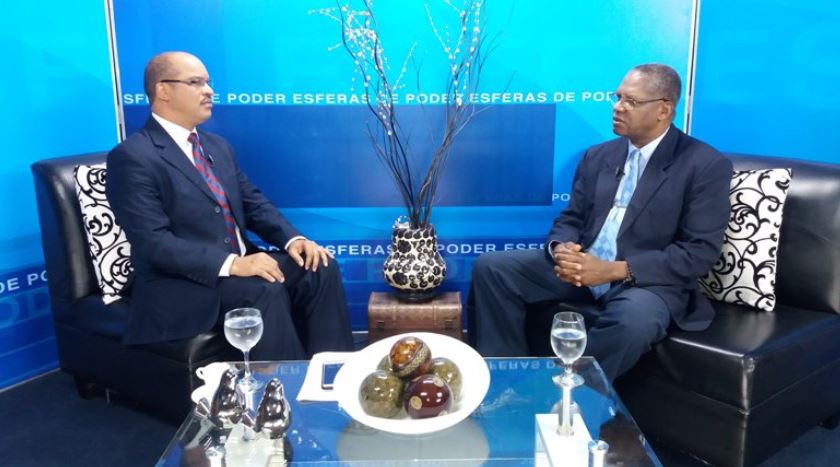
Polanco was interviewed by Federico Méndez, for the TV program Esferas de Poder on Sunday, 14 October 2018.
He explained that the blocks that form both the tectonic plates and the geological faults are constantly interacting with each other, which causes deformations that cause accumulation of energy, which in turn generates ruptures that cause earthquakes.
Polanco explained that in the community of Villa Elisa, Montecristi, there have been more than 100 seismic events in a short time of between two and three weeks.
“The Dominican Republic is located exactly in the northern part of the Caribbean plate, where it interacts with the North American plate. That is the main reason why the earth trembles in the Dominican Republic,” he said.
Polanco explained that the country has a series of geological faults that are also capable of generating significant earthquakes, which is corroborated by the occurrences of the past.
The last major earthquake to be felt in the country was on 22 September 2003, with a magnitude of 6.5 on the Richter Scale. This had its epicenter in the northern province of Puerto Plata, where several buildings collapsed and caused three deaths and around 30 persons injured. It was also felt strongly in Santiago, in the center of the country.
Among recommendations for preventing damages in case of a big earthquake are:
Secure belongings.
Brace all bookcases, storage shelves, put latches on cabinet doors, file cabinets.
Fasten water containers, heaters and other appliances that could fall.
Store hazardous materials in a sturdy place.
Secure picture frames, bulletin boards and other wall-mounted equipment to the walls using closed screw-eyes to prevent falling.
Keep fire extinguishers handy.
Replace rigid plumbing supply lines and couplings with flexible braided lines and flexible couples to reduce the chance of rupture.
Brace mechanical equipment such as air conditioning equipment and water heaters to the wall/or floor to prevent overturning or shifting.
Source: DR1, Elnacional
Oct 16, 2018

Deury Corniel won the Dominican Republic’s first Olympic gold medal in sailing in the Youth Olympic Sailing in Argentina. He was competing in the Sailing Men’s Kiteboarding IKA Twin Tip of the Youth Olympics in Argentina. He attributed his win to “training a lot.” Corniel lives and trains in Cabarete Beach, Puerto Plata.
http://sailingtv.ro/video/786/deury-…nos-aires-2018
Source: DR1
Oct 16, 2018

The Dominican Professional Winter Baseball Championship began on Saturday, 13 October 2018, with games held in the ballparks in Santo Domingo, Santiago and San Pedro de Macoris. The tournament this year is dedicated to Hall of Fame member, Vladimir Guerrero.
Fans can now take Omsa buses that will travel five key city routes in Greater Santo Domingo and Santiago to ensure they safely arrive at home, despite the late hours the games may end at. In San Pedro de Macoris, the buses will offer two routes, one in La Romana and one in San Francisco for bargain fares of RD$15.
In the Saturday opening game, the Aguilas defeated the Licey 2-0 at the Estadio Cibao to the delight of home Santiago fans. In other opening games, the Leones del Escogido defeated the Gigantes del Cibao 2-1, and the Toros del Este defeated the Estrellas Orientales 7-3.
This year there will be daytime games, starting at 2:30pm on Saturdays when the local team is home team during the regular season. The tournament encompasses 150 games, with each of the five teams playing 25 games as home team. The regular season ends on 17 December, and the semi-final round robin starts on 21 December through 26 January 2019.
See the games schedules at:
http://www.lidom.com/home/calendario/
Source: DR1, Elcaribe
Oct 16, 2018
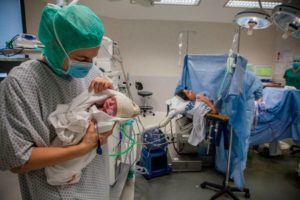
The Dominican Republic is the global leader in C-sections, with the World Health Organization reporting in 2015 that 56% of all births were by C-section. The number is expected to be even higher this year. In the Dominican Republic, C-sections appear to be the birth procedure of choice, rather than the exception. The study revealed back then that 42% of all births in public hospitals were by C-section, while 87% of births in private clinics were by C-section.
In most countries abroad, C-sections are traditionally reserved for circumstances that include prolonged labor, placenta abnormalities, cord prolapse, distress of the fetus, certain diseases and if the baby is in an abnormal position. Globally, medical professionals estimate that these conditions occur in 10 to 15% of births.
In the Dominican Republic, nevertheless, doctors are increasingly recommending C-sections. As a result, young physicians are losing confidence in their ability to assist in vaginal births. Moreover, women have also increasingly requested the C-sections due to prior negative experiences with natural births, fear of labor pain or damage to their bodies or concerns about future sexual function.
However, recent studies confirm that there are no benefits of employing the procedure without a medical justification and indeed women and babies can die from complications from C-sections, especially when a medical facility is under-resourced and staff is under-trained.
New studies organized for the International Federation of Gynecology and Obstetrics World Congress presented recently in Brazil indicate that the use of C-sections is highest in the Dominican Republic, Brazil, Egypt, Turkey and Venezuela, accounting for more than half of all births there. Rates of C-sections have increased the most sharply in South Asia, where they accounted for 7% of births in 2000. Since then, the rate in Asia has risen to more than 18 percent of births in 2015.
The findings of the compilations of research indicate that C-sections continue to be overused in North America, where rates grew from 24% to 32% during that time; in Western Europe, with rates of 20% in 2000 and 26% in 2015; and in Latin America and the Caribbean, where rates jumped 32% to 44%.
Low- and middle-income countries saw the greatest disparity the use of C-sections, where wealthy women were six times more likely to have one than the poorest of those populations. The procedure is 1.6 times more likely to take place in a private institution rather than a public one, perhaps due to persistent shortages of staff and facilities in rural and vulnerable regions.
Source: UsNews
Oct 16, 2018

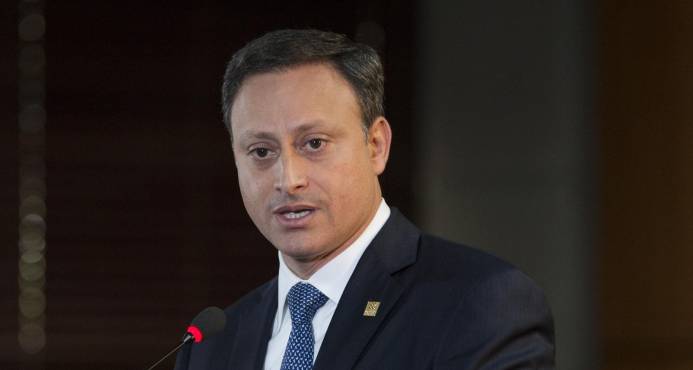
The Attorney General of the Dominican Republic, Jean Alain Rodriguez, announced late last week that with some government funding as well as the cash from payments received from Odebrecht and Embraer as compensation in government bribery cases, the Justice Department would build a new prison to replace La Victoria in Guerra together with the facility in San Luis used for preventive custody.
According to Rodriguez this is only part of a program to provide more humane treatment throughout the penitentiary system. The jails have a budget of around US$170 million, says the Attorney General. Odebrecht has agreed to pay the Dominican government US$184 million after admitting in a New York City court that the company paid US$92 million in bribes in order to obtain some very lucrative contracts for public works in the Dominican Republic. Embraer, the company that manufactured and sold the Super Tucanos aircraft to the Dominican Air Force, reimbursed the government to the tune of US$7.0 million in order to be excluded from the judicial case unfolding over corruption in the purchase of these aircraft.
The Attorney General reported that the projects should be completed by April 2020, a month before the 2020 general election.
La Victoria prison was designed to hold 1,200 inmates but currently has a prison population of over 9,000. The new prison complex will be built in the area of Las Parras in Guerra, in East Santo Domingo and will have a capacity for 8592 men and 665 women. Construction companies will use the prison labor to build the jail. The new facility will have its own hospital, the first one of its kind in the Dominican Republic.
The Attorney General also announced the construction of juvenile detention centers in Barahona and La Romana.
Source: DR1, DiarioLibre
Oct 16, 2018
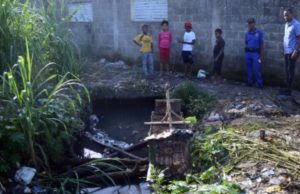
Technicians from the Ministry of the Environment are on the lookout for the American crocodile that is known to live in a creek in the area of Barrio Nuevo, in Sabana Perdida, over in East Santo Domingo. The authorities reported that traps were laid but the wily crocodile has so far avoided capture.
Nelson Garcia is one of the technicians heading the operation. He told the press over the weekend that this crocodile is a protected species and is mostly found in Enriquillo Lake, in the southwest. It is a species in danger of extinction.
It is not known how the crocodile relocated to Santo Domingo. But now residents told reporters they live in fear of being attacked by the crocodile, because it has been seen wandering the streets in the barrio. The crocodile is between three and 4m long and usually scurries back to its safe place in the dirty creek under a large concrete slab.
Many of the locals have encountered the crocodile, like Julia Martinez who said that one time the crocodile appeared right in front of her house. Sightings of the crocodile are more frequent in the morning or after heavy rains.
One morning late last week, a team from El Nacional newspaper visited the creek where the reptile lives and noticed that very early at least four children between the ages of eight and 12 were waiting for the crocodile to come out to watch it around 9am. Residents avoid the area at night, and all the families that live nearby close their doors early in the evening and place pieces of sheet metal in the alleyways so that the crocodile doesn’t enter yards or empty lots.
Some of the neighbors reported losing chickens they raise for their own consumption. They suspect the crocodile. Julio Perez, the president of a local boxing club said that he hoped that the authorities capture the animal soon so that his students will pay attention to their sport and not be so interested in observing and taking photos of the creature.
The existence of this neighborhood crocodile became known throughout the area because some residents loaded videos on social media, and now the area is a local tourist attraction.
Source: DR1, Elnacional
Oct 16, 2018

The director of the National Institute of Traffic and Ground Transport (Intrant), Franchesca de los Santos says they will be enforcing traffic rules that establish that trucks and other cargo vehicles need to keep to the right on multi-lane roadways. It is common to see large trucks permanently occupying the left lane on main roadways when this should be used exclusively for passing. This is just one of several other regulations the Intrant is publicizing in the agency’s push to improve road and highway safety. However, Intrant did not explain how they are going to enforce the new ruling.
The obligation to drive on the right has always been in local driving rules. When Law 241-67 was published it already specified that cargo vehicles need to drive on the right.
The announcement of the trucks and the left lane coincides with an editorial in Listin Diario, titled “The Untouchables” on the dangerous practice of truck drivers who insist on using the left lane, forcing other vehicles to pass these trucks on the right.
The editorial in the Listin Diario on 13 October 2018 stated:
“It cannot be alleged that the drivers do not know this rule. Drivers know this rule well, but they do not respect it because here no authority has been able to stop them and fine them for the infraction. These truck drivers are under the impression these traffic laws are never enforced and they are immune to any legal penalty. In truth, they have every right to feel impunity, because the lack of the intent of the government to enforce our nation’s traffic laws. Thus, truck drivers do essentially what they want, a privilege that millions of Dominican citizens do not enjoy yet as only these have reached the highest category of ‘owners of the country’ “..
Traffic experts have been critical of the delays in Intrant implementing rulings contained in Law 63-17 that replaced Law 241-67. The Dominican Republic is a global leader in traffic accidents in great part for the lenient application of traffic laws by local authorities.
Motorcycles are involved in 64% o the mortal accidents in the country. Sunday is the day when most accidents occur.
Source: DR1, Listindiario
Oct 16, 2018
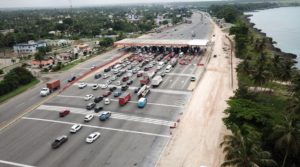
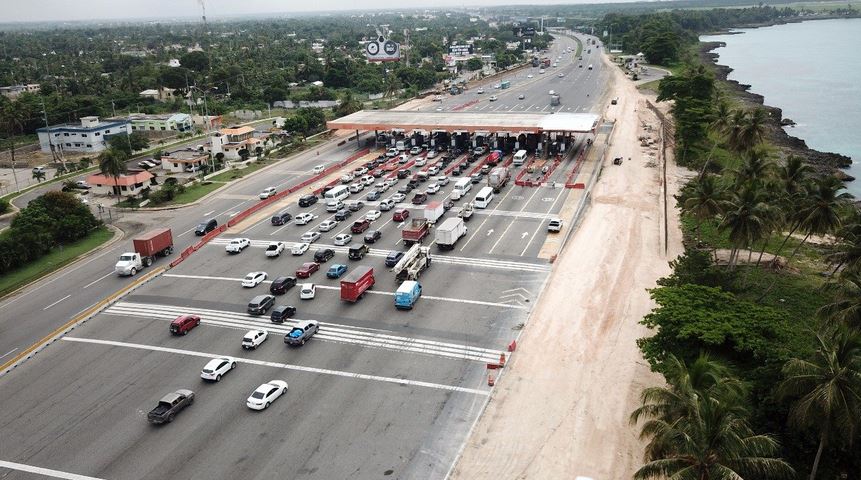
The Coordinating Office of the DR Highway Trust is increasing the lanes at the Las Americas Highway near the tollbooths to speed up the vehicular traffic. Eyla Vargas, the director general of the DR Highway Trust, explained that the expansion of the Las Americas Highway calls for the construction of three new lanes, with two dedicated to normal toll collection by hand, and one lane dedicated to EZY Pass. She added that there will be an additional lane set aside exclusively for motorcycles, bringing the total access to 14 marked lanes. During the construction some lanes will be closed and there will be manual collection of tolls.
Vargas encouraged drivers to purchase and use the time-saving Las Americas toll road Paso Rápido (EZY Pass).
Source: DR1, Elnacional
Oct 16, 2018
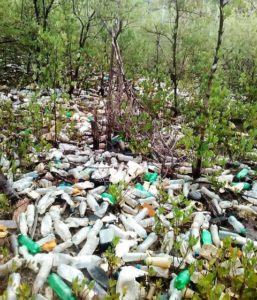
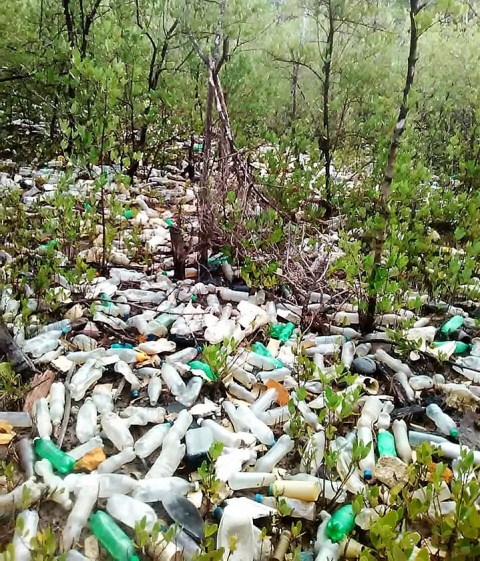
PUERTO PLATA.- Tonnes of solid waste are being collected in the mangroves that make up several ecosystems in the Wildlife Refuge of the Bahía de Gracia in the municipality of Luperón.
It is estimated that two thirds of the fish populations in the world depend on the mangrove, in one or more of their life cycles as they are also nesting and feeding areas for many species of birds and reptiles, their roots being the ideal substrate for many species of bivalves used commercially.
The sanitation day is carried out by the personnel of the Ministry of Environment and Natural Resources, who within the existing mangrove ecosystem there, with great zeal and enthusiasm, continue to remove bags full of garbage and waste.
In a mangrove area of 50 tasks that have been traversed, were extracted some 185 covers each with capacity of 55 gallons and 47 bags of inorganic waste, such as plastic and glass bottles, cups and plates of polyurethane, tin, in addition to plastic cases.
The solid waste that is being removed from the mangrove area in the beautiful Luperón Bay, is dragged by several ravines, which denotes the unbridled behavior of the society that lives on its back to its natural environment, without caring about the consequences of their actions.
The expert Pablo Rodríguez, explained that mangroves are the most important vegetation that predominates in the bay of Luperón, where the species are found: Rhizophora mangle (Red Mangrove), Laguncularia racemosa (White Mangrove), Conocarpus erectus (Mangle Button) and Avicennia germinans (Black Mangle).
“The mangrove ecosystem of which there are around 258 square kilometers in the Dominican Republic is economically important, since it represents a source of food for most of the estuarine and marine organisms that live there,” Rodríguez said.
He said that the mangrove ecosystem is characterized by high productivity, production of organic matter, barrier against coastal erosion, natural barrier against salinity and waves, help improve water quality, fixation of pollutants.
Source: Puerto Plata Digital
Oct 11, 2018