Archive for September, 2018

The director of the Cinema Agency (DGCine) Yvette Marichal announced the filming of ten episodes of an unnamed Netflix series. Marichal estimated the production will inject around RD$1 billion into the Dominican economy.
The film industry is booming in the Dominican Republic. The CEO of Lantica Media forecast an injection of around US$39 million this year as several international companies carry out productions locally. As reported in Diario Libre, Juan Aguerrevere, CEO of Lantica Media (Pinewood Studios) said among the films are movies and series by NBC, Turner, Entertainment Studios Television, Seesaw Film and Netflix.
Of the estimated US$39 million, US$15 million will enter via the production of a series of 10 episodes for the Netflix series.
Source: DR1, DiairoLibre
Sep 17, 2018
September is the peak months for hurricanes affecting the Dominican Republic.
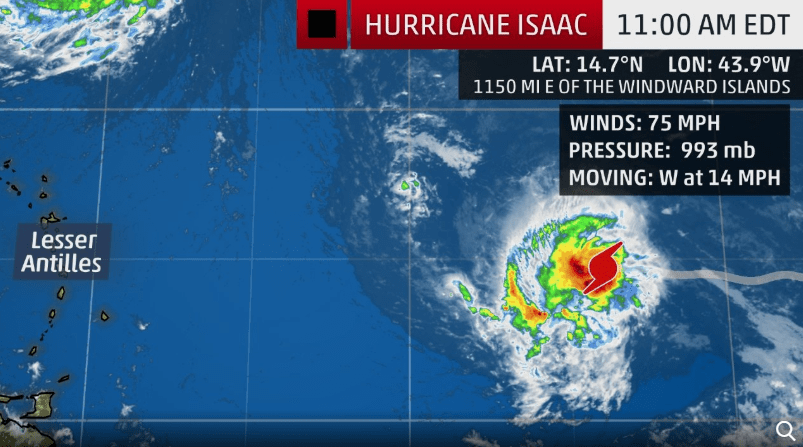
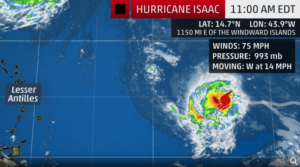
September 2018 is no exception. Weather followers now point to follow Hurricane Isaac that is moving its way to the eastern Caribbean islands and by the end of the week could be passing Puerto Rico and Punta Cana to the south by Thursday or Friday, 13-14 September 2018.
The present forecasted path means at worst it would bring tropical storm force winds and rains to the southern coast as early as Wednesday, 12 September.
Hurricane Isaac is continuing its progress towards the Caribbean with winds of 120 kilometers an hour. According to the deputy director of the National Meteorological Office, Miguel Campusano, the storm is expected to pass to the south of the country on Thursday, 13 September 2018 in the night. Currently a category 1 hurricane, Isaac is expected to strengthen and then weaken as it crosses the Caribbean Sea.
In addition the country is under the influence of a weather trough currently over Haiti that is expected to bring rains to the northeast, southeast, southwest, central mountain range and border zone.
While at present sea conditions are normal on the Caribbean coast, the Atlantic coast is feeling the effect of high waves due to the effect of Hurricane Florence to the north and small craft are advised to stay close to shore.
Local weather authorities say that its present path does not endanger Dominican shores, but needs to be monitored closely.
Follow the hurrican path
Source: DR1, Windy
Sep 11, 2018
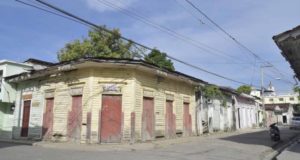
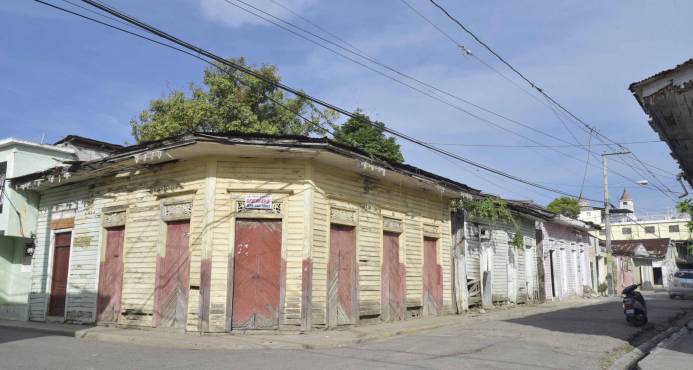
Representatives from different sectors in Puerto Plata have expressed their concern at the advanced deterioration of the homes from the Victorian period, which are one of the main tourist attractions of the city. According to historian Germán Camarena Gómez, there only remain 187 of around 375 Victorian homes that were counted as part of an inventory in 1975, by real estate developers José Augusto Puig Ortiz and Robert Gamble.
Camarena called on the authorities to put together a restoration plan for these buildings, many of which are in such a poor condition they could collapse and injure people. Julio Almonte, Deputy Minister of Tourism for the North Coast said that those buildings which disappeared had been abandoned by their owners because they were collapsing and new modern buildings were erected in their place. He said that the Ministry of Tourism, along with the City Hall authorities would carry out a survey to see how many homes needed repair.
These old buildings that are protected by law are located in the streets of Juan Bosch, Beller, Margarita Mears, Sánchez, José Ramón López, San Felipe, Villa Nueva and others.
Source: DR1, DiarioLibre
Sep 11, 2018

On 10 September 2018, the Regulation on the Registration of Notarized Documents goes into effect, according to the Association of Notary Publics. This establishes a new tax of RD$554 as approved by Resolution 21/2018, establishes that the registration of notarized documents will be under the control of the Presidential Secretary or a Chamber which functions as the president of the Commercial and Civil Chamber of the Appeals Court which is assigned the Court of First Instance where the Notary is registered.
Likewise the regulation says that when they are dealing with documents prepared by consular officials of the Dominican Republic overseas, who function as Notary Public, the registration will be supervised by the Commercial and Civil Chamber of the Appeals Court of the National District the regulation also stipulates that all notaries who prepare a notarized document must deposited within the next 10 working days at the Commercial and Civil Chamber of the Court of the First Interest in the judicial district where they are registered.
Source: DR1, Diariolibre
Sep 11, 2018

18-year old Dominican kitesurfer Adeuri Corniel came in second to Brazilian Carlos Mario in the World Kiteboarding Championships that ended on 9 September 2018 in Akyaka, Turkey. The Dominican team was made up by Posito Martinez, Luis Alberto Cruz and Joselito del Rosario, all Cabarete-born and trained.
Earlier this year in May 2018, Corniel was part of the Dominican team of kiteboard racers that won top places in the 2018 Youth World Championships Championships that took place in Hainan island, China. Corniel himself a freestyle star, had grabbed the top spot at that event that is a qualifier for the Youth Olympic Games (YOG) in Argentina in October 2018.
https://www.iksurfmag.com/riders/adeuri-corniel/
Source: DR1, iksurfmag
Sep 11, 2018
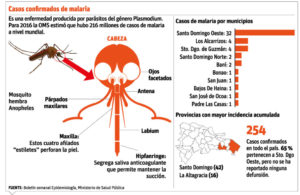
Santo Domingo West mayor Francisco Peña has admitted to an increase in malaria in his municipality. The explanation he has given: “Where there are Haitians, there will be malaria,” he said. He explained that the Haitians have erected illegal housing that creates unsanitary conditions. He said around 100,000 Haitians live in the municipality and constantly travel to and from Haiti. Malaria is common in Haiti.
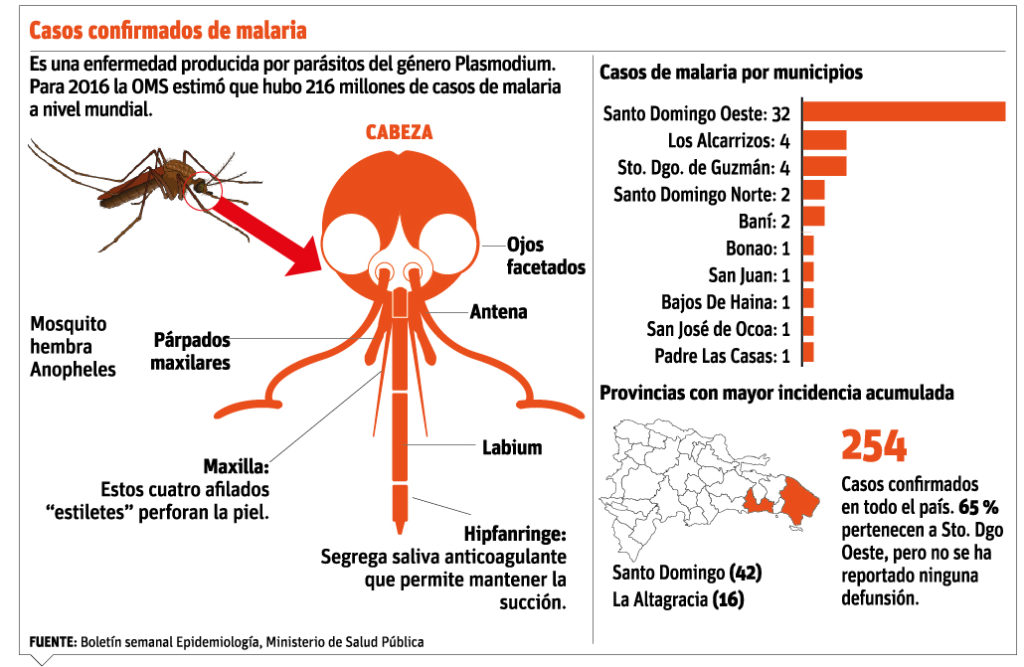
As reported in El Dia, 65% of the recent malaria cases have occurred in the Santo Domingo West municipality. Dr. Jose Manuel Puello of the Ministry of Public Health acknowledged the increase in malaria cases in the municipality over the past two months and said among control actions is the use of fumigating to eliminate the mosquitoes.
Although new cases of malaria are registered almost every day, the country has this disease under control, mostly due to the government’s work in malaria prevention. Also, Ministry of Health has cited major advances that promise to eradicate the disease by 2020.
The director of Health Management in the Population, a part of the Ministry of Public Health, Dr. José Manuel Puello, who has led the fight against malaria for several years when he was the director of the National Center for the Control of Tropical Diseases told reporters that the country is going towards the elimination of malaria. Nonetheless, he pointed out that this is an island shared by two countries and that it is not possible to eliminate the disease totally in one of the countries without it being eliminated in the other.
Between 2013 and 2015, the Dominican Republic was awarded the prize of champion in the fight against malaria in the Americas, given by the Pan-American Foundation for Health and Education, and the Milken Institute at the School of Public Health at George Washington University together with the School of Public Health at Johns Hopkins University and the Pan-American Health Organization and the World Health Organization.
So far, the outbreak of malaria affecting the country is centered mostly in the town of Los Alcarrizos, a part of West Santo Domingo, with 30 cases reported. Another 16 cases were reported in Higüey in La Altagracia. Officials in West Santo Domingo have undertaken a door to door educational program that includes spraying in order to reduce the number of mosquitoes that carry this disease.
Source: DR1, Eldia, DiarioLibre
Sep 11, 2018
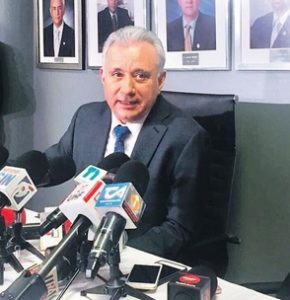
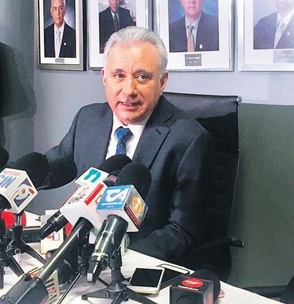
The president of the National Business & Industry Association of Herrera (ANEIH), Antonio Taveras Guzmán criticized the fact that 87% of the pension funds have been invested in Central Bank bonds to cover the Ministry of Hacienda deficit. Taveras said the cash should have been used to foster economic development and job creation in productive sector. Instead, the funds are producing low yields that are insufficient for a decent retirement.
He added: “It is an issue that should concern all of us, employers, workers and the authorities. From the ANEIH we propose a frank dialogue to find a solution to the issue of pensions. If we do not do something now, in a few years we will have a terrible drama of a working population in retirement, aged and without the basic income to eat at least three times a day. ”
Taveras observed that according to the quarterly reports published by the Superintendence of Pensions (SIPEN) from 2014 to 2018 the portfolio of pensions has doubled from RD$276.54 billion to RD$559.86 billion.
Source: DR1, Lisitndiario
Sep 11, 2018
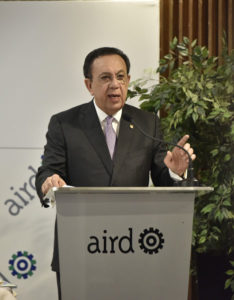
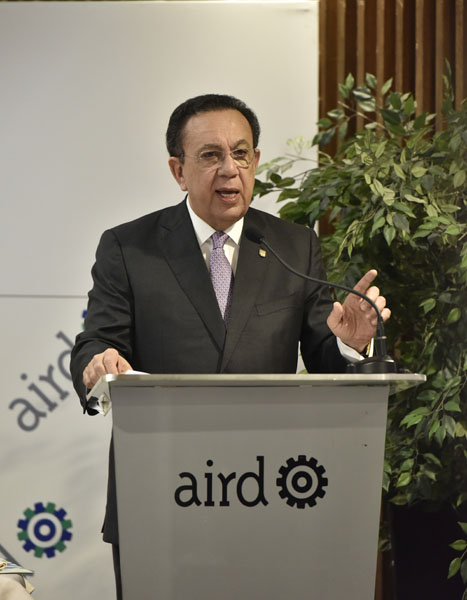
Central Bank Governor Héctor Valdez at a meeting on Wednesday, 5 September 2018, with the Association of Industries of the Dominican Republic (AIRD) and the National Business Council (Conep) highlighted the high points of the Dominican economy. The presentation is posted on the Central Bank website.
Forecast GDP growth for 2018 is 6-6.5%. From January to July the economy grew 6.1%. Latin American average is 1.5%. The DR has sustained an average annual growth from 2013 to 2017 of 6.1%, with average inflation during the same period of 2.7%.
The Dominican Republic in 2017 was the leader in tourism receipts in South America, Central America and insular Caribbean with 7.2%.
The DR was second in remittances received, behind Guatemala, with US$5.91 billion.
In exports of goods and services, the DR was ranked third highest, behind Panama and Costa Rica with US$18.91 billion.
Dominican Republic was only second to Panama in foreign direct investment received in 2017 in the Central American region with US$3.57 billion.
Economic growth was 6.2% on average from January to July 2018. Sectors experiencing the most growth during the first half of the year were construction (10.6%), free zone manufacturing (10.1%), commerce (9%), health (8.3%), transport and warehousing (6.9%), commerce (8.4%), communications (7%), local manufacturing (6.5%), farming (6.2%), water and energy (6.4%), financial services (6.4%), and tourism (5.2%).
Non-resident travel to the country is up 5.9% from January to July 2018, with 227,140 more tourists arriving for a total of 4,106,474 during the first seven months of the year.
The country showed a public deficit of US$141 million, primarily due to the rising cost of fuel imports this year compared to 2017.
Exports are up to US$5.43 billion from US$5.01, including national and free zone exports. This is a 5% overall increase.
Tourism receipts are up US$205.7 million from January to July 2018, to US$4.69 billion. The increase is attributed to increased spending and more visitors, primarily from North America.
January to July 2018 remittances increased 11%, from US$3.42 billion in 2017 to US$3.80 billion in 2018.
Foreign Direct Investment increased to US$1.59 billion for January to June 2018, a significant 20.2% compared to the previous year. Investments have been in tourism, energy and mining.
International hard currency reserves, or the Gross International Reserve chapter at the Central Bank increased to US$7.43 billion, equivalent to 4.5 months of imports, not taking into consideration of the free zones.
Accumulated inflation from January to August 2018 is 1.44%, and inter-annual inflation from August 2017 to August 2018 was 3.87%.
Source: DR1, Bancentral
Sep 11, 2018
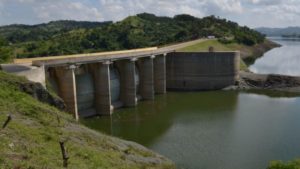
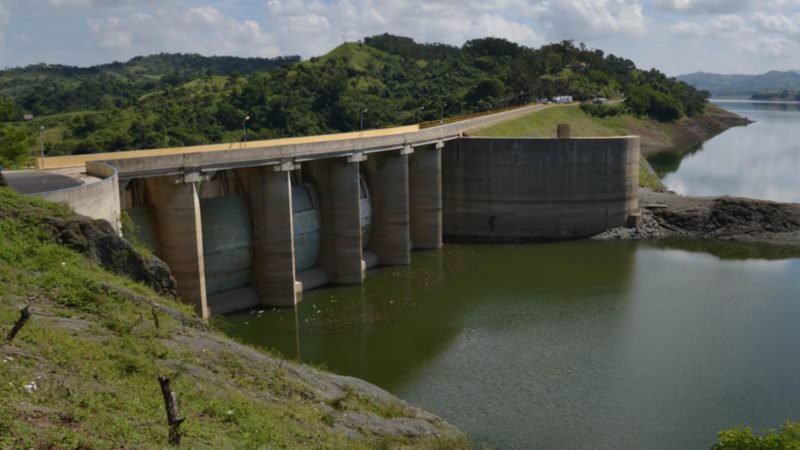
According to the director of the National Institute of Hydrological Resources (Indrhi) Olgo Fernandez, only the Sabaneta dam in San Juan de la Maguana has enough water to guarantee irrigation for the next bean planting in November. A region-wide drought has severely reduced water in other dams and reservoirs.
Of the 32 large dams, only Sabaneta has a high volume of water, and the other dams such as Tavera, Monción, Rincón, Tavera, Hatillo, Bao, Sabana Yegua, Lope Angostura and Sabana Yegua, among others are below the minimum levels required.
Fernández said that due to these low water levels in key dams, INDRHI officials have met with the 32 irrigation boards and the 8 agrarian reform boards to determine which irrigation zones can be planted and which not while hoping for rain this month, October and November.
He said there had not been rain in the main river sources but they were trying to continue to provide water to the population and for agriculture and that the next challenge was to prepare for rice planning in December as well as for bean and tomatoes which all were obligatory but which needed a lot of water.
The president of the Dominican Association of Landowners and Agriculture (ADHA) Julio de Beras said that the east, south and northwest had been affected by a severe drought that had already caused severe damage to the production of meat and milk.
Source: DR1, Hoy
Sep 11, 2018