Archive for September, 2018
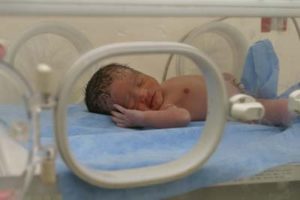
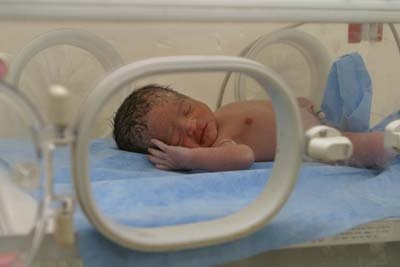
The number of births to foreigners in the Dominican Republic is on the rise. The significantly better quality medical services and little cost is a big lure for Haitian women to pay traffickers to cross the border. While services are free at Dominican public hospitals, in Haiti these are costly even for the poor.
A report in Diario Libre says that RD$500 (US$10, or what a tourist card costs) paid at the border is enough to get across. The pregnant women then can board a commuter bus or a motorcycle taxi to one of the cities to visit a public hospital. Another US$100 is usually enough to ensure the woman is not stopped at the military checkpoints. Other trips are organized for up to US$200. Diario Libre says the contacts for the trip are known in the Haitian barrios in the cities, and at the public hospitals, also.
Last October 2017, Defense Minister Lieutenant General Ruben Paulino Sem had reported on the dismantling of a network of civilians and military involved in birthing tourism after then director of the National Health Serivce, Nelson Rodriguez Monegro, had bitterly complained of the high cost of the inflow of the Haitian women to the public health system. Defense Minister Paulino Sem confirmed there are networks in operation all along the border. These contract the buses. There are military and civilians involved.
But Diario Libre could not find a case on illegal smuggling being heard in any court. One source told the newspaper that the announcement by Paulino Sem was fake news.
The Ministry of Public Health says that it has 205,000 births to Haitian mothers registered since 2007.
The Diario Libre report by journalists Tania Molina and Mariela Mejía also reveals that the Haitian mothers many times will share identity cards. In an earlier report, the newspaper reporters confirmed that border migration checks are lax. Profiting and brotherly benevolence are reasons mentioned for the lax controls.
Statistics from 2010-2017 show there are 1,071,631 births at Dominican public hospitals. The number of foreign births are on the rise. While in 2016, these 2343 18,874 compared to 112,511 of Dominicans, in 2017 these had increased to 23,292 foreigners compared to 119,692 of Dominicans.
Source: DR1, DiarioLibre
Sep 20, 2018
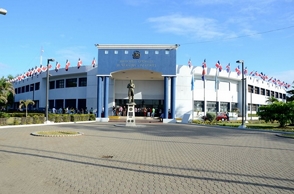
As of Monday, 24 September 2018, exit permits issued for unaccompanied minors will be valid for 90 days up from 30 days, says the Migration Agency (DGM). The permits affect Dominican nationals traveling alone or with only one of the child’s parents. The permits can be requested online and then paperwork deposited at any of the offices.
The measure will make it possible for parents to request the permits with more days and will bring relief to the agency that gets swamped by the requests in peak vacation times of the year. The permits will also be issued now at the regional offices in Santiago, Puerto Plata and Punta Cana, in addition to the main office at the Plaza Malecon Center.
https://www.migracion.gob.do/Menu/Index/30
Source: DR1
Sep 20, 2018
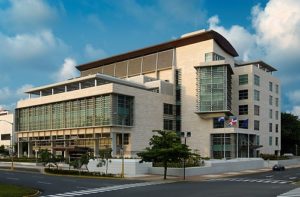
In a decision on 19 September 2018, the judges of the Third Chamber of the Supreme Court of Justice confirmed that the property titles that had been issued to individuals in the Bahía de las Aguilas beach area of Pedernales are not valid. The court, chaired by Judge Manuel Herrera, and composed of Robert Plasencia and Moisés Ferrer, adopted the decision after declaring inadmissible the titles and rejecting 25 appeals filed by several who had claimed the lands and now are sentenced to pay the legal costs.
The court, entrusted with land, labor, litigation, administrative and contentious-tax matters, confirmed the judgment of the Superior Land Court issued on 24 February 2016, regarding plot 215-A of Cadastral District 3, of the municipality of Enriquillo in the province of Pedernales, in the southwest. This is an area of 4,530.6 tareas (1 tarea= 626 square meters). However, other cassation appeals related to the other plots, 40 and 215B, remain pending.
The case of Bahía de las Águilas has been known in the courts since 1997, when the complaint was filed against the former director of the Dominican Agrarian Institute (IAD), Jaime Rodríguez Guzmán, his wife Reyna Margarita Martínez and his brother Rafael Rodríguez Guzmán, who were accused of irregularly disposing of government land. The property titles were contested by the civic society and environmentalists who claimed the lands were in protected areas and could not be sold.
Bahia de las Aguilas is best known for its pristine beaches along the southwestern coast. The tourism development potential of the area is behind the irregularities.
The Supreme Court judgment could mean the government now has green light to undertake development of the area, albeit it is not yet known what would be done given the protected status area and the vulnerability of the area itself. There is no fresh water in the area. The Medina administration has shown particular interest in resolving the legal issues in order to attract foreign investment for developing the Pedernales beach area.
Source: DR1, Acento
Sep 20, 2018
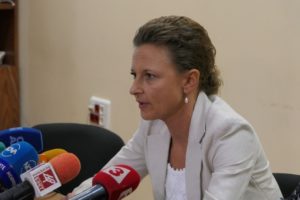
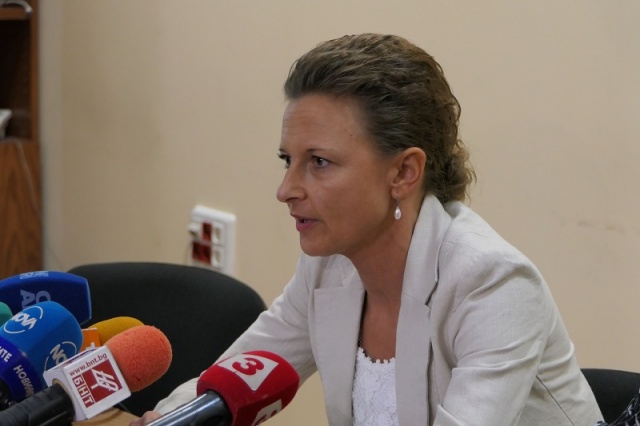
According to the head of the Bulgarian Special Prosecutor’s Office, Daniela Nacheva, four people have been detained in Sofia, Bulgaria in connection with a criminal group for distribution of drugs from the Dominican Republic. As reported, the group recruited low-income people to travel through European countries to the Dominican Republic and then back to the area of Stara Zagora. During their weeklong stay there, the mules swallowed an average of 80 to 100 cocaine-containing capsules of between 8 and 13 grams. The cocaine was distributed in Gabrovo, Burgas, Varna, Plovdiv, Sofia and other cities in the country, as reported in Euscoop.
While waiting for the expulsion of the drugs, they were accommodated, with mobile phones taken away and limited contact with the outside world. The distribution network became known when one of the people was caught on 15 September 2018 in Portugal when falling ill. After a medical checkup, 99 capsules were found inside his stomach – nearly a kilo of cocaine.
Nacheva explained that four people, including a woman, were charged with involvement in a criminal group and detained for 72 hours. The prosecutors will request detention in custody.
Source: DR1, Novinite
Sep 20, 2018
Port-au-Prince, Sep 17 (Prensa Latina) The formal trade exchange between Haiti and the neighboring Dominican Republic reportedly reached 888.33 million dollars in 2017.
More than 90 percent of these resources corresponded to products imported to this country, while 36.61 percent, which includes items for fishing, tobacco, as well as equipment accessories, are exported to the Dominican Republic.
According to the National Statistics Office of Santo Domingo, formal trade between both nations rose by 6.5 percent compared to 2016, however, it remains below the figures of 2015, when it reached one billion dollars.
The fall is due to Haiti barring the import of some 23 products by land, including wheat, flour, edible oil and cement, with the aim of controlling their quality and ensuring the safety of the population.
However, despite these impositions experts point out that the informal trade between both nations is around 1.2 billion dollars, and that Haitians mainly buy in the Dominican Republic agricultural and agro-industrial goods such as chickens, eggs, rice, beans and vegetables.
Conversely, the main products are textiles, footwear and alcoholic beverages.
According to the Ethics and Anti-Corruption Commission of the Senate, the Haitian State loses annually 55 billion gourdes (848,508,534 dollars) on tax evasion, despite the brigades deployed in the border area to counteract the activities of smugglers.
Source: plenglish.com
Sep 20, 2018

According to the latest survey on the risks that present for travelers the world’s tourist destinations in 2017, International SOS, the largest international assistance company to travelers, 60% of those surveyed believe that in 2017 the risks for people traveling have increased.
Haiti is on the RED list among one of the most dangerous countries to travel at the level of the Caribbean and Latin America, in the same group that Venezuela, Mexico and Honduras …
In the index of tourist destinations at risk, the Dominican Republic is classified in countries at “moderate” risk while Cuba is classified as a very “reassuring” country.
Physical violence is not the only factor taken into account for the assessment of the risks to which the lives of travelers could be exposed, such as robbing, the health situation, the degree of availability, the quality of care in case of emergency and the socio-political situation…
Source: TB/ HaitiLibre
Sep 17, 2018

In the past, it is alleged that terrorists of all stripes had taken advantage of tourist friendly policies in the Dominican Republic. Recently, security measures in the country have been enhanced. But events in 2011 and 2015 highlight the vulnerabilities of the migration controls to keep out world known drug traffickers, smugglers, criminals, mafias and terrorists.
It is now known that Arab terrorists behind the 9-11 terrorist attack on the Twin Towers in New York City had “vacationed” in Puerto Plata at the hey days of when they were sought for terrorist attacks in Paris, France. That was in 2011. Listin Diario journalist Carolina Pichardo also shared that Puerto Plata was a meeting point for Mohamed Atta, head of the 9-11 terrorist attack in New York City, just three weeks before the attack. Reportedly, then Dominican consul in Hamburg, Germany Dra. María de los Ángeles Peña revealed that the Egyptian pilot that crashed the American Airlines flight into the Twin Tower had requested and obtained a tourist visa to vacation in the country. Peña said she would learn about this after she was contacted by the Central Intelligence Agency of the United States after it was determined the visa had been issued by a Dominican consulate in Germany.
More recently, in 2015, Amedy Coulibaly, known as a French Islam terrorist who held up a Jewish supermarket where several persons were killed including Charlie Hebdo publication journalists that year, was also in the country. 26-year old Hayat Boumedienne, at a time when she was sought by the French police as a suspected accomplice of her common law husband Amedy Coulibaly, who was the main suspect for the Montrouge, Paris 2015 shooting in France, supposedly vacationing in Puerto Plata. At the time she was considered on the run and armed and dangerous.
Listin Diario reports that in February 2014, Interpol revealed the capture of 20 fugitive foreign criminals that were living in the country. These persons face charges for drug trafficking, homicide, fraud, asset laundering, bank robbery, rape, among others. Among the 20 that were captured in the country were: Serbian Ivan Ivan Sivkovic, who had laundered a considerable amount of money and was sought for bank fraud; Slovenian Hari Presetnik, sought for bank fraud, Mexican drug trafficker Antonio Avalos Valencia. All reported with long stays in the country.
Another case was the use of the country as a base by accomplices of former El Salvador President Elías Antonio Saca (2004-2008) to launder around US$300 million from corrupt actions in El Salvador.
Source: DR1, fuegoalalata.do
Sep 17, 2018

Intrant says they are illegal, but the major operators of public transport vehicles are already imposing or threatening to impose a RD$5-RD$10 peso fare increase. The National Institute for Traffic and Ground Transport (Intrant) says that the announced RD$5 fare increase in public transport is illegal and Intrant is the only body that can review fares according to Mobility, Ground Transport, Traffic and Road Safety Law 63-17, stated Viviano de León, press officer for Intrant to El Caribe. Spokesmen for providers of the public transport service want an increase in the “bono gas” subsidy made by the government to compensate for the constant increases in the price of fuel. Major transporters want a change in the Hydrocarbons Law 112-00 that the government is arguing allows the routine increases in the cost of fuel.
Because of recent price increases in fuels, many publico and bus drivers have already increased their fares for passengers by RD $5 and RD $10. However, according to the president of the National Confederation of Transportation Organizations (CONATRA) Antonio Marte, these fare increases have not yet been approved by his union. Marte went on to tell reporters for most of the nation’s newspapers that it would be this week when his union would decide whether or not to officially increase fares. The other player in this scenario is the National Transportation Institute (Intrant) that has not approved any fare hikes by any of the different transportation unions.
After the price increases of gasoline, diesel, and LPG instituted on 7 September, many local public transport union members staged strikes and protests throughout last week. Marte, together with several members of the leadership of CONATRA delivered documents to the Ministry of Industry and Commerce which stated that the drivers belonging to the union “can no longer shoulder the high fuel prices.” Last Friday, 14 September 2018, gasoline prices went down slightly, and the reaction by different transportation syndicates is expected this week.
Source: DR1, Eldia
Sep 17, 2018
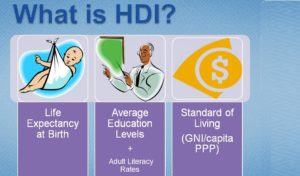
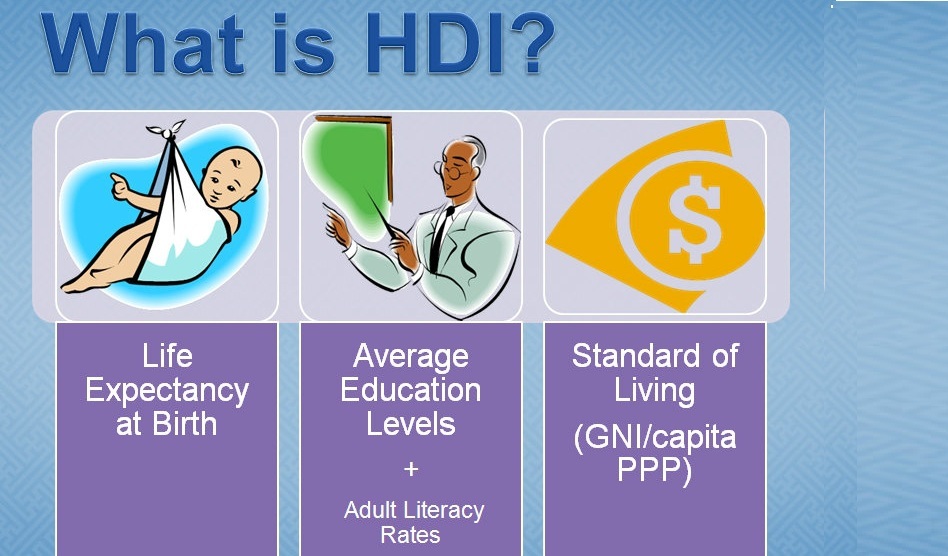
The Dominican Republic has moved up eight places to ranking 94th of 189 countries in the United Nations Human Development Index published by the United Nations Development Program (UNDP). The overall trend globally is toward continued human development improvements, with many countries moving up through the human development categories, including the Dominican Republic.
The Dominican Republic is categorized in the high human development group of the ranking, together with Costa Rica, Panama, Trinidad & Tobago, Antigua & Barbuda, St. Kitts and Nevis, Cuba, Mexico, Grenada, Venezuela, Brazil, Ecuador, Peru, Colombia, St. Lucia, Jamaica, St. Vincent & the Grenadines, Dominica, and Paraguay in Latin America and the Caribbean. Argentina, Chile, Uruguay, Bahamas and Barbados are included in the top very high human development group.
The UNDP 2018 Report that focuses on opportunities and wellbeing for young people concluded that Ireland enjoyed the highest increase in HDI rank between 2012 and 2017 moving up 13 places, while Turkey, the Dominican Republic and Botswana were also developing strongly, each moving up eight places.
Norway, Switzerland, Australia, Ireland and Germany lead the ranking of 189 countries and territories in the latest Human Development Index (HDI), while Niger, the Central African Republic, South Sudan, Chad and Burundi have the lowest scores in the HDI’s measurement of national achievements in health, education and income, released on 14 September 2018 by the United Nations Development Programme (UNDP).
According to the report, Latin America and the Caribbean enjoy high levels of human development, second only to Europe and Central Asia. However, when adjusted for inequality, the region’s HDI drops by 21.8% due to the unequal distribution of human development, particularly in income. The region has the narrowest gap between men and women in HDI at 2%, below the global average of 6%. However, it has the second highest adolescent birth rate and the labor force participation rate for women is significantly lower than for men (51.6 vs 77.5%).
http://hdr.undp.org/sites/default/fi…6436-4_web.pdf

The Dominican Republic’s U20 women’s volleyball team imposed its power and today is the champion of the Norceca U20 Women’s Final-4 Volleyball Cup that was held 6-9 September in Lima, Peru. The win shows the quality of women’s volleyball in the country. The senior volleyball team is ranked 9th in the world.
In Peru, the DR competed against teams from Argentina, Cuba and Peru in the second edition of the tournament. In the first edition, the DR had placed second.
The Dominican team captain Natalia Martinez was named most valuable player, first outside hitter, best server and best scorer. The event also recognized Geraldine Gonzalez as leading middle blocker and Yaneirys Rodriguez as best digger.
To win the tournament, the DR defeated Argentina 3-1 (25-22, 22-25, 25-17, 25-21), avenging its loss to the team in the pool phase of the competition. As reported, Dominican captain Natalia Martinez led the way with 18 points, with Yanlis Feliz contributing 15 points to the winning cause. Melissa Corzo had 25 points in the losing effort.
Source: DR1, Norceca
Sep 17, 2018