Central Bank: Dominican economy
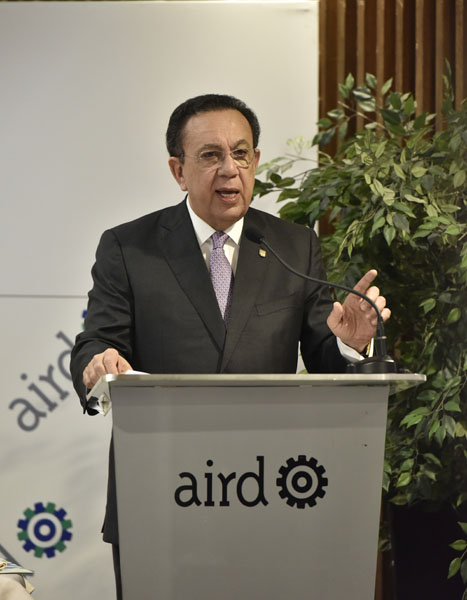
Central Bank Governor Héctor Valdez at a meeting on Wednesday, 5 September 2018, with the Association of Industries of the Dominican Republic (AIRD) and the National Business Council (Conep) highlighted the high points of the Dominican economy. The presentation is posted on the Central Bank website.
Forecast GDP growth for 2018 is 6-6.5%. From January to July the economy grew 6.1%. Latin American average is 1.5%. The DR has sustained an average annual growth from 2013 to 2017 of 6.1%, with average inflation during the same period of 2.7%.
The Dominican Republic in 2017 was the leader in tourism receipts in South America, Central America and insular Caribbean with 7.2%.
The DR was second in remittances received, behind Guatemala, with US$5.91 billion.
In exports of goods and services, the DR was ranked third highest, behind Panama and Costa Rica with US$18.91 billion.
Dominican Republic was only second to Panama in foreign direct investment received in 2017 in the Central American region with US$3.57 billion.
Economic growth was 6.2% on average from January to July 2018. Sectors experiencing the most growth during the first half of the year were construction (10.6%), free zone manufacturing (10.1%), commerce (9%), health (8.3%), transport and warehousing (6.9%), commerce (8.4%), communications (7%), local manufacturing (6.5%), farming (6.2%), water and energy (6.4%), financial services (6.4%), and tourism (5.2%).
Non-resident travel to the country is up 5.9% from January to July 2018, with 227,140 more tourists arriving for a total of 4,106,474 during the first seven months of the year.
The country showed a public deficit of US$141 million, primarily due to the rising cost of fuel imports this year compared to 2017.
Exports are up to US$5.43 billion from US$5.01, including national and free zone exports. This is a 5% overall increase.
Tourism receipts are up US$205.7 million from January to July 2018, to US$4.69 billion. The increase is attributed to increased spending and more visitors, primarily from North America.
January to July 2018 remittances increased 11%, from US$3.42 billion in 2017 to US$3.80 billion in 2018.
Foreign Direct Investment increased to US$1.59 billion for January to June 2018, a significant 20.2% compared to the previous year. Investments have been in tourism, energy and mining.
International hard currency reserves, or the Gross International Reserve chapter at the Central Bank increased to US$7.43 billion, equivalent to 4.5 months of imports, not taking into consideration of the free zones.
Accumulated inflation from January to August 2018 is 1.44%, and inter-annual inflation from August 2017 to August 2018 was 3.87%.
Source: DR1, Bancentral
Sep 11, 2018
Category: DR News |