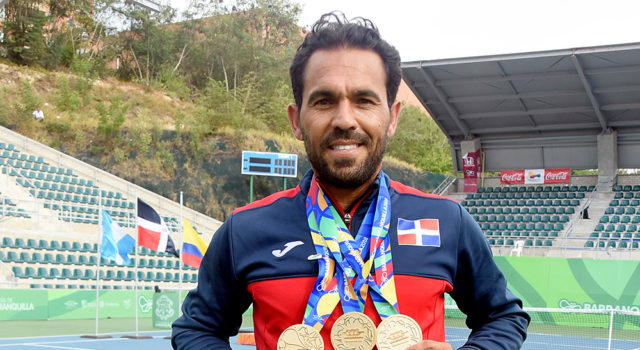
38-year old Victor Estrella won gold again in tennis in the Cup of Nations. Previously he had won the singles gold and that of doubles with Roberto Cid (6-2, 6-4) over Guatemala to win three gold medals in the Central American and Caribbean Sports Games that took place in Barranquilla Colombia. The DR team won 107 medals in Barranquilla, including 25 gold medals, 29 silver and 53 bronze. This is the first time the Dominican Republic has won more than 100 medals since Cuba began participating in the games. The total medal winner of the games was Mexico, followed by Cuba, Colombia, and Venezuela.
By sports, the Dominican Republic won medals:
Weightlifting (18)
Judo (12)
Boxing (11)
Taekwondo (9)
Karate (7)
Wrestling (7)
Track & Field (6)
Gymnastics (5)
Tennis (5)
Equestrian (4)
Fencing (2)
Basketball (2)
Diving (1)
Swimming (1)
Table Tennis (1)
Source: DR1, Eldia
Aug 9, 2018
By Ramon Collado
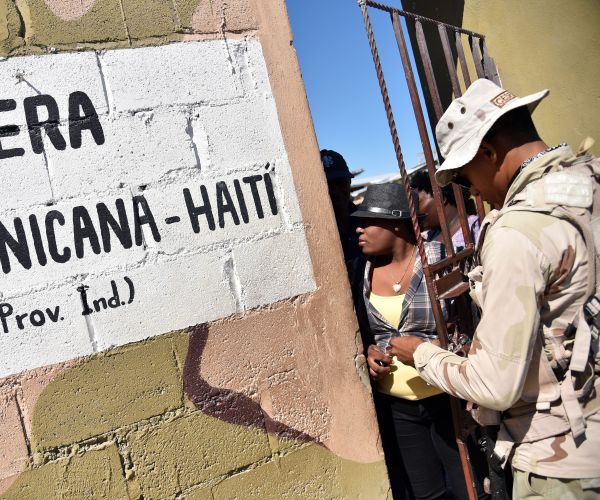
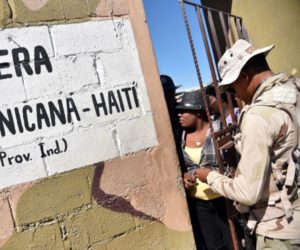
The Dominican Republic (DR) and Haiti share the Island of Hispaniola, an island divided by a 236-mile border protected by 36 checkpoints and over 5,400 soldiers on the Dominican side. Citizens of these vastly dissimilar nations generally cross the border legally and illegally for business, employment, medical, trading, and academic purposes, as well as for illegal activity.
The Dominican Government blames illegal immigration from Haiti on Haiti’s weak governance and battered economy. In reality, the Dominican-Haitian border has become intractable due to a myriad of factors: the demand of cheap labor from the Dominican public and private sector; drug smuggling; human trafficking; lack of political will; the faulty, immethodical role of the International Community; and, amongst other factors, the inability of Dominican authorities to tackle corruption.
Haiti is the poorest nation in the Western Hemisphere, it is therefore accurate to claim that Haiti has been unable to retain its human capital due to its critical economy — over 500,000 Haitians currently live in DR. Notwithstanding Haiti’s calamities, Santo Domingo should not hold Port-au-Prince responsible for an issue that it could handle domestically. Unlike Haiti, DR possesses sufficient governmental and economic stability to implement national security measures to protect its territory. However, corrupt Dominican government officials, unethical business tycoons, and criminal organizations do not want a secure border; a weak border is just too profitable.
Dominican government officials are closely linked to illegal activity along the border. In 2007 Andrés Boció, a Dominican consul in Haiti, was arrested for trafficking undocumented Haitians in his car. In 2016 National Progressive Force (FNP) council member Bolivar Matos was caught trafficking 1,026 kilos of cocaine in Barahona province. In 2017, Mayor of Las Yayas city Ramon Soto was arrested for transporting undocumented Haitians in an ambulance.
Dominican senator Felix Bautista was recently sanctioned by the U.S. Department of the Treasury under the Global Magnitsky Act, for engaging in severe corrupt acts during the reconstruction of post-earthquake Haiti. Bautista’s net worth is over $500 million; however, his net worth was $400,000 in 2010 when he first became senator. Bautista is unable to justify his wealth and has evaded prison time due to his political influence.
Further, organized crime is firmly established at the Dominican-Haitian border, because criminals on Dominican soil are generally associated with the government, the discredited criminal justice system, and law enforcement, to whom they pay juicy kickbacks.
Children are used as mules to carry drugs, and Haitian and Dominican women are willingly and unwillingly trafficked through the Border by pimps to work in prostitution. Contraband of garlic, appliances, timber, and traffic of cocaine, heroin, marijuana, machine guns, and semiautomatic weapons are business as usual at the Dominican-Haitian border, turning DR into a criminal’s haven and one of the largest illicit drug hubs in the Caribbean.
The corruption-stricken, crime-ridden narco-state the Dominican Republic has become benefits tremendously from illegal immigration from Haiti. Construction, tourism, farming, and agricultural employers artfully employ undocumented Haitians to flout paying health insurance, taxes, pension plans, paid time off, and workers compensation. Preying on their undocumented-immigrant status, employers negotiate salaries at half of the amount they’d normally pay a legal resident.
Dominican President Danilo Medina Sánchez is aware of these issues, but has other issues occupying his agenda, e.g., the ODEBRECHT corruption scandal, to which his presidential terms (2012-2016, 2016-present) have been linked by confessed criminals Rodrigo Tacla, Fernando Migliaccio, Gilberto Silva, and Marcos Vasconcelos Cruz, key members of ODEBRECHT corruption scheme. Medina’s presidential terms have been extremely profitable for the ODEBRECHT conglomerate. Punta Catalina power plant, for example, was allegedly overvalued by ODEBRECHT and Medina’s government by over $1 billion, with the lobbying of former Brazilian president Lula da Silva and Ángel Rondón, essentially to funnel money to Medina’s 2016 presidential campaign and for ODEBRECHT to make an enlarged, illicit profit.
Corruption completely dominates DR’s political sphere and governmental structure, giving rise to illegal activity. In its 2017 Corruption Perceptions Index, Transparency International ranked the Dominican Republic 135 out of 180 countries, in which country 1 is the least corrupt and country 180 is the most corrupt. In short, unscrupulous employers, untouchable criminal organizations, a corroded criminal justice system, and rampant political corruption and ineptitude represent the root of the chaos in the Dominican-Haitian border.
Given the high levels of corruption within the state, Dominican civil society must organize peaceful, massive demonstrations to demand serious political reforms from the government. This is the only domestic, civilized way to tackle the sea of corruption that drowns this poverty-stricken nation.
Source: Newsmax
Aug 8, 2018
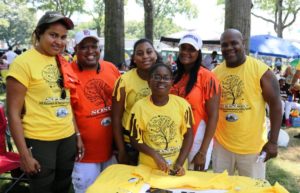
Last weekend, August, 3-5th a reunion for (ex) residents of the province of Puerto Plata was held for the 14th year in New York. Other Dominicans who now live in the USA and Canada were also welcomed.
The program for the Friday evening, August 3rd, was a ‘Gala Dinner Dance 2018’ at the Astoria World Manor in New York. A Dominican merengue band took care of dance music. On Saturday, August 4th, the event continued with softball matches in the Randall Island Park, under the Triboro bridge. Sunday afternoon and evening there was a large set up for BBQ in the park with performances by various Dominican bands. Many (ex) residents from Sosúa were present at this BBQ party. Among them Anderson Almonte of Sosúa Online, Cruz De León with his wife, Deyanira Peralta with representatives of local politicians such as Oscar Peralta and Jezabel García. Anderson Almonte from Sosúa Online was again accompanied by a large group of young people from the Charamicos neighborhood.
Source: Sosua News
Aug 8, 2018

The BHD Bank announced the winners of the 2018 contest “Women Who Change the World.” The contest seeks to honor women who have made a difference in the country. The winner this year is Zeneida Perez, creator of a community development model in San Jose de las Matas, Santiago province. Second places went to Maria Josefina Paulino, defender of children and teenager rights in tourism coastal areas and Michela Izzo, for reforestation projects and installation of 40 community hydroelectric plants in remote areas across the country.
Other finalists were:
Alba Maria Reyes, for programs to strengthen citizen participation in programs
Carmen Ofrocina Montero, founder of the Centro de Educacion Epeical Celida Luisa Perez de Crespo in Azua
Elsa Johanne Sanchez, leadership promoter among young people
Esperanza Marte, creator of the Club de madres La Nueva Esperanza
Guadalupe Valdez, special ambassador of the FAO program Hambre Cero
Juana Adita Tavares, promoter of the Program for Development and Forestation training
Maria Elena Moreno, creator of the Fundacion Dominican Republic Jazz Festival
The winner received RD$1 million in prize money, the two second places received RD$500,000 and the seven finalists received RD$100,000 each.
Source: DR1
Aug 2, 2018
Fifty years ago, if you called someone a “calié” (informant), you were likely going to be slapped, punched, or perhaps even killed, as this word was closely associated with the SIM, the secret police used by the dictator Trujillo to weed out dissidence.
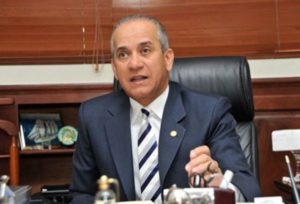
On 31 August 2018, Admiral Sigfrido Pared Perez, the director of the National Investigation Department (DNI) revealed that his agency has some 2,000 informants on the streets, supporting the work of the agencies that combat drug trafficking, illegal immigration, corruption and street crime.
Pared Perez told reporters that a large percentage of the drug shipments recently seized by the National Drug Control Agency (DNCD) are the result of information provided by these informants.
Pared Perez also said that they have offices that are permanently supporting prosecutors who are investigating cases of corruption. He said 80% of the DNI offices are civilians and 20% belong to the Armed Forces.
The specialized blog Notihistoria Dominicana explains that “calié” has its origin in the French word for a notebook: “cahier.” The blog says that during the dictatorship of Ulises Heureaux (Lilises) a large intelligence group was formed, and they carried around a notebook (cahier) as well is a code to send secret information by telegraph. These agents were notice caliéses and since then this is the term used to describe any government intelligence agent.
Source: DR1, Elnacional
Aug 2, 2018

Luguelin Santos won the gold medal in 400 meters competition in the Central American and Caribbean Games on Wednesday, 1 August 2018. He ran the race in 44.59 seconds. Luguelin Santos was a silver medallist in the London Olympic Games in 2012 with a time of 44.46. His brother Juander Santos also won bronze in the 400 meters hurdles in the same Baranquilla 2018 sports games.
On the same day, Lewis Medina also won gold in the 100 kilogram category of judo competition.
On Wednesday, 1 August, the Dominican Republic picked up 11 medals, for a total of 95 medals. The DR is in 5th place in the standing, behind Mexico, Cuba, Colombia, and Venezuela.
Source: DR1
Aug 2, 2018

Dominican-born singer, Amanda Mena made it to the top five that will be performing in the live shows of the finals of America’s Got Talent starting 14 August 2018. Mena, who is 15 years old, was chosen by former Spice Girl Mel B.
https://www.pantagraph.com/entertain…1bee663d5.html

Ammar Ibrahim, the director of the National Diabetes Endocrinology and Nutrition Institute, noted that 13.45% of the Dominican population suffers from diabetes in some form or another. He insisted that the nation’s eating habits need to be improved to counter the surge of this very serious illness. He said that in addition to the 13.45% that suffer from actual diabetes, 9.3% have a condition known as pre-diabetes something that generally appears in patients after 50 years of age. He said: “Diabetes by itself produces little direct fatalities but, the majority of diabetic patients die from a heart attack, kidney failure, or brain hemorrhaging, conditions that were worsened by being diabetic. He made the comments on occasion of August being “Diabetes Month.”
The specialist also noted that families suffer when a member is diagnosed with diabetes. Such a diagnosis alters the lifestyle of the person diagnosed and also all of those around the patient.
José Rodriguez, the president of the Dominican Diabetic Society, said that the causes of this illness, beyond genetics, are related to a lack of exercise and the poor diet. He complained of the sedentary lifestyle, the epidemic of overweight and obese people and the unhealthy diet, together with genetics as the root causes of diabetes.
Dr. Noris Solano added that juvenile diabetes is a silent disease that is affecting more and more children and adolescence without any regard for geography or social class. She estimated that between eight and 10% of the juvenile population are affected by diabetes.
Source: DR1
Aug 2, 2018
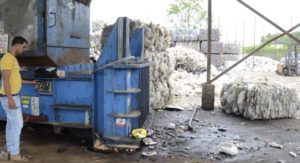
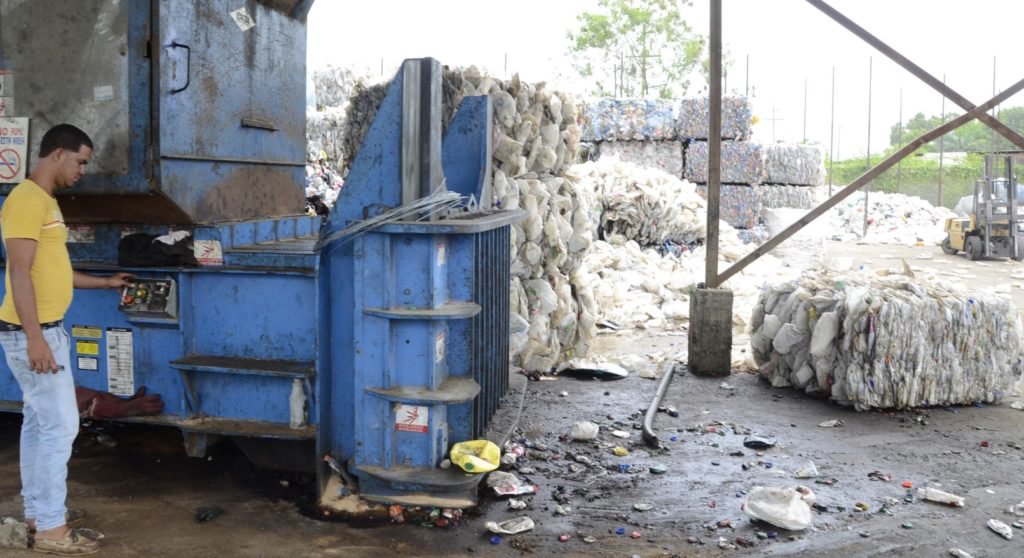
The lack of a recycling culture and the weaknesses exhibited in the handling of solid waste are impeding exporters of plastic waste from having access to materials in good conditions and at reasonable prices without intermediaries.
As readers might remember, at the Duquesa garbage dump, a group of men and women known as “divers” (buzos) are the ones who pick through the solid waste as it arrives every day and from sunup to sundown, scavenge for anything plastic, metal, or any other recyclable item. At sundown they gather their treasure trove and place it in a dumpster until they have a sufficient amount to fill one or two trucks.
It is at this point that the intermediaries enter the picture, and a group which calls itself the Recyclers’ Association, and the divers are forced to sell their recycled materials to them. This group has prohibited the divers from selling their recycled materials directly to formal (i.e. legally constituted) or informal recyclers.
This forces processors and exporters to purchase their materials from “suppliers” according to Carlos Mancebo who heads a recycling firm. He told EL DIA that “there is no law that regulates this business and so we have to buy our materials this way.” Apparently, the garbage truck drivers for the different city governments take advantage of the market and before they even arrive at the Duquesa site they take out the plastic at sites provided by either formal or informal recyclers according to another report.
The informal recyclers offer better prices because they don’t pay any taxes. According to Green Love, a recycling outfit, they have received 280,000 pounds of plastic over the last four years.
Source: DR1, El dia
Aug 2, 2018