Archive for August, 2018

Situated a very short distance from the eastern region city of La Romana – 1.5 hours east of Santo Domingo and 30 minutes west of Punta Cana – the Butterfly Park is found along the banks of the Chavon River. This beautiful area was used for location scenes in the movies “Apocalypse Now” and “Rambo II.” Surrounded by lush tropical vegetation, the Butterfly Park is the largest in the Caribbean.
A few steps from the region’s main highway tour members will board a wooden barge will transport the tour members to the town known as “Gato.” The crossing is done with the sounds of typical merengue music, the national rhythm of the Dominican Republic. Once across, guests are transported to Caribbean VIP Tours, a very special place because it is home to the largest butterfly park in the country’s eastern region.
During the last two years tourists from Germany, Holland and Italy have participated in special tours that have taken them to areas where they can become familiar with the beautiful landscape of the Dominican Republic. The guided tours start off with a walk through a path lined with wild flowers and lush vegetation. Native birds are also a popular sight in these tours. At the butterfly park, tour guides will give guests a full explanation of the cycle of life of a butterfly.
This is truly a magical and unforgettable place to experience, surrounded by hundreds of colorful butterflies that flutter all around.
In the park, it is common to see the impressive black and yellow Tiger Butterfly settle quietly on the shoulder of one of the visitors. During the tour, guides will provide all the information necessary on the importance of these noble insects in the local environment. For more information, please visit: www.tanamabayahibe.com.
Source: Access DR
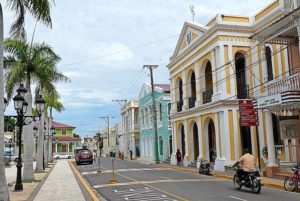
Founded in 1502, the north coast city of Puerto Plata was the second settlement founded by Christopher Columbus on the island currently shared by Haiti and the Dominican Republic. The first settlement was “La Isabela,” founded in 1492.
Today, the city invites its many visitors to stroll through its oceanside streets, enjoy the city’s beautiful Victorian-style homes or to sit and enjoy the city’s picturesque central plaza.
The city also offers an attractive array of national and international restaurants nightclubs, and the exclusive Playa Dorada, Costa Dorada and Costambar resorts.
Puerto Plata’s Oceanside Drive
The city’s iconic oceanside drive, also known as the “Malecon,” is one of the country’s most beautiful avenues.
It is a favorite spot for Dominicans and international visitors to walk, jog, rides bicycles or simply sit alongside the avenue to enjoy the spectacular view of the Atlantic Ocean.
At one end of the boulevard is the historic San Felipe Fortress, a colonial building that is now a popular museum that features the military weapons used in the country during the 18th and 19th centuries.
The Amber Museum
The museum, situated in a beautiful Victorian-style home, features the world’s most important amber collection.
Some of the amber pieces on exhibit feature fossils that are some 30 million years old. One of the museum’s most famous pieces is the amber rock featured in the film “Jurassic Park.”
Address: Duarte Street #61, Puerto Plata.
General Gregorio Luperon Museum
This is the original home of national hero General Luperon. In 1861, the Dominican Republic was once again annexed by Spain. General Luperon was the military leader that defeated the Spanish authorities in 1865
Address: 12 de Julio Street #54
E-mail: museogregorioluperon@claro.net.do.
“Damajagua Falls”
The 27 Damajagua natural waterfalls is one of the north coast’s most important tourist attractions. National and international visitors continuously visit this nature preserve, which features more than two dozen natural waterfalls in a six square kilometer area.
For more information, visit: www.saltosdamajagua.com.
Puerto Plata’s Cable Cars
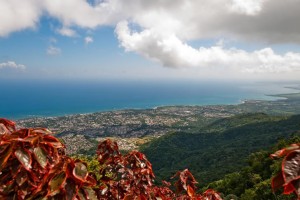
One of the city’s most iconic attraction are the cable cars that transport visitors to the city’s “Isabel de Torres” mountain. Once on top of the hill, visitors will enjoy the most beautiful and breathtaking view of the city and ocean.
More information available: www.telefericopuertoplata.com.
Ocean World
If swimming with the dolphins is your wish, then Ocean World is your destination. The water park also features other important attractions, such as wild bird exhibits, aquarium and other exotic animals. The park is also open in the evenings, featuring aquatic sports, casino, restaurants, disco, and its very popular Bravissimo cabaret spectacle
Source: Access DR
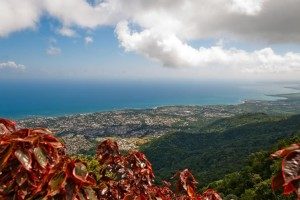
Puerto Plata’s iconic cable car system is situated in the “Isabel de Torres” mountain, the highest peak in the region – more than a thousand meters above sea level. From the mountain, visitors will enjoy a truly breathtaking view of the surrounding landscape, including the majestic Atlantic Ocean and the city of Puerto Plata, the largest in the country’s north coast.
The new cable car system consists of two cabins, two stations and supporting tower cables.
During the 10-minute climb, national and international visitors will take in the impressive panoramic view of the surrounding landscape.
The temperature on the mountain is generally cool, dropping down to 17 C. (62 F.).
Sometimes the fog will roll in and cover the “Isabel de Torres” mountain with a slight miss.
As a symbol of the colonization of the Americas, a flower garden – with the names of the Spanish Catholic Kings, Ferdinand and Isabella, who spearheaded the colonization process – have been etched on the side of the mountain.
The dome situated near the Christ the Redeemer statue, on top of the hill, was built by dictator Rafael Trujillo to be used to install anti-aircraft military equipment to “protect” the city from possible foreign invasions.
Christ the Redeemer
This 16-meter tall statue, dedicated to Christ the Redeemer, was subsequently twinned with the Christ of Corcovado Statue, the most important symbol of Rio De Janeiro, Brazil.
History
Puerto Plata’s cable car is the only one of its kind in the Caribbean. It officially opened on July 19, 1975 and was designed by Dominican architect Cristian Martinez who was inspired by the installation, in 1970, of the Christ the Redeemer statue. Construction on the road that leads visitors to the top of the mountain began in June 1971.
The Italian company Ceretti and Tanfani was contracted to supply all the necessary equipment and installation of the cable cars.
In 1973, engineer Benjamin Paewonsky was responsible for creating the botanical garden found at the top of the mountain.
The cable car operates Monday to Sunday, from 8:30 a.m. to 5:00 p.m.
Telephone: (809) 970-0501
Source: Access DR

Texas Rangers pitcher Bartolo Colón’s persistence paid off and on Tuesday, 7 August 2018, he pitched seven innings to land his No. 246 career win and pass Nicaragua’s Dennis Martínez in number of wins. It was his sixth try at the milestone win. His last win had been on 30 June. The Texas Rangers won the game 11-4. Colon said the heavy run support helped him settle in after a shaky start to his outing.
The 45-year old Dominican born pitcher said, as reported by MLB: “It was a long journey, but it finally came,” Colon said. “And it feels good.”
“It’s pretty incredible to watch, to be part of,” Rangers manager Jeff Banister said of Colon’s milestone. “… I got to watch Bartolo in 1995 when he was a young guy with a blazing fastball that just wiped everybody out. Watched him throughout his career, been part of teams that have faced him.
“To be fortunate enough and blessed enough to be his manager for a period of time, to sit and watch, and to know what he means to a group of guys inside that clubhouse, number of teammates along the way. … They’re probably saluting and maybe even tipping a glass to him in congratulations.”
Source: DR1, USA Today
Aug 9, 2018

Former Central Bank governor and Dominican ambassador to the USA, economist and historian Bernardo Vega shared in a feature in Acento on 7 August 2018, his opinions on what to expect from the signing of diplomatic relations with the People’s Republic of China.
Vega speculates that it is possible that before the end of the year, President Danilo Medina would accept an invitation to travel to Beijing and then will be when the country will learn of the bilateral plans.
He says to get an idea of what to expect, one should study what Costa Rica and Panama have gained from signing with China.
Vega explains that Costa Rica received a US$100 million football stadium, and aircraft to fight drug trafficking. It also benefited from China buying Costa Rica bonds at below market rates. The Chinese have provided financing to build a Police Academy and provide vehicles for that institution. The Chinese also contributed to the extending of a highway and improvements to their Chinatown. He says the most important benefit of the relationship, nevertheless, has been the construction of industrial parks where Chinese companies can skirt trade barriers now imposed by US President Trump. Vega points out that China has gained much more from the 2011 establishing of diplomatic ties than Costa Rica, where he says the impact has been relatively low.
As for Panama, that established diplomatic relations with China in 2017, he writes that China is the main client of the Colon Free Zone, where China warehouses its goods and re-exports to the rest of the Western Hemisphere. He observes China is also the second largest client of the Panama Canal after the USA. He observes that Panama is a service economy (the canal, banks, warehousing) with little farming and industry. Some 23 agreements that have been signed along these lines and Panama, as well as Costa Rica, are working on the signing of a free trade agreement.
Air China has initiated flights to Panama via Houston, Texas. An estimated 130 million Chinese travelers, that spend on average 25% of their travel budget on shopping, more than other travelers. But he observes earlier experiences of travel to Costa Rica and Cuba has been disappointing, and the Chinese prefer to vacation in nearby Asia beach destinations such as those in Indonesia and Australia. Likewise, he says the Chinese tourists have their peculiarities and require special details.
Vega focuses on two points that could be convenient to the Dominican Republic in regards to China. This is that the country attract Chinese export companies that generate jobs and that China buy our sovereign bonds at subsidized rates. Vega highlights that a free trade agreement definitely is not of interest to the Dominican Republic.
He writes that it is tempting to replace Odebrecht with mega Chinese infrastructure projects, but he urged the government to avoid this temptation. “The Chinese are as corrupt as Odebrecht. I doubt that they are interested in buying Catalina because they prefer to build the projects themselves. Developing the port of Manzanillo and adding natural gas plants make sense. The United States already exports that gas to our country and Panama. Our generation is concentrated between Macoris and Haina and a natural disaster would affect us a lot.” [China has already signed a memorandum of understanding in this direction.]
Source: DR1, Acento
Aug 9, 2018
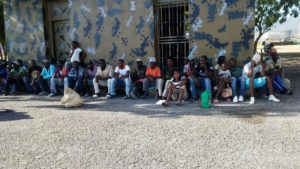
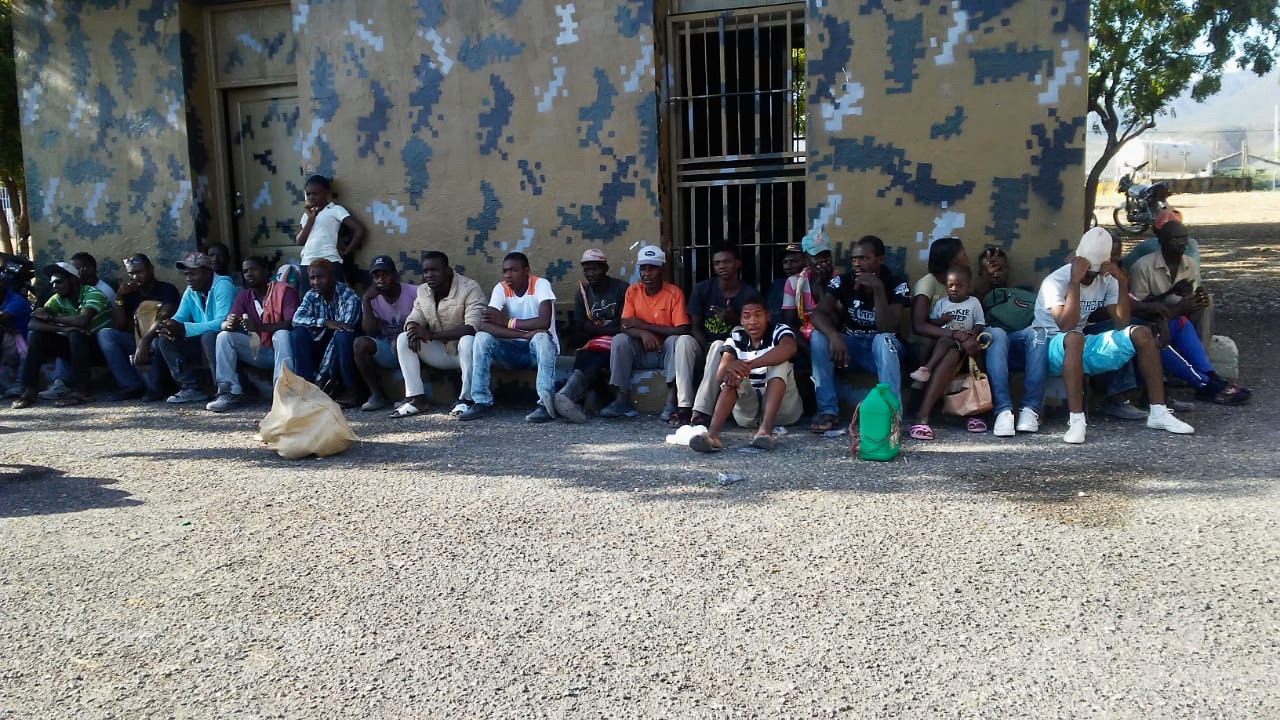
The Migration Department (DGM) has announced that in July 10,832 foreigners were deported or not admitted to the country. According to the report, of the 10,832 some 3,721 from Brazil, China, Colombia, Haiti, Hungary, Pakistan, Switzerland, Venezuela and Vietnam, were deported and 7,111 were not allowed to enter the country by air, land and sea.
As far as air passengers are concerned, the report says that in July 718,564 people arrived by air and 721,930 left, with the majority arriving and leaving from Punta Cana in La Altagracia province.
By land there were 24,133 people entering and 20,133 leaving, mainly via the border crossing at Jimani, followed by Dajabon, Elias Piña and then Pedernales.
By sea, there were 90,963 arrivals and 90,458 departures, mostly from Maimon in Puerto Plata and La Romana.
The report says that during the month of July, 176 Dominicans returned to the country having completed jail sentences in 19 countries and in addition 78 foreigners returned voluntarily to their home countries. During the month 1,061 residencies were issued to people from 59 countries.
Source: DR1, Almomento
Aug 9, 2018
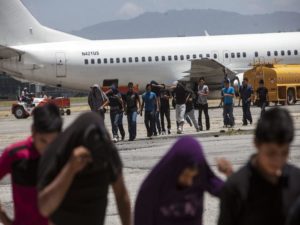
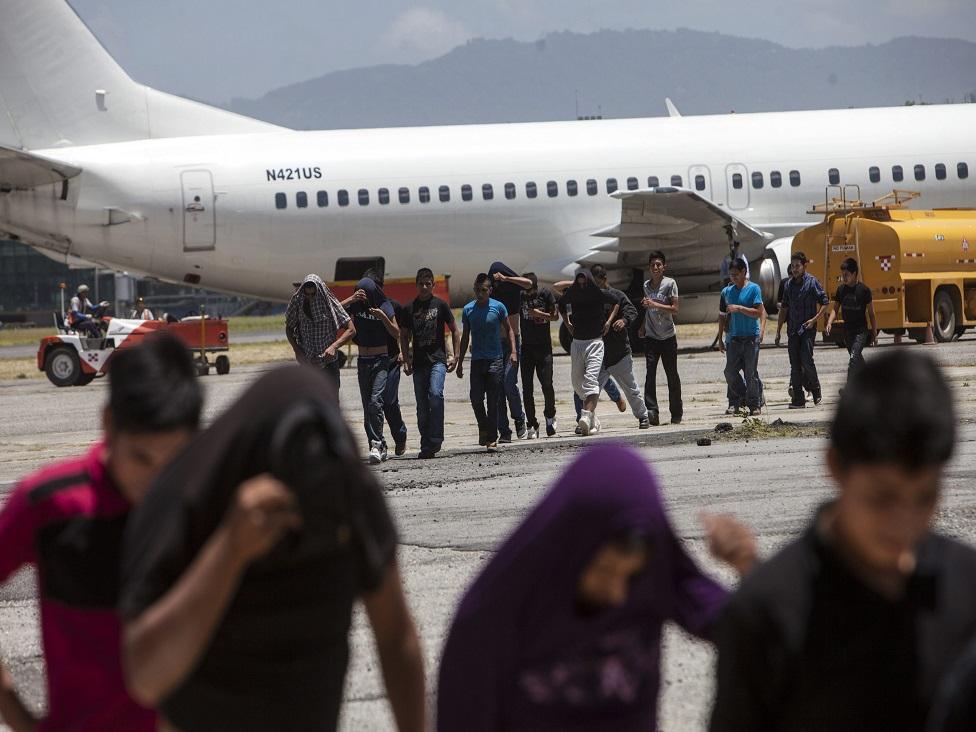
On Tuesday 7 August, the United States authorities repatriated a group of 74 Dominicans who had completed jail sentences for different crimes. Of the group 29 were convicted of drug related offences, and the other for murder, forgery, state fraud, rape, kidnapping, arson and other crimes. The group arrived in the afternoon and were immediately taken to the Refugee Center in Haina for processing. Those with no outstanding warrants were then handed over to their families.
With this group, the number of repatriated Dominicans so far this year has reached 1,062, which is 11% increase compare to the same time last year.
Source: DR1, Hoy
Aug 9, 2018
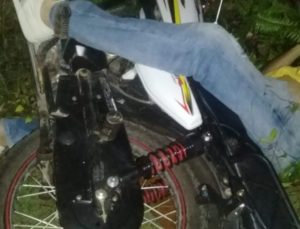
In Las Galeras, in Samaná, a Frenchman was murdered on Sunday, 5 August 2018.
51-year old Christophe Claude Michel Bachats, had been living in the country for over 14 years and 11 months in Las Galeras. He died of his wounds after having been shot three times, according to the medical examiner Doctor Julián Emilio Boden.
According to his Dominican partner, they were returning to their home, he on his motorcycle and she on a scooter, when they heard shots and Michel Bachats was injured. The body was sent to the Institute of Forensic Science in San Franciso de Macoris for an autopsy and the case is still under investigation.
Source: DR1, Elnuevodiario
Aug 9, 2018

The National Institute for Transit and Terrestrial Transport (Intrant) has begun to take public transport vehicles off the road that do not meet the new regulations and guarantee the safety of the users.
During an operation carried out by the Department of Supervision and Control of Sanctions (DSCS) of Intrant, vehicles were confiscated at kilometer 9 of the Duarte Highway and at the intersection of Maximo Gomez with San Martin. The impounded vehicles did not have proper authorization to operate for public transport as the law says that Intrant and the City Halls have to authorize inter urban vehicles according to the type of services, needs, geographic conditions and the demand for the service, always guaranteeing the safety of the passenger.
The vehicles have to be the property of the operators or they need to hold a document where the driver is authorized to use the vehicle for public transport.
The president of the National Union of Unified Transport Owners (CNTU), William Pérez Figuereo, warned that Intrant was obligated to take action, noting the high number of ramshackle vehicles in the fleet.
Intrant also announced the changing of transit direction of several roads in the Naco neighborhood to reduce traffic bottlenecks.
Source: DR1, Eldia
Aug 9, 2018

The film, that tells the story of Dominican wrestler Jack Veneno, won 15 of the 17 La Silla awards, the Oscars ceremony for the local cinematography industry. The film was directed by Tabaré Blanchard, who won awards for best film, best director, best script (Blanchard, Riccardo Bardelino, Miguel Yanull, Marien Zagrella), best production, production design, editing, special visual effects, art direction, costumes, make up, directing, musical score, sound track, among others.
Carpinteros by Jose Maria Cabral won three awards, including best actor and best actress for Jean Jean and Judith Rodriguez, and the best drama award.
In comedy, the best was “Todas las mujeres son iguales” by David Maler.
The best documentary went to Yanillis Perez for Jeffrey. The best song of the year is “La vida en el barrio” by Carlos Alberto Rivas (Voces de la Calle).
The La Silla Awards are organized by the Dominican Association of Cinematography Industry Professionales (Adocine), directed by Juan Basanta.
A posthumous tribute was celebrated for recently deceased movie maker 61-year old Fernando Báez, who had tragically died in a vehicle accident on 3 July 2018.
Source: DR1, Elcaribe
Aug 9, 2018