Archive for August, 2018
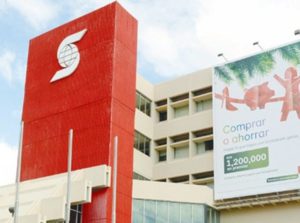
Talks are advanced for the purchase of the small, yet efficient Banco del Progreso. The bank is the local representative for American Express. Reportedly, it would merge with the big Scotiabank. Talks had been ongoing since 2015.
The reports are that it is a US$320 million operation. It would turn Scotiabank into the fourth largest bank in the Dominican Republic, behind the governmental Banco de Reservas, Banco Popular Dominicano and the merged BHD-Leon.
Source: DR1, Eldia
Aug 14, 2018

The Migration Agency (DGM) has called on those foreigners enrolled in the National Foreigners’ Status Legalization Plan (PNRE) to renew or change their migration category or status. DGM noted that the current period ends on 26 August 2018 and that the foreigners who have not obtained their updated residency permits can go to their local office and check to see if they are on the list at the Migration Agency website.
To renew the card, a visit in person is required to present the corresponding PNRE card or passport with a sticker, legalized birth certificate and permanent address in the Dominican Republic as well as a contact number. The applicants also have to take four photographs. The extension of the validity of the PNRE cards has been granted mostly to benefit Haitians who have not been able to secure the documentation from the Haitian government that are needed to complete the status regularization process. The Haitian government on innumerable occasions as committed to produce the documentation, but has not come through.
Source: DR1, DiarioLibre
Aug 14, 2018

In the first half of this year, the Taxation Agency (DGII) has collected RD$1.08 billion in revenues via tourist card purchases, as airlines comply with a new government regulation. The new charge that mostly affects foreigners and Dominicans living abroad was introduced by Decree 430-17 on 14 December 2017 and requires airlines to charge all purchasing airline tickets abroad the tourist taxes, regardless whether the persons are Dominican or foreign visitors.
While Dominicans can reclaim the US$10 charge at the Taxation Agency office or via Internet, the process takes 10 days, and in reality very few are presenting claims, creating a windfall in foreign exchange for the government.
It has not been established how much has been refunded nor how much of the money collected is from Dominicans. A report from the DGII shows that in April 2018, RD$169.3 million was collected; in May RD$119.1 million and in June RD$195 million.
Many Dominicans have complained about the charge and saying that the reimbursement process, which requires Internet access, is cumbersome. Others say the measure discriminates against Dominicans who live overseas, that are more likely to purchase their airline tickets online or abroad.
Marcos Cadet, DGII spokesman, called on the Dominicans who have paid for the tourist card to seek a reimbursement. He claims the process is simple enough.
Source: DR1, Listindiario
Aug 14, 2018
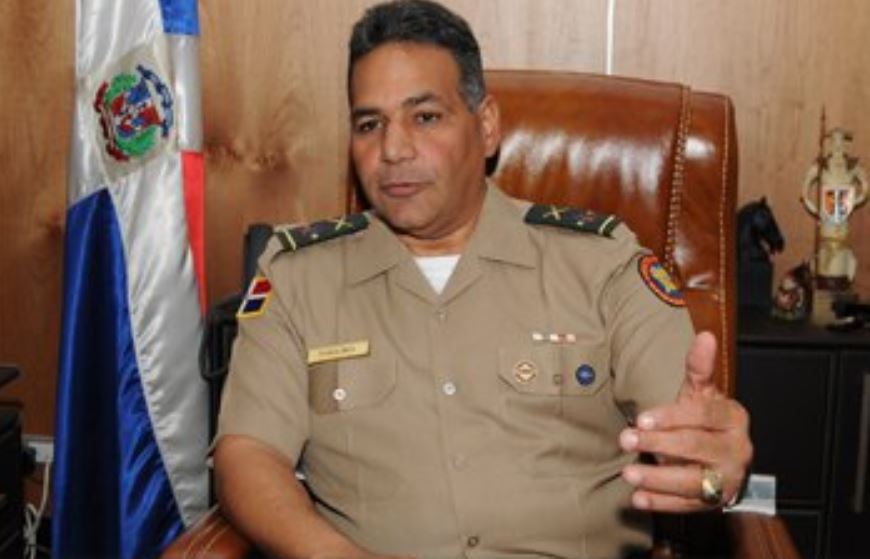
El Nacional newspaper said yesterday that the assignments of all of high ranking military officers will have to be changed this coming Thursday, having had served two years in their posts, according to the Organic Law of the Armed the Forces. This law, Law 139-13, states in Article 33 that officers will remain it in their duties for a maximum of two years. The law also instructs the president to appoint a chief of staff of the Armed Forces as well as commanding generals of the different branches and the Inspector General of the Armed Forces, and these will be chosen among the generals and admirals currently in command positions as long as they have complied with the law with regards to time served in order to be considered for these top positions.
The Minister of Defense, Lieutenant General Ruben Paulino Sem, was appointed on 16 August 2016 and his term will end on Thursday, that commemorates the 155th anniversary of the War of Restoration.
The current commanders of the Army, Navy and Air Force will all be relieved of their commands. Curiously enough, the head of the National Directorate of Drug Control (DNCD) will also be replaced, as will be the commanding officer of the Presidential Guard.
Source: Dr1, Elnacional
Aug 14, 2018
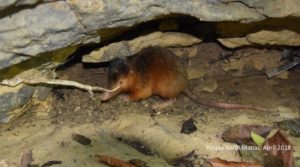
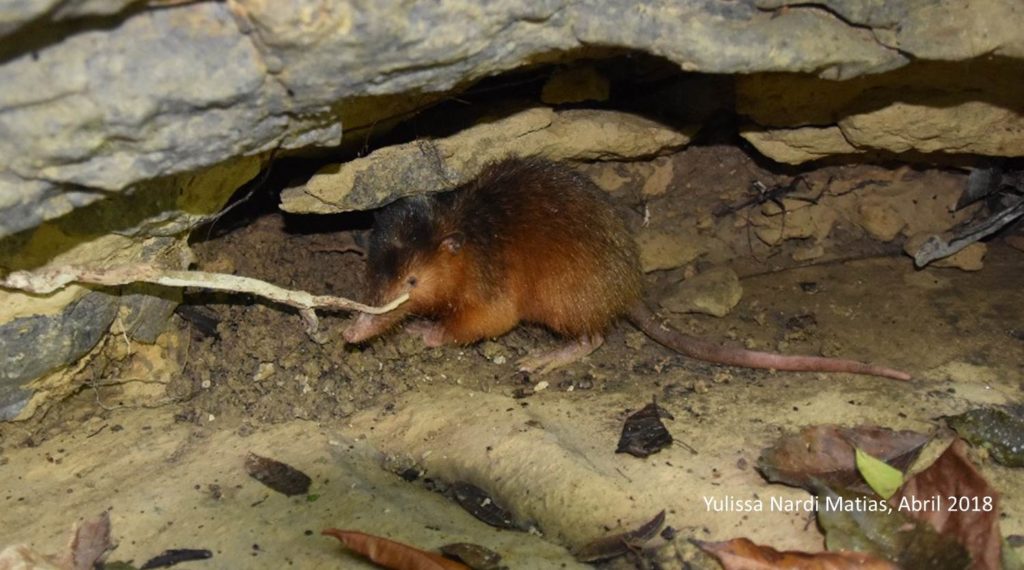
Some really good news for Dominican wildlife. There is news coming out of Puerto Plata that technicians from the Ministry of Environment have found a population of Solenodontes, a Dominican native mammal that is in extreme danger of extinction, in the area of the 27 Waterfalls of Damajagua in Puerto Plata province.
The administrator of the Natural Monument of Damajagua, Robert Luis Gomez Santana, said that researchers from the ministry were able to identify the group of Solenodontes.
The full report will be made public tomorrow at 11am from the visitor center in this protected area.
The Solenodontes is the only native mammal on the island of Hispaniola and is apparently almost a throwback to the age of the dinosaurs. It is nocturnal and feeds mostly on insects and is rarely seen by humans. A distant cousin of the species survives in Cuba. At the present time, according to the International Union for Nature Conservation, Solenodontes are in danger of extinction. The research that led to discovering this group of mammals in Damajagua was led by a José Mateo Feliz, who is the director of Biodiversity at the Ministry of the Environment.
Source: DR1, Eldia
Aug 14, 2018
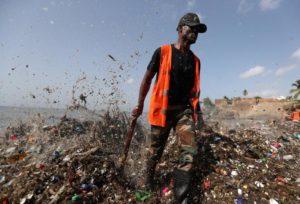
A tropical storm hit Caribbean tourist destination Montesinos Beach in the Dominican Republic, flooding its beaches with over a thousand tons of plastic and garbage.
Although the Caribbean nation is typically known for its blue seas and sandy white beaches, it is currently littered with plastic bottles and styrofoam takeout boxes, according to a statement by Parley for the Oceans, a non-profit environmental organization that works to reduce plastic waste in the world’s oceans.
Piles of plastic waste—most notably the “Great Pacific Garbage Patch”—are usually far from human settlements. However, workers have collected over 60 tons of waste on Montesinos Beach in the Dominican Republic’s capital city Santo Domingo since last week, and the mucky waves continue to carry more waste ashore.
The plastic waste is flowing from the Ozama River, where people, often living in informal settlements, have taken to dumping their trash; up to 90,000 tons per year. According to Lorraine Chow of EcoWatch, the trash was pushed ashore by a recent storm.
Parley for the Oceans’ founder Cyrill Gutsch indicated that this piling up of plastic waste was not an unusual occurrence.
“What we’re seeing here is, unfortunately, the new normal,” said Gutsch. “The plastic wave you’re seeing here is material that got flushed down the rivers. It’s not something that gathered for a long time. One strong storm can cause this.”
Once it is out in the open, plastic breaks down and releases chemicals that are impossible to capture. Wildlife trapped in the debris and humans affected by the toxic particles in the waves are all at risk, local environmentalists said.
More than 500 public workers and volunteers have been dispatched to clean up the scene, and the Dominican Republic’s navy and army are also assisting in the effort. After just three days, workers had collected 30 tons of plastic off of the beaches. As teams use pikes, shovels, and excavators to lift the garbage, they are met with new waves washing more waste ashore.
Machinery and trucks have been sent in to deal with the massive tide of plastic, much of which will have to be sent to landfills because it is mixed and contaminated.
Parley is working to transform a portion of the recycled plastic into Ocean Plastic—a material used to create products like Adidas shoes that raise awareness and help fund the campaign against ocean plastic. So far, six tons of plastic have been recovered for this cause. Adidas plans to contribute to the solution by making 1 million pairs of running shoes out of 11 million plastic bottles recovered from the ocean by next year.
Along with assisting the clean-up effort, Parley is trying to implement the AIR strategy (Avoid, Intercept, Redesign) across the island. The strategy focuses on identifying the root of the problem and working with policy-makers to improve the island’s waste and recycling infrastructure.
The plastic on Montesinos Beach is just a small fraction of the trash that is being dumped into the water, as most of it gets washed out to sea. A recent study found that coastal countries alone sent 8 million tons of plastic trash into the oceans in 2010. Another report predicted that in just over 30 years, plastic will outweigh fish in the ocean.
Gutsch explained that recycling isn’t enough to fix the global plastic problem. “Even if you recycle [plastic] and even if you use it in the best possible way, it always leaches chemicals,” he said. “A better solution is drastically cutting back on single-use plastics.”
If action is not taken to fix the global plastic problem, many worry that within a few decades, the larger pieces of debris could break up into microplastics, which are much harder to remove from the ocean.
“Garbage emergencies like this are urgent reminders that we need to act fast,” Parley says in its statement. “Unless urgent action is taken, scenes like this will become more common all over the world in the coming years as we reach a plastic tipping point.”
Source: manufacturing.net
Aug 14, 2018

Frontier Airlines is adding the Florida city of Sarasota to its route map as part of a broader 11-route expansion that also will return the carrier to Fort Lauderdale.
Frontier’s flights from Sarasota (airport code SRQ) begin Dec. 10, when the “ultra-low-cost carrier” begins twice-weekly seasonal service to Cleveland (CLE).
Beyond the Sarasota-Cleveland service, Frontier announced 10 additional seasonal routes that beef up its presence at airports in Florida, Ohio and the Dominican Republic. Among airports getting the most new routes were West Palm Beach (four), Cleveland (three) and Punta Cana in the Dominican Republic (three).
Also added to Frontier’s winter schedule are routes to Fort Lauderdale from both Trenton, New Jersey, and Islip/Long Island, New York. Those routes shift service to Fort Lauderdale that Frontier operated to Miami last year. At the time, Frontier had ended its Fort Lauderdale service in favor of Miami. Now, Frontier will again be flying from both of South Florida’s two busiest airports.
Frontier also turned to New York LaGuardia for a winter-schedule update, announcing seasonal daily flights to Orlando that begin Nov. 15.
Frontier’s announcement is the latest in a flurry of new routes announced by the airline. Just last week, Frontier announced six new routes from Fort Myers, Florida, on Tuesday and followed that up a day later with 11 other new routes and an entirely new city (Tucson).
The full schedule details of the routes included in Frontier’s Monday announcement:
Sarasota, Florida
Cleveland: Two weekly flights begin Dec. 10; seasonal
Fort Lauderdale
Islip/Long Island, New York: Schedule details not specified
Trenton, New Jersey: Schedule details not specified
Orlando
New York LaGuardia: Daily service begins Nov. 15; seasonal
West Palm Beach, Florida
Cleveland: Three weekly flights begin Nov. 15; seasonal
Columbus, Ohio: Two weekly flights begin Nov. 16; seasonal
Pittsburgh: Two weekly flights begin Nov. 17; seasonal
St. Louis: Three weekly flights begin Nov. 15; seasonal
Punta Cana, Dominican Republic
Cincinnati: Friday-only flights begins Jan. 11; seasonal
Cleveland: Three weekly flights begin Jan. 6; seasonal
St. Louis: Three weekly flights begin Jan. 5; seasonal
Source: wcnc.com
Aug 14, 2018

TORONTO, Aug. 14, 2018 (GLOBE NEWSWIRE) — Sunwing has confirmed that they will be returning to Sudbury this winter and will be adding a new flight service to Montego Bay. The travel company has operated from Sudbury for the past 11 years, but this coming season will mark the first time that they have offered local residents two different destinations for their winter escape. The new flight service will depart Thursdays between December 20, 2018 and April 11, 2019. In addition, the tour operator’s perennially popular seasonal flight service to Punta Cana, Dominican Republic will operate weekly from December 19, 2018 until April 3, 2019.
Lined with sparkling white-sand beaches, Montego Bay—or “MoBay” as it’s affectionately known—offers the ideal ambience for both relaxation and adventure. Travellers can experience all the destination has to offer with an array of Sunwing Experiences, from reggae and culture tours to visits of one of the island’s historical plantations. They could also take a tranopy tour of the island’s lush interior or scale world-famous Dunn’s River falls.
President of Tour Operations, Andrew Dawson, for Sunwing explained that the move to expand the number of destinations from Sudbury this coming winter was a result of consumer demand and feedback from our travel agency partners in the Greater Sudbury region. “Our seasonal Sudbury flight service has been consistently well received so we were delighted to be able to add Jamaica, another one of our most popular destinations.”
“We are thrilled to welcome Sunwing back to Greater Sudbury for their 12th season,” said Todd Tripp, CEO of the Greater Sudbury Airport. “Punta Cana has always been a popular sun destination choice for Sudbury travellers and we are delighted that Sunwing is doubling their flight service over the 2018/2019 winter season to now offer Montego Bay, Jamaica as an option. Both Punta Cana and Montego Bay provide local travellers with excellent winter escape choices.”
Sunwing offers a wide range of resort options in Montego Bay including Sensatori Azul Beach Resort Jamaica, which now also benefits from an adults only section. Situated on the shores of the famous Seven Mile Beach, this resort is both family and adult-friendly with cooking classes for kids, an exciting Splash Park, as well as an exclusive beach and pool area that comes with butler service for adults who upgrade to the Premium Couples room category.
Popular among families, the recently-renovated RIU Palace Tropical Bay welcomes guests with new modern rooms, a redesigned pool area, an action-packed RiuLand Kids Club with an enlarged pool and playground, as well as a new lounge bar and café. Featuring an enviable beachfront, the resort also offers guests many complimentary activities included such as kayaking, water volleyball, windsurfing, boogie boarding and snorkelling. Plus, vacationers who travel with Sunwing will enjoy exclusive RIU®-topia inclusions such as unlimited à la carte dining, spa discounts and much more.
All vacation packages include return flights on Sunwing Airlines where passengers can look forward to starting their vacation off in style with award-winning inflight service that includes a welcome sparkling wine toast, buy on board Sunwing Café menu with selections inspired by Food Network Canada Celebrity Chef, Lynn Crawford, and backpacks for children filled with games and toys.
To book your next all inclusive vacation visit www.sunwing.ca or contact your travel agent.
Source: globenewswire.com
Aug 14, 2018

By Heather Lincoln
Have you ever thought about how cool cassava is? Widely grown throughout Latin America and the Caribbean, this popular root vegetable is a staple in the Dominican diet. The Dominican Republic’s tropical climate makes an excellent environment for its growth and because of cassava’s versatility and tolerance, it has been revered since the Taino, Carib, and Arawak population.
Here are 10 things you might not know about cassava:
Cassava can take up to 18 months to harvest and needs 8+ months of warm weather to grow. It does best in full sunlight.
Cassava is able to tolerate drought and grow in poor soil, and naturally resists pests and plant disease.
It can be stored for two years in the ground without rotting!
Cassava is known by many names including yuca, manioc, mandioca, yucca root, casabe, and tapioca.
People with dietary constraints will appreciate that cassava is gluten-free, grain-free and nut-free.
The ways to make cassava are numerous— boil, bake, steam, grill, fry or mash it, as well as add it to stews!
There are two varieties of cassava – sweet and bitter. Bitter cassava is processed into breads, pastries and cakes.
Cassava is high in calories and carbohydrates.
The American Cancer Society warns that people with a latex rubber allergy might be more susceptible to an allergy to cassava.
Cassava should never be eaten raw — it contain traces of cyanide that can be deadly! The Bill and Melinda Gates Foundation is helping to breed cassavas with less cyanide.
When properly prepared, cassava poses no problems to your health. It needs to be soaked, dried, and cooked. Because of its long life-cycle and easy agriculture, cassava can act as a source to help prevent hunger in impoverished communities. Delicious in many forms, it’s often eaten for breakfast, lunch, and dinner. It’s no wonder why we find so many ways to enjoy it!
Source: Casa de Campo Living

The Province of Samana, on the country’s northeast region, offers visitors much more than its beautiful white-sand beaches. Its spectacular natural resources and the friendly attitude of its citizens, has turned the region into a fascinating tourism destination.
Its mountains and rivers offer excellent possibilities to visitors looking for adventure tourism. Other possibilities are horseback riding, hiking and ziplining, just to mention a few. By far, the Province of Samana offers tourists a wide range of fun activities, such as:
Samana 4×4:
This is a unique experience for the more adventurous visitor. The offer consists of traveling to some of the province’s most beautiful destinations on board safari-like vehicles that will take the guests through beautiful mountains, valleys and local villages. This is an excellent option for those who also want to meet and interact with the local communities, and enjoy snacks consisting of native fruits, fresh coconut milk or a warm cup of freshly brewed coffee and/or hot cocoa.
“Los Haitises” National Park:
Situated in Samana Bay, this rainforest is situated along the southern part of the Bay of Samana. The area is one of the country’s top nature reserves, where visitors can visit caves where the Tainos – the original inhabitants of the island – painted symbolic drawings that have lasted through the ages. The reserve is also known for the incredible number of birds that live or migrate through the area.
Las Galeras:
This old fishing village is situated next to the Bay of Rincon. Well organized tours include hiking and camping.
Limon Waterfall:
The 40-meter waterfall can be reached with the help of special guides, either on foot or on horseback.
Scuba Diving:
The area is also known for excellent scuba diving possibilities due to the beautiful coral reefs found along the north coast of the Bay.
Source: Access DR