Archive for July, 2018
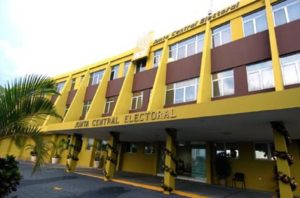
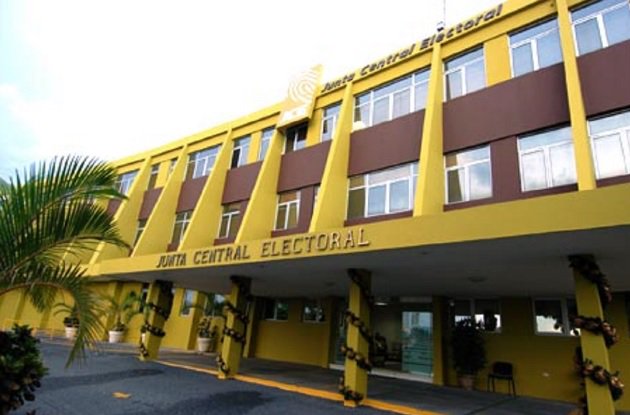
The Central Electoral Board (JCE) has announced that Dominicans residing abroad will have to pay more for documents issued by the JCE — Act No. 10/2018 dated 16 July 2018. Identity cards will now cost between US$50 and US$80 and a duplicate identity card, that in the past was free, is now US$15.
Certificates that were US$10 and will now be US$20, and before postage was free and it will now be US$15. Registration of births, previously free, is now US$25 as will be the registration of deaths.
Certain processes remain free such as registering to vote overseas, looking for certificates in the archives and corrections with resolutions.
Local Dominican community activists including Emmanuel Flores, Julio César Tiburcio, Claudio Liberato, Iván Rosario Peña and Juana Melania Rodríguez, urged Dominicans living abroad to call the JCE in the Dominican Republic to voice their opposition to these increases.
The number to call is 809539-5419.
Source: DR1, Hoy
July 17, 2018

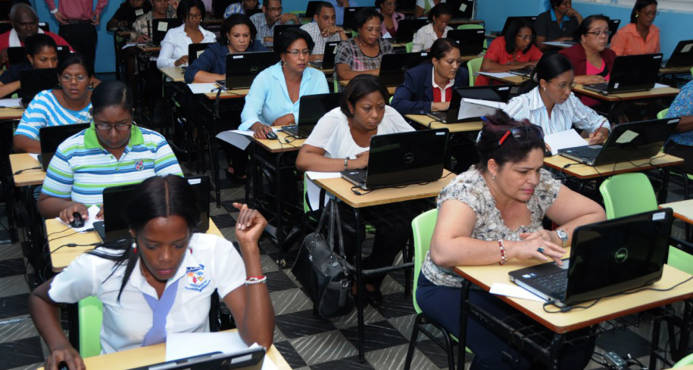
According to the director of the Dominican Institute for Assessment and Research of Educational Quality (Ideice), Julio Valeirón, only 2.9% of the 60,100 teachers examined in the classroom as part of the 2017 Teaching Performance Assessment qualified as excellent and outstanding, having achieved over 90 points.
Valeiron said the country needs to be served by better qualified teachers. He aimed most of his criticism at the 25 universities that offer degrees in education, pointing out that the curriculum and quality of instruction at these institutions needs to be reviewed and upgraded.
The first phase of the evaluation included more than 40,000 teachers and the results were available in January 2018. This phase completes the process. Valeiron said the full report would be available this week and will provide information to take into account to achieve an improved education system in the country.
Source: DR1, DiarioLibre
July 17, 2018

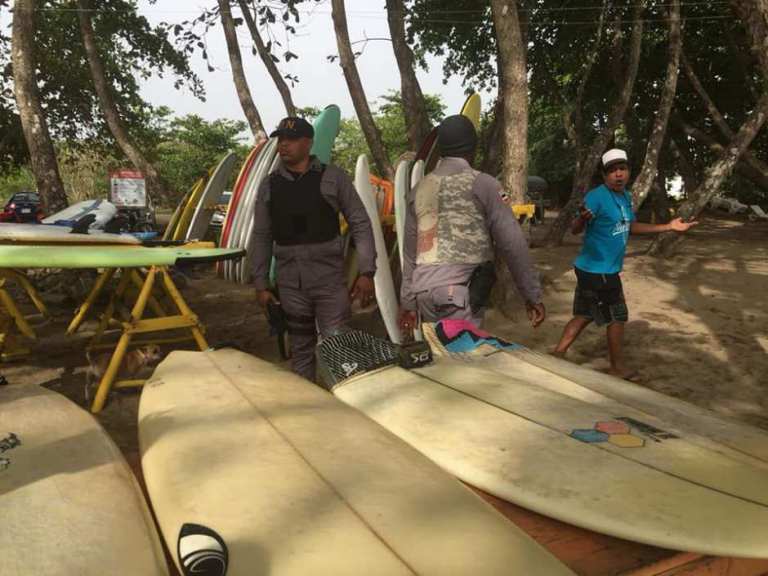
Backed by a Supreme Court of Justice ruling, government authorities closed small business stands from Encuentro Beach, to the west of Cabarete Beach in Puerto Plata. The court order was in response to a petition filed by two companies: Inversiones Calpes SRL and Mesa Investment Limited.
In a paid advertisement in Diario Libre, Inversiones Cape manager Lance Lundberg states that Julio Cesar Monegro (Arismendy) for over more than a decade illegally occupied portions of their property and the public space (60 meters of the sanded beach line) and rented this space to small businesses.
The company says that the recovery of the property by its rightful owners “at no time will affect the free access and enjoyment of Encuentro Beach by the general public.” The company says that the same people that now allege the beach is being privatized were those who illegally rented the spaces, with the passive support of government authorities who turned a blind eye to the practice.
https://www.instagram.com/playaencuentrolibre/?hl=es
Source: DR1
July 17, 2018
Ozama River waters have brought plastics, not only seaweed after the torrential rains result of the remnants of Tropical Storm Beryl on Tuesday, 10 July 2018.
Tons of garbage has drifted to the Santo Domingo Malecon for all to see. It is the result of the uncontrolled practice of throwing garbage into the Ozama River gullies and streams and the river itself. The garbage has accumulated on the barge bridge that links Santo Domingo’s east and west side. The barge bridge is also flooded by seaweed.
The garbage has flooded from the barge bridge all the way down to Guibia Park off the Malecon and other beachfronts along the southern Caribbean Sea coastline of the capital city of Santo Domingo.
Listin Diario and El Caribe shared videos and reports showing the garbage that accumulated since Tuesday to Friday, 13 July.
Brigades from the Ministry of Public Works, the National District government with the support of the Association of Industries of the Dominican Republic (AIRD) that lent heavy equipment (backhoe loaders) and volunteers began to clear the tons of plastics that flooded to the Malecon. Around 1,200 men were stationed in the clean up operation on Friday, 13 July. The actions took place at the points of Plaza de Montesinos, Guibia Beach and the Obelisco Hembra, where the garbage accumulated on the beachfronts.
National District Mayor David Collado complained that the garbage originated primarily in other municipalities of Santo Domingo, but of the three municipalities only his was having to carry the cost for the correct disposal. He said the operation will cost the capital city government RD$10 million. He estimated at around 1,600 tons the garbage that needs to be removed, mostly plastics. He called for coordination between the operators of the floating bridge over the Ozama River and the city government. He said the bridge is best used to capture the floating garbage and collecting at that site and not letting the garbage flow down to the Malecón.
Recyling leader, Virginia Heinsen said that the garbage that flowed down to the Malecon is just the tip of the iceberg. She said the problem originates north of the coastline and affects the river beds. Heinsen who directs the Sostenibilidad 3Rs and the recycling programs at the Centro para el Desarrollo Agropecuario y Forestal (Cedaf) said: “80% of all the garbage we are seeing on the beach comes from inland, the gullies, the streams, the rivers. We accomplish nothing cleaning the beaches if we do not attack the problem affecting the rivers. She called for more citizen education and consequences.
Source: DR1, Listindiario
July 17, 2018
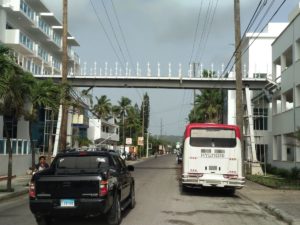
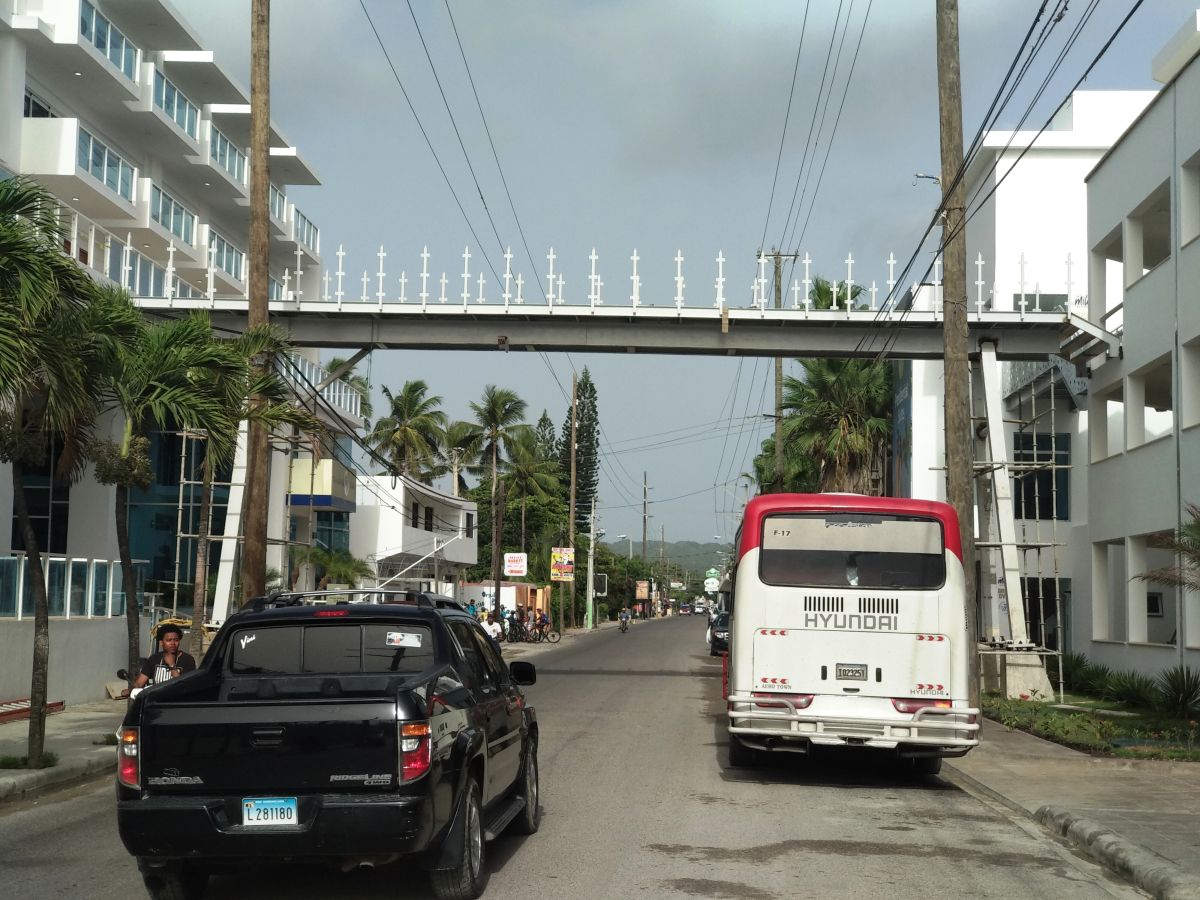
Last week a pedestrian bridge appeared over night between two public buildings in Cabarete. During the day this road is often a chaos for many hours because all traffic is forced through this narrow street which is the only connection with Sosúa and Sabaneta. For years there has been talk about a ring road past Cabarete. But there is a lot of resistance about that because it has to pass through a protected unique nature reserve. This pedestrian bridge thus brings relief for the employees of these public buildings that sometimes have to cross this very busy street several times a day. The opponents of this bridge now make a lot of fuss about it because the bridge was built without planning permission.
Source: Sosua News
July 17, 2018
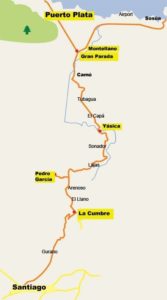
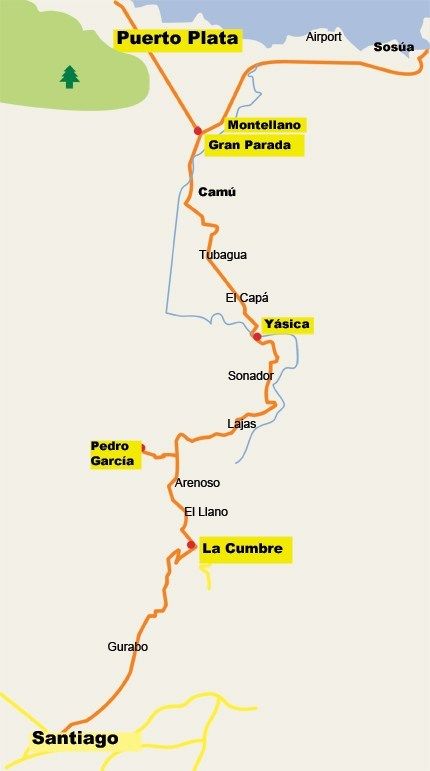
Last year the Public Works department started to repair the tourist route (Ruta Panorámica Puerto Plata – Santiago) with heavy equipment. The deep pot holes were filled and the road surface was then covered with new asphalt. There has also been constructed a deep ditch along the road that provides better drainage. This tourist road runs from the Grand Parade, just past Montellano to Santiago. The tourist route leads through the most beautiful landscape of the Dominican Republic. You can see picturesque villages, beautiful views and the most beautiful vegetation. Because of the many rain showers the road was difficult to pass as large parts of the road were washed away. Also the many deep pot holes made this tourist route impassable. The tourist route was a popular route for many holidaymakers to enjoy the beautiful nature. This brought money to the residents through the sale of drinks and food. The residents and nature enthusiasts are very happy that this important connecting road now finally has been repaired.
Source: Sosua News
July 17, 2018

According to the Global Innovation Index 2018, a report produced by Cornell University in the United States, INSEAD in France and the World Intellectual Property Organization (OMPI), the Dominican Republic is 87th in the list of the most innovative countries in the world. The top 10 innovative countries are Switzerland, Netherlands, Sweden, United Kingdom, Singapore, USA, Finland, Denmark, Germany and Ireland.
In Latin America, the innovative rankings are: Chile (47th). Others are Costa Rica (54) and Mexico (56), Uruguay (62), Colombia (63), Brazil (64), Panama (70), Peru (71), Argentina (80), Jamaica (81), Dominican Republic (87), Paraguay (87), Trinidad and Tobago (96), Ecuador (97), Guatemala (102), El Salvador (104), Honduras (105) and Bolivia (117), out of 126 countries. Nicaragua and Venezuela were not included due to lack of data.
The study was presented yesterday, Tuesday 10 July 2018 in New York City.
The Global Innovation Index 2018 provides detailed metrics about the innovation performance of 126 countries and economies around the world. Its 80 indicators explore a broad vision of innovation, including political environment, education, infrastructure and business sophistication. The GII 2018 analyses the energy innovation landscape of the next decade and identifies possible breakthroughs in fields such as energy production, storage, distribution, and consumption. It also looks at how breakthrough innovation occurs at the grassroots level and describes how small-scale renewable systems are on the rise.
http://www.wipo.int/edocs/pubdocs/en…b_gii_2018.pdf
Source: DR1, Wipo
July 12, 2018

Journalist Felicia Mota and her daughter Alicia Morillo alerted against driving at night on the Las Americas Expressway that links the Las Americas International Airport and the city of Santo Domingo. She reports that unscrupulous persons continue to throw stones and other objects at the vehicles in the evening, in order to cause windshield breaks so the drivers stop, making them victims to robberies.
As reported, Mota said that she was a victim of the assailants when driving between La Ureña and La Caleta. She suspects the purpose was to force them to stop. “I got nervous and asked my daughter not to stop the vehicle because these criminals would rob us and I told her to keep going,” said Felicia Mota, who is a television producer.
Mota said that the seriousness of the case is that when she went to the insurance company for the damaged vehicle, she was told that hers was the 12th claim by clients who had suffered the same situation. She said that many are entire families returning from beach outings in the eastern part of the country.
While the new alert is for driving on Las Americas Expressway, the general advice is to avoid driving at night in the country.
Source: DR1, Elnacional
July 12, 2018

Guiomar Bay, an official of Population Affairs of the Latin American and Caribbean Demographic Center (Celade), on occasion of World Population Day on 11 July 2018 shared the fact the Dominican Republic leads in teenage pregnancies in the Caribbean. The data was shared during a presentation of data on generational replacement numbers of children and teenage pregnancies.
Figures from Celade show that the average of Latin America is at the level of generational replacement of 2.1 children per woman, which is the minimum number of births that guarantees the renewal of a population, with some differences between countries in their overall rate of fertility (TGF).
The data shows that generational replacement rates for regional countries are:
Puerto Rico (1.3), Brazil (1.7), Cuba (1.7), Chile (1.8), Costa Rica (1.8), Colombia (1.9), El Salvador (1.9), Uruguay (2), Mexico (2.2), Nicaragua (2.2), Venezuela (2.3), Argentina (2.3), Pero (2.4), Dominican Republic (2.4), Honduras (2.5), Paraguay (2.5), Ecuador (2.5), Panama (2.5), Bolivia (2.9), Haiti (2.9) and Guatemala (3).
Celade reports that Latin America has achieved a reduction in the generational replacement that contrasts with the high teenage pregnancy rates, only surpassed in the world by countries in Africa. The region reports 66.5% births per 1,000 young women ages 15 to 19 years. The regional average is 46 births per 1,000 young people. The report says that the Latin American region is the only one in the world where the number of teenage pregnancies is on the rise, as confirmed by a report by the Panamerican Health Organization, Unicef and the United Nations Fund for Population.
The Dominican Republic leads the region with teenage births, with 100.6. Other countries with high rates are Nicaragua (92.8), Guyana (90.1), Guatemala (84), Venezuela (80.9), Panama (78.5), Ecuador (77.3) and Bolivia (72.6).
UNFPA says that the poorer Latin American women do not have access to birth control.
Source: DR1, Listindiario
July 12, 2018

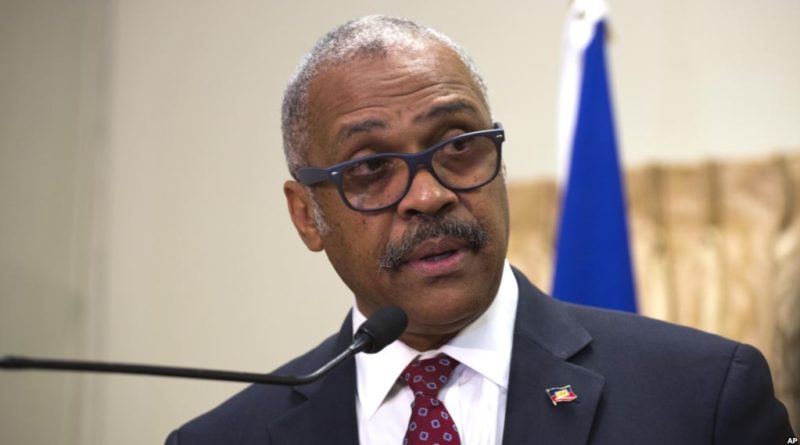
Prime Minister Jack Guy Lafontant of Haiti blamed the crisis in Haiti on the reselling of petrol imported to Haiti in the Dominican Republic. He said the situation is unsustainable and has lead to the increase in fuel prices in Haiti.
In a press release, Jack Guy Lafontant said that Haiti sources fuel at a very low price, much lower than in the Dominican Republic. He says the fact that across the border prices are 43% and 37% more expensive has created a market for their irregular resale.
The president of the Dominican Petroleum Refinery, Félix Jiménez (Felucho) explained that businesses of this kind with the refinery are impossible.
Jiménez said that the Refinery does have clients in the country that sell fuel to the Haitian government, but that it is not the Dominican Petroleum Refinery directly.
Source: DR1, telecentro
July 12, 2018