Archive for June, 2018
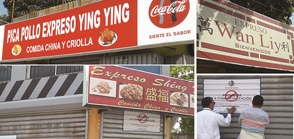
The National Institute for the Protection of Consumer Rights (ProConsumidor) ordered the immediate closure of three Chinese restaurants for inadequate hygiene. Pro Consumidor declared the health of consumers were at risk at these eateries.
The establishments closed are: Expreso Ying Ying, Expreso Sheng Fu and Wan Liy, all located on Independencia Avenue in the National District.
According to the report from Pro Consumidor, in Expreso Ying Ying there was evidence of cross contamination in the refrigerators, lack of a system for the registration of complaints by customers, inadequate drains, rust, rotting of the utensils, and a lack of organization. Employees were inadequately attired, expired products and products in poor condition were noted during an inspection. In the other two restaurants there were cockroaches in the kitchen, cross contamination of foodstuffs with chemicals, cracked floors, an inverter battery in the kitchen, inadequate bathrooms, among other violations.
Source: DR1, Listindiario
June 19, 2018

The Dominican passport was recognized as the best in Latin America during the 7th High Security Printers Conference held 11-13 June 2018 at Secrets Cap Cana in Punta Cana.
The latest technologies and techniques for the production and issue of banknotes, e-passports, ID cards, visas and other documents across Latin America and the Caribbean were presented at the conference. The conference looked into regional developments in document security, currency features, travel documentation technologies and features, printing and production technologies, anti-counterfeiting, document verification and enforcement, new developments in ID cards, driver documents, licenses and vehicle registration.
During the event, Ramon (Monchi) Rodríguez presented the new Dominican Republic passport. He received a certificate for the Dominican passport being the best in the Latin American region.
Source: DR1, Listindiario
June 19, 2018
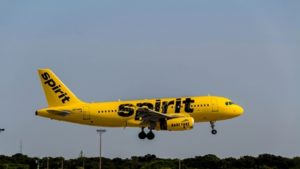
Fort Lauderdale-based Spirit Airlines plans to launch 14 new destinations out of its Orlando International Airport (MCO) focus city this fall, including 11 new markets in Latin America and the Caribbean, as the ultra-low-cost carrier (ULCC) continues its strategy to focus on core large-US and leisure markets.
The new international routes, most of which start Oct. 4, include:
Aguadilla, Puerto Rico; Guatemala City, Guatemala; Panama City, Panama; Santo Domingo, Dominican Republic; San Pedro Sula, Honduras; San José, Costa Rica; St. Thomas, Virgin Islands; San Salvador; and Bogota, Medellin, and Cartagena, Colombia.
Spirit also is adding service to Asheville and Greensboro, North Carolina; and Myrtle Beach, South Carolina.
“After more than doubling service [at MCO] last year, we are so proud to be expanding there yet again,” Spirit CEO Bob Fornaro said. “Orlando is now one of our largest markets, and we have no plans on stopping our growth.” Spirit’s largest market in 2017 was Fort Lauderdale, which accounted for 26% of its capacity.
The international additions fit into the airline’s strategy of connecting large origin-and-destination markets, major leisure destinations, and international markets popular with leisure travelers—including vacationers and the “visiting friends and relatives” niche. Last year, Spirit’s expansion focused mainly on medium- and long-haul domestic routes, connecting east and west coast cities as well as flying the Eastern Seaboard.
The service changes will boost Spirit’s MCO operation from 27 to 38 destinations, and up to 49 weekly flights. While Spirit has a sizable presence at MCO, its share of total passengers in the 12 months ended March 31 did not crack the top five, according to US Department of Transportation data. Southwest Airlines was the top carrier at MCO for the time period, with a 28% share, roughly double the next-largest carrier, Atlanta-based Delta Air Lines. Dallas/Fort Worth-based American Airlines, New York-based JetBlue Airways and Chicago-based United Airlines—each with at least a 10% share—rounded out the top five.
Spirit’s growth, which included a 17.6% capacity boost in 2017 and projects to be 22.5% this year, fits with MCO’s expansion. The airport boosted total passengers 6.4% in 2017 to a record 44.6 million passengers as carriers added more than 3 million seats. International traffic accounted for 5.9 million passengers, or 13.4%.
First-quarter results show the momentum has continued, as total passenger traffic topped 12 million, a 7.8% jump, while international service was up nearly 14%.
The surge has led MCO—already Florida’s busiest airport as measured by passengers—to expand on existing expansion plans. Last month, its board approved adding three new gates to its South Terminal Complex project Phase 1, which was approved for 16 gates. The new, 19-gate facility is slated to open in early 2021 and will house JetBlue—which is slated to have 14 gates—and a dozen or so other carriers, the airport authority said. MCO last month approved both domestic and international operations from the new terminal, boosting its versatility and paving the way for JetBlue’s relocation and expansion from 70 to perhaps 100 daily MCO departures.
Source: http://atwonline.com
June 19, 2018

Frontier Airlines, the low-airfare carrier that has significantly expanded its operation at Raleigh-Durham International Airport this year, announced Wednesday that it will begin flying to six new destinations from RDU this winter, including three in the Caribbean.
The new cities include three international destinations: Cancun, Mexico; Montego Bay, Jamaica, and Punta Cana, Dominican Republic. The other three are domestic warm-weather cities — Fort Myers and West Palm Beach in Florida and Phoenix.
The schedules and frequency of the flights will be released in the next few weeks.
Altogether, Frontier has announced flights to 18 new destinations from RDU this year and will now serve 27 cities with nonstop service from the Triangle. Last week, the airline announced twice-a-week nonstop flights to San Diego.
Frontier will be the only airline to fly nonstop to Jamaica, Dominican Republic, Fort Myers and West Palm Beach from RDU, bringing the number of places served with nonstop service from RDU to 62.
Until this year, Frontier was a small player at RDU, accounting for just 2.3 percent of passengers in and out of the airport last year. When the new flights are in place, Frontier will fly to more nonstop destinations from RDU than any other airline (Delta is currently tops with 25).
Source: heraldsun.com
June 15, 2018
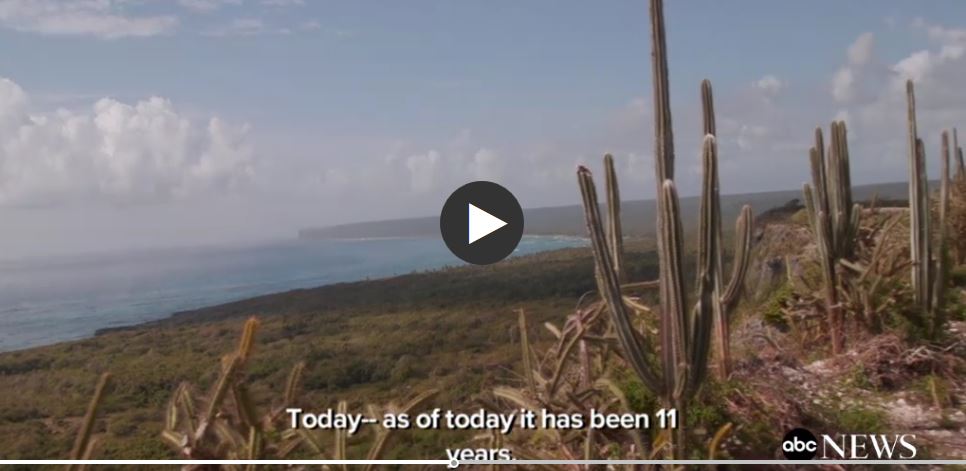
The US TV station, ABC News aired a news story covering the side of investors who lost big sums after having ploughed millions into the Trump Farallon Estates at Cap Cana, the would-be luxury development that had been planned by the local developers of Cap Cana and that was championed by then Apprentice-show star, today US President Donald J. Trump. ABC reminds readers that on the same day buildable lots in the cliff-top resort went on sale, dozens buyers bought out 95% of the development, snapping up more than US$350 million in property. There would have been condominium-hotel, a beach club, private villas, and a world class golf course, but all collapsed, reportedly due to the financial crash in 2008. Many investors lost their life savings.
ABC is following up the story now that after Trump reached the US Presidency, his son Eric Trump, the real estate developer, was back meeting with Cap Cana developers Ricardo and Fernando Hazoury at the property in February 2017. ABC recalled that in 2012, the Trump Organization had filed a lawsuit against the developers, accusing them of having “grossly underreported” the project’s sales figures to avoid having to pay the Trump company its share of the proceeds. “This was textbook fraud on a wide scale, involving millions of dollars,” the Trump lawsuit alleged.
ABC explains that unlike many of the original buyers – many of who saw their land lost to foreclosure – the Trumps had made US$12 million in licensing fees. Records show the legal claim was resolved in an undisclosed settlement.
Former US ambassador to the Dominican Republic, Wally Brewster, told ABC News that he wants to know if any of the president’s broad range of powers have become tools of leverage in the company’s dealings with the powerful Dominican family that is developing Cap Cana.
Brewster mentioned that the US government is still aggressively pursuing a slow-moving legal case that it brought against the project’s developer for more than US$12 million in US government loan guarantees issued by the Export-Import Bank of the United States but that were never repaid. The loans, bank officials told ABC News, were meant to help the Cap Cana developer to import US products.
Eryn Schornick, a lawyer with the watchdog group Global Witness told ABC News these are concerns inherent with having a US President whose family is doing extensive business overseas, as reported in ABC News.
“The primary concern I see with the potential of Mr. Trump’s family returning to the Dominican Republic is abuse of power,” said Schornick, who has done legal work in the Dominican. “The fact is, the Dominican Republic is a very small country. They’re in a place where doing business with [the family of] the President of the United States could influence the way in which any negotiations in foreign policy may happen.”
https://abcnews.go.com/Politics/trum…ry?id=55759829
Source: DR1, abcnews
June 13, 2018
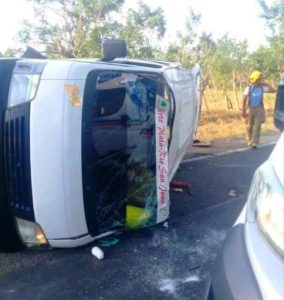
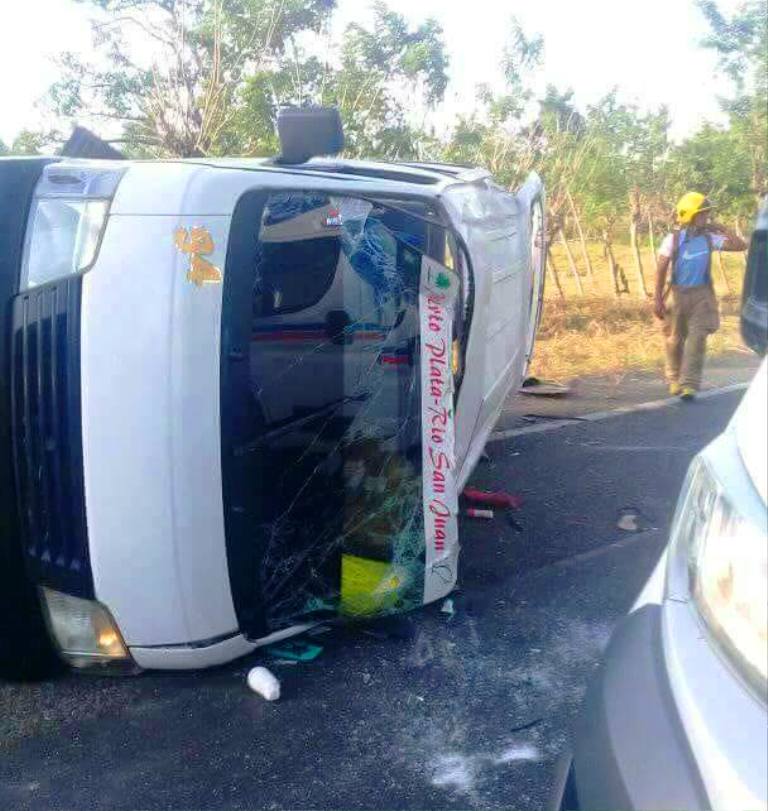
Eight people were injured yesterday, Monday 11 June 2018, in yet another accident on the road between Sosúa and Cabarete in Puerto Plata province. The accident happened outside the Coconut Palms – Perla Marina almost in front of the entrance to the Bombita de Cabarete sector, when a public transport minibus on the route from Puerto Plata to Rio San Juan flipped over after one of its front tires blew out.
Eight people were injured including the driver Luis Manuel Ortega Martínez, Karina Inés Martínez, 20, Luis David Vargas, 23, Paula Acosta 40, Juan Días 42, Yanelys Estefanía Polanco 21, and Danilda Hernández aged 19, aalong with two minors.
Units of the 911 National System of Emergency Assistance responded to the accident.
Source: DR1, Eldia
June 13, 2018
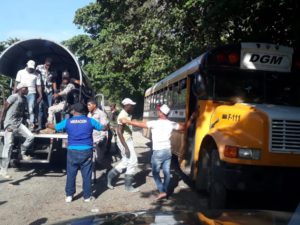
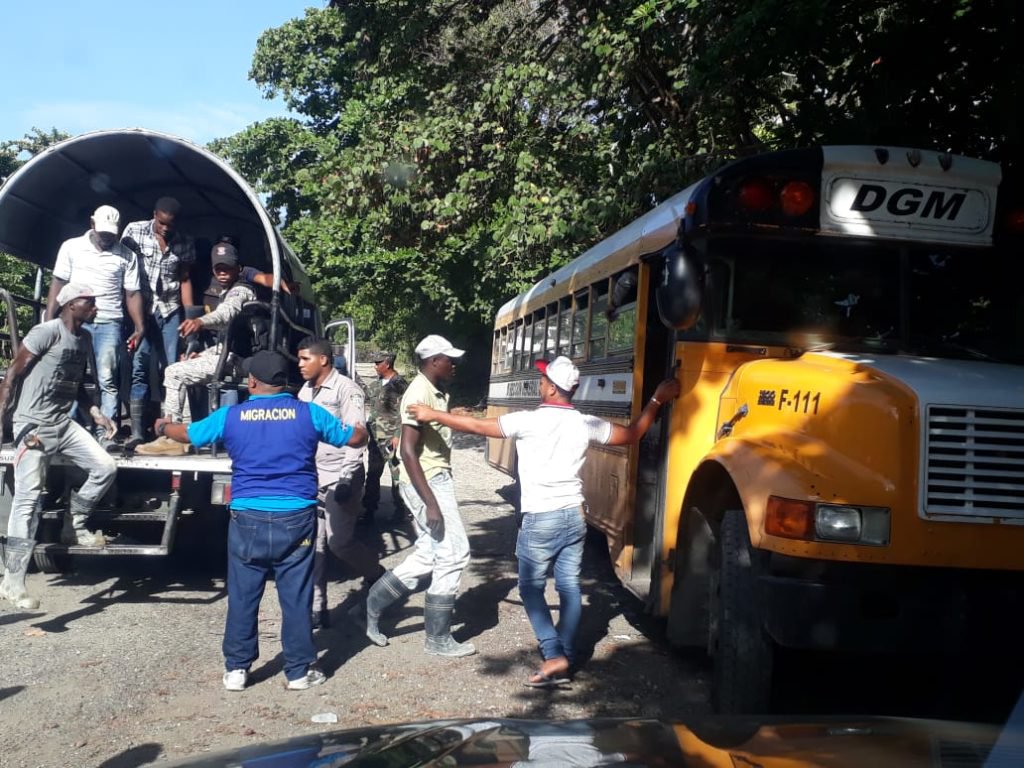
The Migration Agency carried out a wide-ranging series of raids over three days in different municipalities and sectors of the province of Puerto Plata. During the operation 511 foreigners were detained in Altamira, Guananico, La Isabela, Luperón, Sosúa and other sectors.
The operation, which began at dawn on Wednesday 6 June 2018, lasted 72 hours. Migration Agency agents and inspectors, members of the Northern Command of the Dominican Air Force, National Police and representatives of the Public Prosecution Service participated in the operation.
Following verification of the immigration status, 367 foreigners were taken to the border at Dajabon to be deported to Haiti, three were sent to the National Police in possession of homemade arms and drugs, and another two were sent to the Migration investigation department.
Source: DR1, Eldia
June 13, 2018

At 45-years, and the oldest active MLB player, Bartolo Colón is making baby boomers proud with his high-80s fastballs, two decades deep into his Major League career. He is playing for the Texas Rangers after grabbing a spot during spring training.
Colón landed a lifetime goal, the Juan Marichal all-time record for wins by a Dominican-born pitcher that stood at 243 until he broke it on Thursday, 7 June 2018 in the 8-2 game against the Oakland A’s in Arlington, Texas.
“I feel very happy because I finally got my 243rd win,” Colon told reporters (via MLB.com). “I tied this mark with a Hall of Famer, so I feel very proud and honored to do that. It means a lot because Marichal is Dominican and Marichal was the first ball player from the Dominican Republic to become a Hall of Famer.”
The next record to beat is that of Nicaragua-born Dennis Martínez, who accumulated 245 career victories, which is currently the most wins by any Latin American pitcher. Colon is also close to joining the prestigious club of MLB pitchers with 2,500 career strikeouts.
Colón has pitched with many Major League teams. He began his career in a game on 4 April 1997 pitching for the Cleveland Indians (1997-2002). Next he moved on to the Montreal Expos (2002), Chicago Sox (2003, 2009), Los Angeles Angels of Anaheim (2004-2007), Boston Red Sox (2008), New York Yankees (2011), Oakland Athletics (2013), New York Mets (2014-2016), Atlanta Braves (2017), Minnesota Twins (2017) and now Texas Rangers (2018).
http://www.sportingnews.com/mlb/news…01fxaxf44gmpzr
Source: Sportingnews
June 13, 2018
The Dominican Republic has a wide variety of animal inhabitants. Located on an island in the Greater Antilles, Hispaniola along with its neighboring country, Haiti, it boasts a variety of geographic habitats, from mountains to coastal plains. It has a tropical climate as well. There are 290 bird species, 20 land mammal species, and 5,600 plant species found in the Dominican Republic. These numbers do not even include the amount of sea life surrounding the island. Coral reefs can be found with a plethora of animals that live inside and around the reef, such as sea urchins, star fish and crustaceans.
The beautiful vegetation and wildlife of the Dominican Republic will provide the backdrop to all of the adventure activities you undertake. For some the nature will be the primary attraction, while for others it will be an added bonus. The best places to see plants, trees, birds and animals are in the country’s network of national parks and protected areas. Note, also, that the Dominican flora and fauna is not dangerous.
Amphibians and Reptiles
Reptiles and amphibians are not particularly abundant in the Dominican Republic. The lizards outnumber the snakes and frogs, while other species unique to the island are invariably under threat.
Rhinoceros Iguana
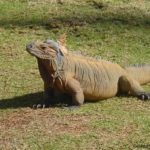
The rhinoceros iguana is an endangered species endemic to Hispaniola. They like dry, rocky ground with cacti and thorny bushes, and are most commonly found in the Enriquillo Basin. The males, in particular, look like fearsome creatures, with three small horns on their snout, a pad like a helmet on top of their head, and a large throat pouch (the females have neither helmet nor horns). In reality, however, they are very shy animals which prefer flight to fight. Their size (often over one meter in length) and their uniform gray color explains why they are called rhinoceros iguana. They live on plants and berries and are active only by day. The other species of iguana found in the Dominican Republic is the ricord iguana.
Turtle
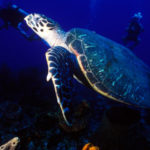
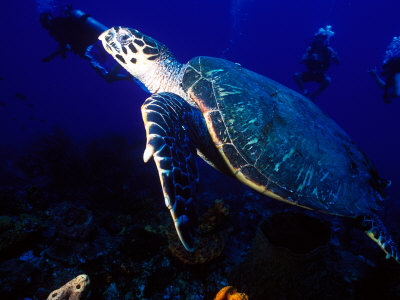
The four main types of turtle living off the Dominican coast are the leatherback (the largest living turtle), the loggerhead (found in lagoons and coastal bays), the hawks bill (prized for its beautiful shell) and the green sea turtle (hunted for calipee, a glutinous yellow substance used to make soup).
Crocodile
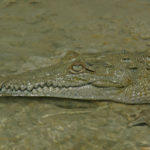
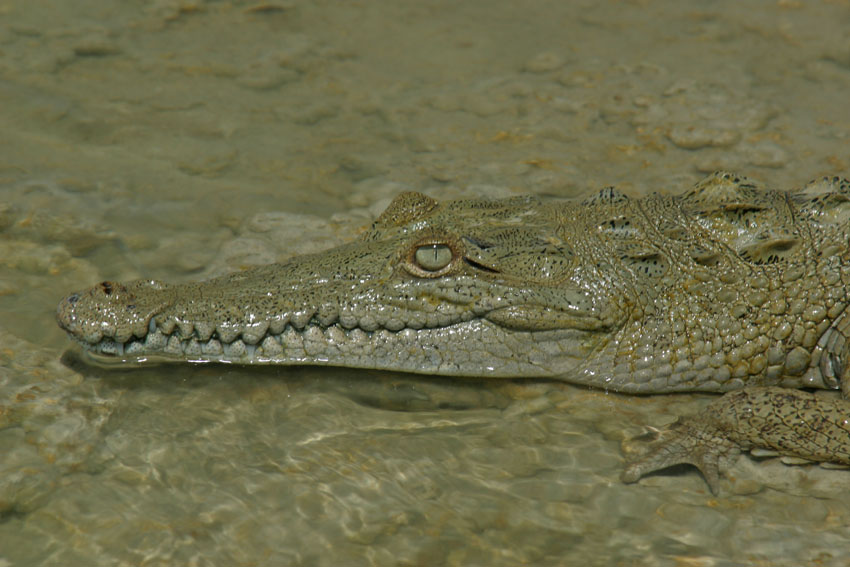
The American crocodile is the most widely distributed of the four crocodile species present in the New World. On its travels, it has managed to colonize most of Central America, South America as far as Peru, and much of the Caribbean. In Hispaniola, the American crocodile is so well established that it represents one of the largest wildlife crocodile populations in the world. In the Dominican Republic, its favorite haunt is the brackish water of Lago Enriquillo. However, while the adults can survive in hyper-saline conditions by way of a salt gland in their mouth and by taking advantage of fresh water in the environment (rainfall, for example), hatchlings cannot, which means that the water must not be too salty. Lago Enriquillo is now four times saltier than the sea – due in large part to the diversion of streams feeding into the lake for irrigation purposes – which has put the younger crocodile population under real threat. Take my word for it that any crocodiles you see will be American crocodiles. If you don’t believe me, get as close as you dare and look for the fourth tooth protruding above the level of the upper jaw. American crocodiles also have an olive-brown shade and an obvious swelling on the snout in front of the eye sockets. An average length for a female is 2.5 meters, but males can grow to about 4 meters. Although they are reputed to be a threat to man, attacks are rare and American crocodiles stick to their normal diet of fish, turtles and the occasional dog or goat. They often hunt at night and spend the hottest parts of the day in deeper areas of water. The best time to see them on land is during the early morning or late afternoon when they emerge from the water to raise their body temperature under the sun’s rays.
Jaragua Sphaero
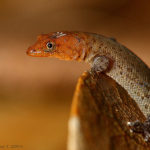
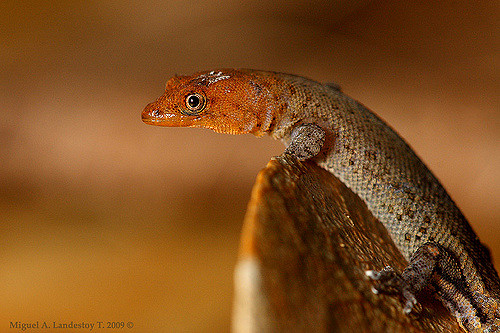
The Jaragua Sphaero, scientific name: Sphaerodactylus ariasae, fits on a Dominican Peso which is about the same size as a U.S. quarter. This is the smallest known reptile is found in Jaragua National Park.
Insects
Cacata/ Tarantula
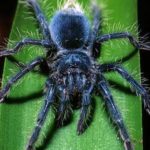
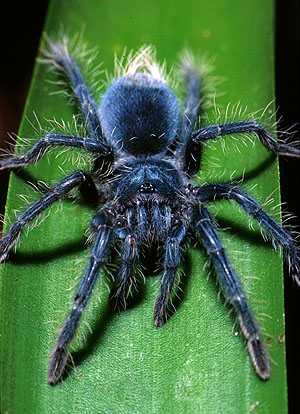
Dominican Republic does have it’s share of spiders, scorpions, ticks, mites, centipedes and other nasty, ugly yet amazing creatures. They are not readily seen, especially in the cities, but in the country they can be plentiful. They are nocturnal and are rarely seen in the daylight.
They are not very aggressive. When attacking a Cacata beware, they are crafty creatures. They jump and can play dead. When they do walk on your flesh they seem to almost stick to it. Many Dominicans that I have met think that if they do get bit by one they will surely die.
Noseeums (No-see-ums) in Dominican Spanish: Mayes (may-gee’s) (found near the sea) and Gegenes (found in the hills)
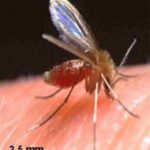
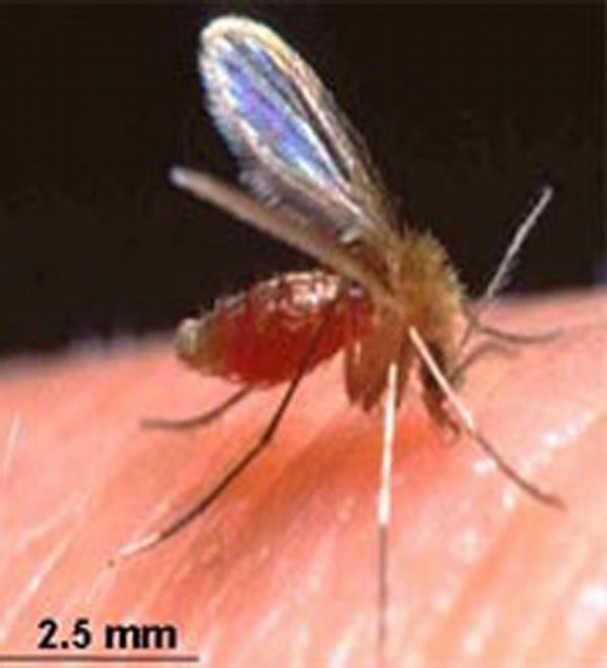
These nasty little creatures are true blood suckers. They are known as Punkies, Black Gnats, and Black Sand flies. (In Spanish: Moscas de Arena, Chaquistíes, Zancudos Negros). These loathsome flies come from the family Ceratopogonidae. They are teeny, tiny, biting, persistent little buggers that are, in my opinion, worse than mosquitoes. Less than ¼ inch long and can get through a normal window screen with no problem. No problem for them but big problems for their unawares meal that just may have your name on it!
Since the noseeum cannot be seen (maybe this is why they have this nickname??) and the immediate bite can’t be felt, they can make your blood a feast before you really know what’s happening. Walking along ever so innocently one can easily stir up a swarm without knowing. If you’re lucky they will swarm. In a swarm they can be seen, a dark foreboding mass. The only problem with this swarm is they can enter any open body cavity (i.e. the mouth and nose). If you happen to find yourself in a swarm I strongly suggest that you close these openings. That is, unless you want to be choking on their little, bitter tasting carcasses (yes, I know the taste well). If you have been swarmed move along quickly and get out of their territory, as they don’t like to travel very far from their home. So, I say, when you see a black cloud of flying bugs coming toward you..RUN AWAY! RUN AWAY! These blood sucking mini vampires usually live in shrubs and ground cover. Along the water, marshlands and areas where it is damp. But they can be found just about anyplace. Even in the soil around your home or in your favorite potted plant. They are unlike mosquitoes as they do not need water to produce their offspring. Moisture will do just fine for them and their babies.
The female, the only gender of these vicious little buggers that sucks blood, will get you before you know what is happening. She needs the protein in your blood for her to be able to pro-create and be mommy to the next generation of these relentless creatures. She will find you by smell. As with any persistent woman out for blood, it is not easy to hide. This unrelenting female will suck the blood of anything that has this red substance flowing through their veins. After taking the blood, of course they need to leave you a little gift so you remember them. Left behind is a little red blotch that is extremely itchy. Try not to scratch these red spots as they will just get itchier and could get infected.
The red spots can plague you for a few hours up to a week or more. Usually there are many blotches and you can look like you have some sort of disease before they turn from bright red to a light fading pink. Rest assured the blotches will disappear in time. All that will be left behind is the memory of what these minuscule, almost invisible vampire-ettes can do to reek havoc on your nerves and flesh. You will for sure remember to watch out for them in the future, even if you can’t see them.
Be sure to use some type of insect repellent. Something with DEET is best. It is said that if you do not want to put those chemicals on your body that you can use Catnip, lavender, cedar, or even patchouli oils. Don’t wear light colored clothing as this attracts bugs. They say (do you know who they are?) that eating too many bananas can attract biting bugs. If you eat garlic or eat lots of hot peppers (bugs and humans alike won’t come near), take vitamin B or brewers yeast, this is supposed to help also. To ease the itch rub parsley, lemon balm, or the inside of a banana peel on the spot. (*NOTE-these are all things I have read and some I have tried myself. Use what is best for you. These natural remedies are not tested and may not work for you. I just like learning of the natural ways to rid myself of bugs and their after effects. This is probably why I always have bites on my body).
Interesting note – these tiny insects are found in abundance in amber. Seemingly attracted to the color of the fluid. The DMS extracted from these pesky creatures has been very helpful.
The Coral Reef
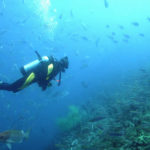
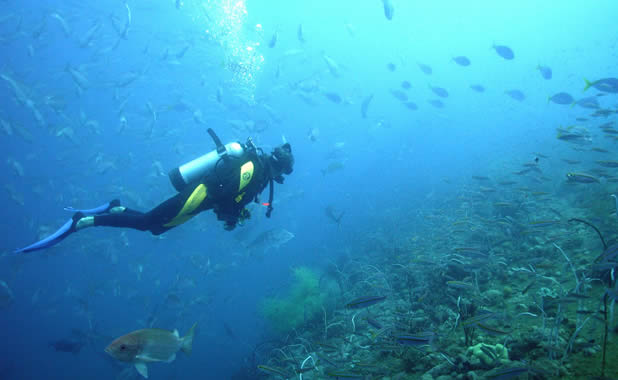
Scuba diving and snorkeling are two of the most popular activities on a trip to the Dominican Republic. However before putting on your flippers or water tank, bear in mind a few general rules which are all part and parcel of being a responsible tourist: do not stand on the reef, touch it, remove pieces from it, or otherwise interfere with what you see.
Types of coral
One of the discoveries made by Charles Darwin during his voyages on the Beagle was that there are three kinds of reef. The first is known as the fringing reef, which is what you see if you go snorkeling just off the shore. The fringing reef is always connected to the mainland, but can extend quite far out to sea. It has a variety of coral types and species, and for the uninitiated it is a great place to see some underwater life. Beyond the fringing reef across the lagoon – an area of shallow water with a floor of coral sand and debris – you will come to the barrier reef or, as is more common in Caribbean and tropical Atlantic waters, the bank/barrier reef. The difference between the two is their size: the barrier reef, found mainly in the Pacific, is larger than the bank/barrier reef and is separated by lagoons thousands of meters wide, as opposed to the hundreds which separate the bank/barrier reef from the mainland. This type of reef is home to more species than the fringing reef, but you will need a boat to get out to it. The third type of reef is the atoll, an incomplete ring of sandy islands built up on coral reefs surrounding a submerged volcano. They are usually found far from any continent or large island and are rare in the Caribbean. The closest atoll to the Dominican Republic lies off the coast of Belize.
Species of the coral reef
There are hundreds of species in both the fringing reef and the bank/barrier reef. These include corals, sponges, worms, mollusks, crabs, lobsters and fish. There are basically two types of coral. Both photosynthesize the energy of the sun and excrete limestone from the calcium carbonate in the water. In the case of hard corals, this limestone creates a skeleton which encloses the animal altogether and eventually builds up to form the reef itself. Soft corals, meanwhile, have no such skeleton and resemble plants. However, the creation and maintenance of the reef depends on more than just the hard coral; instead, it is a team effort. Several types of algae also help to bind and solidify the reef’s frame, while mollusks, crustaceans, sea urchins, starfish and sponges all anchor to the reef, thereby helping to line and protect it. At the same time other species dependent on the reef for their survival, such as the fire worm, the coral snail, the green reef crab and, most notoriously, the parrot fish, are ironically doing their best to destroy it by living off the coral tissue. It is estimated that for every acre of reef, one ton of solid coral skeleton is converted into fine sand every year. The major culprit is the parrot fish.
Birds
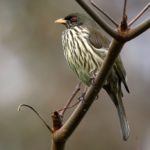
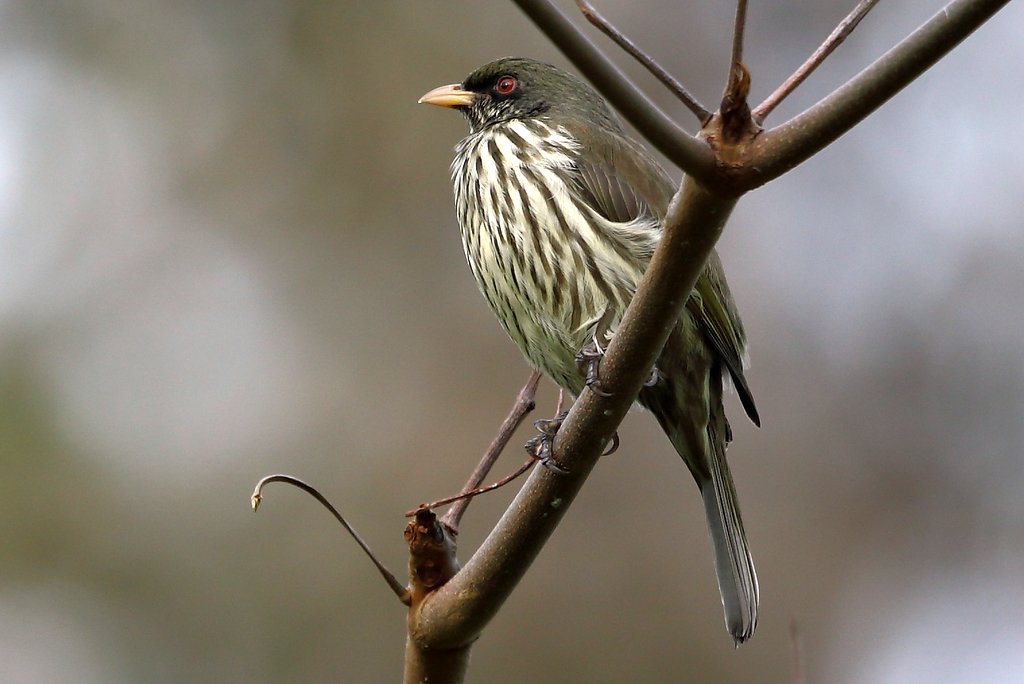
The considerable bird population in the Dominican Republic is made up of indigenous species and wintering birds from the North American mainland. Look out for species such as the Hispaniolan parrot, the Hispaniolan woodpecker, the rarer Hispaniolan trogon and Hispaniolan parakeet, the palm chat (which nests in the royal palms on the coastal plains) and several types of owl and pigeon, including the endangered white-crowned pigeon. Around the coast plenty of shorebirds can be seen. Great egrets, American frigate birds, brown pelicans, blue herons, glossy ibis, ruddy ducks and flamingos are all relatively common, especially on the off-shore islands of the Dominican Republic and around the numerous lakes and lagoons on the mainland. In the mountains, there are yet more species such as the Antillean siskin, the white-necked crow, the green-tailed warbler and numerous types of butterfly and hummingbird. This is just the tip of the iceberg, and it remains to be seen what other species exist in the hitherto unexplored parts of the country.
Land mammals
The Caribbean in general does not have many land species, and the Dominican Republic is no exception. Most of the mammals you see in the country today – dogs, cats, pigs, boars, horses, rats and mice – were introduced by the Europeans. In fact, there are only two endemic land mammals in Hispaniola.
Solenodon
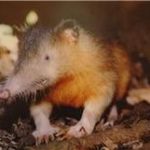
The solenodon is an insectivore not dissimilar to a rat, but more aesthetically pleasing. It has a long snout, lives in caves and hollow tree trunks, and feeds on insects and worms.
This furry rabbit sized creature is from the genus Dasyprocta and can be found throughout the American tropics. The species found in Dominican Republic and Haiti is the Solenodon paradoxus.
This insect eating mammal is quite similar to a mole as it feeds and moves around mostly in the darkness and at night. It has a long body, with a small or sometimes non-existent tail, and small ears. This burrowing animal weighs about 25 to 35 ounces at adulthood. Its long narrow feet have some very sharp claws. The teeth of this wiry, dark brown mammal are its most unique part. These very unique teeth can inject venom into what ever it bites. This venom is injected through some small grooves that run down their small sharp teeth. They are the only mammals with this ability.
Hutia
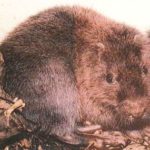
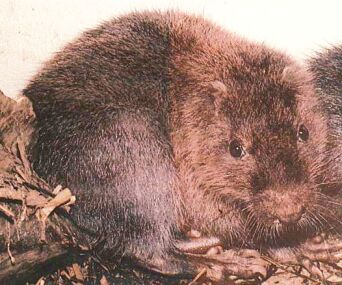
The hutia is another small rodent which, like the solenodon, lives in caves and tree trunks. The chances of spotting either of these animals on your travels are slim: firstly, because they are nocturnal creatures; secondly, because some believe that they might already be extinct. Their walk is more or a waddle. When they are frightened this slow waddle can change into a fast high hop. Using this hop or their good climbing skills is how they escape their predators. The Hutia have an almost naked tail that is a little scaly. They do have claws. Mainly vegetarian, they live on roots and fruits which they eat when they come out of their burrows, hollow trees, or nesting boxes where they live, after dark. The small creature closely resembles the rabbit having the same nesting and eating habits.The Hutai is becoming increasingly rare. They have been hunted and have not been able to repopulate as fast as they are being taken. Also with their habitat slowly diminishing they are slowly disappearing from existence. These cute fuzzy creatures have been hunted since the Taino days. Their meat was considered quite tasty by the indigenous peoples and also by Columbus and his European gang. The Hutai does well in captivity and hopefully soon the Dominican people will start raising/farming them as a food crop. Let’s hope that we humans can protect these little furry island mammals and once again see the Hispainolan Hutia romping and bouncing freely through the Dominican landscape.
Marine mammals
West Indian manatee
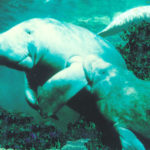
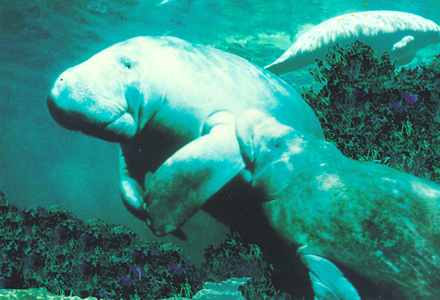
The West Indian manatee is an endangered marine mammal. They can sometimes be seen in the coastal areas of the national parks or in Samana Bay, but hunting and the increase in boat traffic has caused a decline in their numbers. Nicknamed the ‘sea cow’, manatees can grow to over 3.5 meters in length and they ‘graze’ on aquatic plants on the ocean floor.
Humpback whales
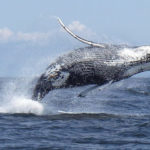
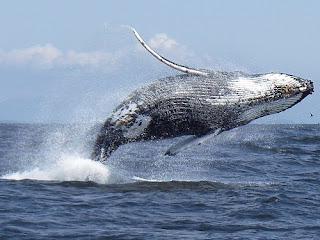
One of the principal breeding grounds in the world for humpback whales is on the Silver and Navidad banks off the north coast of the Dominican Republic. Each winter some 3,000 whales migrate from their feeding grounds in the North Atlantic, and congregate here to reproduce in shallow waters protected by coral reefs and free of boats and other distractions. Nearer to the mainland, Samana Bay is also a popular spot for whale watching, which has become an important tourist activity during the months of January, February and March click. The humpback is one of the larger species of whale, measuring from 12-15 meters and weighing up to 60 tons. Adult humpbacks are dark gray, while their calves are a lighter color. Although their name would suggest otherwise, humpbacks do not actually have a humped back. It only looks as though they do when they jump out of the water with arched backs. Other distinguishing features are their knobby heads, long, white flippers and large tails. Moreover, unlike all other toothed whales, the humpback has two blowholes rather than one. Humpbacks do not eat during their stay in Hispaniolan waters. Instead, they live off the 15-20 centimeters of fat accumulated during the feeding season by eating about a ton of food a day. Most of this turns to fat, and is the equivalent of a human daily diet of 8,000 hamburgers. The humpback’s preference, however, is small fish and crustaceans called krill (about 6 centimeters long and resembling shrimps). While adult humpbacks reproduce and diet, the newly born calves drink 50 gallons of milk a day. This milk, produced by the mother, is about 50% fat, allowing the calves to grow big enough to survive the journey back to the feeding grounds in the north.
Source: NPN

“Everything is for sale!”
Reasons for leaving:
1) To renew either their temporary or permanent residency’s, has become a big dirty let-down by the government, as they are now going back on their past promises of supplying Gringo’s either their up-coming “permanent residency” or to renew actual permanent residency’s without too much hassle or lawyers involvement. Gringo’s are now asked to re-supply all their documents as a “cover-up” by the Governments immigration, who’s lost thousands of foreigners records both on their PC’s and papers I.e. birth certificates, police records etc… and everyone is now being kicked back to zero, having to prove clean police record, re-do all the medicals, find witnesses of good character and supply proof of financial independence – and some would even have to travel back to their home country to receive new birth certificates (I.e. Russia, Ukraine etc…) – in other words a lot hassle, unfair expenses, frustration and life interrupting nonsense!
2) They are sick of being manipulated by the Government Owned power company, who especially with property owners, can use their monopoly position to violate customers in every nasty way possible. If you have been to pay your power bill a few times, then you would be sure to hear higly upset customers who have suddenly received some ridiculously high power bill or business owners being victims of ridiculous ongoing charges (and law suits if they don’t keep paying!). According to some locals latest frustrations, the power company is now getting really sophisticated in ripping us all off, as they are now replacing our existing “meters” with some new ones that effect our power bill in such a way that customers bills are tripling. In other words, brace yourself for their new sophisticated rip-off scheme! (They probably hired some scumbag who knows how to make the meters run faster based on the same electricity consumption – rat bags!).
3) Especially Expats who work or run businesses here on the North Coast, have over the past few years noticed how the Government, local Mayors and their armed forces, have gradually killed off business, Tourism and foreign investment. Most of the business focused expats are realizing, that if they took a couple of steps back and moved onto a country with stable rules and a healthy economy, then even with working less hours and applying the same skills, they could fairly quickly bounce back and start earning 5-10+ times as much as they currently earn in this pathetic economy. Leaving expats also miss the ability to afford relaxed time out with their kids and family, to dine out and to buy/repair stuff when needed and not when the purse allows it! Just because there is sun and beaches nearby, doesn’t necessarily mean that everyone has the ability to kick back and enjoy it all, as now that earnings are getting smaller and the cost of living is simultaneously increasing, then pampering oneself and one’s family, becomes a hard to reach luxury. They are also sick of experiencing or seeing Police extort money and their continued harassment of Girls walking between bars and the rough treatment of Haitians.
4) Leaving Expats also voice that they are sick of Dominicans, local traders and a large percentage of shifty fellow expats ripping them off. Unfortunately a lot of traders and businesses on the North Coast, seem to think that survival in business is only possible if they engage in Lying, cheating, stealing and letting people down! These culprits are found from the moto concho driver, right through to the Government. This region especially is known globally by many as the “pit” for many national and international scumbags – what a shame!
5) Daily there’s Racism and classicism being displayed by Dominicans on foreigners, especially by the various Police forces, Fiscal offices and even the courts. Examples of this ranges from traffic Police targeting “Gringo’s” over laws that often don’t exist, or for laws that they don’t pull Dominicans over for. Others find that if they counter sue after having won their freedom from a Malicious criminal or civil legal attack, then the sentence never comes through, especially if the Gringo is up against a Dominican. Police and a list of self-proclaimed inspectors will harass Gringo business owners for large sums of money, or they will use their connections to get them shut down! Many Expats have found themselves being locked up for the most pathetic or unfair things I.e. Bringing a person they saw in a traffic accident to the hospital, only to be withheld for paying the bill and then the police arrests them till they clear up what actually happened (keep driving fellow Gringo!). The fact is, that pretty much anything you get involved with, you always have to fight to get equal treatment or the same price as your Dominican neighbor – and that sucks! “When it’s rotten from bottom to top, then it’s game over for the Gringo!”.
6) Expats who are leaving also voice that they miss the abundance of cultural initiatives, watching skilled street performers in action, whether musicians, jugglers, clowns, artists, stunts, motor-animal or sports races. Also they miss theatre, cinema’s, abundance of choices in sports and watching skilled artists in action. Also the urge is strong to return to a society where honor, productivity, long-term business mentality, sucess, love and law has a meaning to a much larger percentage of people in society. Many insist to find a new country that still offers all year round sun and clear water but this time a place that offers a lot more of the initiatives mentioned earlier in “point 6?.
“Life is short even at it’s longest!” “Only the dreamers are awake, the rest are sleeping!” – Happy travels fellow Gringo’s!!
Author: Anonymous