Archive for June, 2018

Coffee lovers take note. Ground coffee needs to be in checked luggage.
Travelers to the United States from the Dominican Republic should be aware that as of 30 June 2018, the Transportation Security Administration (TSA) in the United States will implement new requirements for the carriage of powders in hand luggage on international flights to the United States. The substances need to be placed in checked bags.
The TSA announced that the restrictions are:
1.) Powder-like substances are described as fine dry particles produced by the grinding, crushing or disintegration of a solid substance (i.e. flour, sugar, ground coffee, spices, powdered milk and cosmetics).
2.) Powders are described as fine particles such as coffee, sugar, ground coffee, spices, powdered milk and cosmetics.
3.) Certain powders will be exempt from secondary screening, including baby formula, medically necessary powders and human remains.
https://www.delta.com/content/www/en…trictions.html
Source: DR1, nytimes
June 27, 2018
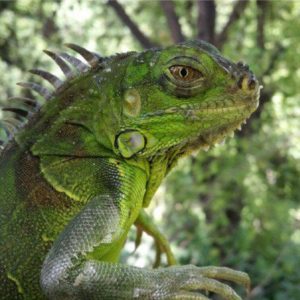
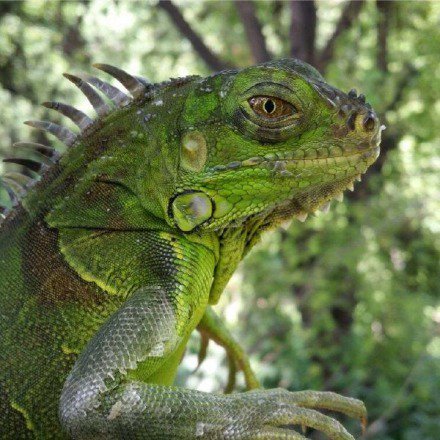
The Ministry of the Environment has warned the population not to buy green iguanas that are currently being sold on the streets as a pet. The Ministry of Environment Biodiversity Director, José Manuel Mateo, said that the reptile has been introduced to different habitats where there are native and endemic species and they are competing for food, threatening populations of endemic and native species. In addition, the iguana can potentially transmit diseases to humans.
If anyone has information about green iguanas or have sited one, they are asked to call 809.567.4300/809.539.6400/809.200.6400 or tweet or message AmbienteRD.
In addition Mateo called on tourists not to take up the offer to be photographed with the iguana and warned that they could transmit bacteria, viruses and fungal infections.
The green iguana was brought to the country a few years ago and is reproducing rapidly. It orginates in Central American countries, such as El Salvador, Guatemala and Costa Rica.
The green iguana is also a scourge in Florida. The Sun Sentinel newspaper has reported that the green iguanas have been considered mostly harmless because they eat plants instead of animals. But the newspaper explains that their burrows undermine seawalls, sidewalks and levees, and they eat their way through valuable landscaping as well as native plants. The newspaper reports that the droppings of the iguana can be a significant cleanup problem and a potential source of salmonella bacteria that causes food poisoning.
Source: DR1, Eldia
June 27, 2018
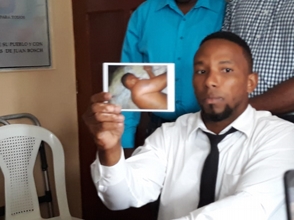
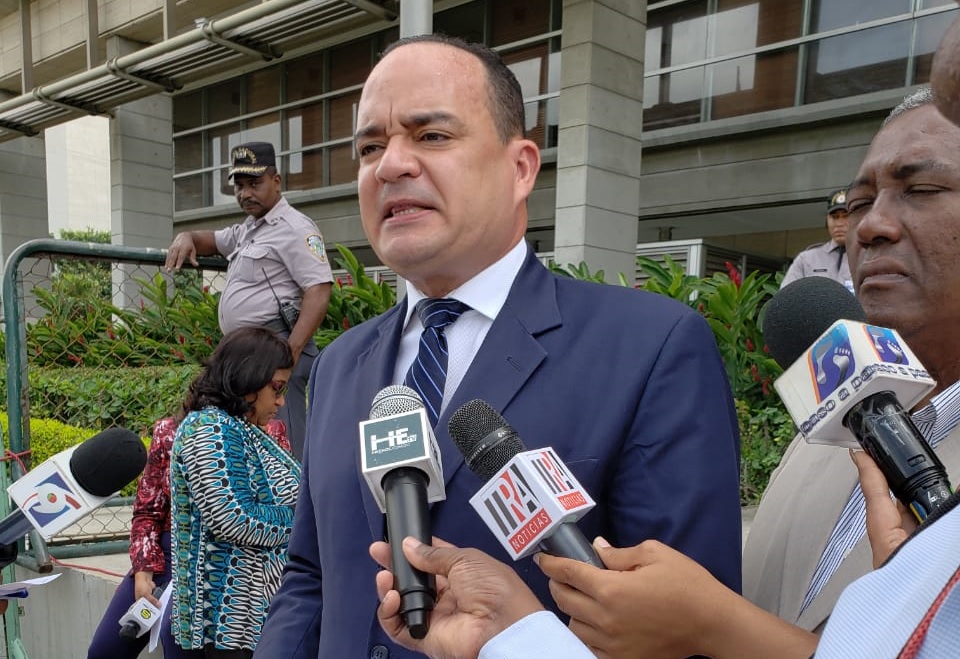
A law student from the Autonomous University of Santo Domingo (UASD) in Bani has complained that he was tortured in Bani jail by the police and inmates.
José William Calderón Franco told the local press about the torture he was subject to after he went to the jail to request that the authorities release a neighbor of his who had been arrested in a raid on Thursday 21 June 2018. Calderon Franco said that having asked about the detained man, a construction worker, the police insulted him, handcuffed him and put him in a cell with other inmates.
He said that there several police hit him and kicked him, and in tears, he said they hit him with a plank on the buttocks, chest and back, even after he rolled up on the floor in a fetal position.
Others in the cell were also tortured being made to stand on a bench with a gallon of water in each hand, and were punched without being allowed to drop the water. Later they had to stand for hours with their arms above their heads.
He said that one of the police told him this was to teach him not to mess with the police and that he had to learn that those lawyers who were successful were those who worked with the police.
He named some of those allegedly involved in the torture including Lieutenant Germán, Sergeant Soto Lugo. Calderon Franco claimed that officers were acting under the orders of Colonel Báez Ubier.
Franco was accompanied at the press conference by Senator Wilton Guerrero, who asked General Brown Pérez to order a proper investigation into the case and transfer those police who were implicated in the incident away from Bani.
Source: DR1, Listindiario
June 27, 2018
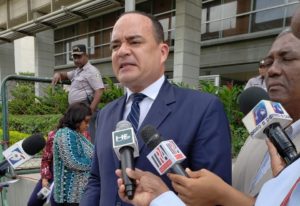
The Lawyers Guild in the Dominican Republic (CARD) has expressed opposition to a new resolution that would add what they say would be a tax of RD$350.00 to each document that is notarized in the country. CARD president, Miguel Surún Hernández, complained that the resolution is illegal and abusive and had been issued by the Judicial Branch that is unlawfully assuming the role of Congress. Based on this, CARD has filed an appeal to the Supreme Court of Justice.
Surún Hernández explained that when this new resolution goes into effect, all of the contracts and documents that are notarized in the country will have to pay a registration fee twice, once to the local City Hall and another to the corresponding Civil and Commercial Court. He says this is a flagrant invasion of the duties that exclusively reside in Congress and the Supreme Court of Justice. He explained that this measure violates the laws for the registration of civil documents and even worse, that it penalizes notaries who are not governed by the judicial power. Surún Hernández explains and that the registration of documents is within the scope of the local authorities, with the exception of powers of attorney and wills that are controlled by the judicial branch, but never all documents.
Source: DR1, Almomento
June 27, 2018
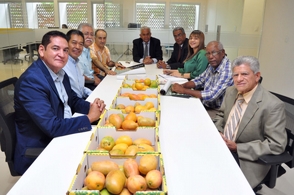
The Dominican Mango Cluster, the Association of Mango Producers of Baní (Abapromango) and the Ministry of Agriculture announced that the traditional Expo Mango 2018 will take place from 27 June to 1 July 2018 at the Baní city central park. This is a time to taste different varieties of mangos and to buy these cheap right from the farmers.
Upon announcing the event, representatives of the organizations said the sector seeks to export US$40 million in mangos in five years time, of which around 80% would be produced in southern Baní farms. Rafael Leger, president of the Mango Cluster said that this goal would be met when nurseries are certified to meet requirements to export to international markets and access is gained to USA markets.
Leger said that during Expo Mango 2018 an event would mark the formal start of the construction of a hydrothermal mango treatment plant that should be in operation by 2019. The president of Abapromango, Andrés Mejía Báez said that with the plant in operation exports to the US would increase. At present, only 10% of Dominican exports are shipped to the United States. Mejía Báez also announced the construction of a US$30 million packaging plant with dual capacity for preparing produce for the US and Europe markets.
Ministry of Agriculture regional director, José Luis Cruz highlighted how the sector has grown. He said exports in 2005 were 300,000 boxes, and that in 2017 4 million boxes were exported. Most Dominican mangos are shipped to Europe (90%). Netherlands, United States and Canada make up the other 10%. The main varieties that are exported are Keith (65%), mingolo (17%, grano de oro (10%) and banilejo (4%).
Speaking at the event, Agriculture Minister Osmar Benítez said the government sees Expo Mango as a “responsibility” because of the need to back a product that is gaining in exports.
Source: DR1, Listindiario
June 27, 2018
Source: www.bizjournals.com
June 27, 2018
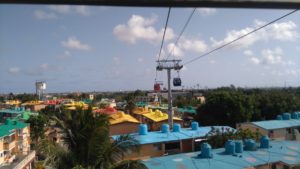
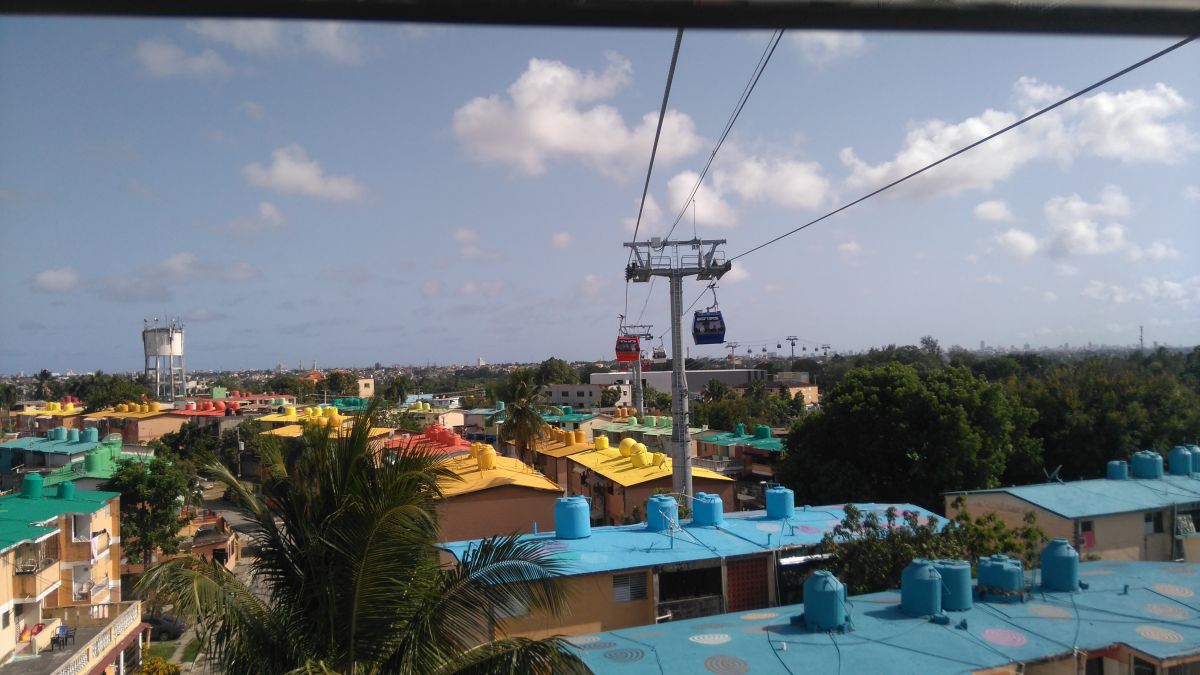
As everyone knows, there has been a ‘Teleférico’ (cable car) in Puerto Plata to the top of Mount Isabel de Torres for a long time. Now there is a second Teleférico in the country, but as a public means of transport. It is an extension of the existing metro lines. The cable car connects with the last station in the east of line 2, Eduardo Brito. With four stations and a length of 5 km it takes you north via ‘Los 3 Brazos’ and ‘Sabana Perdida’ to the final station Charles de Gaulle.
The cable car has not yet been officially taken into use, it is still in a test phase. During this test phase in the month of June, free use can be made of the cable car. After June the cable car can be used at metro rates. Sosúa-News was on site to take a ride and joined in the long queue on Sunday afternoon. This is both a public transportation, and a wonderful experience!
Source: Sosua News
June 27, 2018

The director of the National Office of Statistics (ONE), Alexandra Izquierdo says that according to civil registry records in 2016 there were 204,037 births. The bad news is that 88.6% were to women that were not legally married. This does not mean the child did not have a father in the household, just that the mothers reported their status as single in the civil state.
Of the births, women ages 25 to 29 years had the most children, with 36,571, of which 31,164 were of single moms and 5,371 of married moms.
Next there were 29.7% to mothers 20 to 24 years old, or 41,533, of which 39,047 were single moms and 2,483 were married.
The statistics show there were 22,326 births to females 15 to 19 years, of which 22,068 were to single moms and 2,483 to married moms. And there were 604 births to girls of 15 or less.
“These figures should motivate us to reflect because of the great proliferation of pregnancies in adolescents when they should instead be making the most of their youth, especially to finish their studies and seek a better future,” explained Izquierdo.
Source: DR1, Hoy
June 26, 2018
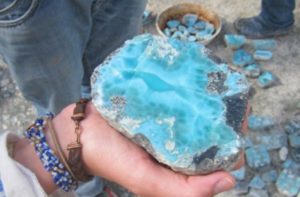
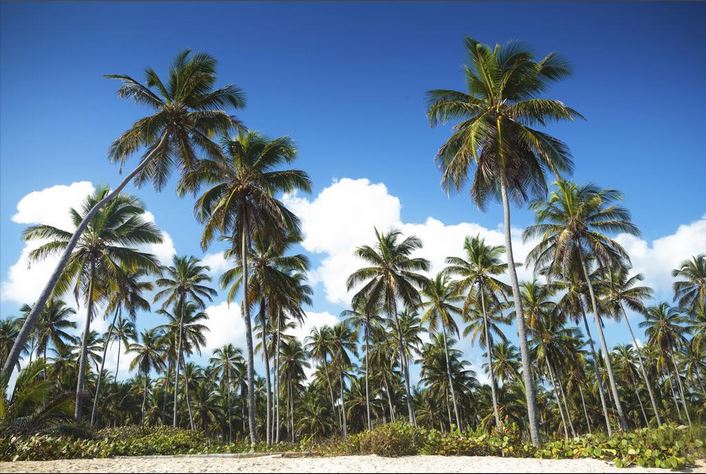
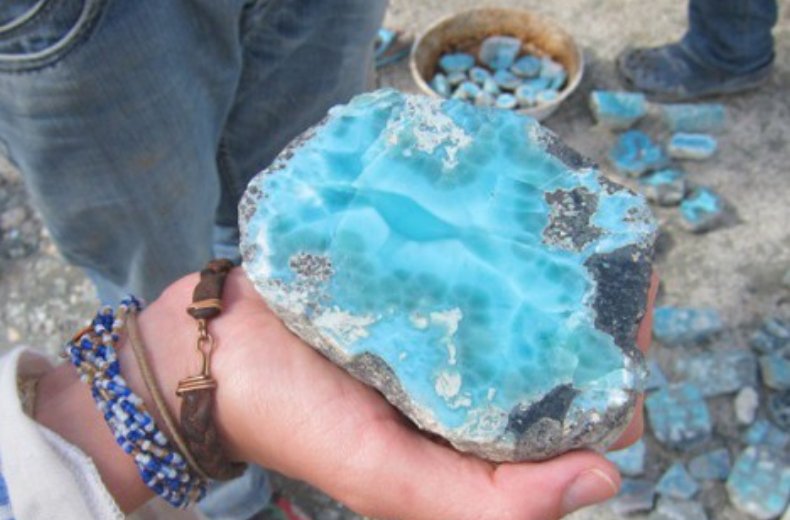
National Congress has declared that 22 November of each year be “National Larimar Day.” Law 17-18 declares that the date marks when 1916 priest Miguel Domingo Fuertes first discovered the stone in southwestern Barahona.
Larimar is a variety of white and blue colored pectolite that is only found in the Dominican Republic. It was declared the national stone in 2011.
By means of this law, the ministries of Energy and Mines, Environment, Culture and Tourism should fund activities to promote larimar nationally and internationally.
Included in the legislation is the call for an annual celebration in Barahona province where the Larimar artisans school, workshop and museum is located.
Source: DR1, Eldia
June 19, 2018

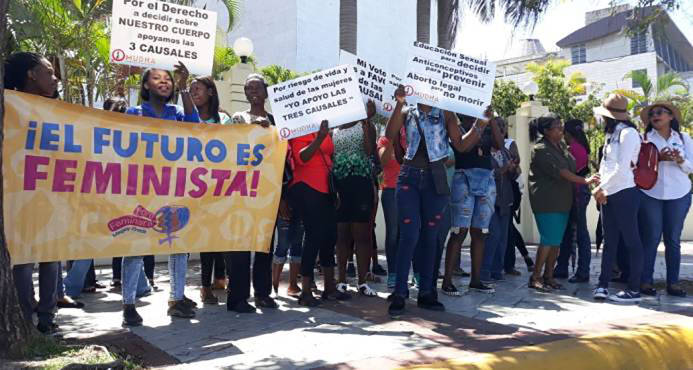
Polls show most Dominicans are in favor of allowing exceptions to abortion bans in cases of rape, incest, or saving the pregnant woman’s life. A report in Diario Libre reveals that a recent poll carried out by Untold Research says that 79% of Dominicans eligible to vote are in favor, with only 9% against instating what is the standard trinity in anti-abortion lawmaking around the world. President Danilo Medina has twice vetoed the Penal Code when legislators have not included the exceptions for the three specific cases.
The Untold Research results show an upward trend in support for the exceptions. As reported in Diario Libre, the CID Gallup Latinoamerica poll in 2015 revealed that 77% were in favor of the exception to save the mother’s life or if her life were at risk.
By age group, the poll showed the most support to the exceptions is in the 18-29 years age group, with 81%.
Those who identified themselves as Catholics, backed the exceptions with 75%, compared to 70% for those who identified themselves as of a non-Catholic Christian faith.
Source: DR1, DiarioLibre
June 19, 2018