Fauna of the Dominican Republic
The Dominican Republic has a wide variety of animal inhabitants. Located on an island in the Greater Antilles, Hispaniola along with its neighboring country, Haiti, it boasts a variety of geographic habitats, from mountains to coastal plains. It has a tropical climate as well. There are 290 bird species, 20 land mammal species, and 5,600 plant species found in the Dominican Republic. These numbers do not even include the amount of sea life surrounding the island. Coral reefs can be found with a plethora of animals that live inside and around the reef, such as sea urchins, star fish and crustaceans.
The beautiful vegetation and wildlife of the Dominican Republic will provide the backdrop to all of the adventure activities you undertake. For some the nature will be the primary attraction, while for others it will be an added bonus. The best places to see plants, trees, birds and animals are in the country’s network of national parks and protected areas. Note, also, that the Dominican flora and fauna is not dangerous.
Amphibians and Reptiles
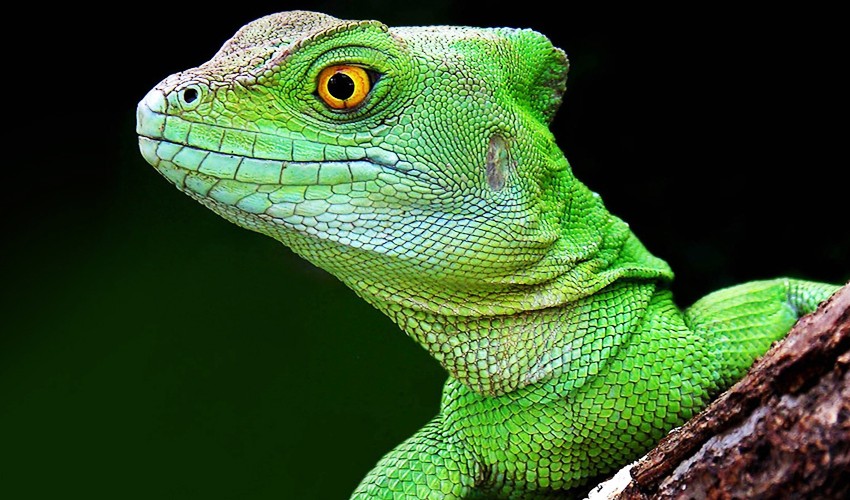
Reptiles and amphibians are not particularly abundant in the Dominican Republic. The lizards outnumber the snakes and frogs, while other species unique to the island are invariably under threat.
Rhinoceros Iguana
The rhinoceros iguana is an endangered species endemic to Hispaniola. They like dry, rocky ground with cacti and thorny bushes, and are most commonly found in the Enriquillo Basin. The males, in particular, look like fearsome creatures, with three small horns on their snout, a pad like a helmet on top of their head, and a large throat pouch (the females have neither helmet nor horns). In reality, however, they are very shy animals which prefer flight to fight. Their size (often over one meter in length) and their uniform gray color explains why they are called rhinoceros iguana. They live on plants and berries and are active only by day. The other species of iguana found in the Dominican Republic is the ricord iguana.
Turtle
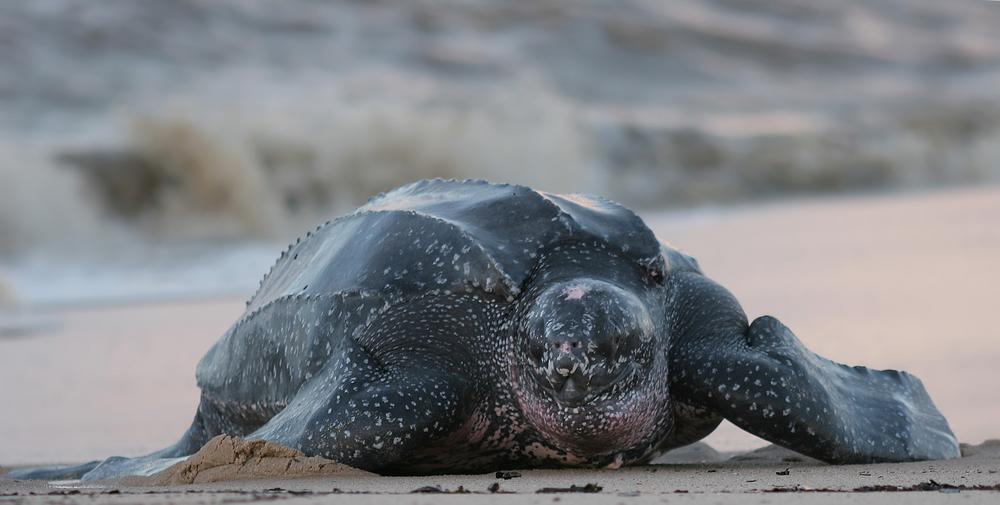
The four main types of turtle living off the Dominican coast are the leatherback (the largest living turtle), the loggerhead (found in lagoons and coastal bays), the hawksbill (prized for its beautiful shell) and the green sea turtle (hunted for calipee, a glutinous yellow substance used to make soup).
Crocodile
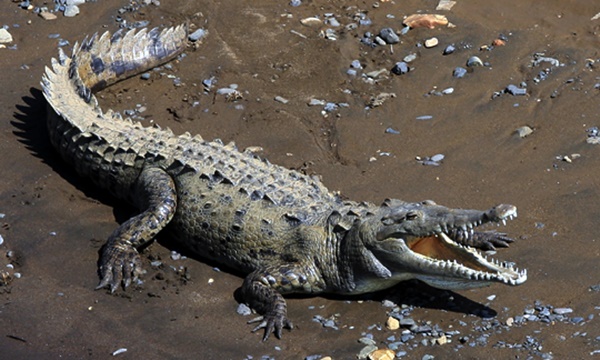
The American crocodile is the most widely distributed of the four crocodile species present in the New World. On its travels, it has managed to colonize most of Central America, South America as far as Peru, and much of the Caribbean. In Hispaniola, the American crocodile is so well established that it represents one of the largest wildlife crocodile populations in the world. In the Dominican Republic, its favorite haunt is the brackish water of Lago Enriquillo. However, while the adults can survive in hyper-saline conditions by way of a salt gland in their mouth and by taking advantage of fresh water in the environment (rainfall, for example), hatchlings cannot, which means that the water must not be too salty. Lago Enriquillo is now four times saltier than the sea – due in large part to the diversion of streams feeding into the lake for irrigation purposes – which has put the younger crocodile population under real threat. Take my word for it that any crocodiles you see will be American crocodiles. If you don’t believe me, get as close as you dare and look for the fourth tooth protruding above the level of the upper jaw. American crocodiles also have an olive-brown shade and an obvious swelling on the snout in front of the eye sockets. An average length for a female is 2.5 meters, but males can grow to about 4 meters. Although they are reputed to be a threat to man, attacks are rare and American crocodiles stick to their normal diet of fish, turtles and the occasional dog or goat. They often hunt at night and spend the hottest parts of the day in deeper areas of water. The best time to see them on land is during the early morning or late afternoon when they emerge from the water to raise their body temperature under the sun’s rays.
Jaragua Sphaero
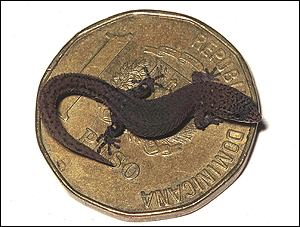
The Jaragua Sphaero, scientific name: Sphaerodactylus ariasae, fits on a Dominican Peso which is about the same size as a U.S. quarter. This is the smallest known reptile is found in Jaragua National Park.
Insects
Cacata/ Tarantula
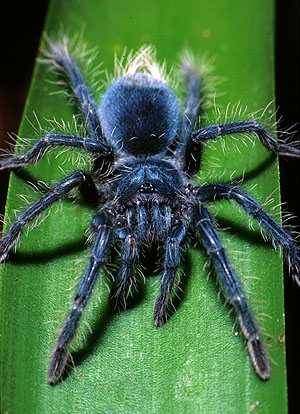
Dominican Republic does have it’s share of spiders, scorpions, ticks, mites, centipedes and other nasty, ugly yet amazing creatures. They are not readily seen, especially in the cities, but in the country they can be plentiful. They are nocturnal and are rarely seen in the daylight.
They are not very aggressive. When attacking a Cacata beware, they are crafty creatures. They jump and can play dead. When they do walk on your flesh they seem to almost stick to it. Many Dominicans that I have met think that if they do get bit by one they will surely die.
Noseeums (No-see-ums) in Dominican Spanish: Mayes (may-gee’s) (found near the sea) and Gegenes (found in the hills)
These nasty little creatures are true blood suckers. They are known as Punkies, Black Gnats, and Black Sand flies. (In Spanish: Moscas de Arena, Chaquistíes, Zancudos Negros). These loathsome flies come from the family Ceratopogonidae. They are teeny, tiny, biting, persistent little buggers that are, in my opinion, worse than mosquitoes. Less than ¼ inch long and can get through a normal window screen with no problem. No problem for them but big problems for their unawares meal that just may have your name on it!
Since the noseeum cannot be seen (maybe this is why they have this nickname??) and the immediate bite can’t be felt, they can make your blood a feast before you really know what’s happening. Walking along ever so innocently one can easily stir up a swarm without knowing. If you’re lucky they will swarm. In a swarm they can be seen, a dark foreboding mass. The only problem with this swarm is they can enter any open body cavity (i.e. the mouth and nose). If you happen to find yourself in a swarm I strongly suggest that you close these openings. That is, unless you want to be choking on their little, bitter tasting carcasses (yes, I know the taste well). If you have been swarmed move along quickly and get out of their territory, as they don’t like to travel very far from their home. So, I say, when you see a black cloud of flying bugs coming toward you..RUN AWAY! RUN AWAY! These blood sucking mini vampires usually live in shrubs and ground cover. Along the water, marshlands and areas where it is damp. But they can be found just about anyplace. Even in the soil around your home or in your favorite potted plant. They are unlike mosquitoes as they do not need water to produce their offspring. Moisture will do just fine for them and their babies.
The female, the only gender of these vicious little buggers that sucks blood, will get you before you know what is happening. She needs the protein in your blood for her to be able to pro-create and be mommy to the next generation of these relentless creatures. She will find you by smell. As with any persistent woman out for blood, it is not easy to hide. This unrelenting female will suck the blood of anything that has this red substance flowing through their veins. After taking the blood, of course they need to leave you a little gift so you remember them. Left behind is a little red blotch that is extremely itchy. Try not to scratch these red spots as they will just get itchier and could get infected.
The red spots can plague you for a few hours up to a week or more. Usually there are many blotches and you can look like you have some sort of disease before they turn from bright red to a light fading pink. Rest assured the blotches will disappear in time. All that will be left behind is the memory of what these minuscule, almost invisible vampire-ettes can do to reek havoc on your nerves and flesh. You will for sure remember to watch out for them in the future, even if you can’t see them.
Be sure to use some type of insect repellant. Something with DEET is best. It is said that if you do not want to put those chemicals on your body that you can use Catnip, lavender, cedar, or even patchouli oils. Don’t wear light colored clothing as this attracts bugs. They say (do you know who they are?) that eating too many bananas can attract biting bugs. If you eat garlic or eat lots of hot peppers (bugs and humans alike won’t come near), take vitamin B or brewers yeast, this is supposed to help also. To ease the itch rub parsley, lemon balm, or the inside of a banana peel on the spot. (*NOTE-these are all things I have read and some I have tried myself. Use what is best for you. These natural remedies are not tested and may not work for you. I just like learning of the natural ways to rid myself of bugs and their after effects. This is probably why I always have bites on my body).
Interesting note – these tiny insects are found in abundance in amber. Seemingly attracted to the color of the fluid. The DMS extracted from these pesky creatures has been very helpful.
The Coral Reef
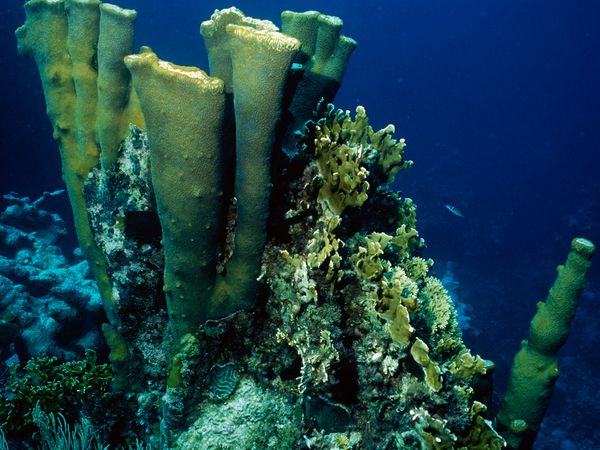
Scuba diving and snorkeling are two of the most popular activities on a trip to the Dominican Republic. However before putting on your flippers or water tank, bear in mind a few general rules which are all part and parcel of being a responsible tourist: do not stand on the reef, touch it, remove pieces from it, or otherwise interfere with what you see.
Types of coral
One of the discoveries made by Charles Darwin during his voyages on the Beagle was that there are three kinds of reef. The first is known as the fringing reef, which is what you see if you go snorkelling just off the shore. The fringing reef is always connected to the mainland, but can extend quite far out to sea. It has a variety of coral types and species, and for the uninitiated it is a great place to see some underwater life. Beyond the fringing reef across the lagoon – an area of shallow water with a floor of coral sand and debris – you will come to the barrier reef or, as is more common in Caribbean and tropical Atlantic waters, the bank/barrier reef. The difference between the two is their size: the barrier reef, found mainly in the Pacific, is larger than the bank/barrier reef and is separated by lagoons thousands of meters wide, as opposed to the hundreds which separate the bank/barrier reef from the mainland. This type of reef is home to more species than the fringing reef, but you will need a boat to get out to it. The third type of reef is the atoll, an incomplete ring of sandy islands built up on coral reefs surrounding a submerged volcano. They are usually found far from any continent or large island and are rare in the Caribbean. The closest atoll to the Dominican Republic lies off the coast of Belize.
Species of the coral reef
There are hundreds of species in both the fringing reef and the bank/barrier reef. These include corals, sponges, worms, mollusks, crabs, lobsters and fish. There are basically two types of coral. Both photosynthesize the energy of the sun and excrete limestone from the calcium carbonate in the water. In the case of hard corals, this limestone creates a skeleton which encloses the animal altogether and eventually builds up to form the reef itself. Soft corals, meanwhile, have no such skeleton and resemble plants. However, the creation and maintenance of the reef depends on more than just the hard coral; instead, it is a team effort. Several types of algae also help to bind and solidify the reef’s frame, while mollusks, crustaceans, sea urchins, starfish and sponges all anchor to the reef, thereby helping to line and protect it. At the same time other species dependent on the reef for their survival, such as the fireworm, the coral snail, the green reef crab and, most notoriously, the parrotfish, are ironically doing their best to destroy it by living off the coral tissue. It is estimated that for every acre of reef, one ton of solid coral skeleton is converted into fine sand every year. The major culprit is the parrotfish.
Birds
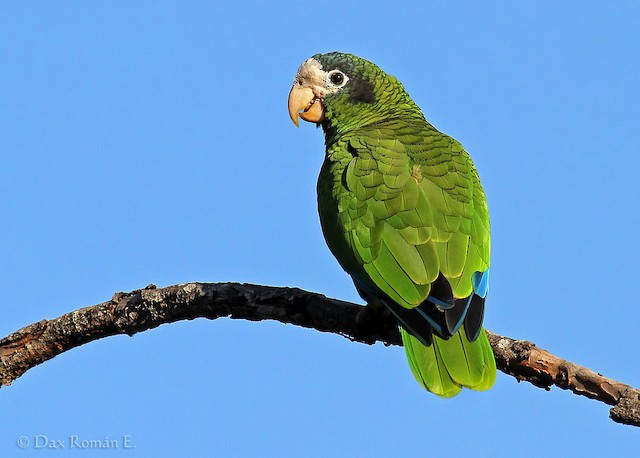
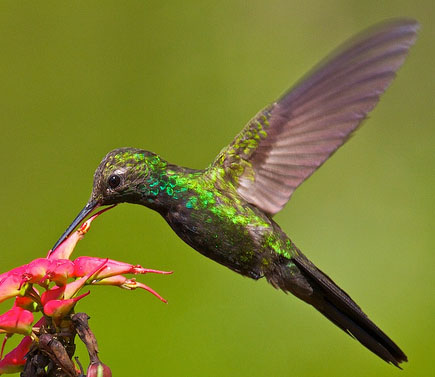
The considerable bird population in the Dominican Republic is made up of indigenous species and wintering birds from the North American mainland. Look out for species such as the Hispaniolan parrot, the Hispaniolan woodpecker, the rarer Hispaniolan trogon and Hispaniolan parakeet, the palmchat (which nests in the royal palms on the coastal plains) and several types of owl and pigeon, including the endangered white-crowned pigeon. Around the coast plenty of shorebirds can be seen. Great egrets, American frigate birds, brown pelicans, blue herons, glossy ibis, ruddy ducks and flamingos are all relatively common, especially on the off-shore islands of the Dominican Republic and around the numerous lakes and lagoons on the mainland. In the mountains, there are yet more species such as the Antillean siskin, the white-necked crow, the green-tailed warbler and numerous types of butterfly and hummingbird. This is just the tip of the iceberg, and it remains to be seen what other species exist in the hitherto unexplored parts of the country.
Land mammals
The Caribbean in general does not have many land species, and the Dominican Republic is no exception. Most of the mammals you see in the country today – dogs, cats, pigs, boars, horses, rats and mice – were introduced by the Europeans. In fact, there are only two endemic land mammals in Hispaniola.
Solenodon
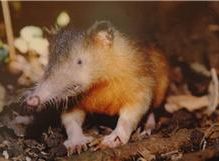
The solenodon is an insectivore not dissimilar to a rat, but more aesthetically pleasing. It has a long snout, lives in caves and hollow tree trunks, and feeds on insects and worms.
This furry rabbit sized creature is from the genus Dasyprocta and can be found throughout the American tropics. The species found in Dominican Republic and Haiti is the Solenodon paradoxus.
This insect eating mammal is quite similar to a mole as it feeds and moves around mostly in the darkness and at night. It has a long body, with a small or sometimes non-existent tail, and small ears. This burrowing animal weighs about 25 to 35 ounces at adulthood. Its long narrow feet have some very sharp claws. The teeth of this wiry, dark brown mammal are its most unique part. These very unique teeth can inject venom into what ever it bites. This venom is injected through some small grooves that run down their small sharp teeth. They are the only mammals with this ability.
Hutia
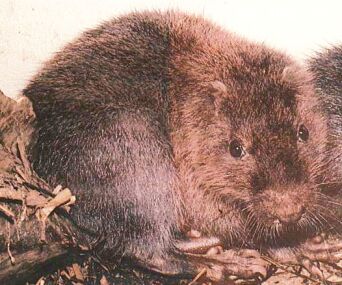
The hutia is another small rodent which, like the solenodon, lives in caves and tree trunks. The chances of spotting either of these animals on your travels are slim: firstly, because they are nocturnal creatures; secondly, because some believe that they might already be extinct. Their walk is more or a waddle. When they are frightened this slow waddle can change into a fast high hop. Using this hop or their good climbing skills is how they escape their predators. The Hutia have an almost naked tail that is a little scaly. They do have claws. Mainly vegetarian, they live on roots and fruits which they eat when they come out of their burrows, hollow trees, or nesting boxes where they live, after dark. The small creature closely resembles the rabbit having the same nesting and eating habits.The Hutai is becoming increasingly rare. They have been hunted and have not been able to repopulate as fast as they are being taken. Also with their habitat slowly diminishing they are slowly disappearing from existence. These cute fuzzy creatures have been hunted since the Taino days. Their meat was considered quite tasty by the indigenous peoples and also by Columbus and his European gang. The Hutai does well in captivity and hopefully soon the Dominican people will start raising/farming them as a food crop. Let’s hope that we humans can protect these little furry island mammals and once again see the Hispainolan Hutia romping and bouncing freely through the Dominican landscape.
Marine mammals
West Indian manatee
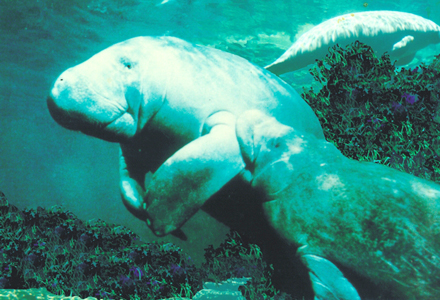
The West Indian manatee is an endangered marine mammal. They can sometimes be seen in the coastal areas of the national parks or in Samana Bay, but hunting and the increase in boat traffic has caused a decline in their numbers. Nicknamed the ‘sea cow’, manatees can grow to over 3.5 meters in length and they ‘graze’ on aquatic plants on the ocean floor.
Humpback whales
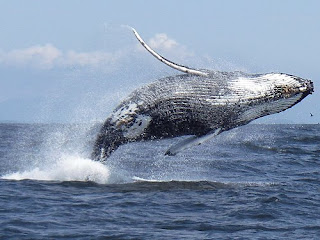
One of the principal breeding grounds in the world for humpback whales is on the Silver and Navidad banks off the north coast of the Dominican Republic. Each winter some 3,000 whales migrate from their feeding grounds in the North Atlantic, and congregate here to reproduce in shallow waters protected by coral reefs and free of boats and other distractions. Nearer to the mainland, Samana Bay is also a popular spot for whale watching, which has become an important tourist activity during the months of January, February and March click. The humpback is one of the larger species of whale, measuring from 12-15 meters and weighing up to 60 tons. Adult humpbacks are dark gray, while their calves are a lighter color. Although their name would suggest otherwise, humpbacks do not actually have a humped back. It only looks as though they do when they jump out of the water with arched backs. Other distinguishing features are their knobby heads, long, white flippers and large tails. Moreover, unlike all other toothed whales, the humpback has two blowholes rather than one. Humpbacks do not eat during their stay in Hispaniolan waters. Instead, they live off the 15-20 centimeters of fat accumulated during the feeding season by eating about a ton of food a day. Most of this turns to fat, and is the equivalent of a human daily diet of 8,000 hamburgers. The humpback’s preference, however, is small fish and crustaceans called krill (about 6 centimeters long and resembling shrimps). While adult humpbacks reproduce and diet, the newly born calves drink 50 gallons of milk a day. This milk, produced by the mother, is about 50% fat, allowing the calves to grow big enough to survive the journey back to the feeding grounds in the north.
Source: NPN