In January 2018, family members in the Dominican Republic received a total of US$522.4 million in remittances, an increase of 18.5% over January in the previous year. According to data from the Central Bank, this is the largest percentage increase from January one year to the next for the past eight years.
The majority of the remittances, 74.31% of the total, came from the United States. Experts believe that the tightening of the immigration policy and the threat of potential deportations have led expat Dominicans to increase in the amount of money flowing into the country from the US. Expats in Spain sent back 12.81% of remittances.
In January the average per transaction was US$228, but some countries had a higher average such as Switzerland with US$403, Spain with an average of US$383, France with US$360, Germany with US$309 and Italy with US$291.
Source: DR1, DiarioLibre
March 26, 2018

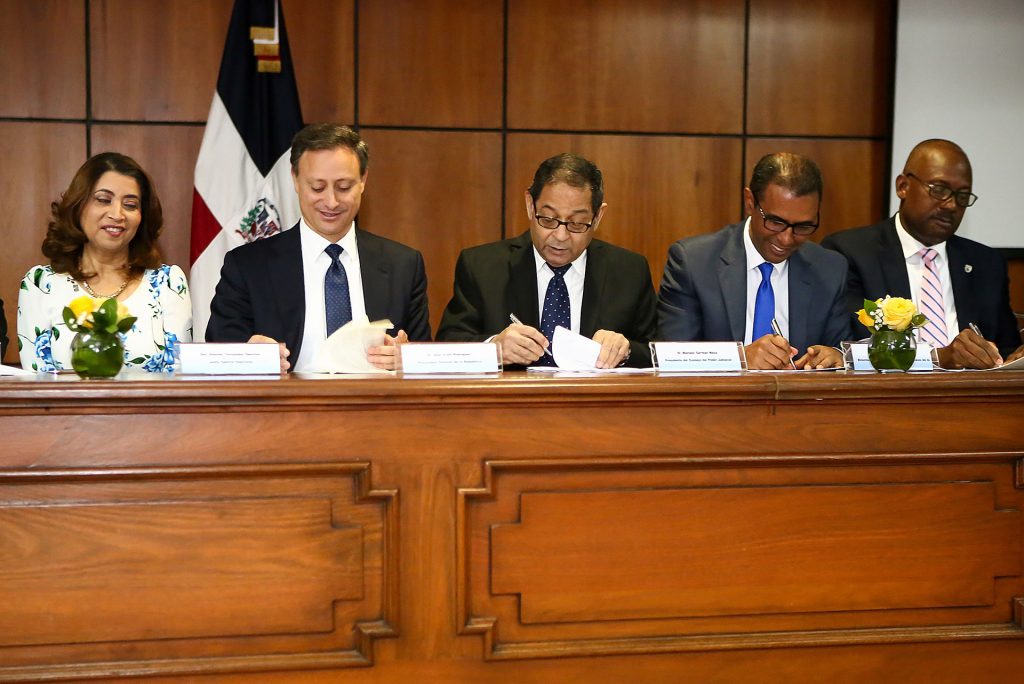
An estimated 300,000 Dominicans do not have legal identities, a situation that affects entire families. A recent effort to correct the situation is bringing together ten universities and several government institutions to take actions to help these socially excluded persons.
Signing the agreement are the Attorney General Office, the Supreme Court of Justice, the Specials Programs of the Presidency, the Central Electoral Board, the Federation of Dominican Municipalities, among others.
In the Dominican Republic, parents have 30 days to declare a child. When this doesn’t happen in time, a lengthy and sometimes costly procedure must be undertaken.
The participating universities are: Universidad Autónoma de Santo Domingo (UASD), Pontificia Universidad Católica Madre y Maestra (PUCMM), Universidad Pedro Henríquez Ureña (UNPHU), Universidad APEC (UNAPEC), Universidad del Caribe (UNICARIBE), Universidad Federico Henríquez y Carvajal (UFHEC), Universidad Tecnológica de Santiago (UTESA), Universidad Central del Este (UCE), Universidad Abierta para Adultos (UAPA), and Universidad de la Tercera Edad (UTE).
Source: DR1, pgr.gob
March 26, 2018

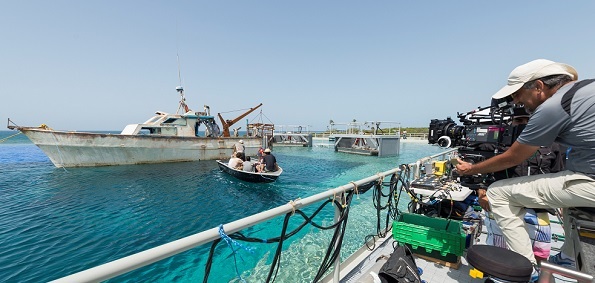
The story of a young female slave forced to work on a Jamaican plantation in the mid-19th century will be filmed at Pinewood Studios in Juan Dolio, Dominican Republic this summer. It is a BBC One adaptation of Andrea Levy’s novel “The Long Song”. Heyday Television is producing with the company’s David Heyman and Rosie Alison joining Williams, Levy and the BBC’s Elizabeth Kilgarriff as executive producers.
http://www.kftv.com/news/2018/03/14/…nican-republic
Source: Dr1, kftv.com
March 26, 2018

With more than two years to go for the May 2020 general election, a Gallup poll published in Hoy newspaper reveals that most Dominicans are uncertain over who they would vote for President in 2020. The poll was carried out by Gallup Dominicana for Hoy newspaper from 5 to 11 March 2018. Some 1,200 persons eligible to vote were polled in Greater Santo Domingo, the south, north and eastern regions. The poll results have an error margin of plus or minus 2.8%.
PLD voters: 46% of PLD voters said they are uncertain who would be the party’s candidate. 19.7% understand incumbent President Danilo Medina should be the PLD candidate for President, even when the 2015 Constitution bans him from opting for another term. Former President Leonel Fernández was mentioned by 18.7% of those polled. 4% mentioned Vice President Margarita Cedeño. Nevertheless, when the name of President Medina was removed, her numbers increased to 27%.
PRM voters: 49.9% of eligible voters in the Dominican Republic do not know who should be the PRM candidate in the 2020 presidential election. 31.8% believe this should be Luis Abinader, and 7.8% favor former President Hipólito Mejía. David Collado, who is the mayor of the National District, had a preference of 3.3% among those polled.
PRD voters: The PRD allied with the PLD in the 2016 general election. Now the Gallup poll reveals that among PRD voters there is an uncertainty of 66.5% regarding who would be the presidential candidate for that party. 10.8% mentioned Miguel Vargas Maldonado, the party president and incumbent foreign minister.
PRSC voters: The PRSC is the political party with the most uncertainty. 83.8% of PRSC voters said they were clueless who would be that party’s presidential candidate. The president of the party, Federico Antún Batlle appears with 6.3% following, and La Altagracia senator Amable Aristy Castro received 3.3% preference in the poll.
Among the minority parties, Guillermo Moreno of Alianza País did best, with 46% of voters thinking he would run for president on that party’s ticket. Among the minority parties, 26% mentioned Eduardo Estrella of Dominicanos por el Cambio and 3.4% mentioned Max Puig of Alianza por la Demoracia.
President Danilo Medina and former President Leonel Fernandez were tied to 14.8% to the question of “who would you prefer” of the two. 18.8% of PRM voters said they would like PRM presidential candidate to win the 2020 presidential election. Vice President Margarita Cedeño was preferred by 7.2% of the population. And Guillermo Moreno of AlPais received 6.6%. Former President Hipólito Mejía received 6.2%, and Ramfis Domínguez (grand child of dictator Rafael Leonidas Trujillo) got 5.4%. David Collado, mayor of the National District, received 2.8% of the preferences.
Source: DR1, Hoy
March 26, 2018

550 pesos per adult “All you can eat Buffet”!! Not only eggs…. choose your favorites on eggs, omelettes, hush Brown, Bacon, sausages etc ..our Chef prepares it right at the buffet. Then, of course, croissants and other various delicious breads, tropical fruits, variety of cheese, egg-shrimps salad, salmon and much more…
Parada Tipica El Choco restaurant is located on the highway Sosua – Cabarete, km 2 (opposite Sosua Ocean Village).
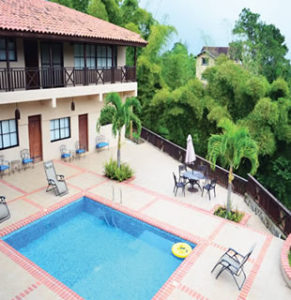
Visitors who want to enjoy the pleasures of a Caribbean “winter” should plan to visit Jarabacoa, one of the country’s most beautiful mountain destinations. Whether it is winter or summer, the centrally-located mountain town of Jarabacoa is the perfect destination for the ecotourist, the more adventurous visitor who enjoys more extreme sports, or the golfer who enjoys playing in cooler temperatures. This paradisiacal mountain town also offers visitors excellent lodging facilities, entertainment and delicious Dominican cuisine.
Situated in the very heart of the country’s Central Mountain Chain, Jarabacoa is the perfect destination for anyone interested in ecotourism activities. The region’s tremendous beauty, the diversity of its flora and fauna, the breathtaking mountain views, its provincial charm and spring-like climate (temperatures can range from 7 to 22 degrees Celsius) makes it a truly perfect destination for anyone interested in mountain tourism.
The town of Jarabacoa has a population of about 60,000, and is situated some 530 meters above sea level. This friendly community, which for decades was the perfect vacation destination for wealthy Dominicans, has become an active tourism enclave that also depends greatly on agricultural activities.
Visitors will have plenty of options for horseback riding, hiking, canoping, motocross activities and white-water rafting, among others. Jarabacoa is also a haven for the nature lover looking to disconnect from the hustle and bustle of everyday living.
This area is also the gateway to the country’s Duarte Peak, the highest in the Caribbean with an altitude of 3,175 meters above sea level. It is the ultimate experience for the hiker and anyone else who wants to experience the beauty of this unique region.
Enjoy Golf in the Mountains
Jarabacoa features the country’s only mountain-region golf course. Quietly nestled among low-lying hills, the Jarabacoa Golf Club offers golfers a challenging terrain. But, the cool temperatures and beautiful landscape makes it a must-stop for golf lovers traveling to the region.
The Coffee Trail
The Coffee Trail is a never-before-experienced adventure that envelops visitors in the unique aroma and wonderful flavor of Dominican coffee. This particular region is known for the production of some of the world’s best, and most beautiful, coffee plantations.
Also, visitors staying in Jarabacoa have a wide range of hotels, restaurants and bars from which to choose from. Most of these places are located in and around the town’s main square, which features a native tree that is more than 160 years old.
Where to Stay
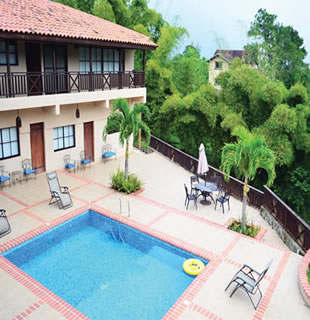
Rancho Aurora: Swimming pool, conference room that comfortably seats 70, full-service restaurant featuring spectacular mountain views.
“Casa Tranquila” : This 14-room country home features a dining area, conference room and cozy country atmosphere. This ecolodge was awarded a “Dominican Treasure” certificate, issued to excellent eco-friendly tourism destinations in the Dominican Republic.
“Bohios de Campo Añil” : Features beautiful cottages, and the package includes three meals and a true country atmosphere. There is a swimming pool, a playground, bonfires, movies and an outdoor bungalow for dancing and other social activities.
“Hotel Brisas del Yaque” : Situated right in Jarabacoa, the hotel features 18 comfortable rooms and a good restaurant.
“Jarabacoa River Club”: 45 rooms, restaurant, swimming pool, terrace to hold social events, playground for kids and weekend bar-café, karaoke and a DJ.
“Villas Quintas del Bosque”: The complex features 70 eco-lodges that range from 150 to 300 square meters. Swimming pool, clubhouse, playground, BBQ area and gazebo.
“Hotel Gran Jimenoa”: 65 comfortable rooms, swimming pool, restaurant, beautiful surrounding gardens, access to the nearby Jimenoa River and a conference room with capacity for 600 guests.
“La Jamaca de Dios” : 12 luxury apartments with stunning views of the beautiful mountain region. The perfect destination for those who want to relax in a perfect mountain setting.
Where to Eat
“Restaurant Brisas del Yaque” : Specializing in popular Dominican dishes, such as mashed green bananas, suckling pig and stewed goat.
“Pizzeria y Resposteria Pepperoni” : Offers some of the best pizzas in Jarabacoa, and local desserts.
Jarabacoa River Club: Known for its many popular Dominican treats.
Restaurant “Gran Hotel Jimenoa:” True experts when it comes to Dominican dishes.
D’ Kalidad : Offers both national and international dishes.
“La Tinaja:” Best sandwiches in Jarabacoa.
“Plaza La Confluencia:” This popular shopping plaza is home to various restaurants, such as Pala Pizza, Segafredo and the Pierre Restaurant, specializing in meats and sushi dishes.
“Aroma de la Montaña” in the “La Jamaca de Dios Hotel: Excellent a la carte restaurant, with stunning mountain views.
“El Carrito de Moshe” : Known for their giant and very tasty sandwiches.
“Helados Ivon” : The best hand-made ice cream in the entire region.
Shopping
“La Tinaja:” The shop offers a wide variety of organic gourmet coffee, German beers, homemade desserts, popular carrot and banana cupcakes, homemade custard and many other locally-made products.
Ecotourism Cluster Office: Beautiful native Taino souvenirs and fruit wines produced in Jarabacoa.
Night Life
“Entre Amigos Bar”
“Bar Veniu”
Road to Jarabacoa
The road that connects Jarabacoa with the Duarte Highway, the country’s most important highway, is in optimum condition. In general, all roads leading to and from Jarabacoa are in very good condition.
By Anya Duran
Photographs: Maximo Zorrilla
Source: Access DR
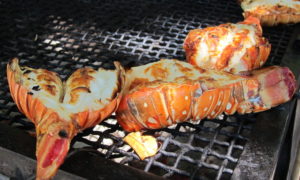
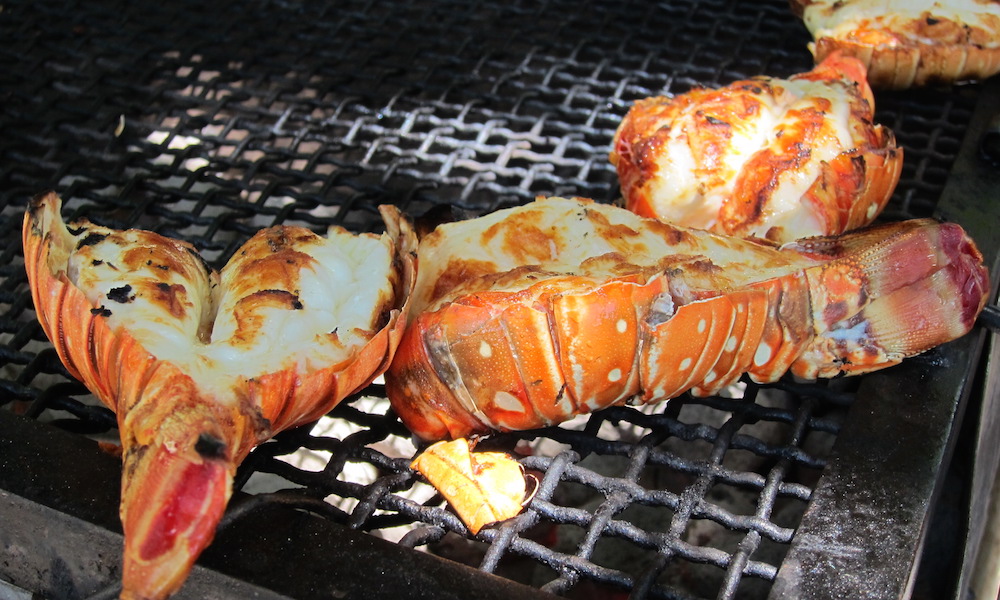
The annual lobster ban is officially underway! Craving the savory sea critter? Well you’re going to have to wait until June 30th! From March until June it is mating and reproduction season for Caribbean lobster. Eight years ago, in 2010, the ban was placed on these crustaceans during their breeding season because of over fishing causing a decrease in the numbers of the species. Placing this “No Lobster” ban is an attempt to balance out the numbers and avoid Caribbean lobster extinction!
Even if you are in a place that offers lobster, even if you’re out for an afternoon boat trip and see plenty of lobster, do not buy them! Vendors selling them are disregarding the ban and threatening the existence of Caribbean lobsters such as spiny lobsters, spotted spiny lobsters, and spiny rock lobsters.
The ban is respected across the Caribbean and Central America, and to protect the delicious shellfish it is essential to support this ban for the next few months! Anyone that is found disrespecting this ban could be fined up to US$50,000 as well as serve a jail sentence of up to 10 years. By saying no to lobster for a few months, you are guaranteeing the continuation of enjoying the savory shellfish for years to come! Just think about how rewarding that first lobster will taste, post ban, knowing you did your part in saying NO to lobster!
Source: Casa de Campo Living
Mar 21, 2018