DR Living
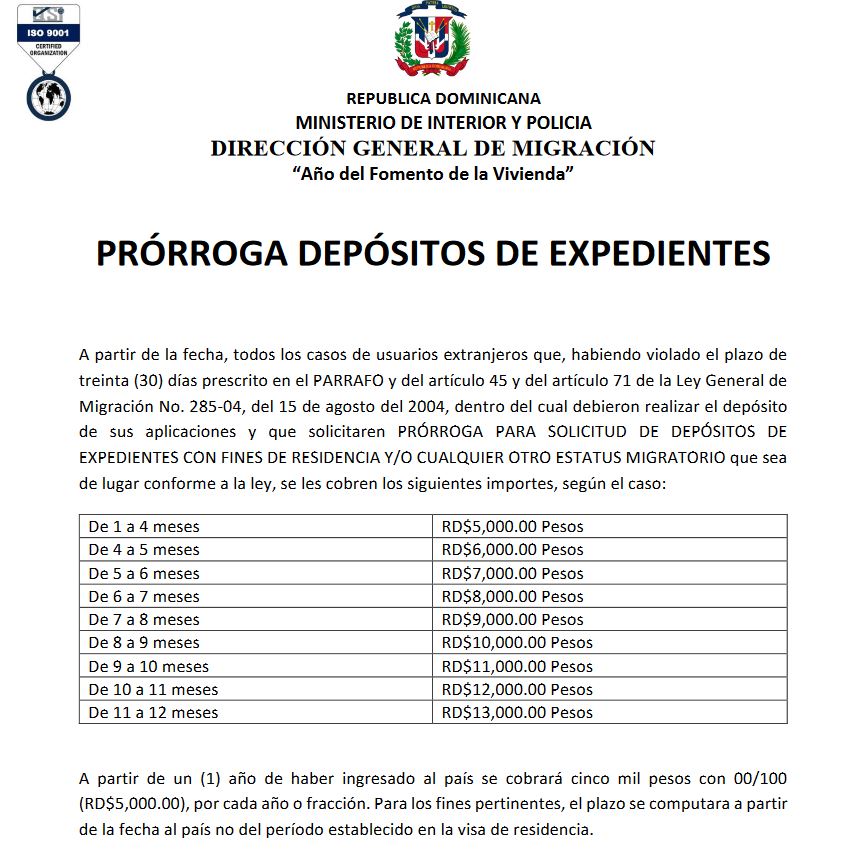
Overstay fees/fines have been increased. They have also clarified, in writing, that time begins on date of arrival, not the 31st day.
https://www.migracion.gob.do/Content/docs/prorroga.pdf
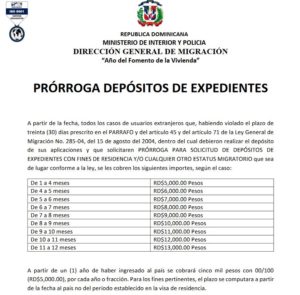
EXTENSION DEPOSITS OF RECORDS As of the date hereof, all cases of foreign users who, having violated the term of thirty (30) days prescribed in PARAGRAPH and article 45 and article 71 of the General Law of Migration No. 285- 04, of August 15, 2004, within which they had to make the deposit of their applications and request EXTENSION FOR APPLICATION OF DEPOSITS OF RECORDS FOR RESIDENCE PURPOSES AND / OR ANY OTHER IMMIGRATION STATUS that is of place according to the law, charge them the following amounts, depending on the case:
From 1 to 4 months RD $ 5,000.00 Pesos
From 4 to 5 months RD $ 6,000.00 Pesos
From 5 to 6 months RD $ 7,000.00 Pesos
From 6 to 7 months RD $ 8,000.00 Pesos
From 7 to 8 months RD $ 9,000.00 Pesos
From 8 to 9 months RD $ 10,000.00 Pesos
From 9 to 10 months RD $ 11,000.00 Pesos
From 10 to 11 months RD $ 12,000.00 Pesos
From 11 to 12 months RD $ 13,000.00 Pesos
From one (1) year of entering the country, an additional five thousand pesos will be charged with 00/100 (RD $ 5,000.00), for each year or fraction of year.
For the pertinent purposes, the term will be computed from the date to the country not of the period established in the residence visa.
Overstay fees paid at the airport so far stay the same, and allow you to be in the country for up to 60 days.
https://www.migracion.gob.do/Menu/Index/21
Source: DR1 Forum, Migracion.gob.do
May 24, 2018
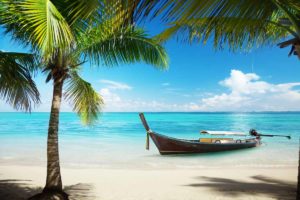
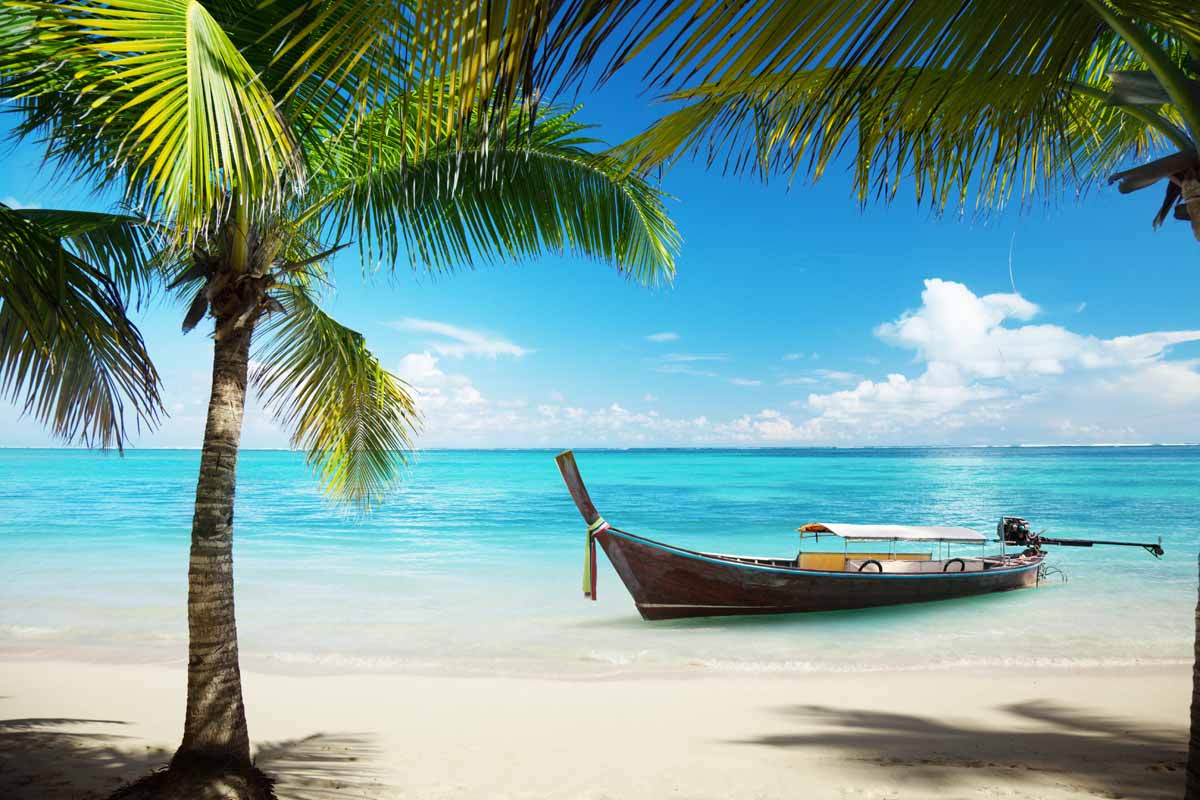
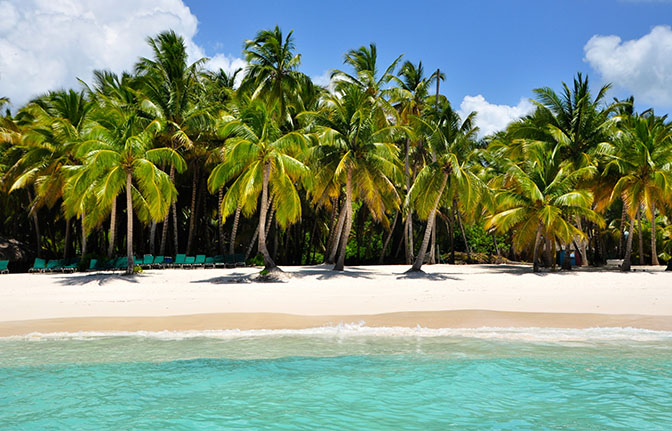
The Dominican Republic is a few hundred kilometers of snow-white sandy beaches, which are framed by magnificent tropical jungles. Travelers from different parts of the world like to come here to inspire amazing landscapes, as well as rest and relax on the most beautiful beaches.
Dominican Republic is a real paradise for every traveler who is a true connoisseur of beach holidays. The Republic is washed by the warm Caribbean Sea and the majestic Atlantic Ocean, thanks to which the coast, suitable not only for sunbathing, but also for swimming, stretches for many kilometers. It should be noted that there are a huge number of resort and tourist areas, but there are also the most popular among holidaymakers.
Cap Cana
Cap Cana is one of the most luxurious resorts of the Dominican Republic. All hotels, as well as resorts of the named area have a class of luxury. The port of Capa Cana is approached by delightful yachts, while on the waterfront are the chicest boutiques and restaurants.
Santo Domingo
Santo Domingo is the capital of the Dominican Republic, the center of the city’s busy urban life. Striking architecture, ancient streets, bazaars, where you can buy a variety of souvenirs, museums, cathedrals, as well as exhibition galleries – all this offers to know more the capital of the Dominican Republic.
Punta Cana
Punta Cana is a true beach paradise, which is perfect for a family holiday. The nature of Punta Cana is extraordinarily beautiful. Bright-turquoise warm sea, the highest palm trees, long white sandy beaches that are similar to flour – do you really need something else for complete happiness? There are all conditions for a good vacation. There is an opportunity to dive with a personal instructor, and you can go on an unforgettable fishing trip or visit the national park, which contains the rarest species of animals. The variety of options for entertainment in Punta Cana is extensive. Especially popular is the local resort area, like Playa Bavaro, which is known for its magnificent beaches. In this city there is an excellent international airport, so there is no need for a separate transfer.
Any city, as well as the terrain of the Dominican Republic, has its own advantages and features. Some travelers visit their vacation to go round the whole country in order to get acquainted with the living conditions and peculiarities of this extraordinary and picturesque corner of our planet.
https://republicapro.com/
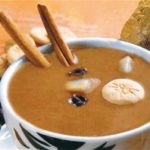
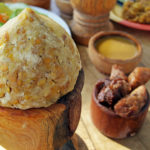
The food of Dominican Republic is a blend of many different cultural dishes all combined to make style of cooking that is unique to this island. With influences from the Taino Indians, Spaniards, African Slaves and many other immigrants, the Dominican dishes or comida criolla has evolved. The Dominicans have created their own food and cooking styles into dishes that have their own distinctive flavors, tastes and appearances.
Dominican food is high in carbohydrates and starch. Most recipes are not complicated and are made from very natural and locally grown foods that are readily available in gardens, trees and from local vendors. Add a little locally raised meat or a fresh catch of fish, and some spices and you have a typical Dominican meal. Remember that typical Dominican foods are usually not spicy. In local type eateries there is a high chance that you will not see any black pepper. If you ask many will give you a bottle of hot sauce instead. They, in general do not like their foods hot.
Breakfast Dominican style has many options from which to choose. One of the traditional foods served for breakfast is Mangú, which is mashed plantains with some flavoring added and topped with lots of red onions. The orange squash / auyama is used to make mazamorra that is also served with onions. Fried cheese is also a favorite served with fried salami and eggs. People love their oatmeal/ avena that usually a bit runny cooked with milk and is very sweet. Of course there is always a good variety of fruits from which to choose. Many people eat Sancocho and Mondongo for breakfast as well. To wash it all down have some jugo de avena, hot chocolate made with water or milk, some fresh juice and of course a hot cup of espresso style coffee made fresh to order.
The typical Dominican lunch, called La Bandera Dominicana / The Dominican Flag, consists of beans/ habichuelas and rice/ arroz, meat/ carne or fish/ piscado, and a salad/ ensalada of some sort. The plate is filled with the most rice heaped on a plate. The habichuelas/ juicy beans come in black, red, white or green, depending on the type of bean used. These beans are usually served in a small bowl or cup on the side and you pour this on top of the rice, along with some of the sauce from the meat if you so desire. You eat this with a large spoon and a knife used for pushing the food onto the spoon. The meat is usually cut into pieces and is stewed. The portion size of meat is dwarfed when it sits next to the hugh amount of rice on the plate. There are different varieties of salads that can be served the most popular being, Green Salad / Ensalada Verde, Avacado Salad/ Ensalada de Aguacate, Russian Potato Salad/ Ensalada Rusa, and a boiled salad I love with tayota, carrots and potatoes. When the beans are made just right and the rice has the perfect amount of salt, along with a little concón/ crispy fried rice from the bottom of the pan, this meal is wonderful. Most Dominicans eat this meal everyday of their lives.
Sancocho is the national dish of the Dominican people. It is made with a variety of meats and vegetables such as pork, beef, goat, fish, sweet potatoes. There is also another type of soup – stew type dish called asopao which is meat, veggies and rice in a flavorful broth.
Mofongo – typical Dominican dish made with mashed fried green platanos/ plantains. These traditionally are mashed with chicharrones/fried pork skins. This is served with a broth on the side for dipping or moistening the dish.
The evening meal is usually something light as the main meal is served midday. You will see Dominicans eating a sandwich or a soup or stew such as Sancocho. They do eat full dinners if they go out to a restaurant in the evening but at home it is usually light. Maybe they will pick up a snack on the street such as Chicharones, pasteles en hoja a hamburger or some fruit. Along many of the streets throughout the country you can find small trucks selling all types offried foods and sandwiches. The roasted pork sandwiches are wonderful. Some snacks/ picadera consisting of olives, cheese and salami to go with a cold drink with friends are also popular.
The Dominicans know how to make desserts and sweets just right. They use all the local ingredients to make candies and cakes like no other place in the world. Try out a mixture of beans, condensed milk and some other sweet and interesting ingredients. The name of this sweet mix is Habichuelas con dulce. It is a traditional dessert served during Easter but can also be found the year round if you make your quest in the right places. It is also made into an ice cream that can be bought at Bon’s Helados. You would never thought of beans as a dessert and ice cream. This is a must taste for sure. There is also the Dominican cake called Bizcocho that you can get with or without icing. The Flan is sweet and creamy and the candies made from coconut, papaya, almonds and other local fruits are yummy.
Whatever you choose to eat while you are in Dominican Republic you should try new things. Things that may look strange to you might be a new yummy for your pallet. Some you might not like but most of the cuisine in this country you will enjoy. You should keep your mind open to new taste sensations and try something new. Whenever you visit a new place it is always important to try something different. You just might be pleasantly pleased. Try going to a restaurant and asking for something typical Dominican. If invited to a persons home for dinner make sure you try everything, no matter what it is. Even if you are not crazy about what is served let them know how much you enjoyed everything. They are always hospitable and will probably be watching you while dining to make sure you are comfortable and happy. Many times when you are sitting in a restaurant, having a drink or snack in a Colmado or enjoying any type of food or drink Dominicans will pass by and say “Buen Provecho”. This means “Enjoy your meal”. Dominicans are a friendly people and they use this phrase often.
Handy List of Dominican Food words http://www.colonialzone-dr.com/food-spanish_food_words.html
View few Dominican recipes http://www.colonialzone-dr.com/food-recipes.html
There is a good number of restaurants in the Sosua – Cabarete – Puerto Plata area that offer a wide choice of Dominican dishes. For example, in Sosua: La Finca Restaurant, Cafe Tropical, Bailey’s, El Mofongo, Don Andres, Luna Llena, Waterfront. In Cabarete: Restaurant Max, Casa Mami, Chichigua. In Puerto Plata: Yasmin Grill, Le Papillon, El Mofongo.
To view restaurants’ contact details please visit our Directory (in the left hand side of the website).
Source: NPN

Public Schools
The primary language of instruction in public schools in the Dominican Republic is Spanish. There are generally not enough teachers, facilities or funding to meet the demands of the unusually large Dominican school-age population. Many private and religious schools supplement the state-financed schools. Children aged 7 to 14 years are required to attend, and almost every large community has elementary and secondary schools. Public schools are free to attend, however, a child need uniform and books to buy.
Instruction in foreign languages is available in Dominican schools for children of all ages. Curriculum is available in Spanish and other languages. Some schools will offer education in one language whilst others may be bilingual. While there are students enrolled from all over the world, the majority is Dominican. This means that much of the school’s informal social life will take place in Spanish, regardless of the educational facility’s policies.
Private Schools
Private schools in the Dominican Republic normally have the medium of instruction in English and usually take children from many nationalities. Students must meet a certain level of English fluency for entrance. The school year is normally divided into two semesters which begin in mid-late August and finish early-mid June.
Tuition fees for students vary from school to school, the maximum being US$8,000 per academic year. As a general rule the older the child, the higher the fees. There may be additional charges for school lunches, uniforms and schoolbooks and materials.
Validity of Qualification after leaving Dominican School
Schools which are accredited by the Dominican Ministry of Education offer certificates which are valid for entrance to Dominican, European and US universities. However, students planning to undertake higher education in the US may wish to attend a school which has been accredited by the US Southern Association of Colleges and Schools (SACS). Those interested in studying in Europe, should consider a school where the International Baccaulaureate curriculum is used.
Education in English is available in Santo Domingo as well as in La Romana, Santiago, Punta Cana and Puerto Plata.
List of private schools in the North Coast (Sosua – Cabarete – Puerto Plata)
PUERTO PLATA
Santa Rosa
Offers Pre-K through Grade 12, located downtown, close to the Malecon.
Oldest, and respected school, religious (Catholic) influences.
Spanish speaking, many foreigners attend this school nonetheless.
Costs about RD$2,000 per month, excl. books, uniforms, meals and registration fee.
Colegio Adventista
Offers Pre-K through Grade 12, located downtown.
Spanish speaking, with about 10% foreigners.
English and French lessons.
Good reputation.
Costs about RD$1,200 per month, excl. books, uniforms, meals and registration fees.
Colegio San José
Most respected school in the city, Pre-K through Grade 12.
Spanish speaking only, with English and French lessons
A lot of practical work, outdoor education combined with classroom education.
Costs approx. RD$2,500 per month. Excl. meals, uniforms, books and registration fees. Non-religious.
Alic New World School
Grades Pre-K through Grade 12.
Bilingual school, not all teachers are educated, certified teachers though (usually the foreigners are not, and the local teachers are )
French lessons offered.
Costs around RD$2,500 per month, excl. books, uniforms, meals and registration fees.
Colegio Carlos Maria Hernandez
Offers Pre-K through Grade 12, small children in a separate building.
Located on Avenida 27 de Febrero, close to Tropical supermarket.
Spanish Speaking. Several foreigners attending this school.
Non-religious. Good reputation.
Costs around RD$1,500 per month, excl. books, uniforms, meals and registration fees.
Torre Alta Montessori School
Pre-school located in Torre Alta area of Puerto Plata.
Half days, bilingual. Good reputation.
Costs around RD$5,000 per month excl. meals, diapers, etc.
Bautista
Small school, close to supermercado Jose Luis.
Only half day, religious (Evangelical) and Spanish speaking.
Quite a lot of foreigners put their children here, if they live close by, to allow them to learn the language and integrate into the local social life.
Costs around RD$400 per month, excl. books, uniforms (shirts only here) and registration fees.
Colegio Isabel
Located close to the fire station.
For children with learning difficulties.
Spanish speaking.
Good reputation.
Pre-school Hermanas Pierret
Located by Parque Luperon downtown.
Solid school with good reputation.
Spanish speaking.
John’s English School
Afternoon/evening English language school.
Located close to the cemetery.
Foreigners and Dominican children, grade 1-9.
Many foreigners have this as a supplement, to keep their children’s English alive and correct.
Colegio Mary Lithgow
Large school on Calle Kennedy downtown.
Offers pre-K through grade 12.
Spanish speaking.
English lessons.
Good reputation, and a few foreigners attending.
Religious influences (Evangelical).
Costs around RD$2,000 per month excl. books, uniforms, meals and registration fees.
Escuela De Educación Especial
Located by Parque Luperon, in the Victorian building where Arthur Roderick (the architect who designed Central Park and most of Puerto Plata’s Victorian buildings). School for children with special needs. Good reputation.
SOSUA
ISLA Academy
ISLA Academy offers a high-quality, rigorous and personalized curriculum taught primarily in English. The ISLA Academy team is comprised of internationally certified, experienced teachers from eight different countries. A unique offering to the private, international schools of the Dominican Republic, ISLA Academy is the only institution that offers an exclusively inquiry-based method of learning. Inquiry-based learning ensures that students are prepared for a global society and encourages them to be active participants in their own education.
Tel: 809-571-4633
Playa Laguna, Sosua, Dominican Republic
Email: islaoffice@islaacademy.com
www.islaacademy.com
The International School of Sosua (ISS)
ISS is accredited by SACS, located in Sosua (La Mulata), and serves the communities of Sosua, Cabarete, and Puerto Plata. It has Grades Pre-K through Grade 12 and offers diploma programs from both the US and Dominican Republic. Courses are taught in English and teachers are certified in their field. The school has upgraded sophisticated facilities: soccer field, basketball ground, musical class with the equipment, rich library, karate class, drama class and more…
Fees: from US$600 per month (including books). The older the child the higher the fee.
Website: www.issosua.com
The Garden Kids School
Children aged 5–11 years (Pre-K to Grade 12).
Languages: Bilingual, primarily English
Teachers: only certified
Fees: US$400 per month, plus uniform, inscription fee, books etc.
Website: http://gardenkids.edu.do/
Colegio Children’s World
Founded in 2008
Languages: Bilingual, primarily Spanish
Level: Pre-K – Grade 12
Teachers: mostly certified
Fees: US$300 per month, plus uniform, inscription fee, books etc.
Located: behind German butchery store “Bavaria”
Nueva Vida Escuela
Religious school
Languages: mostly Spanish
Level: Pre-K – Grade 12
Fees: US$80 per month, plus uniform, books, inscription fee
Colegio Luis Hess
This is the oldest school in Sosua, founded by Jews in 1941.
Located: Pedro Clisante
Languages: Spanish
Fees: from RD3000 per month, plus uniform, books, inscription fee
http://www.clhess.edu.do/
CABARETE
3 Mariposas Montessori
The school was founded to support poor families in the area
Languages: English, Spanish and Creole
Teachers: some certified from USA and other countries, volunteers
Children from 0 – 6 years old
Website: http://3mariposasmontessori.com/
Colegio El Coral
Located in the side street down from Plaza Ocean Dream
Languages: Spanish
Fees: RD900 per month, plus uniform, books, inscription fee
Children: Kindergarten – Grade 8, primarily Dominican kids
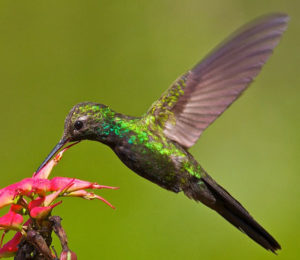
The Dominican Republic has a wide variety of animal inhabitants. Located on an island in the Greater Antilles, Hispaniola along with its neighboring country, Haiti, it boasts a variety of geographic habitats, from mountains to coastal plains. It has a tropical climate as well. There are 290 bird species, 20 land mammal species, and 5,600 plant species found in the Dominican Republic. These numbers do not even include the amount of sea life surrounding the island. Coral reefs can be found with a plethora of animals that live inside and around the reef, such as sea urchins, star fish and crustaceans.
The beautiful vegetation and wildlife of the Dominican Republic will provide the backdrop to all of the adventure activities you undertake. For some the nature will be the primary attraction, while for others it will be an added bonus. The best places to see plants, trees, birds and animals are in the country’s network of national parks and protected areas. Note, also, that the Dominican flora and fauna is not dangerous.
Amphibians and Reptiles
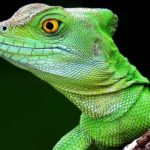
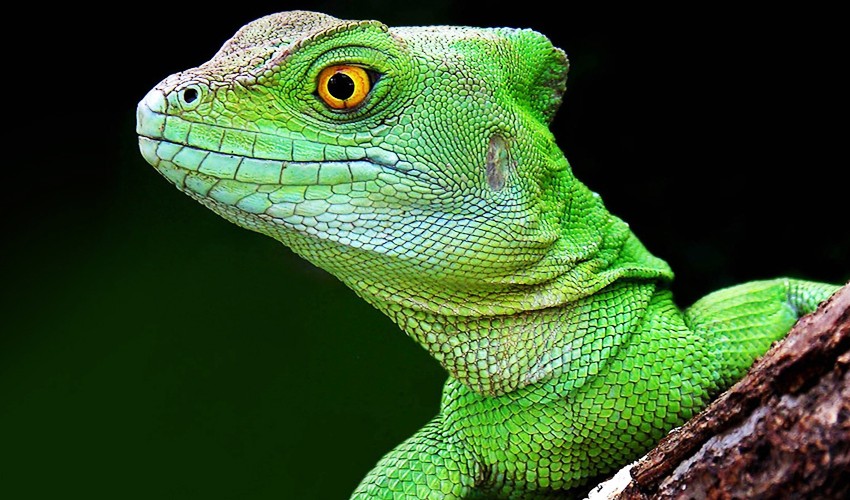
Reptiles and amphibians are not particularly abundant in the Dominican Republic. The lizards outnumber the snakes and frogs, while other species unique to the island are invariably under threat.
Rhinoceros Iguana
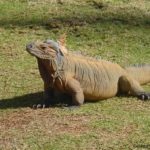
The rhinoceros iguana is an endangered species endemic to Hispaniola. They like dry, rocky ground with cacti and thorny bushes, and are most commonly found in the Enriquillo Basin. The males, in particular, look like fearsome creatures, with three small horns on their snout, a pad like a helmet on top of their head, and a large throat pouch (the females have neither helmet nor horns). In reality, however, they are very shy animals which prefer flight to fight. Their size (often over one meter in length) and their uniform gray color explains why they are called rhinoceros iguana. They live on plants and berries and are active only by day. The other species of iguana found in the Dominican Republic is the ricord iguana.
Turtle
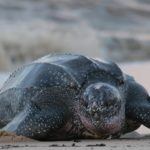
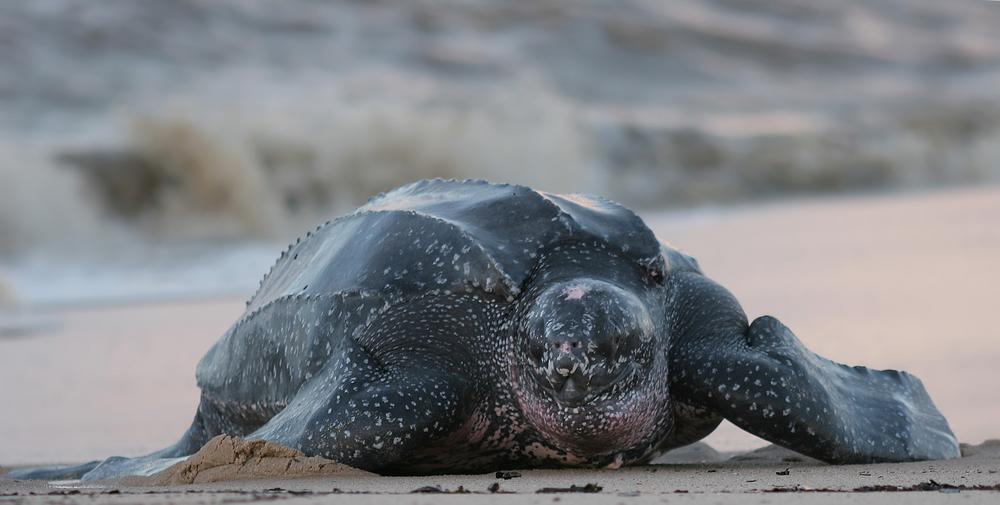
The four main types of turtle living off the Dominican coast are the leatherback (the largest living turtle), the loggerhead (found in lagoons and coastal bays), the hawksbill (prized for its beautiful shell) and the green sea turtle (hunted for calipee, a glutinous yellow substance used to make soup).
Crocodile
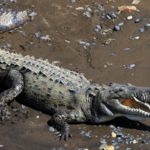
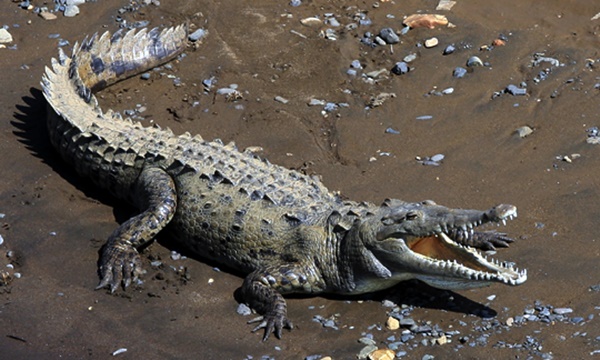
The American crocodile is the most widely distributed of the four crocodile species present in the New World. On its travels, it has managed to colonize most of Central America, South America as far as Peru, and much of the Caribbean. In Hispaniola, the American crocodile is so well established that it represents one of the largest wildlife crocodile populations in the world. In the Dominican Republic, its favorite haunt is the brackish water of Lago Enriquillo. However, while the adults can survive in hyper-saline conditions by way of a salt gland in their mouth and by taking advantage of fresh water in the environment (rainfall, for example), hatchlings cannot, which means that the water must not be too salty. Lago Enriquillo is now four times saltier than the sea – due in large part to the diversion of streams feeding into the lake for irrigation purposes – which has put the younger crocodile population under real threat. Take my word for it that any crocodiles you see will be American crocodiles. If you don’t believe me, get as close as you dare and look for the fourth tooth protruding above the level of the upper jaw. American crocodiles also have an olive-brown shade and an obvious swelling on the snout in front of the eye sockets. An average length for a female is 2.5 meters, but males can grow to about 4 meters. Although they are reputed to be a threat to man, attacks are rare and American crocodiles stick to their normal diet of fish, turtles and the occasional dog or goat. They often hunt at night and spend the hottest parts of the day in deeper areas of water. The best time to see them on land is during the early morning or late afternoon when they emerge from the water to raise their body temperature under the sun’s rays.
Jaragua Sphaero
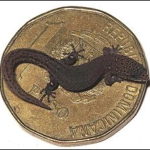
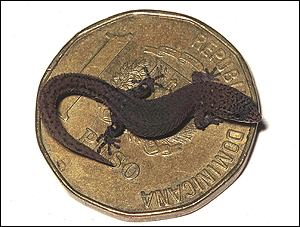
The Jaragua Sphaero, scientific name: Sphaerodactylus ariasae, fits on a Dominican Peso which is about the same size as a U.S. quarter. This is the smallest known reptile is found in Jaragua National Park.
Insects
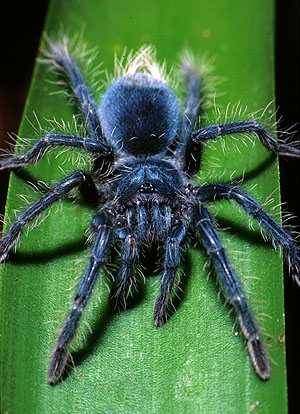
Cacata/ Tarantula
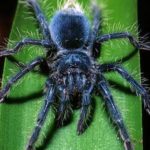
Dominican Republic does have it’s share of spiders, scorpions, ticks, mites, centipedes and other nasty, ugly yet amazing creatures. They are not readily seen, especially in the cities, but in the country they can be plentiful. They are nocturnal and are rarely seen in the daylight.
They are not very aggressive. When attacking a Cacata beware, they are crafty creatures. They jump and can play dead. When they do walk on your flesh they seem to almost stick to it. Many Dominicans that I have met think that if they do get bit by one they will surely die.
Noseeums (No-see-ums) in Dominican Spanish: Mayes (may-gee’s) (found near the sea) and Gegenes (found in the hills)
These nasty little creatures are true blood suckers. They are known as Punkies, Black Gnats, and Black Sand flies. (In Spanish: Moscas de Arena, Chaquistíes, Zancudos Negros). These loathsome flies come from the family Ceratopogonidae. They are teeny, tiny, biting, persistent little buggers that are, in my opinion, worse than mosquitoes. Less than ¼ inch long and can get through a normal window screen with no problem. No problem for them but big problems for their unawares meal that just may have your name on it!
Since the noseeum cannot be seen (maybe this is why they have this nickname??) and the immediate bite can’t be felt, they can make your blood a feast before you really know what’s happening. Walking along ever so innocently one can easily stir up a swarm without knowing. If you’re lucky they will swarm. In a swarm they can be seen, a dark foreboding mass. The only problem with this swarm is they can enter any open body cavity (i.e. the mouth and nose). If you happen to find yourself in a swarm I strongly suggest that you close these openings. That is, unless you want to be choking on their little, bitter tasting carcasses (yes, I know the taste well). If you have been swarmed move along quickly and get out of their territory, as they don’t like to travel very far from their home. So, I say, when you see a black cloud of flying bugs coming toward you..RUN AWAY! RUN AWAY! These blood sucking mini vampires usually live in shrubs and ground cover. Along the water, marshlands and areas where it is damp. But they can be found just about anyplace. Even in the soil around your home or in your favorite potted plant. They are unlike mosquitoes as they do not need water to produce their offspring. Moisture will do just fine for them and their babies.
The female, the only gender of these vicious little buggers that sucks blood, will get you before you know what is happening. She needs the protein in your blood for her to be able to pro-create and be mommy to the next generation of these relentless creatures. She will find you by smell. As with any persistent woman out for blood, it is not easy to hide. This unrelenting female will suck the blood of anything that has this red substance flowing through their veins. After taking the blood, of course they need to leave you a little gift so you remember them. Left behind is a little red blotch that is extremely itchy. Try not to scratch these red spots as they will just get itchier and could get infected.
The red spots can plague you for a few hours up to a week or more. Usually there are many blotches and you can look like you have some sort of disease before they turn from bright red to a light fading pink. Rest assured the blotches will disappear in time. All that will be left behind is the memory of what these minuscule, almost invisible vampire-ettes can do to reek havoc on your nerves and flesh. You will for sure remember to watch out for them in the future, even if you can’t see them.
Be sure to use some type of insect repellant. Something with DEET is best. It is said that if you do not want to put those chemicals on your body that you can use Catnip, lavender, cedar, or even patchouli oils. Don’t wear light colored clothing as this attracts bugs. They say (do you know who they are?) that eating too many bananas can attract biting bugs. If you eat garlic or eat lots of hot peppers (bugs and humans alike won’t come near), take vitamin B or brewers yeast, this is supposed to help also. To ease the itch rub parsley, lemon balm, or the inside of a banana peel on the spot. (*NOTE-these are all things I have read and some I have tried myself. Use what is best for you. These natural remedies are not tested and may not work for you. I just like learning of the natural ways to rid myself of bugs and their after effects. This is probably why I always have bites on my body).
Interesting note – these tiny insects are found in abundance in amber. Seemingly attracted to the color of the fluid. The DMS extracted from these pesky creatures has been very helpful.
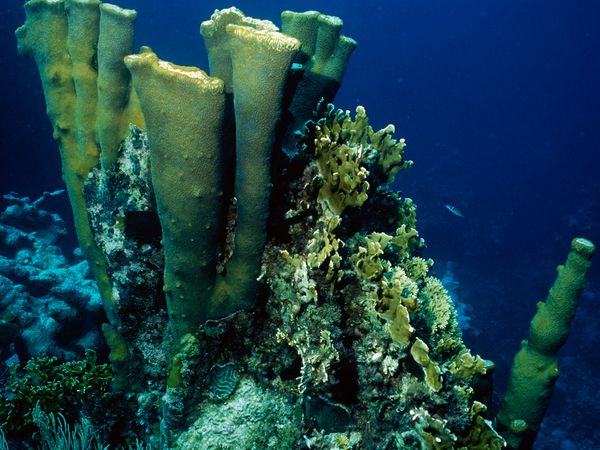
The Coral Reef
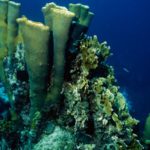
Scuba diving and snorkeling are two of the most popular activities on a trip to the Dominican Republic. However before putting on your flippers or water tank, bear in mind a few general rules which are all part and parcel of being a responsible tourist: do not stand on the reef, touch it, remove pieces from it, or otherwise interfere with what you see.
Types of coral
One of the discoveries made by Charles Darwin during his voyages on the Beagle was that there are three kinds of reef. The first is known as the fringing reef, which is what you see if you go snorkelling just off the shore. The fringing reef is always connected to the mainland, but can extend quite far out to sea. It has a variety of coral types and species, and for the uninitiated it is a great place to see some underwater life. Beyond the fringing reef across the lagoon – an area of shallow water with a floor of coral sand and debris – you will come to the barrier reef or, as is more common in Caribbean and tropical Atlantic waters, the bank/barrier reef. The difference between the two is their size: the barrier reef, found mainly in the Pacific, is larger than the bank/barrier reef and is separated by lagoons thousands of meters wide, as opposed to the hundreds which separate the bank/barrier reef from the mainland. This type of reef is home to more species than the fringing reef, but you will need a boat to get out to it. The third type of reef is the atoll, an incomplete ring of sandy islands built up on coral reefs surrounding a submerged volcano. They are usually found far from any continent or large island and are rare in the Caribbean. The closest atoll to the Dominican Republic lies off the coast of Belize.
Species of the coral reef
There are hundreds of species in both the fringing reef and the bank/barrier reef. These include corals, sponges, worms, mollusks, crabs, lobsters and fish. There are basically two types of coral. Both photosynthesize the energy of the sun and excrete limestone from the calcium carbonate in the water. In the case of hard corals, this limestone creates a skeleton which encloses the animal altogether and eventually builds up to form the reef itself. Soft corals, meanwhile, have no such skeleton and resemble plants. However, the creation and maintenance of the reef depends on more than just the hard coral; instead, it is a team effort. Several types of algae also help to bind and solidify the reef’s frame, while mollusks, crustaceans, sea urchins, starfish and sponges all anchor to the reef, thereby helping to line and protect it. At the same time other species dependent on the reef for their survival, such as the fireworm, the coral snail, the green reef crab and, most notoriously, the parrotfish, are ironically doing their best to destroy it by living off the coral tissue. It is estimated that for every acre of reef, one ton of solid coral skeleton is converted into fine sand every year. The major culprit is the parrotfish.
Birds
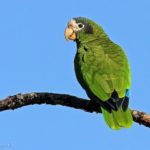
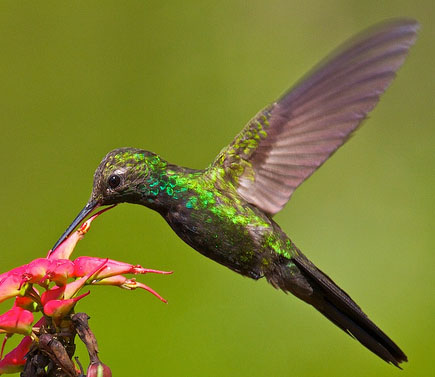
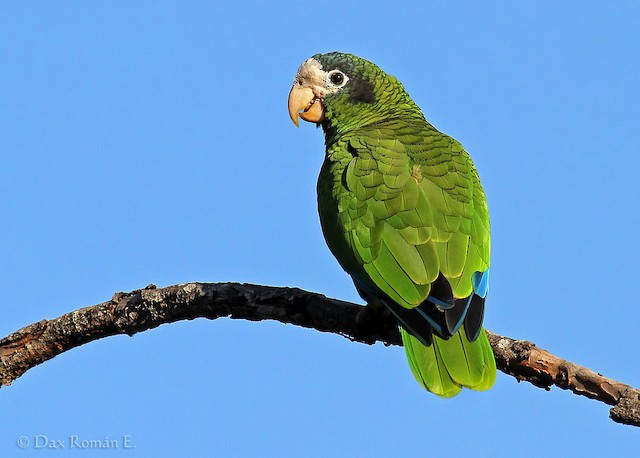
The considerable bird population in the Dominican Republic is made up of indigenous species and wintering birds from the North American mainland. Look out for species such as the Hispaniolan parrot, the Hispaniolan woodpecker, the rarer Hispaniolan trogon and Hispaniolan parakeet, the palmchat (which nests in the royal palms on the coastal plains) and several types of owl and pigeon, including the endangered white-crowned pigeon. Around the coast plenty of shorebirds can be seen. Great egrets, American frigate birds, brown pelicans, blue herons, glossy ibis, ruddy ducks and flamingos are all relatively common, especially on the off-shore islands of the Dominican Republic and around the numerous lakes and lagoons on the mainland. In the mountains, there are yet more species such as the Antillean siskin, the white-necked crow, the green-tailed warbler and numerous types of butterfly and hummingbird. This is just the tip of the iceberg, and it remains to be seen what other species exist in the hitherto unexplored parts of the country.
Land mammals
The Caribbean in general does not have many land species, and the Dominican Republic is no exception. Most of the mammals you see in the country today – dogs, cats, pigs, boars, horses, rats and mice – were introduced by the Europeans. In fact, there are only two endemic land mammals in Hispaniola.
Solenodon
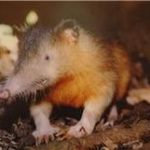
The solenodon is an insectivore not dissimilar to a rat, but more aesthetically pleasing. It has a long snout, lives in caves and hollow tree trunks, and feeds on insects and worms.
This furry rabbit sized creature is from the genus Dasyprocta and can be found throughout the American tropics. The species found in Dominican Republic and Haiti is the Solenodon paradoxus.
This insect eating mammal is quite similar to a mole as it feeds and moves around mostly in the darkness and at night. It has a long body, with a small or sometimes non-existent tail, and small ears. This burrowing animal weighs about 25 to 35 ounces at adulthood. Its long narrow feet have some very sharp claws. The teeth of this wiry, dark brown mammal are its most unique part. These very unique teeth can inject venom into what ever it bites. This venom is injected through some small grooves that run down their small sharp teeth. They are the only mammals with this ability.
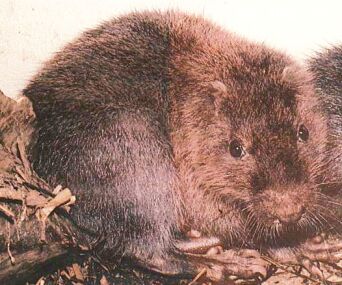
Hutia
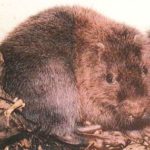
The hutia is another small rodent which, like the solenodon, lives in caves and tree trunks. The chances of spotting either of these animals on your travels are slim: firstly, because they are nocturnal creatures; secondly, because some believe that they might already be extinct. Their walk is more or a waddle. When they are frightened this slow waddle can change into a fast high hop. Using this hop or their good climbing skills is how they escape their predators. The Hutia have an almost naked tail that is a little scaly. They do have claws. Mainly vegetarian, they live on roots and fruits which they eat when they come out of their burrows, hollow trees, or nesting boxes where they live, after dark. The small creature closely resembles the rabbit having the same nesting and eating habits.The Hutai is becoming increasingly rare. They have been hunted and have not been able to repopulate as fast as they are being taken. Also with their habitat slowly diminishing they are slowly disappearing from existence. These cute fuzzy creatures have been hunted since the Taino days. Their meat was considered quite tasty by the indigenous peoples and also by Columbus and his European gang. The Hutai does well in captivity and hopefully soon the Dominican people will start raising/farming them as a food crop. Let’s hope that we humans can protect these little furry island mammals and once again see the Hispainolan Hutia romping and bouncing freely through the Dominican landscape.
Marine mammals
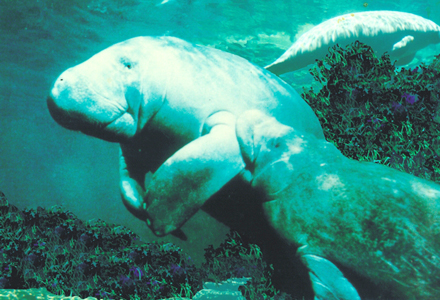
West Indian manatee
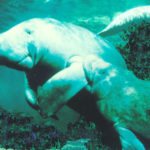
The West Indian manatee is an endangered marine mammal. They can sometimes be seen in the coastal areas of the national parks or in Samana Bay, but hunting and the increase in boat traffic has caused a decline in their numbers. Nicknamed the ‘sea cow’, manatees can grow to over 3.5 meters in length and they ‘graze’ on aquatic plants on the ocean floor.
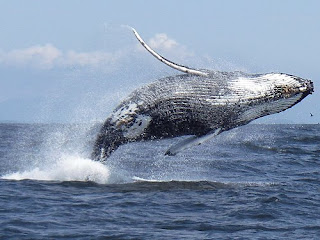
Humpback whales
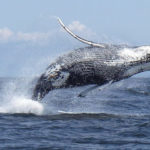
One of the principal breeding grounds in the world for humpback whales is on the Silver and Navidad banks off the north coast of the Dominican Republic. Each winter some 3,000 whales migrate from their feeding grounds in the North Atlantic, and congregate here to reproduce in shallow waters protected by coral reefs and free of boats and other distractions. Nearer to the mainland, Samana Bay is also a popular spot for whale watching, which has become an important tourist activity during the months of January, February and March click. The humpback is one of the larger species of whale, measuring from 12-15 meters and weighing up to 60 tons. Adult humpbacks are dark gray, while their calves are a lighter color. Although their name would suggest otherwise, humpbacks do not actually have a humped back. It only looks as though they do when they jump out of the water with arched backs. Other distinguishing features are their knobby heads, long, white flippers and large tails. Moreover, unlike all other toothed whales, the humpback has two blowholes rather than one. Humpbacks do not eat during their stay in Hispaniolan waters. Instead, they live off the 15-20 centimeters of fat accumulated during the feeding season by eating about a ton of food a day. Most of this turns to fat, and is the equivalent of a human daily diet of 8,000 hamburgers. The humpback’s preference, however, is small fish and crustaceans called krill (about 6 centimeters long and resembling shrimps). While adult humpbacks reproduce and diet, the newly born calves drink 50 gallons of milk a day. This milk, produced by the mother, is about 50% fat, allowing the calves to grow big enough to survive the journey back to the feeding grounds in the north.
Source: NPN

“Everything is for sale!”
Reasons for leaving:
1) To renew either their temporary or permanent residency’s, has become a big dirty let-down by the government, as they are now going back on their past promises of supplying Gringo’s either their up-coming “permanent residency” or to renew actual permanent residency’s without too much hassle or lawyers involvement. Gringo’s are now asked to re-supply all their documents as a “cover-up” by the Governments immigration, who’s lost thousands of foreigners records both on their PC’s and papers I.e. birth certificates, police records etc… and everyone is now being kicked back to zero, having to prove clean police record, re-do all the medicals, find witnesses of good character and supply proof of financial independence – and some would even have to travel back to their home country to receive new birth certificates (I.e. Russia, Ukraine etc…) – in other words a lot hassle, unfair expenses, frustration and life interrupting nonsense!
2) They are sick of being manipulated by the Government Owned power company, who especially with property owners, can use their monopoly position to violate customers in every nasty way possible. If you have been to pay your power bill a few times, then you would be sure to hear higly upset customers who have suddenly received some ridiculously high power bill or business owners being victims of ridiculous ongoing charges (and law suits if they don’t keep paying!). According to some locals latest frustrations, the power company is now getting really sophisticated in ripping us all off, as they are now replacing our existing “meters” with some new ones that effect our power bill in such a way that customers bills are tripling. In other words, brace yourself for their new sophisticated rip-off scheme! (They probably hired some scumbag who knows how to make the meters run faster based on the same electricity consumption – rat bags!).
3) Especially Expats who work or run businesses here on the North Coast, have over the past few years noticed how the Government, local Mayors and their armed forces, have gradually killed off business, Tourism and foreign investment. Most of the business focused expats are realizing, that if they took a couple of steps back and moved onto a country with stable rules and a healthy economy, then even with working less hours and applying the same skills, they could fairly quickly bounce back and start earning 5-10+ times as much as they currently earn in this pathetic economy. Leaving expats also miss the ability to afford relaxed time out with their kids and family, to dine out and to buy/repair stuff when needed and not when the purse allows it! Just because there is sun and beaches nearby, doesn’t necessarily mean that everyone has the ability to kick back and enjoy it all, as now that earnings are getting smaller and the cost of living is simultaneously increasing, then pampering oneself and one’s family, becomes a hard to reach luxury. They are also sick of experiencing or seeing Police extort money and their continued harassment of Girls walking between bars and the rough treatment of Haitians.
4) Leaving Expats also voice that they are sick of Dominicans, local traders and a large percentage of shifty fellow expats ripping them off. Unfortunately a lot of traders and businesses on the North Coast, seem to think that survival in business is only possible if they engage in Lying, cheating, stealing and letting people down! These culprits are found from the motorconcho driver, right through to the Government. This region especially is known globally by many as the “pit” for many national and international scumbags – what a shame!
5) Daily there’s Racism and clasism being displayed by Dominicans on foreigners, especially by the various Police forces, Fiscal offices and even the courts. Examples of this ranges from traffic Police targeting “Gringo’s” over laws that often don’t exist, or for laws that they don’t pull Dominicans over for. Others find that if they counter sue after having won their freedom from a Malicious criminal or civil legal attack, then the sentence never comes through, especially if the Gringo is up against a Dominican. Police and a list of self-proclaimed inspectors will harass Gringo business owners for large sums of money, or they will use their connections to get them shut down! Many Expats have found themselves being locked up for the most pathetic or unfair things I.e. Bringing a person they saw in a traffic accident to the hospital, only to be withheld for paying the bill and then the police arrests them till they clear up what actually happened (keep driving fellow Gringo!). The fact is, that pretty much anything you get involved with, you always have to fight to get equal treatment or the same price as your Dominican neighbor – and that sucks! “When it’s rotten from bottom to top, then it’s game over for the Gringo!”.
6) Expats who are leaving also voice that they miss the abundance of cultural initiatives, watching skilled street performers in action, whether musicians, jugglers, clowns, artists, stunts, motor-animal or sports races. Also they miss theatre, cinema’s, abundance of choices in sports and watching skilled artists in action. Also the urge is strong to return to a society where honor, productivity, long-term business mentality, sucess, love and law has a meaning to a much larger percentage of people in society. Many insist to find a new country that still offers all year round sun and clear water but this time a place that offers a lot more of the initiatives mentioned earlier in “point 6?.
“Life is short even at it’s longest!” “Only the dreamers are awake, the rest are sleeping!” – Happy travels fellow Gringo’s!!
Author: Anonymous

WARNING: “Semana Santa” (Easter week) is coming soon, which means we all have to be extra careful and on alert when it comes to protecting ourselves and our property. Normally a wave of house hits comes 2-3 weeks prior to Semana Santa, and prior to X mas week.
In this article we have put together some tips for the country newbee’s and regular’s.
A burglary attack in most cases happens between 11pm – 2am, so be in the state of alert especially during these hours. Maybe if you stay up until 2 am in the morning it will reduce a risk of being burgled in your own house. Ladrones (thieves) don’t like to be noticed, and prefer to organize a surprise attack when a victim is less prepared.
Sometimes I hear people speak negatively about certain residential areas, because they just had some burglary or shoot-outs. These comments are made about even the most expensive and security fanatic gated communities. As an ex-victim of a home burglary (caused by me trusting a new house keeper) and through getting details from other burglary victims, my conclusion is that in 99% of the cases we were too trusting with either the security guard/s, the house keeper, the gardener, the poor guest, prostitutes, moto concho drivers, construction workers or a combination of two or more of these groups of workers.
We need to wake up to the fact that even if we live in what seems to be the most secure gated community, then the gap between wealthy and poor, exists right there under your nose, in other words there are the “have’s” and “have not’s”. And the “have not’s” know that especially foreigners will receive no justice by reporting a burglary or theft to the corrupt Sosua, Cabarete, Puerto Plata Police. So we are like “fragile lambs” ready to be eaten by the wolves unless we take the right precautions. But before you go out and spend a fortune on turning your Caribbean ocean view villa into your private jail, then try these tips first:
– Don’t keep stacks of cash, jewelry or other easy to steal valuables floating around in your home.
– Keep an old or broken camera or computer lying somewhere visible in your house to distract ladrones from real stuff.
– Ask yourself if you really need that private security guard, maid, nanny, gardener?
– Take sensible precautions when you do let people into your property or inside your home. Ask yourself what they could be tempted to steal? And then hide well before they enter your home.
– Don’t show off your stuff! As this behavior to a poor person triggers a desire to get what you have.
– If your wallet is thick with cash, then in privacy take out 500 – 1000 pesos and place it in a pocket you reach for when you pay for something in front of the “have nots” (otherwise don’t be surprised if you personally become their target.
– Tint the windows in your car to confuse security or other curious eyes as to whether only one person or everyone left your home. When someone is thought to be home, then it lowers the chances of a burglary happen, as most burglaries are done discreetly.
– Get one or two big guard dogs for your yard and a smaller dog you can bring inside at night. This little fella’ will be able to wake you up even if the burglars try to get passed or poison your big dogs, and this warning will win you time to arm yourself, light up the outside, sound a horn or alarm and call for security or armed friends to help you. Usually burglars take off when they are challenged with light, noise and gunshots.
– If you are into the prostitutes, then avoid doing your thing at your home – remember that most these ladies and their moto concho amigos, fall into the category of “have not’s” – and they study more than just your good looks!
– Having all the fancy devices and protection like alarms, glass splinters or NATO wires on your walls, jail bars on windows and doors, electric fences etc. is only effective if you master keeping out those smiley characters who pretend to be your best friend, only to suddenly violate your trust and then to rob you!
– Don’t build a safe in your house! Keep your money in the bank! (Someone will see your safe and tell more bad guys about it.
– Armed robberies usually only happen when an inside informer has guaranteed his scam bag friends that “here is a pot of gold” – “hit this place asap”!
So in other words next time you hear a neighbor being robbed (whether you live in Sea Horse Ranch or in Charamicos) then it’s probably not because the neighborhood, but because your neighbor screwed up with one or more of the above mentioned points.
If you plan to move to to the DR, then it’s important to realize that there are the “Have’s” and the “Have not’s”. It’s a third world country and if you leave yourself open to be mugged or robbed, then the chances are high that you will be! Typically if you’re white, then you’re considered rich in many locals eyes(even if you’re struggling to get by).
Should you need to obtain a legal weapon or security products, then feel free to contact us at info@nicepeoplenetworking.com and leave your name and number for us to contact you.
NPN Editor
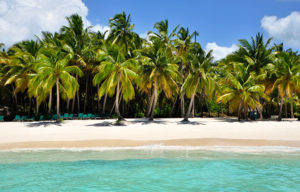
What do you know about the Dominican Republic, except that it is a land of eternal summer? If it’s hard for you to answer this question, then this article is for you and it will reveal the insane world of the resort filled with tremendous emotions of boundless happiness and love. The first thing for every tourist is interested in places where you can go and see the local color. Excursions in the Dominican Republic in 2018 would not be complete without suggestions to visit the famous island of Saona. We can say that its white beaches and the incredible turquoise of the Caribbean remain forever in the heart of every tourist. This is what makes many return here year after year, because this is really a paradise!
Another fascinating place in the Dominican Republic is the island of Samana, which attracts its unusually rich tropical living creatures. Because of the peculiarities of the location of the island, it created its own micro climate, which contributed to the turbulent vegetation. It is like a second medal of the Dominican Republic, ideal for fans of incredible landscapes and stormy waterfalls. By the way, waterfalls are often a visiting card of this country, because only here refreshing water streams against the background of incredible tropical greenery create landscapes, recognizable all over the world. If you ever read about the cuisine of the Dominican Republic, on the island of Samana you can get acquainted with its incredible flavors, exciting and enthralling for every tourist.
Do you think that this resort is ideal only for romance? You are mistaken, because the excursion to Mount Redonda will completely turn your idea of the country. The versatility of nature in the Dominican Republic attracts tourists with completely different lifestyle, thanks to that, it is cozy here for lovers of the mountain area and for lovers to luxuriate in the rays of the boundless sun on the Caribbean coast.
Dominican Republic welcomes everyone with open arms and pleases with an incredible variety of attractions. Here you will meet rare species of birds, plants, get acquainted with the national color, and most importantly, you will see an amazing sight – a flock of humpback whales! To plan their offspring, these mammals go to the warmest waters of the bay, so they become visible to the naked eye. When seeing them, it’s difficult to describe your emotions, but it will no doubt make a vivid impression on you.
On the Rights of Advertising
https://republicapro.com/

Uptowncollective.com – There is something happening in the Dominican Republic.
What IT is? No one is certain for sure. The one thing you should know is that, first of all, it isn’t going to abate anytime soon. It is not going to die down. Some would argue that if the demands of the people are not met, the situation might worsen dramatically.
There is a profound discontent in the Dominican Republic that the national elections earlier this year did not, and could not, ameliorate. In fact, it exacerbated the problem because the issue is bigger than any one party. It is endemic.
The system is broken.
It simply does not function for the majority of people in the country. Far too little people profit far too grotesquely from the wealth of the nation. While the masses are struggling, scrambling for every penny and eking out a meager existence, vile parasites at the very top live like landed gentry.
According to the 2011 Corruption index from Transparency International, the Dominican Republic is ranked an abysmal 129th. We are more corrupt and less transparent than Iran, Bangladesh and Kazakhstan.
To add insult to injury, the Dominican government recently approved a fiscal reform package on Saturday that raises the national sales tax from 16 to 18 percent. The brunt of the new taxes that will also be imposed on liquor, cigarettes, fuel and just about everything else will be felt disproportionately by the middle class and the poor. All the while, the new measures fail to address the runaway spending that government functionaries despicably indulge in. Many in the country, and outside of it, believe that government funds were used to secure another term in office for the ruling party.
————————————————————————-
Acento.com.do – Small and medium-scale industry representatives are calling for major changes in the role of government that they consider has become the epicenter of the great corruption scandals and other ways of crime that affect Dominican society. As reported in acento.com.do the Herrera Association of Industries (AEIH) and the Federation of Industrial Associations (FAI) deplored the fact that citizens linked to government are ever present in cases of assault, robbery, drug trafficking, fraud, corruption and violence.
Wadi Cano Acra of the AEIH and Ignacio Mendez (FAI) criticized the indifference of the government, the private sector and society in general given the challenge to fundamentally reform the Police, the military and the state prosecution to effectively fight crime.
“Diagnostics, studies and projects are abundant on the issue. Debates have been as extensive as unproductive, while the country is in a state of panic because of street violence, in which military and police collude. Society is disgusted by the plunder by some officers who see their positions as a way to get rich,” they warned.
They said that the government sends very negative signs to society when impunity allows the gathering of wealth based on violence and plunder of the Treasury, despite the country having one of the most advanced sets of anti-corruption and transparency laws.
“We have become a country where laws are violated, including by the government itself, and nothing happens; in an international haven for international criminals and nothing happens; multiple complains of irregularities in the use of public funds are evidenced by multiple allegations of wrongdoing by public funds presented by journalistic investigative reports and nothing happens. We face a profound crisis of the systems of consequences that make us wonder what good are laws,” reflected the two business entities.
“We are losing our sense of awe and this may lead to dissolution and anarchy, to a general state of violence where investment is discouraged, and that will make it difficult to create jobs while it threatens governance. No more indifference,” proclaimed the business organizations, as reported in acento.com.do
CNN.com – When a President rob his own country where is the world power to protect its citizens?
After a mandate characterized by rampant estate spending, politicians getting lavish houses and cars, pensions of about USD$12,500 a month for top party officials for four years of work while still having a thousand of dollars government job in another position (Minimum wage is a little over $200), crazy salary hikes, blatant clientelism and tax evasion, millions and millions in government money to fund the official party’s presidential campaign, and many other things, the party ends and the people have to pay the bill.
The congress has approved a fiscal reform that basically screws the people, raising taxes in general and taxing basic food items, as well as small internet purchases that were one of the few ways to circumvent the abusive local retailers (You’d have to pay double the online price + shipping for basically anything), and this also goes against the DR-CAFTA agreement.
This problem isn’t solved by taxing, it’s solved by making those responsible pay. Not a single politician has been put in jail or even tried, even those for whom there is incontrovertible evidence of ghastly instances of fraud and corruption. Today the reform was approved by a government controlled Congress in just 19 minutes with no room for debates. Dissenting congressmen were silenced and not given the opportunity to speak. A student was killed during riots in the state university and it’s believed to be the first of several deaths in the near future.
All because a central figure named Leonel Fernandez, until 84 days ago the President of 12 years, personally controls all of the State Powers: Government, Congress and Supreme Court. He also controls most of the media, so even the fourth state is under his power. It’s ironic since countries like Canada gave him an award as Statesman of the Year and named him “the Oracle of Santo Domingo” all because he let a Canadian-based gold mining corporation named Barrick started raping the land and destroying the environment of the island. The people have had enough and we need your help. Let us help make some noise so the eyes of the world get turned on our small country.
——————————————————————–
Read more on this topic on Dominican Watchdog
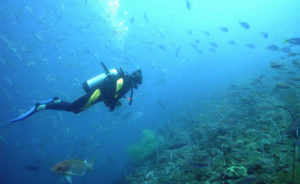
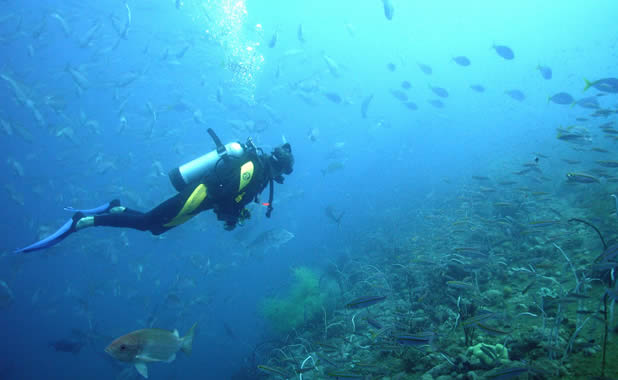
The Dominican Republic is ranked as one of the top Caribbean diving destinations.
The exceptional visibility of its many diving sites, the abundant and diverse marine life, as well as the 25-30 (Celsius) water temperatures, all come together to make the Dominican Republic an important diving destination.
Because diving activities have become an important part of the country’s tourism industry, various businesses, schools and hotels offer diving excursions in all tourism regions.
In Puerto Plata, on the country’s north coast, and in the eastern region, there are many authorized businesses that offer diving classes and tours. For example:
North Coast
Seapro Divers (Playa Dorada)
First Class Divers (Villas Cofresi)
Dressel Divers (Hotel Iberostar)
Diwa Dominicana (Luperon Highway)
Northern Coast Aquasports
The Big Blue
Black Pearl Diving
Scuba Elite
Dive Center Merlin
Aqua Center (Hotel Casa Marina Beach & Reef)
Fat Cat (Playa Sosúa)
Dolphin Dive Center
Dive Cabarete
Punta Cana
Scuba Caribe (Arena Gorda Highway)
Dressel Divers (Hotel Iberostar)
Promarine Watesport (Hotel Catalonia Bavaro)
Dolin Dive Center (Hotel Fiesta & Palladiul)
Aquatic Scuba (Arena Gorda Highway)
Caribbean Dive College (Hotel Alisios)
Policano Water Sports
Bayahibe
Scubafun
Daniel House
Diving Dominican Republic
Gri Gri Divers
Bayahibe Water Sport
Iberostar Hacienda Dominicus
Boca Chica
Caribbean Divers
Tropical Sea Divers
Treasure Divers (Hotel Don Juan Beach Resort)
Samaná
Las Galeras Divers
Las Terrenas Divers (Hotel Bahia Las Ballenas)
Turtle Dive Center
Source: Access DR