DR Living
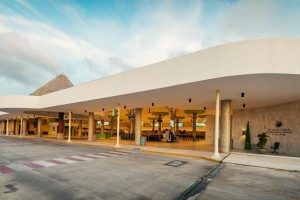
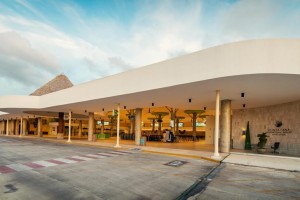
Punta Cana’s international airport was recently issued the “Best Airport in Latin America & Caribbean” award. This award is issued by the Airports Council International (ACI) to the airports that annually handle between five to 15 million passengers.
The Airport Quality of Service Awards 2016 (ASQ) is a global program that surveys passengers traveling through international airports on their scheduled travel day. The idea is to obtain their opinions on 34 key performance indicators, including airport access, check-in, security check, restrooms, shops and restaurants Some 600,000 individual surveys, in 41 languages and in 84 countries, are carried out by ASQ. Each airport is given the same survey with the goal of creating an industry database that will allow airports to compare their situation with other airports in the world.
The ASQ Awards are delivered to those airports that have been rated the best by their customers.
Source: Access DR
Mar 23, 2017
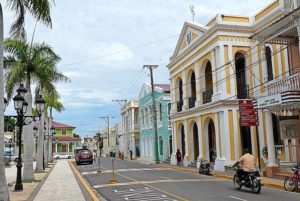
Founded in 1502, the north coast city of Puerto Plata was the second settlement founded by Christopher Columbus on the island currently shared by Haiti and the Dominican Republic. The first settlement was “La Isabela,” founded in 1492.
Today, the city invites its many visitors to stroll through its oceanside streets, enjoy the city’s beautiful Victorian-style homes or to sit and enjoy the city’s picturesque central plaza.
The city also offers an attractive array of national and international restaurants nightclubs, and the exclusive Playa Dorada, Costa Dorada and Costambar resorts.
Puerto Plata’s Oceanside Drive
The city’s iconic oceanside drive, also known as the “Malecon,” is one of the country’s most beautiful avenues.
It is a favorite spot for Dominicans and international visitors to walk, jog, rides bicycles or simply sit alongside the avenue to enjoy the spectacular view of the Atlantic Ocean.
At one end of the boulevard is the historic San Felipe Fortress, a colonial building that is now a popular museum that features the military weapons used in the country during the 18th and 19th centuries.
The Amber Museum
The museum, situated in a beautiful Victorian-style home, features the world’s most important amber collection.
Some of the amber pieces on exhibit feature fossils that are some 30 million years old. One of the museum’s most famous pieces is the amber rock featured in the film “Jurassic Park.”
Address: Duarte Street #61, Puerto Plata.
General Gregorio Luperon Museum
This is the original home of national hero General Luperon. In 1861, the Dominican Republic was once again annexed by Spain. General Luperon was the military leader that defeated the Spanish authorities in 1865
Address: 12 de Julio Street #54
E-mail: museogregorioluperon@claro.net.do.
“Damajagua Falls”
The 27 Damajagua natural waterfalls is one of the north coast’s most important tourist attractions. National and international visitors continuously visit this nature preserve, which features more than two dozen natural waterfalls in a six square kilometer area.
For more information, visit: www.saltosdamajagua.com.
Puerto Plata’s Cable Cars
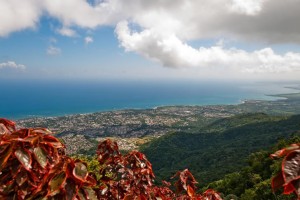
One of the city’s most iconic attraction are the cable cars that transport visitors to the city’s “Isabel de Torres” mountain. Once on top of the hill, visitors will enjoy the most beautiful and breathtaking view of the city and ocean.
More information available: www.telefericopuertoplata.com.
Ocean World
If swimming with the dolphins is your wish, then Ocean World is your destination. The water park also features other important attractions, such as wild bird exhibits, aquarium and other exotic animals. The park is also open in the evenings, featuring aquatic sports, casino, restaurants, disco, and its very popular Bravissimo cabaret spectacle
Source: Access DR
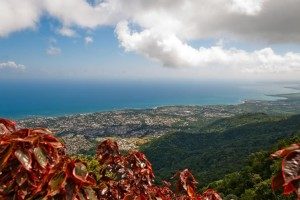
Puerto Plata’s iconic cable car system is situated in the “Isabel de Torres” mountain, the highest peak in the region – more than a thousand meters above sea level. From the mountain, visitors will enjoy a truly breathtaking view of the surrounding landscape, including the majestic Atlantic Ocean and the city of Puerto Plata, the largest in the country’s north coast.
The new cable car system consists of two cabins, two stations and supporting tower cables.
During the 10-minute climb, national and international visitors will take in the impressive panoramic view of the surrounding landscape.
The temperature on the mountain is generally cool, dropping down to 17 C. (62 F.).
Sometimes the fog will roll in and cover the “Isabel de Torres” mountain with a slight miss.
As a symbol of the colonization of the Americas, a flower garden – with the names of the Spanish Catholic Kings, Ferdinand and Isabella, who spearheaded the colonization process – have been etched on the side of the mountain.
The dome situated near the Christ the Redeemer statue, on top of the hill, was built by dictator Rafael Trujillo to be used to install anti-aircraft military equipment to “protect” the city from possible foreign invasions.
Christ the Redeemer
This 16-meter tall statue, dedicated to Christ the Redeemer, was subsequently twinned with the Christ of Corcovado Statue, the most important symbol of Rio De Janeiro, Brazil.
History
Puerto Plata’s cable car is the only one of its kind in the Caribbean. It officially opened on July 19, 1975 and was designed by Dominican architect Cristian Martinez who was inspired by the installation, in 1970, of the Christ the Redeemer statue. Construction on the road that leads visitors to the top of the mountain began in June 1971.
The Italian company Ceretti and Tanfani was contracted to supply all the necessary equipment and installation of the cable cars.
In 1973, engineer Benjamin Paewonsky was responsible for creating the botanical garden found at the top of the mountain.
The cable car operates Monday to Sunday, from 8:30 a.m. to 5:00 p.m.
Telephone: (809) 970-0501
Source: Access DR
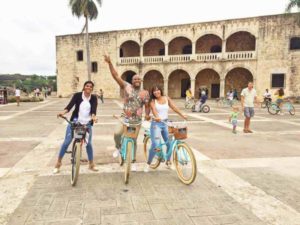
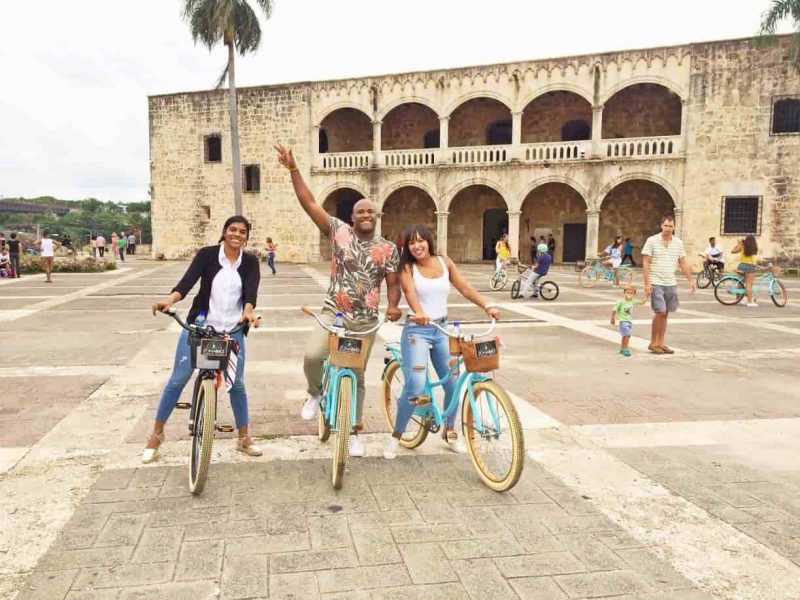
Bicycles have become a creative form of carrying out popular tourism in Santo Domingo’s Colonial Zone. In the past few months bicycling through the city’s colonial streets has become an interesting way to become familiar with the Zone’s rich history. Both tourists and nationals alike can now rent bicycles for a couple of hours and tour the Zone with family and friends.
When bicycling through the colonial streets, tourists will be able to stop and enjoy a refreshing drink or delicious meal in one of the Zone’s many restaurants and pubs, as well as visit some of the museums found in the area.
Bicycle tourism is also a great way to spend a Saturday or Sunday with family and friends. It is by far the best way to get young kids to exercise, and get them away from their cellular telephones and tablets.
Dominican urban cyclist Jose Miguel Paliza explained that bicycles do not pollute and require little maintenance, and are ideal for running errands and doing light shopping.
In addition, bicycling also has great physical benefits since it is one of the most complete physical activities, helping to relieve back pain, lose weight, regulate blood pressure and reduce cholesterol levels, as explained by Dr. Ingo Froböse.
Sunny Bikes
There are several bike rental shops in the area. One is the Sunny Bikes rental shop, where you visitors can choose the bicycle of their choice including bicycles with child seats.
Address: Duarte Street # 154, Colonial Zone
Instagram: sunnybikesrd
Hours: Tue-Fri: 10: 00 a.m. – 7:00 p.m.; Sat-Sun: 9:00 a.m. – 7: 00 p.m.
Telephone: (809) 689-6249
ZonaBici
Address: Arzobispo Merino Street #217
Hours: Tue-Fri: 10:00 a.m. – 7:00 p.m.
Sat-Sun: 9:00 a.m. – 7:00 p.m.
Telephone: (809) 885-6003
Text: Rosa Cedeño; Photo: Maximo Zorrilla
Source: Access DR

The Dominican government is instituting tougher entry requirements and a new extension process for temporary workers, as it continues to implement a new immigration law.
Processing delays are expected in the coming months as the new requirements and procedures are implemented.
New Entry Visa Requirements for Temporary Residence Applicants
Beginning June 1, foreign temporary workers will no longer be able to enter the Dominican Republic as business visitors or tourists and apply for a temporary residence permit after arrival. Rather, they will have to obtain a residence visa from a Dominican consular post before entering the country. The residence visa requirement will apply to all foreign temporary workers, including those from countries that are otherwise visa-exempt.
Interim Medical Exam Requirements for Temporary Residence Applicants
Until June 1, foreign nationals will be subject to more stringent entry requirements as a prerequisite to completing the residence permit process. They will not be able to complete the mandatory medical exam for a temporary residence permit unless they enter the country with a consular-issued business visa. Those entering as tourists, whether visa-exempt or with a tourist visa, cannot undergo the medical exam unless they can show at least two prior entries in tourist status, evidenced by notations in their current passport.
At the medical exam, foreign nationals must present a photocopy of their birth certificate; the copy does not have to be legalized. The government has retracted a recent rule change that required foreign nationals to present a legalized original birth certificate at the medical exam.
Temporary Residence Permits Now Renewable
Foreign residents can now renew their temporary residence permit to extend a stay in the Dominican Republic beyond one year. Previously, temporary residents who wanted to stay for more than one year were required to change to permanent status.
Temporary residence permits are valid for one year initially, and are renewable in one-year increments. A renewal application must be filed at least thirty days before the current permit expires. Renewal applicants are required to submit a passport with at least 18 months’ remaining validity, a local Dominican government-issued police clearance, and a medical insurance policy from an insurance company accredited by a local immigration office.
Foreign residents will not be able to apply for permanent status until they have renewed their temporary permit four times, for a total stay of five years. However, the Director of Immigration has the discretion to allow foreign nationals to apply for permanent status earlier if they can show extraordinary professional, scientific or technical expertise.
Immigration procedures in the Dominican Republic will remain fluid until authorities fully implement the new law, and additional requirements and changes are possible. Employers should take the possibility of further changes into account when planning assignments to the Dominican Republic over the coming months.
Source: Fragomen.com
Date: June 26, 2012
The Dominican Republic has a wide variety of animal inhabitants. Located on an island in the Greater Antilles, Hispaniola along with its neighboring country, Haiti, it boasts a variety of geographic habitats, from mountains to coastal plains. It has a tropical climate as well. There are 290 bird species, 20 land mammal species, and 5,600 plant species found in the Dominican Republic. These numbers do not even include the amount of sea life surrounding the island. Coral reefs can be found with a plethora of animals that live inside and around the reef, such as sea urchins, star fish and crustaceans.
The beautiful vegetation and wildlife of the Dominican Republic will provide the backdrop to all of the adventure activities you undertake. For some the nature will be the primary attraction, while for others it will be an added bonus. The best places to see plants, trees, birds and animals are in the country’s network of national parks and protected areas. Note, also, that the Dominican flora and fauna is not dangerous.
Amphibians and Reptiles
Reptiles and amphibians are not particularly abundant in the Dominican Republic. The lizards outnumber the snakes and frogs, while other species unique to the island are invariably under threat.
Rhinoceros Iguana
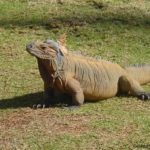
The rhinoceros iguana is an endangered species endemic to Hispaniola. They like dry, rocky ground with cacti and thorny bushes, and are most commonly found in the Enriquillo Basin. The males, in particular, look like fearsome creatures, with three small horns on their snout, a pad like a helmet on top of their head, and a large throat pouch (the females have neither helmet nor horns). In reality, however, they are very shy animals which prefer flight to fight. Their size (often over one meter in length) and their uniform gray color explains why they are called rhinoceros iguana. They live on plants and berries and are active only by day. The other species of iguana found in the Dominican Republic is the ricord iguana.
Turtle
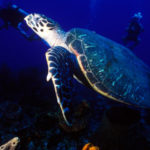
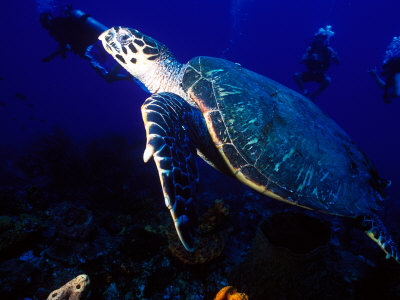
The four main types of turtle living off the Dominican coast are the leatherback (the largest living turtle), the loggerhead (found in lagoons and coastal bays), the hawks bill (prized for its beautiful shell) and the green sea turtle (hunted for calipee, a glutinous yellow substance used to make soup).
Crocodile
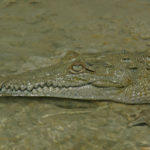
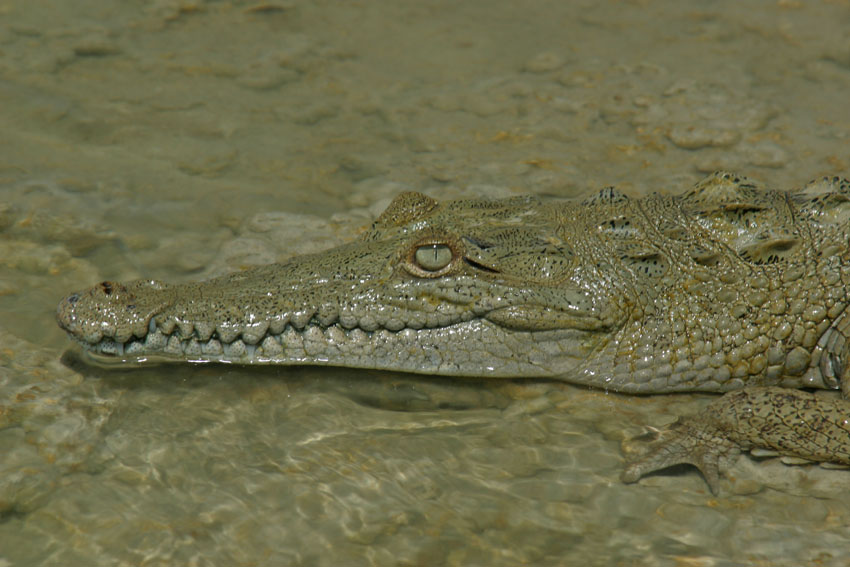
The American crocodile is the most widely distributed of the four crocodile species present in the New World. On its travels, it has managed to colonize most of Central America, South America as far as Peru, and much of the Caribbean. In Hispaniola, the American crocodile is so well established that it represents one of the largest wildlife crocodile populations in the world. In the Dominican Republic, its favorite haunt is the brackish water of Lago Enriquillo. However, while the adults can survive in hyper-saline conditions by way of a salt gland in their mouth and by taking advantage of fresh water in the environment (rainfall, for example), hatchlings cannot, which means that the water must not be too salty. Lago Enriquillo is now four times saltier than the sea – due in large part to the diversion of streams feeding into the lake for irrigation purposes – which has put the younger crocodile population under real threat. Take my word for it that any crocodiles you see will be American crocodiles. If you don’t believe me, get as close as you dare and look for the fourth tooth protruding above the level of the upper jaw. American crocodiles also have an olive-brown shade and an obvious swelling on the snout in front of the eye sockets. An average length for a female is 2.5 meters, but males can grow to about 4 meters. Although they are reputed to be a threat to man, attacks are rare and American crocodiles stick to their normal diet of fish, turtles and the occasional dog or goat. They often hunt at night and spend the hottest parts of the day in deeper areas of water. The best time to see them on land is during the early morning or late afternoon when they emerge from the water to raise their body temperature under the sun’s rays.
Jaragua Sphaero
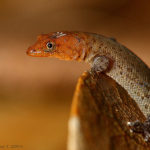
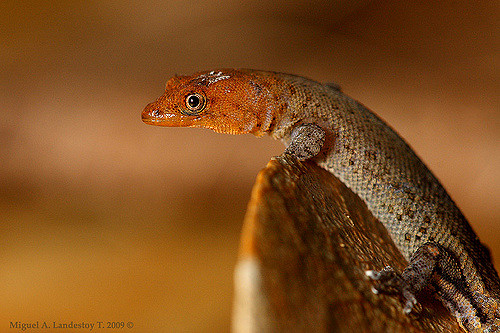
The Jaragua Sphaero, scientific name: Sphaerodactylus ariasae, fits on a Dominican Peso which is about the same size as a U.S. quarter. This is the smallest known reptile is found in Jaragua National Park.
Insects
Cacata/ Tarantula
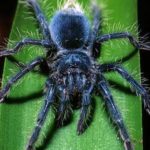
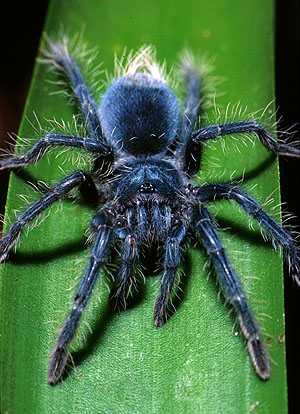
Dominican Republic does have it’s share of spiders, scorpions, ticks, mites, centipedes and other nasty, ugly yet amazing creatures. They are not readily seen, especially in the cities, but in the country they can be plentiful. They are nocturnal and are rarely seen in the daylight.
They are not very aggressive. When attacking a Cacata beware, they are crafty creatures. They jump and can play dead. When they do walk on your flesh they seem to almost stick to it. Many Dominicans that I have met think that if they do get bit by one they will surely die.
Noseeums (No-see-ums) in Dominican Spanish: Mayes (may-gee’s) (found near the sea) and Gegenes (found in the hills)
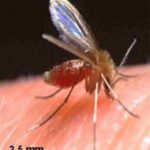
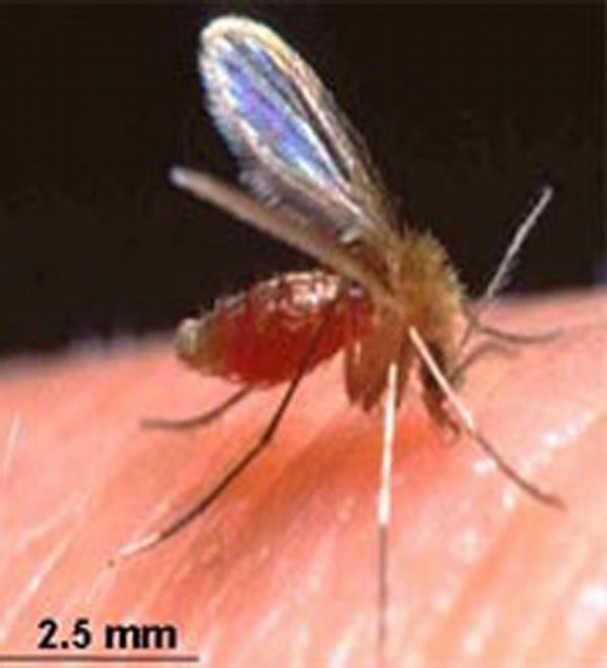
These nasty little creatures are true blood suckers. They are known as Punkies, Black Gnats, and Black Sand flies. (In Spanish: Moscas de Arena, Chaquistíes, Zancudos Negros). These loathsome flies come from the family Ceratopogonidae. They are teeny, tiny, biting, persistent little buggers that are, in my opinion, worse than mosquitoes. Less than ¼ inch long and can get through a normal window screen with no problem. No problem for them but big problems for their unawares meal that just may have your name on it!
Since the noseeum cannot be seen (maybe this is why they have this nickname??) and the immediate bite can’t be felt, they can make your blood a feast before you really know what’s happening. Walking along ever so innocently one can easily stir up a swarm without knowing. If you’re lucky they will swarm. In a swarm they can be seen, a dark foreboding mass. The only problem with this swarm is they can enter any open body cavity (i.e. the mouth and nose). If you happen to find yourself in a swarm I strongly suggest that you close these openings. That is, unless you want to be choking on their little, bitter tasting carcasses (yes, I know the taste well). If you have been swarmed move along quickly and get out of their territory, as they don’t like to travel very far from their home. So, I say, when you see a black cloud of flying bugs coming toward you..RUN AWAY! RUN AWAY! These blood sucking mini vampires usually live in shrubs and ground cover. Along the water, marshlands and areas where it is damp. But they can be found just about anyplace. Even in the soil around your home or in your favorite potted plant. They are unlike mosquitoes as they do not need water to produce their offspring. Moisture will do just fine for them and their babies.
The female, the only gender of these vicious little buggers that sucks blood, will get you before you know what is happening. She needs the protein in your blood for her to be able to pro-create and be mommy to the next generation of these relentless creatures. She will find you by smell. As with any persistent woman out for blood, it is not easy to hide. This unrelenting female will suck the blood of anything that has this red substance flowing through their veins. After taking the blood, of course they need to leave you a little gift so you remember them. Left behind is a little red blotch that is extremely itchy. Try not to scratch these red spots as they will just get itchier and could get infected.
The red spots can plague you for a few hours up to a week or more. Usually there are many blotches and you can look like you have some sort of disease before they turn from bright red to a light fading pink. Rest assured the blotches will disappear in time. All that will be left behind is the memory of what these minuscule, almost invisible vampire-ettes can do to reek havoc on your nerves and flesh. You will for sure remember to watch out for them in the future, even if you can’t see them.
Be sure to use some type of insect repellent. Something with DEET is best. It is said that if you do not want to put those chemicals on your body that you can use Catnip, lavender, cedar, or even patchouli oils. Don’t wear light colored clothing as this attracts bugs. They say (do you know who they are?) that eating too many bananas can attract biting bugs. If you eat garlic or eat lots of hot peppers (bugs and humans alike won’t come near), take vitamin B or brewers yeast, this is supposed to help also. To ease the itch rub parsley, lemon balm, or the inside of a banana peel on the spot. (*NOTE-these are all things I have read and some I have tried myself. Use what is best for you. These natural remedies are not tested and may not work for you. I just like learning of the natural ways to rid myself of bugs and their after effects. This is probably why I always have bites on my body).
Interesting note – these tiny insects are found in abundance in amber. Seemingly attracted to the color of the fluid. The DMS extracted from these pesky creatures has been very helpful.
The Coral Reef
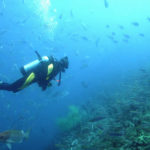
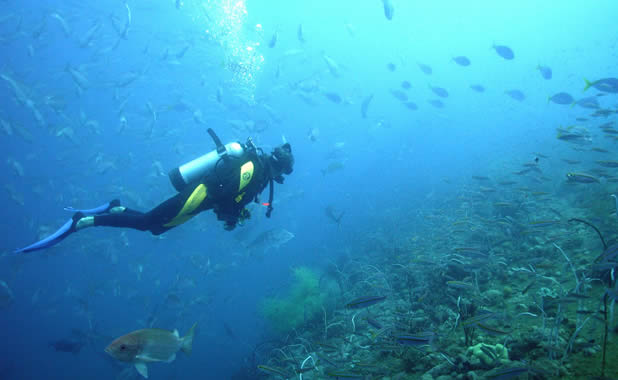
Scuba diving and snorkeling are two of the most popular activities on a trip to the Dominican Republic. However before putting on your flippers or water tank, bear in mind a few general rules which are all part and parcel of being a responsible tourist: do not stand on the reef, touch it, remove pieces from it, or otherwise interfere with what you see.
Types of coral
One of the discoveries made by Charles Darwin during his voyages on the Beagle was that there are three kinds of reef. The first is known as the fringing reef, which is what you see if you go snorkeling just off the shore. The fringing reef is always connected to the mainland, but can extend quite far out to sea. It has a variety of coral types and species, and for the uninitiated it is a great place to see some underwater life. Beyond the fringing reef across the lagoon – an area of shallow water with a floor of coral sand and debris – you will come to the barrier reef or, as is more common in Caribbean and tropical Atlantic waters, the bank/barrier reef. The difference between the two is their size: the barrier reef, found mainly in the Pacific, is larger than the bank/barrier reef and is separated by lagoons thousands of meters wide, as opposed to the hundreds which separate the bank/barrier reef from the mainland. This type of reef is home to more species than the fringing reef, but you will need a boat to get out to it. The third type of reef is the atoll, an incomplete ring of sandy islands built up on coral reefs surrounding a submerged volcano. They are usually found far from any continent or large island and are rare in the Caribbean. The closest atoll to the Dominican Republic lies off the coast of Belize.
Species of the coral reef
There are hundreds of species in both the fringing reef and the bank/barrier reef. These include corals, sponges, worms, mollusks, crabs, lobsters and fish. There are basically two types of coral. Both photosynthesize the energy of the sun and excrete limestone from the calcium carbonate in the water. In the case of hard corals, this limestone creates a skeleton which encloses the animal altogether and eventually builds up to form the reef itself. Soft corals, meanwhile, have no such skeleton and resemble plants. However, the creation and maintenance of the reef depends on more than just the hard coral; instead, it is a team effort. Several types of algae also help to bind and solidify the reef’s frame, while mollusks, crustaceans, sea urchins, starfish and sponges all anchor to the reef, thereby helping to line and protect it. At the same time other species dependent on the reef for their survival, such as the fire worm, the coral snail, the green reef crab and, most notoriously, the parrot fish, are ironically doing their best to destroy it by living off the coral tissue. It is estimated that for every acre of reef, one ton of solid coral skeleton is converted into fine sand every year. The major culprit is the parrot fish.
Birds
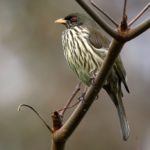
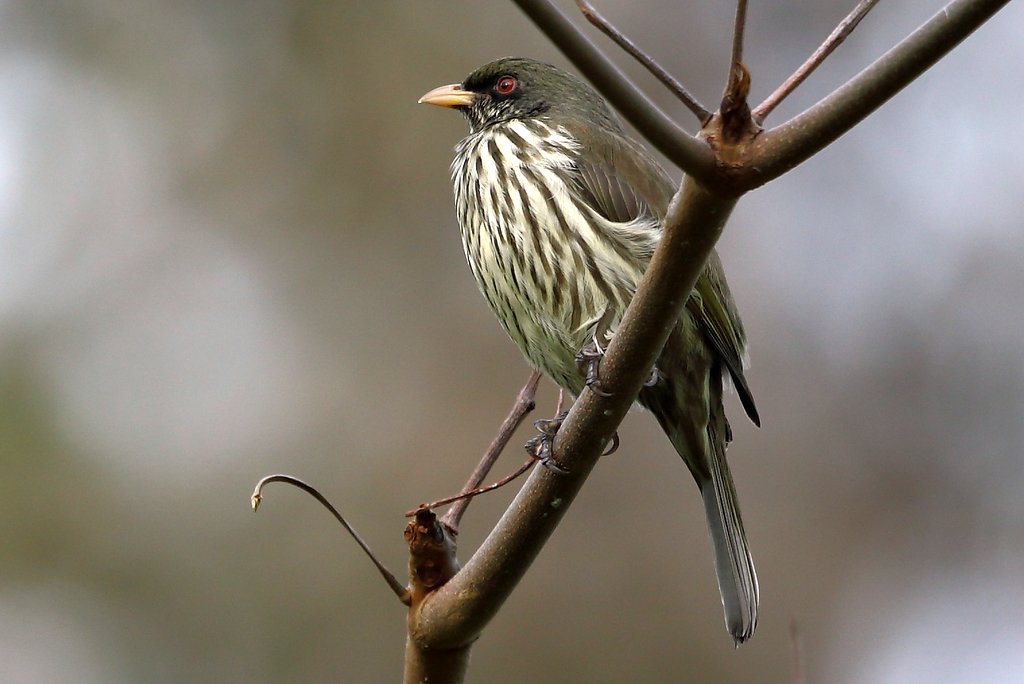
The considerable bird population in the Dominican Republic is made up of indigenous species and wintering birds from the North American mainland. Look out for species such as the Hispaniolan parrot, the Hispaniolan woodpecker, the rarer Hispaniolan trogon and Hispaniolan parakeet, the palm chat (which nests in the royal palms on the coastal plains) and several types of owl and pigeon, including the endangered white-crowned pigeon. Around the coast plenty of shorebirds can be seen. Great egrets, American frigate birds, brown pelicans, blue herons, glossy ibis, ruddy ducks and flamingos are all relatively common, especially on the off-shore islands of the Dominican Republic and around the numerous lakes and lagoons on the mainland. In the mountains, there are yet more species such as the Antillean siskin, the white-necked crow, the green-tailed warbler and numerous types of butterfly and hummingbird. This is just the tip of the iceberg, and it remains to be seen what other species exist in the hitherto unexplored parts of the country.
Land mammals
The Caribbean in general does not have many land species, and the Dominican Republic is no exception. Most of the mammals you see in the country today – dogs, cats, pigs, boars, horses, rats and mice – were introduced by the Europeans. In fact, there are only two endemic land mammals in Hispaniola.
Solenodon
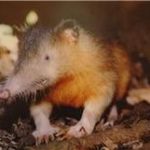
The solenodon is an insectivore not dissimilar to a rat, but more aesthetically pleasing. It has a long snout, lives in caves and hollow tree trunks, and feeds on insects and worms.
This furry rabbit sized creature is from the genus Dasyprocta and can be found throughout the American tropics. The species found in Dominican Republic and Haiti is the Solenodon paradoxus.
This insect eating mammal is quite similar to a mole as it feeds and moves around mostly in the darkness and at night. It has a long body, with a small or sometimes non-existent tail, and small ears. This burrowing animal weighs about 25 to 35 ounces at adulthood. Its long narrow feet have some very sharp claws. The teeth of this wiry, dark brown mammal are its most unique part. These very unique teeth can inject venom into what ever it bites. This venom is injected through some small grooves that run down their small sharp teeth. They are the only mammals with this ability.
Hutia
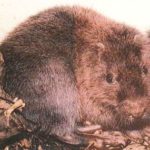
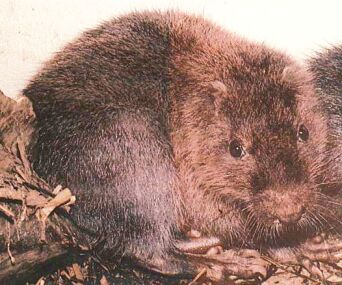
The hutia is another small rodent which, like the solenodon, lives in caves and tree trunks. The chances of spotting either of these animals on your travels are slim: firstly, because they are nocturnal creatures; secondly, because some believe that they might already be extinct. Their walk is more or a waddle. When they are frightened this slow waddle can change into a fast high hop. Using this hop or their good climbing skills is how they escape their predators. The Hutia have an almost naked tail that is a little scaly. They do have claws. Mainly vegetarian, they live on roots and fruits which they eat when they come out of their burrows, hollow trees, or nesting boxes where they live, after dark. The small creature closely resembles the rabbit having the same nesting and eating habits.The Hutai is becoming increasingly rare. They have been hunted and have not been able to repopulate as fast as they are being taken. Also with their habitat slowly diminishing they are slowly disappearing from existence. These cute fuzzy creatures have been hunted since the Taino days. Their meat was considered quite tasty by the indigenous peoples and also by Columbus and his European gang. The Hutai does well in captivity and hopefully soon the Dominican people will start raising/farming them as a food crop. Let’s hope that we humans can protect these little furry island mammals and once again see the Hispainolan Hutia romping and bouncing freely through the Dominican landscape.
Marine mammals
West Indian manatee
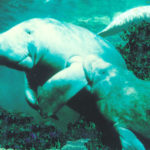
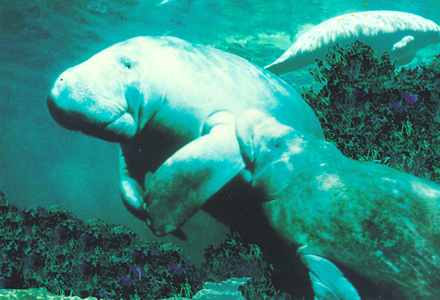
The West Indian manatee is an endangered marine mammal. They can sometimes be seen in the coastal areas of the national parks or in Samana Bay, but hunting and the increase in boat traffic has caused a decline in their numbers. Nicknamed the ‘sea cow’, manatees can grow to over 3.5 meters in length and they ‘graze’ on aquatic plants on the ocean floor.
Humpback whales
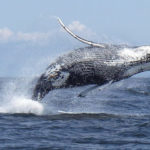
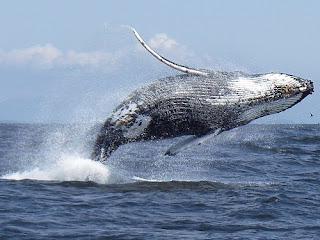
One of the principal breeding grounds in the world for humpback whales is on the Silver and Navidad banks off the north coast of the Dominican Republic. Each winter some 3,000 whales migrate from their feeding grounds in the North Atlantic, and congregate here to reproduce in shallow waters protected by coral reefs and free of boats and other distractions. Nearer to the mainland, Samana Bay is also a popular spot for whale watching, which has become an important tourist activity during the months of January, February and March click. The humpback is one of the larger species of whale, measuring from 12-15 meters and weighing up to 60 tons. Adult humpbacks are dark gray, while their calves are a lighter color. Although their name would suggest otherwise, humpbacks do not actually have a humped back. It only looks as though they do when they jump out of the water with arched backs. Other distinguishing features are their knobby heads, long, white flippers and large tails. Moreover, unlike all other toothed whales, the humpback has two blowholes rather than one. Humpbacks do not eat during their stay in Hispaniolan waters. Instead, they live off the 15-20 centimeters of fat accumulated during the feeding season by eating about a ton of food a day. Most of this turns to fat, and is the equivalent of a human daily diet of 8,000 hamburgers. The humpback’s preference, however, is small fish and crustaceans called krill (about 6 centimeters long and resembling shrimps). While adult humpbacks reproduce and diet, the newly born calves drink 50 gallons of milk a day. This milk, produced by the mother, is about 50% fat, allowing the calves to grow big enough to survive the journey back to the feeding grounds in the north.
Source: NPN

“Everything is for sale!”
Reasons for leaving:
1) To renew either their temporary or permanent residency’s, has become a big dirty let-down by the government, as they are now going back on their past promises of supplying Gringo’s either their up-coming “permanent residency” or to renew actual permanent residency’s without too much hassle or lawyers involvement. Gringo’s are now asked to re-supply all their documents as a “cover-up” by the Governments immigration, who’s lost thousands of foreigners records both on their PC’s and papers I.e. birth certificates, police records etc… and everyone is now being kicked back to zero, having to prove clean police record, re-do all the medicals, find witnesses of good character and supply proof of financial independence – and some would even have to travel back to their home country to receive new birth certificates (I.e. Russia, Ukraine etc…) – in other words a lot hassle, unfair expenses, frustration and life interrupting nonsense!
2) They are sick of being manipulated by the Government Owned power company, who especially with property owners, can use their monopoly position to violate customers in every nasty way possible. If you have been to pay your power bill a few times, then you would be sure to hear higly upset customers who have suddenly received some ridiculously high power bill or business owners being victims of ridiculous ongoing charges (and law suits if they don’t keep paying!). According to some locals latest frustrations, the power company is now getting really sophisticated in ripping us all off, as they are now replacing our existing “meters” with some new ones that effect our power bill in such a way that customers bills are tripling. In other words, brace yourself for their new sophisticated rip-off scheme! (They probably hired some scumbag who knows how to make the meters run faster based on the same electricity consumption – rat bags!).
3) Especially Expats who work or run businesses here on the North Coast, have over the past few years noticed how the Government, local Mayors and their armed forces, have gradually killed off business, Tourism and foreign investment. Most of the business focused expats are realizing, that if they took a couple of steps back and moved onto a country with stable rules and a healthy economy, then even with working less hours and applying the same skills, they could fairly quickly bounce back and start earning 5-10+ times as much as they currently earn in this pathetic economy. Leaving expats also miss the ability to afford relaxed time out with their kids and family, to dine out and to buy/repair stuff when needed and not when the purse allows it! Just because there is sun and beaches nearby, doesn’t necessarily mean that everyone has the ability to kick back and enjoy it all, as now that earnings are getting smaller and the cost of living is simultaneously increasing, then pampering oneself and one’s family, becomes a hard to reach luxury. They are also sick of experiencing or seeing Police extort money and their continued harassment of Girls walking between bars and the rough treatment of Haitians.
4) Leaving Expats also voice that they are sick of Dominicans, local traders and a large percentage of shifty fellow expats ripping them off. Unfortunately a lot of traders and businesses on the North Coast, seem to think that survival in business is only possible if they engage in Lying, cheating, stealing and letting people down! These culprits are found from the moto concho driver, right through to the Government. This region especially is known globally by many as the “pit” for many national and international scumbags – what a shame!
5) Daily there’s Racism and classicism being displayed by Dominicans on foreigners, especially by the various Police forces, Fiscal offices and even the courts. Examples of this ranges from traffic Police targeting “Gringo’s” over laws that often don’t exist, or for laws that they don’t pull Dominicans over for. Others find that if they counter sue after having won their freedom from a Malicious criminal or civil legal attack, then the sentence never comes through, especially if the Gringo is up against a Dominican. Police and a list of self-proclaimed inspectors will harass Gringo business owners for large sums of money, or they will use their connections to get them shut down! Many Expats have found themselves being locked up for the most pathetic or unfair things I.e. Bringing a person they saw in a traffic accident to the hospital, only to be withheld for paying the bill and then the police arrests them till they clear up what actually happened (keep driving fellow Gringo!). The fact is, that pretty much anything you get involved with, you always have to fight to get equal treatment or the same price as your Dominican neighbor – and that sucks! “When it’s rotten from bottom to top, then it’s game over for the Gringo!”.
6) Expats who are leaving also voice that they miss the abundance of cultural initiatives, watching skilled street performers in action, whether musicians, jugglers, clowns, artists, stunts, motor-animal or sports races. Also they miss theatre, cinema’s, abundance of choices in sports and watching skilled artists in action. Also the urge is strong to return to a society where honor, productivity, long-term business mentality, sucess, love and law has a meaning to a much larger percentage of people in society. Many insist to find a new country that still offers all year round sun and clear water but this time a place that offers a lot more of the initiatives mentioned earlier in “point 6?.
“Life is short even at it’s longest!” “Only the dreamers are awake, the rest are sleeping!” – Happy travels fellow Gringo’s!!
Author: Anonymous

WARNING: “Semana Santa” (Easter week) is coming soon, which means we all have to be extra careful and on alert when it comes to protecting ourselves and our property. Normally a wave of house hits comes 2-3 weeks prior to Semana Santa, and prior to X mas week.
In this article we have put together some tips for the country newbies and regular’s.
A burglary attack in most cases happens between 11pm – 2am, so be in the state of alert especially during these hours. Maybe if you stay up until 2 am in the morning it will reduce a risk of being burgled in your own house. Ladrones (thieves) don’t like to be noticed, and prefer to organize a surprise attack when a victim is less prepared.
Sometimes I hear people speak negatively about certain residential areas, because they just had some burglary or shoot-outs. These comments are made about even the most expensive and security fanatic gated communities. As an ex-victim of a home burglary (caused by me trusting a new house keeper) and through getting details from other burglary victims, my conclusion is that in 99% of the cases we were too trusting with either the security guard/s, the house keeper, the gardener, the poor guest, prostitutes, moto concho drivers, construction workers or a combination of two or more of these groups of workers.
We need to wake up to the fact that even if we live in what seems to be the most secure gated community, then the gap between wealthy and poor, exists right there under your nose, in other words there are the “have’s” and “have not’s”. And the “have not’s” know that especially foreigners will receive no justice by reporting a burglary or theft to the corrupt Sosua, Cabarete, Puerto Plata Police. So we are like “fragile lambs” ready to be eaten by the wolves unless we take the right precautions. But before you go out and spend a fortune on turning your Caribbean ocean view villa into your private jail, then try these tips first:
– Don’t keep stacks of cash, jewelry or other easy to steal valuables floating around in your home.
– Keep an old or broken camera or computer lying somewhere visible in your house to distract ladrones from real stuff.
– Ask yourself if you really need that private security guard, maid, nanny, gardener?
– Take sensible precautions when you do let people into your property or inside your home. Ask yourself what they could be tempted to steal? And then hide well before they enter your home.
– Don’t show off your stuff! As this behavior to a poor person triggers a desire to get what you have.
– If your wallet is thick with cash, then in privacy take out 500 – 1000 pesos and place it in a pocket you reach for when you pay for something in front of the “have nots” (otherwise don’t be surprised if you personally become their target.
– Tint the windows in your car to confuse security or other curious eyes as to whether only one person or everyone left your home. When someone is thought to be home, then it lowers the chances of a burglary happen, as most burglaries are done discreetly.
– Get one or two big guard dogs for your yard and a smaller dog you can bring inside at night. This little fella’ will be able to wake you up even if the burglars try to get passed or poison your big dogs, and this warning will win you time to arm yourself, light up the outside, sound a horn or alarm and call for security or armed friends to help you. Usually burglars take off when they are challenged with light, noise and gunshots.
– If you are into the prostitutes, then avoid doing your thing at your home – remember that most these ladies and their moto concho amigos, fall into the category of “have not’s” – and they study more than just your good looks!
– Having all the fancy devices and protection like alarms, glass splinters or NATO wires on your walls, jail bars on windows and doors, electric fences etc. is only effective if you master keeping out those smiley characters who pretend to be your best friend, only to suddenly violate your trust and then to rob you!
– Don’t build a safe in your house! Keep your money in the bank! (Someone will see your safe and tell more bad guys about it.
– Armed robberies usually only happen when an inside informer has guaranteed his scam bag friends that “here is a pot of gold” – “hit this place asap”!
So in other words next time you hear a neighbor being robbed (whether you live in Sea Horse Ranch or in Charamicos) then it’s probably not because the neighborhood, but because your neighbor screwed up with one or more of the above mentioned points.
If you plan to move to to the DR, then it’s important to realize that there are the “Have’s” and the “Have not’s”. It’s a third world country and if you leave yourself open to be mugged or robbed, then the chances are high that you will be! Typically if you’re white, then you’re considered rich in many locals eyes(even if you’re struggling to get by).
Should you need to obtain a legal weapon or security products, then feel free to contact us at info@nicepeoplenetworking.com and leave your name and number for us to contact you.
NPN Editor
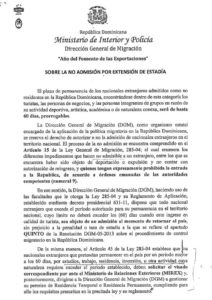
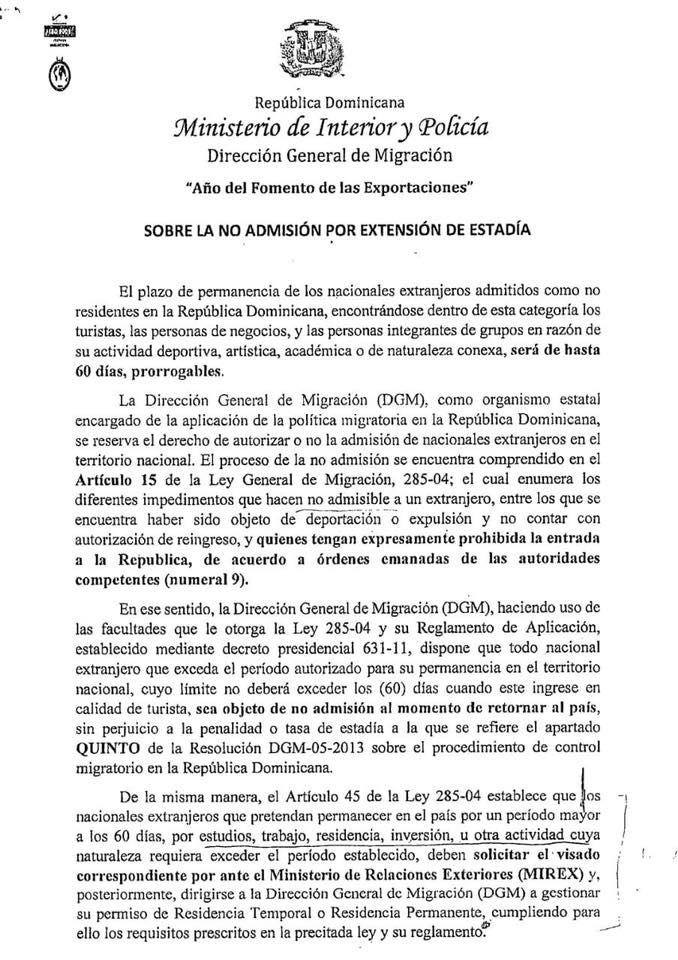
COMMUNICATION FROM IMMIGRATION SAYING THAT NON-RESIDENT WILL BE ALLOWED UP TO 60 DAYS IN DR LEGALLY
The Ministry of Foreign Affairs, Vice ministry for Consular and Migratory Affairs, presents its compliments to the Honorable Diplomatic and Consular Missions accredited in the country, in occasion of sending the Circular of the General Directorate of Migration, through which it informs that the period of permanence will be up to 60 days, extendable, for foreign nationals admitted as non-resident in the Dominican Republic, tourists, business persons and group members being included in this category on account of their sporting, artistic or related nature.
Likewise, it is reported that foreign nationals who wish to remain in the country for a period longer than 60 days, by study, work, residence, investment, or other activity whose nature requires exceeding the established period, must request the corresponding visa beforehand by the Ministry of Foreign Affairs and, subsequently, go to the General Directorate of Immigration to manage their Temporary Residence or Permanent Residence permit, fulfilling for them the requirements in the aforementioned law and its regulations.
In this sense, the General Directorate of Migration, making use of the powers granted by Law 285-04 and its Regulation of Application, established by presidential decree 631-11, provides that any foreign national who exceeds the period authorized for their stay in the national territory, whose limit should not exceed the (60) days when he enters as a tourist, is SUBJECT TO NO ADMISSION AT THE TIME OF RETURNING TO THE COUNTRY, without prejudice to the penalty or rate of stay to which the FIFTH paragraph of Resolution DGM-05-2013 on the immigration control procedure in the Dominican Republic.
Source: Abreu & Associates Immigration Service, Migracion.gob.do
May 25, 2018