Archive for April, 2014

Uptowncollective.com – There is something happening in the Dominican Republic.
What IT is? No one is certain for sure. The one thing you should know is that, first of all, it isn’t going to abate anytime soon. It is not going to die down. Some would argue that if the demands of the people are not met, the situation might worsen dramatically.
There is a profound discontent in the Dominican Republic that the national elections earlier this year did not, and could not, ameliorate. In fact, it exacerbated the problem because the issue is bigger than any one party. It is endemic.
The system is broken.
It simply does not function for the majority of people in the country. Far too little people profit far too grotesquely from the wealth of the nation. While the masses are struggling, scrambling for every penny and eking out a meager existence, vile parasites at the very top live like landed gentry.
According to the 2011 Corruption index from Transparency International, the Dominican Republic is ranked an abysmal 129th. We are more corrupt and less transparent than Iran, Bangladesh and Kazakhstan.
To add insult to injury, the Dominican government recently approved a fiscal reform package on Saturday that raises the national sales tax from 16 to 18 percent. The brunt of the new taxes that will also be imposed on liquor, cigarettes, fuel and just about everything else will be felt disproportionately by the middle class and the poor. All the while, the new measures fail to address the runaway spending that government functionaries despicably indulge in. Many in the country, and outside of it, believe that government funds were used to secure another term in office for the ruling party.
————————————————————————-
Acento.com.do – Small and medium-scale industry representatives are calling for major changes in the role of government that they consider has become the epicenter of the great corruption scandals and other ways of crime that affect Dominican society. As reported in acento.com.do the Herrera Association of Industries (AEIH) and the Federation of Industrial Associations (FAI) deplored the fact that citizens linked to government are ever present in cases of assault, robbery, drug trafficking, fraud, corruption and violence.
Wadi Cano Acra of the AEIH and Ignacio Mendez (FAI) criticized the indifference of the government, the private sector and society in general given the challenge to fundamentally reform the Police, the military and the state prosecution to effectively fight crime.
“Diagnostics, studies and projects are abundant on the issue. Debates have been as extensive as unproductive, while the country is in a state of panic because of street violence, in which military and police collude. Society is disgusted by the plunder by some officers who see their positions as a way to get rich,” they warned.
They said that the government sends very negative signs to society when impunity allows the gathering of wealth based on violence and plunder of the Treasury, despite the country having one of the most advanced sets of anti-corruption and transparency laws.
“We have become a country where laws are violated, including by the government itself, and nothing happens; in an international haven for international criminals and nothing happens; multiple complains of irregularities in the use of public funds are evidenced by multiple allegations of wrongdoing by public funds presented by journalistic investigative reports and nothing happens. We face a profound crisis of the systems of consequences that make us wonder what good are laws,” reflected the two business entities.
“We are losing our sense of awe and this may lead to dissolution and anarchy, to a general state of violence where investment is discouraged, and that will make it difficult to create jobs while it threatens governance. No more indifference,” proclaimed the business organizations, as reported in acento.com.do
CNN.com – When a President rob his own country where is the world power to protect its citizens?
After a mandate characterized by rampant estate spending, politicians getting lavish houses and cars, pensions of about USD$12,500 a month for top party officials for four years of work while still having a thousand of dollars government job in another position (Minimum wage is a little over $200), crazy salary hikes, blatant clientelism and tax evasion, millions and millions in government money to fund the official party’s presidential campaign, and many other things, the party ends and the people have to pay the bill.
The congress has approved a fiscal reform that basically screws the people, raising taxes in general and taxing basic food items, as well as small internet purchases that were one of the few ways to circumvent the abusive local retailers (You’d have to pay double the online price + shipping for basically anything), and this also goes against the DR-CAFTA agreement.
This problem isn’t solved by taxing, it’s solved by making those responsible pay. Not a single politician has been put in jail or even tried, even those for whom there is incontrovertible evidence of ghastly instances of fraud and corruption. Today the reform was approved by a government controlled Congress in just 19 minutes with no room for debates. Dissenting congressmen were silenced and not given the opportunity to speak. A student was killed during riots in the state university and it’s believed to be the first of several deaths in the near future.
All because a central figure named Leonel Fernandez, until 84 days ago the President of 12 years, personally controls all of the State Powers: Government, Congress and Supreme Court. He also controls most of the media, so even the fourth state is under his power. It’s ironic since countries like Canada gave him an award as Statesman of the Year and named him “the Oracle of Santo Domingo” all because he let a Canadian-based gold mining corporation named Barrick started raping the land and destroying the environment of the island. The people have had enough and we need your help. Let us help make some noise so the eyes of the world get turned on our small country.
——————————————————————–
Read more on this topic on Dominican Watchdog
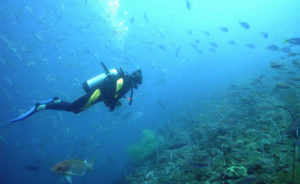
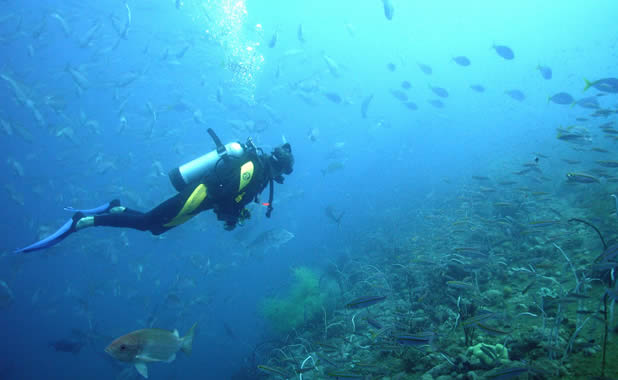
The Dominican Republic is ranked as one of the top Caribbean diving destinations.
The exceptional visibility of its many diving sites, the abundant and diverse marine life, as well as the 25-30 (Celsius) water temperatures, all come together to make the Dominican Republic an important diving destination.
Because diving activities have become an important part of the country’s tourism industry, various businesses, schools and hotels offer diving excursions in all tourism regions.
In Puerto Plata, on the country’s north coast, and in the eastern region, there are many authorized businesses that offer diving classes and tours. For example:
North Coast
Seapro Divers (Playa Dorada)
First Class Divers (Villas Cofresi)
Dressel Divers (Hotel Iberostar)
Diwa Dominicana (Luperon Highway)
Northern Coast Aquasports
The Big Blue
Black Pearl Diving
Scuba Elite
Dive Center Merlin
Aqua Center (Hotel Casa Marina Beach & Reef)
Fat Cat (Playa Sosúa)
Dolphin Dive Center
Dive Cabarete
Punta Cana
Scuba Caribe (Arena Gorda Highway)
Dressel Divers (Hotel Iberostar)
Promarine Watesport (Hotel Catalonia Bavaro)
Dolin Dive Center (Hotel Fiesta & Palladiul)
Aquatic Scuba (Arena Gorda Highway)
Caribbean Dive College (Hotel Alisios)
Policano Water Sports
Bayahibe
Scubafun
Daniel House
Diving Dominican Republic
Gri Gri Divers
Bayahibe Water Sport
Iberostar Hacienda Dominicus
Boca Chica
Caribbean Divers
Tropical Sea Divers
Treasure Divers (Hotel Don Juan Beach Resort)
Samaná
Las Galeras Divers
Las Terrenas Divers (Hotel Bahia Las Ballenas)
Turtle Dive Center
Source: Access DR
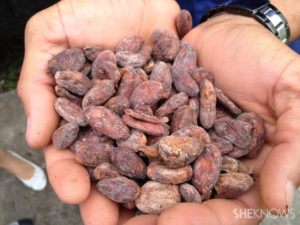
The Dominican Republic is known for its great coffee, cold beers, single-origin chocolates, and stiff rum drinks. If you’re headed to the Caribbean island, be sure to fit into your schedule some foodie tours that are not only educational, but delicious as well.
Discovering a country though its food is by far the best way to envelop yourself in a new culture. Taste everything and learn about how the beloved food items of an island are produced.
Rum: Brugal
Nothing says the weekend in the Dominican Republic more than grabbing a drink at your local colmado (bodega), and that drink is typically a rum and Coke. Made from all local Dominican ingredients, the rum process is one the Brugal family takes very seriously. You can visit their museum in Puerto Plata and sign up for a guided tour of the facilities. The tour covers everything from the moment the sugar cane plants are harvested to learning how to taste the rum itself.
Chocolate: El Sendero del Cacao
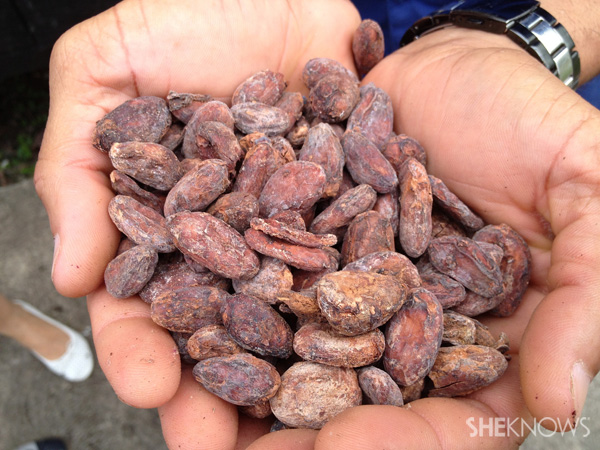
Visiting El Sendero del Cacao, an organic cacao plantation in San Francisco de Macoris in the Dominican Republic is a chocolate lover’s dream come true. As you ride up to the farm, you start spotting the cacao trees, heavy with pods on their trunks, dense foliage shading the trees and keeping the soil moist; these are perfect conditions for cacao to grow. You’re welcomed with a cup of fresh hot chocolate, made with the farm’s cacao, local sugar, and a slice of ginger. The chocolate is thick and creamy, and you’ll want to go back for seconds.
The tour starts with the history of how the cacao reached the Caribbean (through the Spaniards), and the guides will demonstrate how the trees are planted. If it’s on your bucket list to plant your very own cacao tree, now is your chance. You’ll then walk into the farm itself and learn how the trees are harvested, as well as how they are protected from predators. Animals such as woodpeckers and rats scurry away with the cacao pods, and since it’s an organic farm, they bring in the best organic pest control there is: snakes! So, watch out for those!
The tour continues through the farm, where you’ll see how the cacao is fermented and dried, getting it ready to be shipped around the world. Dominican Republic is known for having some of the best single origin and organic chocolate in the world, so be sure to take home a few bars.
Beer: Cerveceria Presidente
Recognized worldwide and even seen on popular TV shows such as Dexter, Presidente Beer is the unofficial beer of the Dominican Republic. When you visit, be sure to ask for “una fria vestida de novia,” a classic term to describe a beer so cold she’s dressed in “white” (ice crystals). Tours are set up through their offices and must be made at least a month in advance; you’ll learn the type of hops used in making this popular beer, and you’ll finish the tour with a bottle of beer in your hand.
Source: http://www.sheknows.com
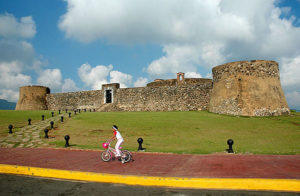
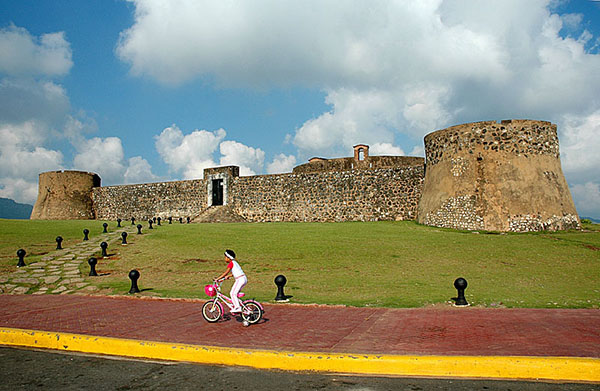
PUERTO PLATA. – Located on the Malecon, with a beautiful view of the Atlantic Ocean, the Museum of Colonial Fortress San Felipe is one of the landmarks of this historic city is also called “The Bride of the Atlantic” which is visited every year by thousands local and foreign tourists.
This building was erected in 1577 on top of a hill, still a landmark historic colonial architecture, built in stone and clay that have survived the vicissitudes of time, conserving its original structure, while the exterior was remodeled, due to damage sustained during the constant bombardment of the city that was submitted in Spanish colonial times. This structure was fitted out as a museum in 1974 and declared a cultural heritage by then the Secretary of State Culture, his name comes to honor the Spanish monarch Philip V in whose reign the construction was completed. The San Felipe fortress was built to protect the city of Puerto Plata from attacks of pirates and privateers, by order of King Philip II of Spain. On several occasions he has served in prison, not just only pirates, but few historic characters, as the founder of the Dominicans, Juan Pablo Duarte, who was detained there for two days in August 1844, before he moved to the Ozama Fortress in Santo Domingo, on the orders of then President General Pedro Santana. This strong second major military construction built by the Spanish colony, and would also be used as a prison compound, located on the north coast of Hispaniola, in Puerto Plata, facing the Atlantic Ocean, which was built as a fort basic defense of the north coast to the adventures of marauding pirates. According to the account of Heidy Silverio, one of the guides offering their services in the museum, from the time of Charles V, in 1541, was intended to erect a defensive fortress in this part of the island to protect permanent actions of pirates and looters trying to loot the Spanish colony in this part of the world.
Work began in the years 1562-1565, with the consent of Francisco Ceballos, important person of Puerto Plata, who died in 1572, when the fort was initiated and during that period was fundamentally smuggled of northern economies of the island. Ceballos was replaced by the second governor Pedro Rengifo and Angulo, who concluded the work in the year 1577. The stories of colonial chroniclers state that to be built on a strategic point on the island, the Fort San Felipe was the scene of major battles for survival of the colony.
To get inside, you have to cross a wooden bridge that was originally erected, in order to lift it when enemies tried to enter the fort and fall into holes handmade coral, in which wooden sharp sticks were placed representing certain death of the invaders who fell there. ”The doors to the rooms, rather small cells are about three or four feet high, because the Spanish kept the weapons of the other side and those who wanted to steal them should bow down and when they showed the head and neck,were waiting on the other side with machetes and were beheaded, “the guide Silverio Heidy referring to doors. In the lobby of the fort, there are glass cases showcasing a collection of military artifacts from the eighteenth and nineteenth centuries, such as guns, bullets, revolvers, rifles, bayonets, swords, axes and other weapons of the period as well as farm tools and different types of coins that were found during the reconstruction of the fort in 1972.
It also has another exhibition with Dominican crafts that are on display, there are necklaces and gourds pieces made with coconut, Larimar and stones, rag dolls and other utensils of the time to recreate the story. In another room you can see paintings representing all American firsts that happened in Dominican Republic as the first admiral, the first mass and the first catechist evangelist, among others. In the second level, is the viewpoint to the sea where the enemy was observed when approaching and several strategically located cannons to attack intruders who try to reach. Silverio Heidy, the guide explained that each day at 10:00 am and 4:45 pm, a replica of a cannon produces sounds to remember the history of the fort.
From there you can see a panorama of the waterfront, a view of Loma Isabel de Torres and a full view of the harbor, which was defended from the pirates invasions.
The museum is open to the public daily, except Mondays, from 9:00 am to 5:00 pm. The fee to enter is one hundred pesos for adults and 20 pesos for children from seven to twelve years and students will present their cards or uniformed. On Wednesdays, tickets are free, but only for Dominicans.
To enable visitors to learn more about the history that keeps the museum within its walls and setting, three guides are responsible for providing historical information of the fortress. But beyond that, have the audio guide service, where they have the information of the history of the fort recorded in Spanish, English, French, German and Russian, which is included in the entrance fee. The Fort survived the devastation. In 1605, during the Devastations of Osorio, the city was utterly wasted, but the strength was not touched, despite orders to destroy it. During the subsequent occupations in the eighteenth century, the fort had to be restored and the name of San Felipe was given in honor of Philip V, then King of Spain. On both sides there were built towers that give it a medieval feel. The hub or central tower 80 feet in diameter was used as a prison in the War of Restoration against Spain, from 1863 “.
Source: Puerto Plata Digital
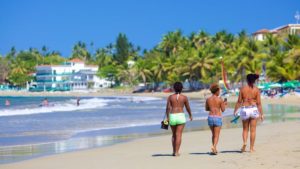
The world-famous Fodors Travel guidebook says that the Dominican Republic has a lot to offer visitors and presents its readers with a selection of must-visit places when visiting the country, such as: visiting Santo Domingo’s Colonial City; whale watching in the northeast province of Samana; strolling through the world-class beaches in Punta Cana’ rafting in the rivers of the mountain town of Jarabacoa; playing in one of the country’s world-class golf courses; scuba diving in the waters off Saona Island, on the country’s eastern region; practicing water sports in the north coast town of Cabarete; enjoying a tasty Dominican stew; hopping on a bus in Santo Domingo and drinking an ice cold beer in a “colmadon,” or local grocery story.
According to the travel guide, the following are must stops for the tourist visiting Santo Domingo:
Stroll through the Colonial Zone in a Carriage. Touring the Zone in a horse-drawn carriage is a not to be missed experience by visitors to the country’s capital city. It is a wonderful opportunity to visit the first neighborhood established in the Americas, back in the sixteenth century.
Whale watching in the Northeast Province of Samana. Annual tours are organized between January to March, the time when the gentle giants visit the north coast in their annual pilgrimage through these waters.
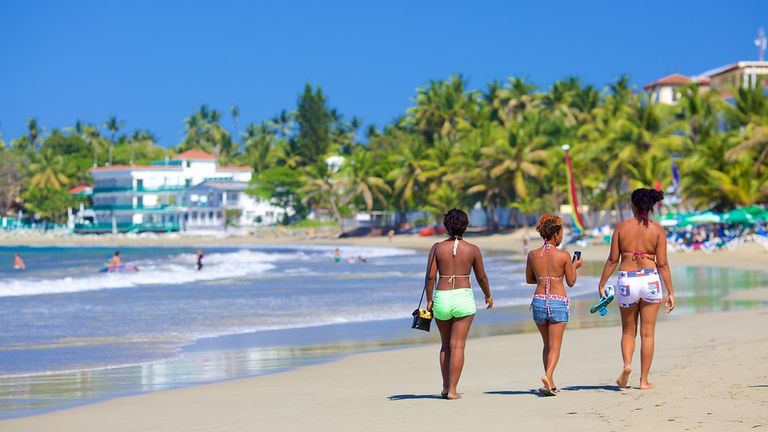
Visiting the Beaches in Punta Cana. The Punta Cana region offers visitors with 35 miles of perfect white-sand beaches. Punta Cana is considered to be one of the Caribbean’s most important tourism destinations, because of its pristine beaches and luxury resorts.
Rafting in Jarabacoa. Those looking for an adrenaline rush during their vacation will find white-water rafting in the mountain town of Jarabacoa to be quite a challenge. The tour will take the visitors through beautiful waterfalls and breathtaking mountain landscapes.
Playing Golf in World-Class Courses. The Dominican Republic was recently voted as the best golf island in the Caribbean. Many golf courses offer magnificent sea views. All have been designed by world-renowned experts such as Jack Nicklaus, Pete Dye and Robert Trent Jones.
Scuba Diving in Saona Island. A just minute from La Romana-Bayahibe is Saona Island, a true paradise for diving enthusiasts. Its crystal clear waters and great variety of species makes it the perfect spot for scuba divers.
Renting a Seaside Villa. This option is an excellent choice for family reunions or weddings.
Water Sports. The north coast town of Cabarete provides the perfect location for wind and kitesurfing.
Living the Local Culture. Visitors to the Dominican Republic should enjoy a tasty dish of Dominican-style stew, made with various meats and vegetables. Another must is riding in a local public bus, and drinking an ice-cold beer in a local grocery store, known as “colmadones.”
Source: Access DR